
War is failure. Humans being quick to aggression, possessive and slow to reconciliation, it’s plagued every corner of history. Reason to go to war can be imperial, territorial, moral or ethical. In a democratic society, defeating an evil becomes an overwhelming imperative. That was certainly the case in the six years of the second world war. This week, it’s time to look back. To recollect the impact of the world war. To remember the sacrifice and suffering. To be thankful for the last 80-years years of relative peace in Europe.
For me these recollections take me to the experience of living in two cities. Cities on different sides of past conflicts. Severely damaged by the conflict. Targets because of their civic and industrial strength. Both cathedral cities with an ancient heritage.
My student life was spent in Coventry[1]. A decade of my working life was spent in Cologne[2].
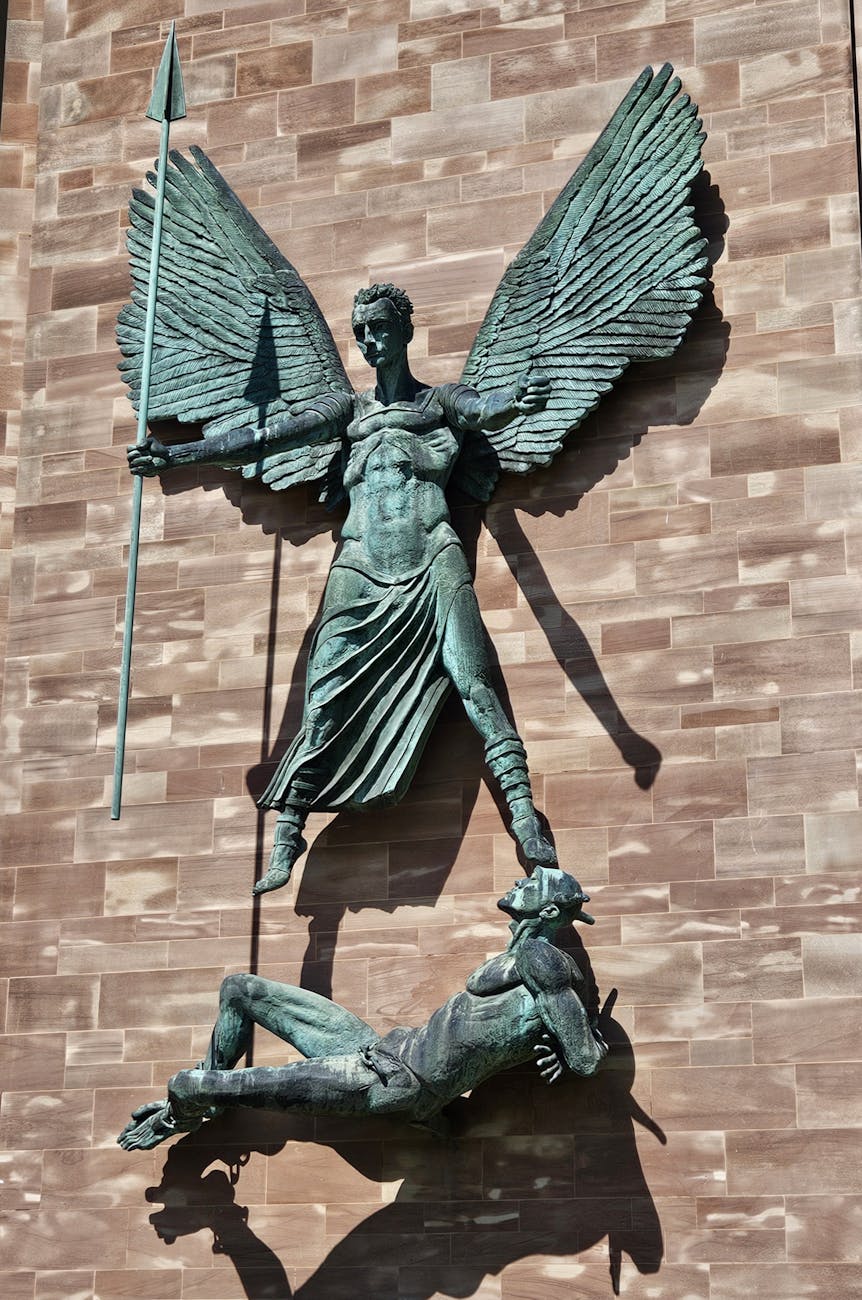
Arriving as a fresh-faced student in the heart of the industrial Midlands, the architecture of Coventry city centre was so striking. It was that post-war vision of rebirth at a time when economic decline had set in. With an inner ring-road that was like a go-cart track, 50s style concrete avenues, windblown and neglected, there was little of the Medieval splendour of the pre-war city remaining. Standing proud in the middle of it was, and is, the skeleton of the old cathedral and the new one that ascended like a phoenix from the flames of war. Well worth a visit, the cathedral built in the 60s is a wonderful modern design. It plays with light and space to elevate emotions. A sign that we have a great capacity for reconciliation and regeneration.
Moving on just over 20-years, my encounter with Germany’s fourth largest city was full of hope and optimism. Based in Cologne, I experienced a city with even deeper roots than Coventry. Ironically, it was the destruction of the war that uncovered much of the Roman remains on display. At Cologne’s heart is a magnificent gothic cathedral that is more dominating of the landscape than perhaps ever it has been. Here the citizens of the city took a different approach to post-war rebuilding. Not so much embracing everything that was new, although there’s quite a bit of that approach, but reconstructing the old city in its original style. The culture of the city survives in the traditions of the annual carnival.
These two European cities have taken different paths. All the same, there are threads of common experience. Both have seen industrial decline and a search for a better future to thrive and grow. Both are distinctive and culturally colourful. Both carry the baggage of a brutalist architecture that was fashionable on the drawing boards of the late 1950s.
Visting the past in museums and walking the streets the marks of the last war are there to be seen by everyone. Passed by every day. Yet, mostly ignored in the humdrum of commuting and the busy obsession we have of staring at a “mobile” or call it a “handy”. Now and then it’s as well to look up. To look and see the bullet marks on stone structures, the nicely arranged medieval or Roman stones and cobbles, or the conserved streets that contain the ghosts of past generations. For good or ill, war has shaped the world we inhabit.
Peace is a far far better condition. I think of the “Coventry Cross of Nails[3]” as a symbol of reconciliation and peace. Let’s not forget.
[1] https://www.coventry.ac.uk/
[2] https://www.koelner-dom.de/en
[3] https://www.coventrycathedral.org.uk/reconciliation/community-of-the-cross-of-nails

 John Vincent