
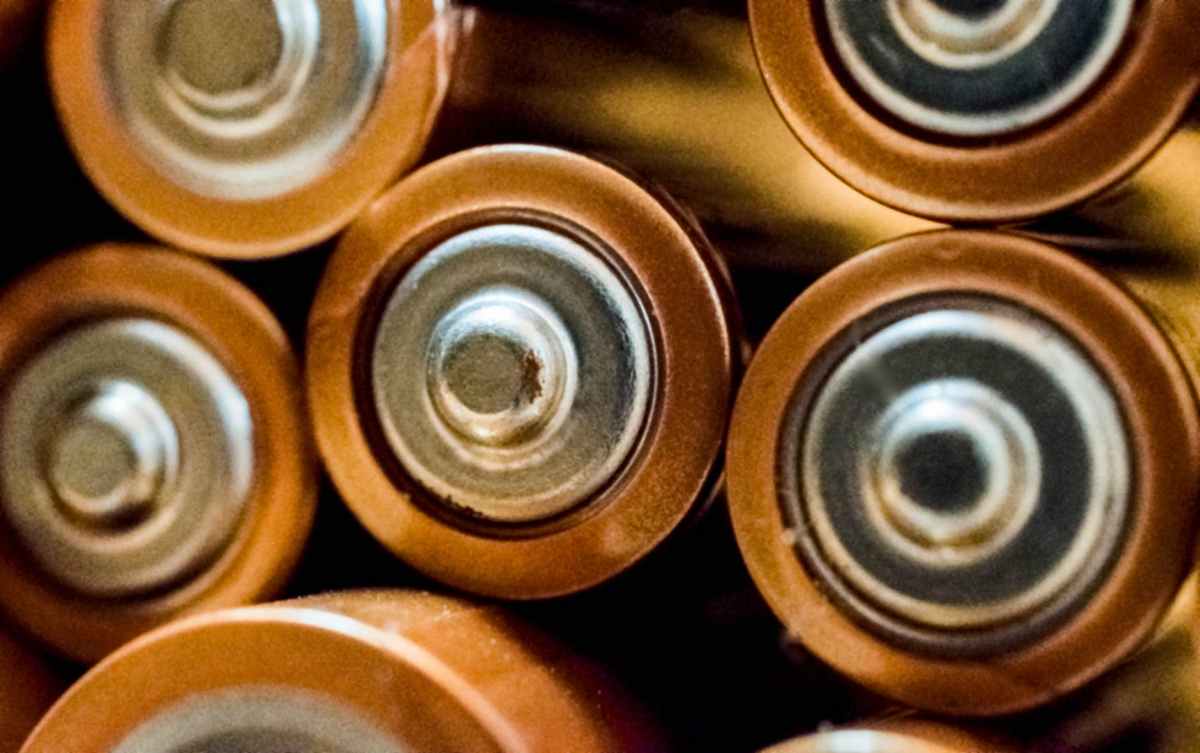
We can talk about chemistry. It’s not a strong subject for me. The simple basics, I remember. As far as handling batteries, or at least knowing what they do, I was quite young on first encounter.
At the back of the farmhouse where I grew up there were several working rooms that that were part of the building. A room we called “egg house” was indeed used to store eggs. That wasn’t its first purpose. In one corner was a copper vat with a small furnace underneath it. I was told this was for sterilising milking machine parts before chemicals took over that role.
On the opposite side of the wide back door corridor was “boot house.” The name was a giveaway as to one of its uses. Boots propped up against the wall. It had a stone mullioned window that looked out on another working room that was part of a later add on. That’s where a shiny stainless-steel milk bulk tank sat filling up most of the space.
Like a lot of obsolete stuff stashed in a corner and then forgotten, eventually they were thrown out. As far as I know. What I speak of is several large round glass jars. They made of thick greenish glass and were about a couple of feet in diameter. Their original purpose was to store sulfuric acid. The acid was an electrolyte used in heavy batteries that were once the backbone of the electrical system of the farm.
My father moved to Goulds Farm in 1938. As I understand it mains electricity didn’t come to the farm until the 1950s. In one of the stone built buildings around the farmyard, there was a single cylinder stationary engine, generator, and DC electric distribution board on the wall. It was like something out of an early Frankenstein movie. Bare metal switches and a couple of round dials for volts and amps. All covered in dust and cobwebs. I never did see the “submarine” lead-acid batteries[1]. I guess they were parts of this early farm electrical system that had a reasonable scrap value and so got sold on.
There were lead-acid batteries in and out of the house in the winter. Heavy tractor batteries often sat in “egg house” charging overnight. Given their cost every little bit of life was squeezed out of them before they were replaced. Some batteries had a second life powering an electric fence.
Now, here we are in 2023. An electrical revolution is underway. It’s fascinating to note some of the objections to electrification. So, wedded to gas and oil that all sorts of spurious arguments get thrown up. Not that there aren’t hazards with each different technology.
Battery technology has advanced at great pace. Chemistry has provided batteries that have huge potential when compared with they predecessor. The race is on to go much further. I’m confident that we’ve a long way to go before every combination and permutation of materials has been exploited for electrical storage. Manufacturing techniques race ahead too.
Lead and acid presented hazards. Ironically, one of them was hydrogen gas emission. In such systems ventilation is a must so that there’s no danger of explosion. Now, hydrogen is heralded as a fuel of the future. Hazards remain but we do get better at managing each and every one.
My message is that electrical technology has both an upside and a downside. Ultimately the upside is much the bigger.
[1] https://uboat.net/articles/id/54

 John Vincent