Young People in Britain

You know, I find this argument so utterly tedious. Economics can be boiled down to old people verses young people. Polarising policy debates and setting one generation against another.

The UK Reform Party are pushing a commitment to the triple lock on state pensions. Not because they believe British pensioners deserve a good deal. No, it’s populist bandwagon to lock in the vote of one generation. Knowing that there’s a higher likelihood of older people voting for them than younger people [According to opinion polls].

It’s true that there’s a madness that has overtaken the British mentality. However, it’s not new. The value of land and property far exceeds its utility. The marketplace has been one of ever forcing a finite commodity to a higher price. The owners and inheritors of land and property have gained whilst its has become harder for younger people to get a foothold.

There have been different times. I remember my father talking about the inter-war period. It was of his father’s time. Practically farmland could not be given away. Estates were broken up. Labour was short. Taboos were challenged. The dynamic of marketplace for changed.

However, in the post-war period, the last 70-years, the cost of a modest dwelling, as a ratio of average earnings, has rocketed. Ownership of land and property has become concentrated.  

British humour addressed the situation in a famous TV sitcom. As said by the character Del boy over breakfast – this time next year, we’ll be millionaires. Only Fools and Horses captured the aspiration. Only that Del boy though it was second-hand cars that would lead to riches. Now, Office for National Statistics (ONS) data shows that roughly 27% of people aged over 65, in Britain, live in households with a total wealth of exceeding one million.

So, what do we conclude? That this pot of wealth has been taken from young people in a transfer from one generation to another. No, that would be playing a sectarian political card worthy of an unprincipled populist. A foolish strategy too.

Deep within British culture there’s an attachment to assets. This particularly goes for commodities that are restricted in supply. Remember Del boy got his wish in the end. Antiques saving the day. Now, amongst most popular TV shows is the Antiques roadshow.

Maybe it’s a latent mistrust of bankers. The shady image of people who hoard money for the sake of hoarding money. In Britain, holding land and property are seen to be a stable assurance of long-term security. I’ve heard it said about land many times – they don’t make it anymore.

The tragic element here is not that young people finding it harder to become just like their parents. To harbour the same attitudes towards land and property. It’s more a question of society undervaluing their contribution to prosperity. Now, and in the future.

It’s pure idiocy to set one generation against another. It’s a mean political trick. What does need to change are the rungs on the ladder, especially at the early stages of life’s journey.

For example, the law in respect of student loans is dire, unjust and unsustainable. Making young people pay a higher marginal rate of tax, when early in their working lives is abysmal. The government penny pinching of education funding and thinning out of courses is short-sighted in the extreme. Apprenticeships must be substantial not hollowed out routes to poor rewards. The world of work [and leisure] is changing more rapidly than it ever has in the past. It’s imperative that society equips young people with the tools needed to navigate a complex and dynamic world. It’s not generous to make a priority of all aspects of education and training. It’s absolutely essential.  

Spring Reflections: Communication

The season is one of mild rain and occasional storms. Seeds that have been lying dormant now get their chance to germinate. To enter the struggle for life as they compete with their surroundings. Leaves emerge, they twist and turn to channel the energy of the Sun. It’s Spring. A time for new beginnings. Longer days. Shorter nights.

UK Government Ministers are often their own worse enemies. These are smart people. Yes, I say that with no sense of irony. If they have fought their way up the greasy pole of a political career, they are not the numskulls that it’s soothing to think that they are. Well, there are naturally exceptions. God only knows why Liz Truss became Prime Minister of this great country.

Amongst the skills that are mandatory in the role of Minister, communications is surely one of them, if not the most important. Because if a Minister can’t communicate what they are doing the chances are that they will not be in a job for long. The cacophony of noise that pervades the everyday media will distort all but the clearest messages.

Let’s say there’s a 5-minute slot available on the national media to address a matter of public concern. There’s a massive pile of matters of public concern. It’s wise to stick to the ones that the individual has a modicum of knowledge about or at least has recently been briefed.

My instinct would be to us a tried and tested formula for public communications. It goes like this – tell them what you are going to say, tell them, and then tell them what you have told them. Doing this focused on one key point. Not wandering off onto tangential subjects and getting sidetracked. I know this is easier said than done. An interviewer, worth their salt, will want to extract as much new information as possible. They will be driven by the common journalist’s creed. The instinct that the greatest accolade is to get a “scoop.”

What happens, if this morning is anything to go by, is a jumble of slogans come out in an almost involuntary way. The speed of speaking increases as the clock ticks away the precious minutes. Then phases, probably implanted by civil servants, pops out of the conversation. Jargon terms like, implied wholesale element, third party intermediaries, or qualifying financially disadvantaged customers. These will mystify the listener unless they have already read chapter and verse of the subject the Minister is talking about.

As the interview progresses then Ministers become parodies of themselves. I’m sure they walk away from their media interviews with the voices inside their heads saying, I should have stuck to the script. Why didn’t I – keep it simple.

There’s a resort to catch phrases that seems irresistible too. It’s one thing to say that a government is working at pace but what on earth does that mean? The alternative would be to be sitting on one’s backside waiting for something to happen.

There’s also the pretence that an action is taking place immediately. Fixes are happening now. I think most listeners are mature enough to know that doing things takes time and resources. So, being evasive about an action that will take place in April next year, as opposed to now, sounds shabbily. Switching to a defensive mode is never a clever way to win over supporters.

It’s Spring. A time for new beginnings. It should be a time to elevate people’s spirits. The prospect of summer and the shaking off a dull dark winter is reason enough to be optimistic. Someone needs to tell government.

Understanding Primary and Secondary Legislation in the UK

Clear again is the conservative politician’s propensity to trade on ignorance. Remember the slogan of the big red bus of the Brexit campaign. All the abject nonsense that was said and written in 2016. It would be extremely charitable to call these intentional inaccuracies. There’s a three-letter word that sums them up. In theory, Parliament has rules. In practice, those rules are abused. That is until miscreants are exposed. Those politicians that misled the House of Commons over parties in Downing Street during the COVID pandemic shouldn’t be forgotten.

It’s a simple question. How many people know the difference between primary and secondary legislation? As far as I know these aspects of the UK’s method of making laws is not taught in schools. I think it’s vital that people of all ages get the opportunity to explore how their democracy works. Including its inherent peculiarities.

[Here’s a national event, later in the year, which can help. It’s free and already possible to plan for UK Parliament Week in November 2026[1].]

Back to the difference between primary and secondary legislation? A tabloid newspaper editor may see that question and fall about laughing. On the basis that the subject is not widely understood, instead of explaining, they may choose to write any drivel that serves their agenda. Day after day this sleight of hand provides bold headlines and support for misleading political campaigns. Then, if the truth pops its head above the parapet cries of Fake News ripple through the right-wing media.

By the way, the sad fact about this common distortion is an erosion of trust[2]. It’s no wonder that Parliament can be seen as remote from real-life. It’s regular inhabitants a strange breed of people who go native as soon as the walk through its hallowed doors.

During the UK’s membership of the European Union (EU) it expanded. In certain specific technical areas, its “competence” grew. Member States agreed to give it new roles and responsibilities. As an example, before aviation legislation was harmonised in Europe, national legislation had to be amended to accommodate every major change that developed. In the UK, both primary and secondary legislation were applied. They are now. That consists of a UK Air Navigation Act and an Order[3]. The Act being the primary legislation and the Order being the secondary legislation. These two rules are not new as they have been part of the UK’s national aviation landscape for decades.

Above here I’ve kicked at the UK’s tabloid media. Well, they are merely doing what they have always done. There’s something in morbid consistency. What’s more disturbing are the lines being taken by a national media that might be expected to be objective. Read this short article and the predisposition shines through, and this is the BBC[4].

Sir Keir Starmer is planning a law which will mean that the UK government can adopt EU single market rules, without a normal parliamentary vote.

One, it’s the personalisation. This is the government of the day and not an individual. Two, it’s the incorrect use of the word “normal.”  As I’ve stated, secondary legislation is perfectly normal. In fact, the UK’s normal regulatory structures depend upon it being in place and up-to-date.


[1] https://www.ukparliamentweek.org/en/sign-up

[2] https://fullfact.org/media/uploads/full_fact_report_121021.pdf

[3] https://www.legislation.gov.uk/uksi/2016/765/contents

[4] https://www.bbc.co.uk/news/articles/c937jkvp3w8o

Modern Polymath

It’s easy to conclude that there’s no such thing as a polymath in the 21st century. So expanded is the field of human knowledge that no one person can have a sufficient overview of every academic, cultural, political, and economic discipline. Not only that but the ability to articulate concepts and ideas in an understandable manner.

If I were to think of a classical polymath, I’d instantly go to American Benjamin Franklin. It’s even how he is described in literature. Here, I’m going back to the 18th century. In the multimedia age, there are numerous influential intellectuals who have become spokespersons for their discipline, but none stride across a vast range.

We segment and partition knowledge, and pepper it with dedicated terms, that it’s way more than a human head full. Specialisation is both a curse and a God send. Generally, the intensification of study of each and every subject has been a bonus to human progress.

There’s become an excess in manipulation of language to suite each scientific endeavour. That goes for politics and economics too. Particularisation does tend to create distance between those who dig deeply into specific subjects.

To help unravel ingrained complexity there’s a respectable number of writers and YouTubers who try their best to communicate. If anything, the demand for this skill is increasing as we move from the traditional paper-based publications, say New Scientist, to the myriads of social media platforms. Then the issue becomes which one speaks with authority.

I started this piece with a thought in mind. It really was to say something complementary about the BBC. Yes, a media organisation that gets a fair share of criticism, but the world would be a much poorer place without it. Its roots are deep.

A popular British pastime is quizzing. That has played a part in TV and Radio since they were invented. A quiz is both entertaining for the participants and those who look on. Like a modern-day mediaeval tournament, a display of quick thinking and astonishing depth or range of knowledge. A test that allows us all to take part even if we come away all too aware of how little we know. Not so much unsettling as a quick return the earth.

Is there’s no such thing as a polymath in 2026? As an avid watcher of the BBC’s University Challenge[1], I’m struck by the breadth of questioning and the ability of the teams of students to find answers to the most tortuous questions. Obscurity knows no bounds.

On questions of famous paintings, I have a preprogrammed response. It’s either Titian or Tintoretto. It’s surprising how many times that works. Try as I might, I rarely get into double figures however much I guess. It’s always worth a punt. Sitting in the back if my memory are facts that I’ve no idea how they lodged there over the years.

Watching the winning teams of students, I do wonder if the notion of a polymath is dead. It does restore my faith in the infinite variety of human capabilities. This counteracts the fancy marketing blurb that accompanies machine learning software. Practically, humanity is far from becoming obsolete.


[1] https://www.bbc.co.uk/programmes/b006t6l0

Lost Opportunities

It’s kind of odd. The wacky folk who still argue that the Brexit referendum was a good thing. For one or two well-heeled people that might be the case. It’s not the case for the overwhelming majority of British people. Maybe one issue is that it’s so difficult to get across the idea of lost opportunity. Benefits foregone because of choosing poorly.

It’s as if an ardent walker is faced with two paths. One is covered in glitter and hung with shiny streamers for the first mile only. The other is much the same as the path already traversed but it gets wide and smother after a couple of miles. One has minstrels singing patriotic and sentimental songs at its gateway. The other path has a well-meaning professor babbling on about solidarity, peace and progress. It’s the guidebook recommendation.

The destination of the first one is to circle around to get back where the walker started meantime having exhausted a lot of their provisions. For the second path there’s a whole new set of possibilities, yet unwritten. Companions are supportive and share their stories. Everyone is richer, both commercially and culturally.

The facts are that Brexit has made us poorer. In every way. It’s a pathway to nowhere, as we have found. After a decade it’s truly painful to tot-up the lost opportunities of the Brexit era. The financial numbers are huge but it’s not just about numbers. Now, the main issue is security. Developing a strong independent European defence against the global turmoil that’s ensuing.

Never a group to roll back and say – yes, you were right all along – those so deep in the Brexit ditch are pumping out propaganda much as they did in 2016. Cherished British food stuffs will need to be named using words last heard in a chemistry class. Hordes of criminal invaders will overrun our cities. They ask us to listen to apologists for climate change deniers.

Brexit is a deep fake. It’s not going to get any better. It’s going to get worse. Even if we wait 50-years, it’s not going to get any better. Certain right-wing commentators implore us to wait. To burden the generations that follow with perpetual decline.

One result of the current turmoil that is raging around the globe is the recognition that struck people with wisdom after the second world war. We have the capacity to choose between order and disorder. Anarchy has a massive cost. International rules are incredibly difficult to establish and maintain but it’s best that we try.

I know those who will counter this argument will count out the number of times the world’s institutions have failed since the late 1940s. However, that’s no-good an argument in of itself. Imagine getting to 2040. Going full circle in a century and arriving at a dystopian world of chaos where imperial racketeers terrorise billions of people. I think we can do a lot better than that if we are prepared to work for the common good.

There’s a few of words to cherish – the common good.

Why King Charles Should Delay US Visit

I’m doing that Keynesian double-take. The facts change, so what do I do? I change my mind. That’s what I’ve done in respect of the current situation on the other side of the Atlantic. Shear pig-headed stubbornness is in fashion in high places. That prideful assertion that says nothing I do or say can be wrong. Well, I’m not going to fall into that foolish trap.

Should the UK’s Head of State pay an official visit to the United States (US). The answer must be “yes” at an appropriate time and place. I listed a respectable number of reasons why the UK and the US are linked by history and a whole lot more. However, I’ve put a caveat on the view presented. At an appropriate time and place, is a way of saying that there should be conditions.

As it stands, the King’s planned visit to the US this year should be called off. The conditions are not right for a successful visit. The US -UK special relationship has a past, it may have a future but at the present there’s a big problem.

In this anniversary year of American independence, I had argued that it was good to celebrate a long-standing relationship. However, just at this moment, the US and UK are in quite separate places. It maybe the case that the citizenry in both countries is thinking similar things. What’s clear is that the leadership of both countries are not on the same page.

If the non-partisan opinion polls are to be relied upon, the citizenry in both countries have a highly negative view of the decision to enter a war in the Middle East. Putting the UK’s Head of State in a position where an appearance can be manipulated to indicate support for the instigation of war in the Middle East is not a good place to be.

It’s right to acknowledge the facts. There is a war in Europe which is of greater concern to most British people. That situation needs to be resolved. Engaging in a war of choice in the Middle East is not in the best interests of people in the UK, or Europe. It’s happening and the daily news gets worse and worse.

From what I gleam, and what little I know, King Charles is doing well at upholding the dignity and integrity of the British Monarchy. Not so easy a task when blessed with a wayward brother and long-standing family splits. The King is faced with small protests in the UK given his brother’s past associations and the blind eye that was turned to his brother’s behaviour.

I’m a British republican in nature but continue to have respect for our peculiar constitutional settlement. Yes, we could do better but that’s an argument for another time. Imagine how much distaste a substantial number of the British people will feel if our King is seen to align himself closely with an unpopular American President. Not good optics, as they say.

My points are made without thought of political bandwagon hopping as favoured by lots of UK Members of Parliament (MPs). That just doubles-up the complexity of making the right long-term decision on this difficult real time issue of international relations.

It’s clear to me that, in his second term, the legacy that President Trump will hand down to the next generation, is and will be a horrid and tragic mess. We’d better start looking further ahead at how the 2030s[1] can be made a better decade. Historian will look as aghast at the late 2020s. The political volatility of the current situation is such that predictions become even more difficult. Power drains away when politicians ignore the people – let’s see how that goes.

Post 1: I agree with David David Dimbleby labels King’s visit to US ‘an embarrassment’

Post 2: Now there’s no doubt in my mind that the King should not visit the US at this time Iran war latest: Trump issues expletive-laden threat to Iran demanding Strait of Hormuz be opened – BBC News


[1] Trump’s term of office: 20th January 2029.

Celebrating Spring

Spring has sprung. And that makes me think of my father-in-law. No longer with us, he was an avid birdwatcher. That’s where I think I got this shorty ditty:

Spring has sprung, the grass is ris, I wonder where the birdies is.

The bird is on the wing, But that’s absurd. From what I’ve heard. The wing is on the bird!

That’s definitely the case either recited with a Yankie accent, or not. The grass is bright fresh green and launching itself skyward. That’s my English garden. Time to dig the lawn mower out of the shed. Dust it off and see if it will run.

Bird life is on the move. Winter slumbers have turned to springtime thoughts of finding a mate.  First thing this morning, off in the distance, at the river’s edge, I saw two Egrets[1] plodding around. They seemed to be ignoring each other, but I bet that’s not the case.

Yesterday, was the vernal equinox, the first proper day of springtime. The weather is behaving itself. The ground is still wet underfoot but at least the process of drying out has begun.

Yesterday, in the adjoining field, I saw a colourful male pheasant[2] wandering around as if it was lost. It’s as if he’d lost his sense of direction, bobbing around the marshy riverbank.

This morning, standing on the fence adjoining my house an assertive little dunnock[3] was surveying the garden. He didn’t seem phased by my presence. Alert to everything that was going on. I’m sure he could see more of my garden than me.

Wrens, Robins, Bluetits and Blackbirds are almost too common to mention. They take their time feeding when the Jackdaws are off doing something else. When the Jackdaws[4] come down in mass it’s like a crowd of football supporters. Almost as noisy. They take over and the smaller birds flee. Watching the Jackdaws interact with each other it’s clear they have a complex social order. The older birds, I assume, are larger and have a head with a more defined band. They push their seniority on every occasion. The younger birds, hopping and jumping as if queuing for permission to take the bast places.

Dare I mention the pigeons. My least favourite common bird. Bit like fat flying rats. They do their thing almost oblivious to any other wildlife. No risk of their numbers declining.

I prefer the Canadian Geese over scruffy pigeons. They too are at not of likelihood of any population risk. I’ve seen as many as twenty grazing in the field. They compete with the Jackdaws to be the noisiest birds.

I must admit, on the positive side, they are incredibly able flyers. To get a sizable round body up in the air with grace and style is impressive. Picture prefect formation flying too.

Spring has sprung. A great time to be out and about.


[1] https://www.rspb.org.uk/birds-and-wildlife/little-egret

[2] https://www.rspb.org.uk/birds-and-wildlife/pheasant

[3] https://www.rspb.org.uk/birds-and-wildlife/dunnock

[4] https://www.rspb.org.uk/birds-and-wildlife/jackdaw

The Ever-Evolving Debate in the UK

It’s astonishing to me. On this site, I’ve been scribbling away for nearly a decade. My first item was posted at the end of April 2016. It was mostly in reaction to the national referendum that had been called on the United Kingdom’s membership of the European Union (EU).

I’d returned to the United Kingdom (UK) after 11-years living in German. In Cologne. As you might expect my reaction to this peculiar referendum was one of bemusement and shock. Had my home country gone completely off its trolly whilst I’d been focused on other matters?

We now know that it was sheer nativity (and a degree of vanity) that brought about this unfortunate situation. One of our privileged public schools educated Prime Ministers (PMs) took it upon himself to deal with an irritating divide in his political party. He was aided and abetted by a former leader of the UK’s most pro-European liberal political party (Nick Clegg). Go figure that one. At the time, Tim Farron was the leader of the Liberal Democrats. Sadly, capable fellow that he is, he had about as much political influence as a flag in the wind.

The campaign to remain as an EU member should have had all the campaign advantages. Lack of planning and imagination on the part of David William Donald Cameron, and those who surrounded him, meant that advantage melted away.

Reading my past words, it seems that I’d hit the nail on the head with this short line.

Migration is the biggest issue for some people when it comes to the EU referendum vote.

Cameron and Co majored on the economics. A number crunchers paradise but shamefully remote from the people who mattered – the British voters.

I’ll stick with the theme of peculiarity. Guess what, after Brexit, now a decade on, that short line is still top dog. What that tells me is that those on the right wing of politics in the UK will never ever be satisfied. To the point of building an impenetrable wall all the way around the country (rather than a path[1]). To shun anyone who they can label as a foreigner.

Those who profit from inequality and polarisation will never ever stop this push to ever most extreme positions. They have been frighteningly successful in that the political centre in the UK has moved gradually to the right. Gravelly, the cost to the average citizen has been high.

After a decade of reflection, the nation needs to get away from building walls and pilling on layers of domestic bureaucracy. The vision of the UK as a big gated community with arbitrary partisan government controls is a dumb one.

It’s fine to say that in early 2016 none of us could have foreseen COVID-19 or Russia’s foolish drive to war. We couldn’t have even foreseen President Trump’s second term in the US, although there are commentators who had that one called.

There’s a long list of predictions about Brexit that have come true – most of us are poorer.

Ironically, global matters are having more impact than ever. The need for regional and global cooperation is self-evident. Building stable institutions to serve that purpose remains of paramount importance.


[1] https://www.nationaltrail.co.uk/en_GB/trails/england-coast-path/

Navigating Change

It’s all too easy to say – it was different in my time. How things have gone downhill. There’s a boring refrain from me, and my baby boom generation, which laments a lost era. What we forget is that all of history is a lost era. Becoming history is a discomforting feeling.

I remember walking around the transport museum at Brooklands in Surrey. Look to one side and there was an aircraft cockpit display that was the latest tech in my days as a young design engineer. It was slightly worse than that in that the retired equipment, covered in dust, was one I worked on in the late 1980s. Sophisticated at the time. Now an item of curiosity.

This weekend, I stood under the last flying Concorde at Aerospace Bristol. Looking up the supersonic aircraft, it remains stunning, impressive, and futuristic. It’s a real testament to the British and French engineers who were so adventurous, creative, and foresighted in its design.

That said, in the end that era came down to money and politics. Just goes to show what the implications are of having made a robust international commitment and finding it impossible to backout. As a purely business adventure, a project like Concorde is difficult to justify. As a cultural icon and industrial marker laid down for all of history to appreciate, it’s momentous. It’s reasonable to say that the success modern-day AIRBUS has roots in this tremendous European collaboration.

Anyway, back to war and more day-to-day concerns. There’s no doubt that having some form of industrial strategy is better than not having one. The trouble is that UK Governments come and go and are incredibly fickle. So, a nice policy document with sound ideas can either spur change or slowly gather dust with equal measure.

Reflecting over the last 40-years and more, the UK has taken a large peace dividend. Defence spending has declined steadily under every political flag. This has led to a focus on fewer engineering projects. A concentration on fewer prestige assets whether in the air, at sea or on land. A gradual cutting of cloth to fit a lesser role in the world.

How do I write is without the predicable lament? It’s a matter of highlighting the downsides of the current position without lapsing into an archaic wish for a return to a bygone era.

One observation I would make here. If I pick up a British aviation magazine of the 1960/70s it’s clear that there’s a huge diversity of small and medium sized enterprises (SMEs) making products that are as diverse as they are spread across the country. Yes, the large aerospace companies have consolidated so that there remains a handful of prominent names. A lot of the iconic British names have disappeared. Consigned to museums. Inward investment has meant that the titans of the past have been swallowed up by international businesses.

There’s a pattern here that is not uniquely British. I’d make the point that one of the most concerning weaknesses is the decline of the large ecosystem of SMEs. Or the precarious situation that is often their fate. These businesses are the smaller fish that swim around the bigger players. They have the capacity to be dynamic and innovative. Even if they are often under regarded and more vulnerable to economic shocks.

Central government can’t always solve problems. That said, they can, at least, take an interest and create an environment where such entrepreneurs can flourish. Reflecting over the last 40-years and more, governments have been immensely ineffective in this respect. Policy documents are great. Where the failing persists is going from words to effective actions.

Dysfunctional Culture of UK Politics

It’s as true today as it’s aways been. Well, that sound like a famous bread avert. The phrase “as good today as it’s always been,” was used for years by one notable bread maker in the UK. A memorable slogan that painted a picture of tradition and continuity.

What I’d like to do is to take the word “good” out of the equation. I’m not talking about our daily bread. Or the need to meld tradition with a modern industrial reality. However, there is an enduring appeal when it comes to selling ideas. A linking with some mythical golden age.

Paddy Ashdown, the former Liberal Democrat leader whose memory is not entirely lost in the mists of time, was not a fan of the Westminster culture[1]. That’s the political culture that pervades the British Parliament and its environs.

He shared the view of many British people that Westminster is grossly “out-of-touch” with life as it’s lived across the nation. Our democratic institutions often alienated people. Not by intention but just by being what they are and acting the way they do. The core of British politician’s concerns come across as detached and insular. More tied up in big egos, infighting, and inflated pompousness. Protecting their own interests.

Now, I know the insipid excuse is to say – surely, politicians are like that throughout the world. Aren’t we lucky to have such ancient and noble traditions. A heritage that others admire.

Paddy knew what he was talking about having been a Member of Parliament (MP) a long time. I first met him in the 1980s, when he was a young idealistic newly elected MP. He was the guest speaker at an evening event in Cheltenham. Full of ambition and vitality.

This week, neither of the two largest political parties in the UK covered themselves with glory. Quite the opposite in fact. It was not pleasant to see or hear.

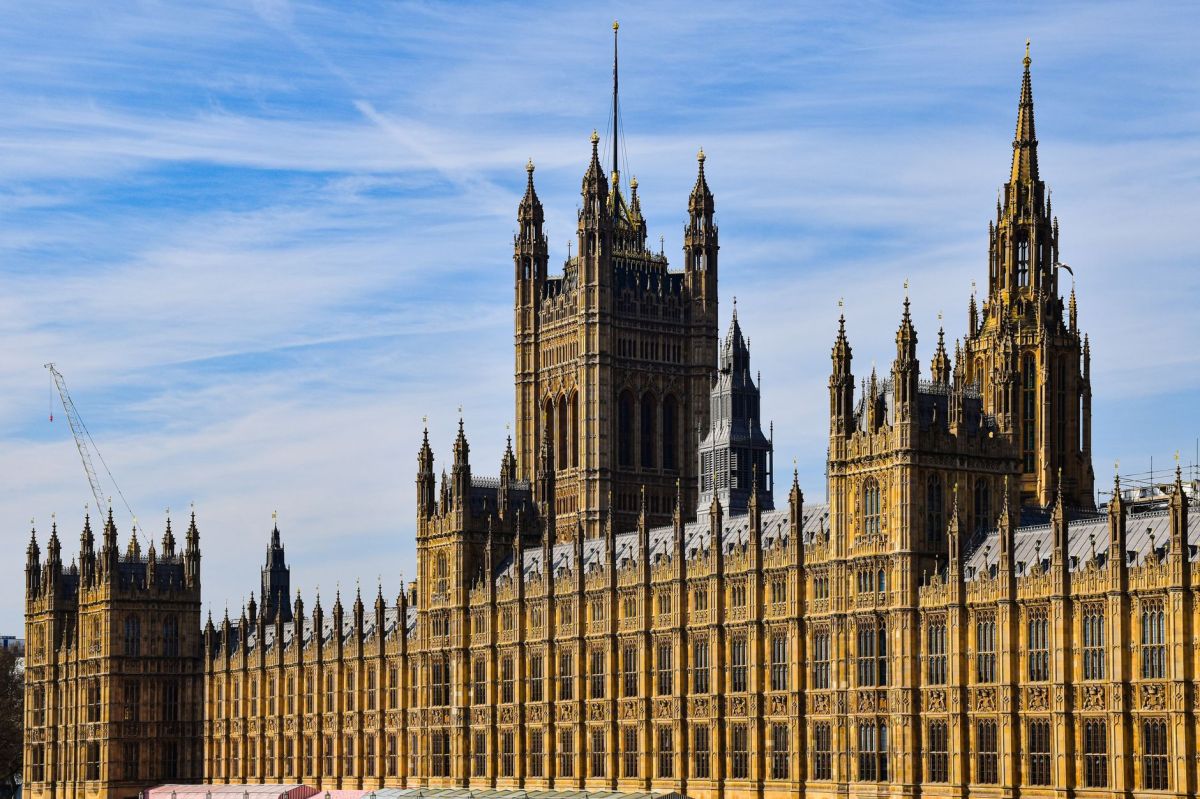
Labour became a stuck record. Vacillating and dithering. Increasingly then sound like their predecessors. It’s a kind of Westminster conditioning. A bland mediocrity that seeps out of the gothic towers of Parliament. Supporters of Labour twist and turn with despair.

The Conservatives are in more trouble for a whole host of reasons. Not least their past performance. What we are witnessing is a peculiar dance by their leader. It involved constantly looking over her shoulder and spinning around at the same time.

Whether we like it or not the problem is our problem. With our institutions becoming ever more dysfunctional over a period of decades the door is open to extremist forces. The more we pretend that Westminster is working the more voters look elsewhere.

The British media are no help in this respect. Instead of shining a light on a dysfunctional culture they race to be part of it. Getting excited at every crash and upset. Every scandal and broken promise. Building careers in the same way as the politicians they report on.

There’s no easy answer. First, it’s important to recognise the problem.


[1] https://www.independent.co.uk/news/uk/politics/ashdown-says-outoftouch-westminster-alienates-voters-disillusionment-could-lead-to-extremism-liberal-democrat-leader-warns-1493502.html