
I take for granted that everyone knows the saying: “Red Sky at night Shepherd’s delight. Red Sky at morning Shepherd’s warning”. It’s not superstition. In the sense that calamitous events will descend on us because the rising sun happens to colour early morning clouds. It’s more the practical reality that British weather most often comes from the North Atlantic. So, clouds hovering in the West can be the signs of a cold front coming our way.
Being born in the countryside these ditties are bread and butter to me. Rural sayings about different times of the year, or nature in general endure, even in the mobile phone age. Now, up to date weather predictions, based on proven science are only a touch screen stroke away. Even so, memorable adages stick.
Last week, I heard a new one. New to me. A rhyming prognostic on the coming winter. This is not only a saying confined to rural areas. It adds to a long list of observations about the habits of birds.
This is not witchcraft. Birds’ behaviour can help us predict the weather, even if the means they use can be obscure. Our feathered friends are much more in-touch with nature than we can be.
“If the ice in November can bear a Duck. The rest of the Winter will be slush and muck”.
What’s going on with this traditional bird proverbs stumps me. OK, this suggest that a hard frost in November is an indicator that a warm, wet, and soggy winter is ahead. The duck as a measure of weight may be incidental. However, some ducks do migrate to find warmer places to overwinter. So, does the saying mean that because the duck is still here, it’s decided that the winter will be mild?
That’s contradictory to the presence of the thickness of ice needed to hold a three-pound bird. If a duck can stand on the ice and is happy with that situation. They are in the local park. Then that could mean a blast of cold air from the North before the year ends, has some meaning in terms of what happens next. What’s that got to do with slush and mush? I wonder.
Is this saying somehow linked to the past when hunting ducks was an annual event. Some strange observation that ducks are easier to hunt earlier in the winter. Or is that nonsense on my part.
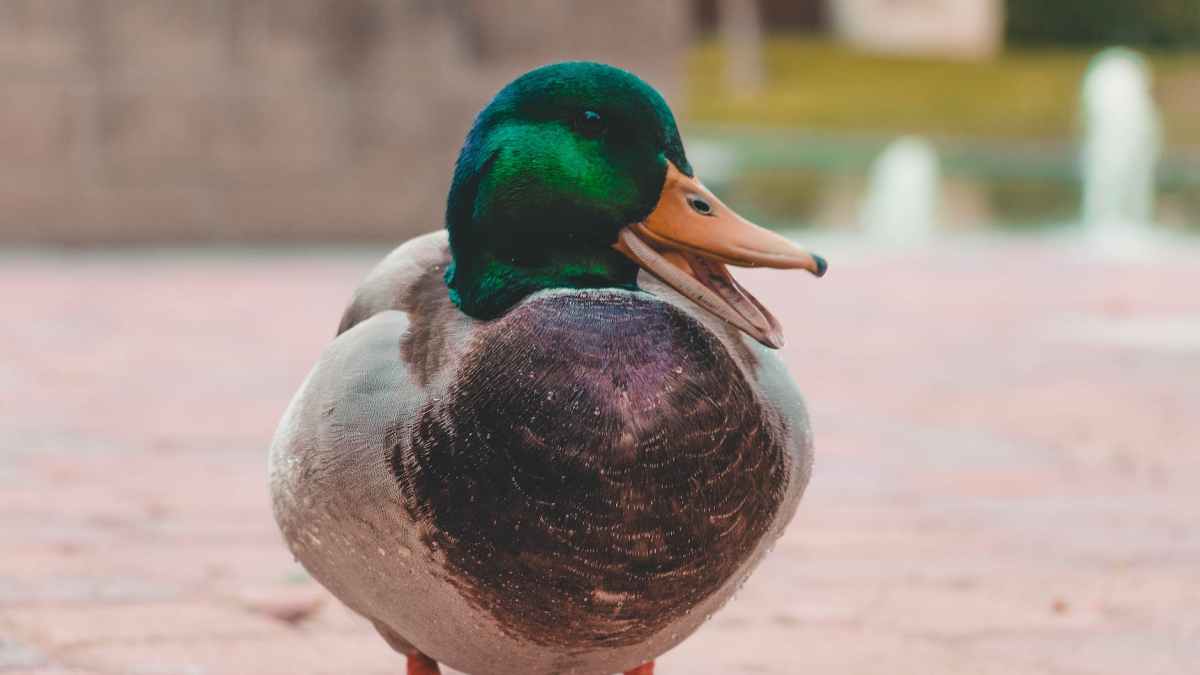
This folklore saying about winter can be put to the test. Although we are close to the end of November, the frost has been hard enough to bear a duck. Not a huge duck but an average mallard.
If this means a mild winter, we’ll soon know. Maybe duck barometers will work as long-term predictors. Showing us a sign of coming foul weather. Ho, ho.

 John Vincent