
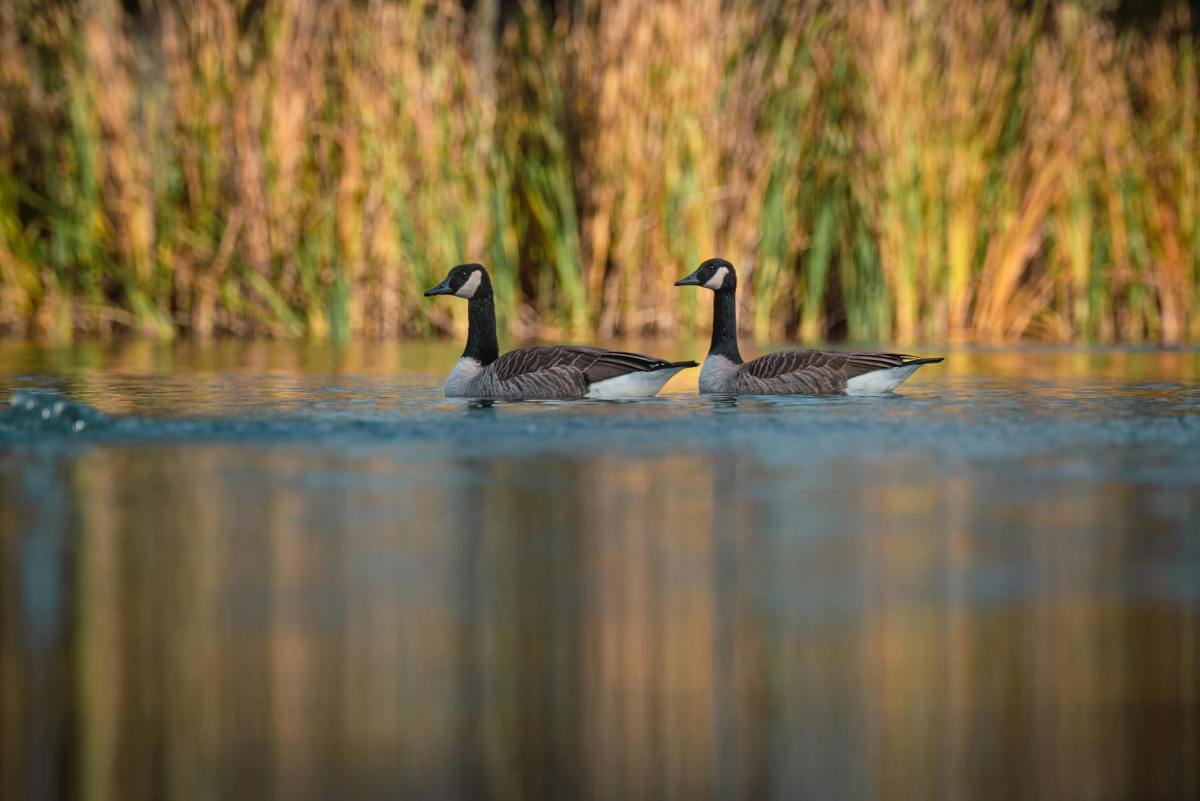
What a contrast. From plus 12 earlier in the week to minus 2. There’s a sheet of white frost covering the fields this morning. The flood water shimmers in the morning sun. Not cold enough to ice over as the water tries to escape back to the river.
I get woken-up to the sound of the 18 or so Canadian Geese who make the boggy grassland next to the River Lambourn[1] their feeding ground. I can understand how they get so big as they graze from dawn to dusk. Their take-off from the water is a long one as they flap furiously to get their great mass airborne. It’s quite a sight as they fly in formation.
These formidable geese are not alone. A few Mallards stray into their territory. For the most part they all seem to get along fine. Plenty of food for everyone. Little grass islands form where the water swirls around. I named one of them duck island.
The geology here is Valley Gravel according to the council’s local plan. I’m not sure what that means but I guess the riverbank will drain fast when the flood water abates. Standing on the ancient bridge on the Oxford Road, I can see that the river Lambourn is shallow and fast running.
I say ancient bridge given the Priory on the other side of the river. The north side. That bridge site certainly dates to the 16th Century. The road must have a long history as it leaves Newbury town and enters the village and environs of the castle of Donnington[2].
I’m imagining the role the area played in the 17th Century. The site of the English Civil War battle, the Second Battle of Newbury. The castle was held by Royalists. It was under siege from the Roundheads camped on this side of the river. The south side.
From what I’ve read so far, the siege was a long one. When it was broken, the defending forces were allowed to escape in honour of the brave fight that they had put up. For whatever reason, in 1646, Parliament voted to demolish the canon damaged castle. Today, only the grounds and gatehouse of the castle remains standing.
It’s nice to be able to look out of my kitchen window and see on the hill such a significant part of English history. The ruin sits on the horizon looking north. Often both the rising and setting sun light it up.
[1] https://www.kennetcatchment.org/catchment/lambourn/
[2] https://www.english-heritage.org.uk/visit/places/donnington-castle/

 John Vincent