
Looked out this morning and there was a couple of geese to add to my list of sightings. The flooded field out the back attracts numerous birds and wildlife. Wet grassland is just right for them to be happy. Egyptian geese[1]. A pair was plodding around. Given their different colouration, I assume they were male and female. One was slightly larger than the other. These two steered well clear of the gaggle of grazing Canadian geese. As geese go these are about twice the size of the Egyptians.
Now there are distinct advantages in having webbed feet. Soggy ground and shallow waters are just right for the duck and goose community. As the light rain returns a couple of pairs of Mallards[2] takeover the riverbank. Swimming around each other and dipping and diving as they go. There’s an abundance of food so I expect to see many more waterfowl in coming days.
It rained overnight so there’s no signs that the flood water as receded this morning. There are ripples on the surface of the flood water as the wind is quite strong and gusty. That has a dying effect. So, the waters may easily follow natures calendar and return to the riverbed in the coming weeks. The trees are still winter bare. Up close they look different with buds already to go. March will be a month of change. The colours will start to change.
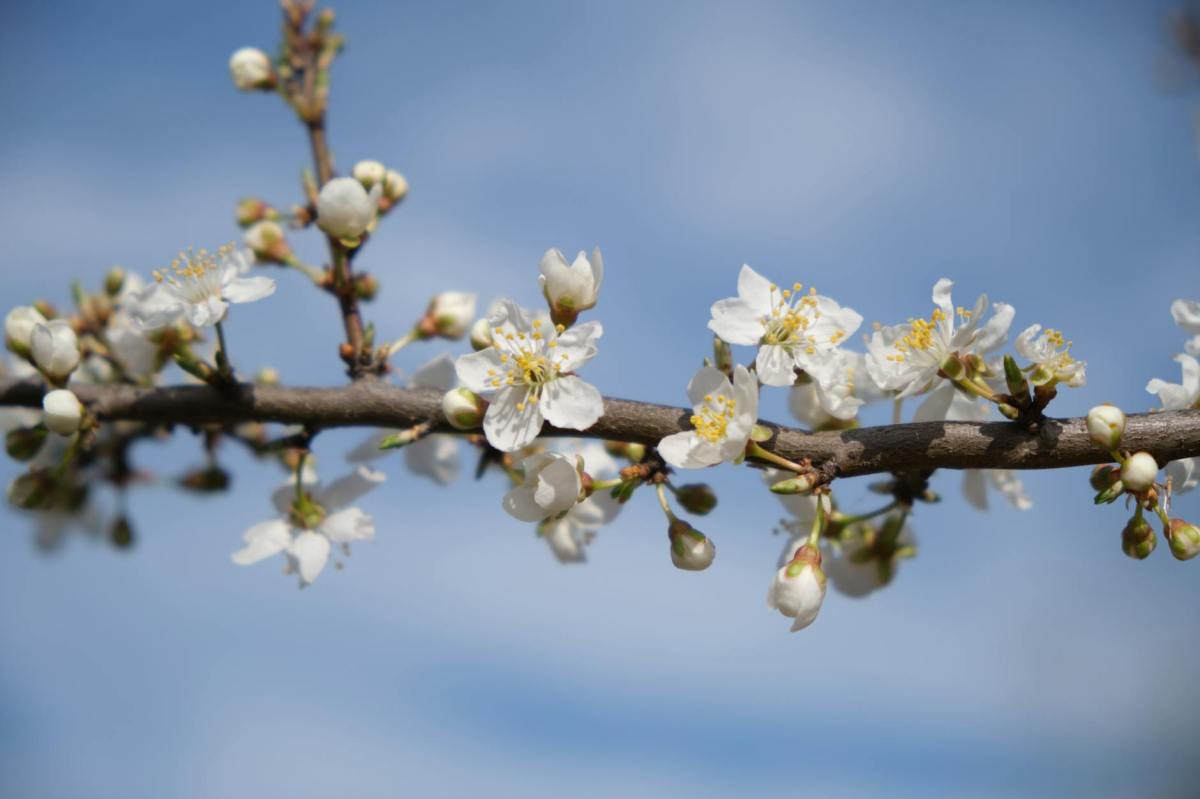
I say these things, but I remember standing in the snow on my March birthday. Winter’s being mild this year. It can still have a sting in its tale if it wants to upset us all. A sudden plunge into ice can still reset the calendar. Snowdrops have almost been and gone. Daffodils are showing at their best. The local hedgerows are full of Blackthorn blooms. That’s early.
I don’t think I’m confusing the Blackthorn[3] and Hawthorn. The Hawthorn has often been considered a symbol of rebirth. That’s associated with the month of May and Springtime. One comes out before the other and seeing so many white flowers in late-February they must be Blackthorn. Even so, flowering now is a marked indicator that the seasons are changing. Climate change?
The blossom of the two hedgerow thorns is similar in shape and size. When they get buffeted by the wind the ground can get covered by a carpet of bright white petals. The distinction is that the Blackthorn has dark round black berries in the autumn. In fact, I’d refer to the whole thorn bush by the name of the berries, namely Sloes. Birds like them but I’d not recommend tasting them given their sharp bitter nature. The Sloe is better known for what it can become. That’s as English as the hedgerows. Sloe Gin[1] has been round for hundreds of years. It’s well worth a go.
[1] https://www.plymouthgin.com/en/product/plymouth-sloe-gin/
[1] https://www.rspb.org.uk/birds-and-wildlife/egyptian-goose
[2] https://www.rspb.org.uk/birds-and-wildlife/mallard
[3] https://www.woodlandtrust.org.uk/trees-woods-and-wildlife/british-trees/a-z-of-british-trees/blackthorn/

 John Vincent