Time

Daily writing prompt
If you didn’t need sleep, what would you do with all the extra time?

Easy. Lot’s more time for social media. No! I joke. I’ve worked hard to resist accumulating hour after hour of screen time. But that addiction will carry a lot of people through an endless night.

Sleep is a luxury. It’s a wonderful restorative time. I’m glad we don’t hibernate like a bear. That would be too much life spent out of touch with the spinning globe. It would be sad if a meteor hit the Earth while I was slumbering. Although, what world I know?

If our bodies were equipped to live without sleep, we’d be machines. Even machines need down time for maintenance. Best resist doing anything productive with that extra time. Maintenance of the mind and body will always be needed. So, better spend that extra time in an activity that keeps the whole person together and sane.

By the way, when I wrote: sleep is a luxury. I was channelling John Cooper Clarke[1]. His line was that not getting sleep is a quick preview of death.


[1] https://johncooperclarke.com/

Daily writing prompt
Beach or mountains? Which do you prefer? Why?

Even if I wanted to answer “mountains”, I couldn’t. You see my early years were spent paddling on the Dorset coast. Not that I’ve got anything against breathtaking mountain walks.

I did all the classic summer things a boy might do in the 1960s. Ride donkeys and build sandcastle on Weymouth beach. Tried stop the tide coming in. That never worked. Ice cream and newspaper wrapped fish and chips. Picked-up seaweed and shells in Swanage.

Idyllic. Not always. Dad driving around forever trying to find a parking space in Bournemouth. Stuck in sweltering hot traffic jams around Corfe Castle[1]. Sunburn.

For me, favourite of all was Studland Bay[2]. Wide open spaces and rolling sand dunes. Those were summer moments that flashed by but last forever in the deep corners of my mind.


[1] https://www.nationaltrust.org.uk/visit/dorset/corfe-castle

[2] https://www.nationaltrust.org.uk/visit/dorset/studland-bay

Daily writing prompt
If you could meet a historical figure, who would it be and why?

It’s one thing to have the fancify idea that just as in “Bill & Ted’s Excellent Adventure[1]”, I’d be able to talk to anyone but that’s just not on. I might meet Socrates, or some other great classical mind and ask questions about the meaning of life.

Let’s face it, nice idea but we wouldn’t understand a word we said to each other. There’s also that divide between the analogue and digital world. Technology 21st Century types take for granted would seem like magic stepping back a century. Thus, dude it’s the modern age where I’d focus attention. Set the dial on my time machine.

Let me go for Richard Feynman[2]. I’d ask how do you communicate complex ideas and make them seem not so complex? Then afterwards I’d be stuck with the dilemma that often strikes. Well, I thought I understood what he was saying but now I’m not so sure.

Strange that Bill & Ted went on their adventure the year Feynman passed on. That year, I was figuring out the space between the analogue and digital world.

If Feynman was busy, I’d go for Carl Sagan.


[1] https://youtu.be/oUDIBzecP1I

[2] https://www.nobelprize.org/prizes/physics/1965/feynman/biographical/

Daily writing prompt
What’s your favorite month of the year? Why?

Beware the Ides of March. What nonsense. March is the start of the New Year. Spring has sprung. Meteorological spring starts on 1st March[1].

Spring is sprung, the grass is ris. I wonders where the birdies is.

They say the birds is on the wing. Ain’t that absurd?

I always thought the wing was on the bird.

That little ditty always reminds me of my father-in-law. Spring has got to be the best time of the year. March is its herald. In ancient Rome the traditional New Year celebrations kicked-off in March. That is until Julius Caesar changed the calendar[2]. Look what happened to him.

Above and beyond all this history, my birthday is in March. So, what better month to celebrate.


[1] https://www.metoffice.gov.uk/weather/learn-about/weather/seasons/spring/when-does-spring-start

[2] https://www.britannica.com/science/Julian-calendar

Daily writing prompt
What’s the first impression you want to give people?

In answer, so much depends on the situation. Clearly, standing on a platform in front to a large audience is different from getting on a train and smiling at fellow passengers.

I almost needn’t say, first impressions are incredibly important. Every textbook echoes that line. For all our advancement and sophistication, judging people in the first couple of minutes we meet them is imbedded. Maybe it’s some ancient human defence mechanism that discriminates between friend and foe. We can be ready to embrace or flee at the drop of a hat.

There’s the core of an answer. First off, in most situations, the impression to give is that of a potential friend. If the people in question are openly threatening, then precisely the opposite comes into play. Call it “caveman” but these human responses are intrinsic.

Daily writing prompt
Is there an age or year of your life you would re-live?

The power of 1976. At an age when the future was a blank page. Specialness of that 12-months, almost unsurpassed in the analogue world. Years of 45 rpm. Music was brilliantly diverse. It wasn’t only Punk bursting onto the scene. Pink Floyd’s pig flew over a London. The Eagles release Hotel California. Dylan, The Stones, Led Zeppelin and Elton John travelled the world. Presley was around. The Beatles continued to be news. Eric Clapton became persona non grata. The range of acts was astonishing, going from the Bee Gees to Bob Marley. From Donna Summer to Queen. The Rocky Horror Picture Show to Abba.

As if to stress the innocence of the time. Filming starts on Star Wars. If a time machine was ready to use at the press of a button, I’d go back and say: you guys may have something with this strange movie. Of course they would ignore me. Lucky me.

Why British Family Farms Face Increasing Tax Pressure

I do get why the UK Labour Government has proposed to change the rules on agricultural property relief[1]. It’s the case that the very largest agricultural estates pay lower average effective inheritance tax rates than the smaller estates. Large agricultural estates are not the ones who need a tax relief.

In yesterday’s budget statement a 100 per cent rate relief will continue to be applicable to the first £1 million of combined agricultural and business assets. That might sound fine to the average British householder. The problem is that in the farming world a threshold of asset value of £1 million is low.

For small holders or hobby farmers, that threshold maybe fine. However, if a productive farm is a viable “modern” business then that threshold is easily exceeded. Looking ahead, even a modest family farm, which is a going concern, is going to tip that tax balance.

On average the value of farmland is over £8000 per acre. The viable family farm I have in mind is no less than 150 acres. Naturally, that number depends on the farm, arable or livestock.

Sadly, the family farm has long been under threat in Britain. Measure like the Government’s latest tax proposal will contribute further to that decline. Why do I say that? Adding to the complexities and expense of family succession means that the next generation of farmers are likely to start their careers with even more debt than their parents.

Today’s family farming is a capital-intensive business. Just look at the price of a new milking machine or any of the latest farm machinery. If there’s a good business income, banks are more than happy to lend money. This then being secured against the assets of land and buildings. So, looking at the asset value alone says little about the viability of a farm business.

Let’s put the question – why have British family farms? Corporations and mega agri-business enterprises can satisfy all our food production needs. Cover the countryside with corporate logos and have done with this rustic tradition. Industrialise the countryside.

Honestly, I don’t think that’s what the British people want. It’s not just sentimentality. The sort of rural sentimentality that gets shown on Sunday evening broadcasts. It’s not just tradition for the sake of tradition.

Today’s family farming is excellent value. Given that we want British farmers to be, not only food producers, but custodians of the countryside, meeting societies environmental goals. That can be done more effectively by people who put their whole heart and soul into the job. There’s a commitment and dedication that comes from preserving the family line.

The Chancellor of the Exchequer has outlined how the new Labour Government will raise money. In this case there’s a need to think again. I suggest that asset value of £1 million for taxation needs to be revisited and revised upward. I do hope the new Chancellor doesn’t want to be remembered as the one who kills-off family farming in Britain.


[1] https://www.gov.uk/government/publications/agricultural-property-relief-and-business-property-relief-reforms/summary-of-reforms-to-agricultural-property-relief-and-business-property-relief

Daily writing prompt
What’s something you believe everyone should know.

“Time is an illusion. Lunchtime doubly so.” With the greatest respect to the author of these words, Douglas Adams*, this is the number one fact to learn and remember.

Everyone you know. Everyone you will ever know. Everyone who has ever been. Time is there. Now, I don’t want to get into the mathematics or physics. That’s not the point I want to make. What’s you should never forget is that the time we have is finite.

We can’t manufacture it. We can’t store it. We can’t buy it. That said, we do experience time in different ways, but the fact remains. Humans, like you and me, on this Earth, have a finite time to do something. Even doing nothing is to do something.

Why the illusion? That’s why I want to step away from the physics. What we experience of time is not linear. Moments drag. Days speed by. Where’s the sense in that? There is none.

My one point to register is that finite means finite. Whatever happens to time and you, use what you have to the best advantage. Even if that’s a long lunch.

Go see “Time and the Conways” if it plays in a theatre near you. Playwright J. B. Priestley loved experimenting with the effects of time and what we do with it.

*The Hitchhiker’s Guide to the Galaxy.

Budgets

You can’t live with them, and you can’t live without them. That’s budgets. Most of us budget even if we don’t write it down. I’ve got a certain amount in my bank account. If I spend more than is stamped at the end of my statement, then trouble may ensure. Not always given our modern dependency on credit. A problem arises only when spending gets out of control.

Mr Micawber cautioned about debt’s downside: “Annual income twenty pounds, annual expenditure nineteen and six, result happiness. Annual income twenty pounds, annual expenditure twenty-pound and six, result misery.” In his time, Charles Dickens was acutely aware of what unsustainable debt could do to people.

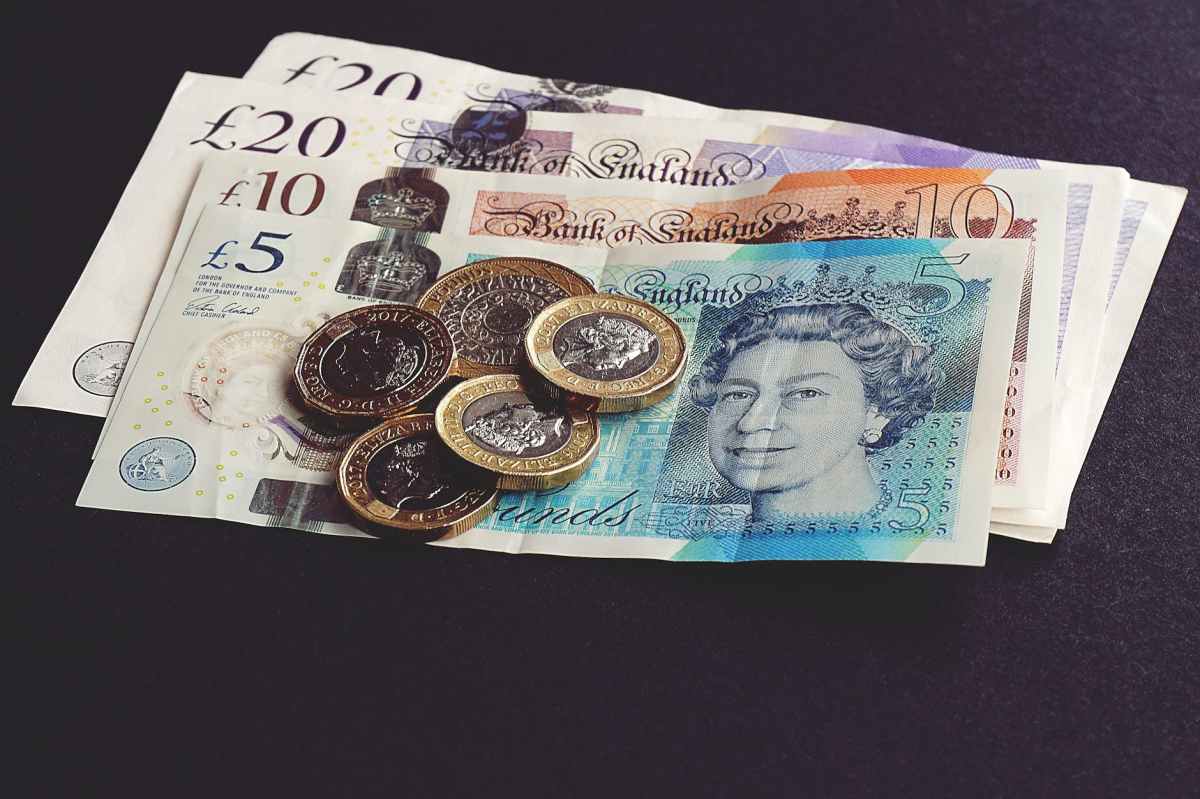
We’ve had weeks where the news media has created a landslide of content on a budget. The repetition of point scoring has got tedious. It’s way out of normal everyday human experience. I don’t know about you, but I can’t easily relate to a number like £1,226 billion[1]. Every year public expenditure totals numbers of that order. It happens. It’s real.

Today, our UK “billion” is a thousand million. That’s spelled out as a one followed by nine noughts. At one time in the past the UK “billion” meant a million million. That’s spelled out as a one followed by twelve noughts. That got dropped for the sake of international harmony.

I have used such numbers in lectures on aviation safety. To think, I often got people glazing over when I talked about ten to the minus nine per flight hour. That’s a billionth of something. A mighty small number. In these cases, a number denoting a probability of something happening.

So, here we are in October getting excited over a change of couple of hundredth of typical annual national expenditure. Not without reason. That figure sound like a small number, and it would be, if it wasn’t for the subject Dickens raises, namely debt.

Wisdom comes from learning from experience. Lessons learned are incredibly valuable. That’s not rocket science. Only we need to factor in how easily we forget bad experiences.

In terms of budgeting, recently two reckless politicians taught us a lot[2]. Truss and Kwarteng sound like a comedy double act or a dodgy back street lawyers office. Those two monster brains had the marvellous idea of borrowing more to give it away. In a short flash of genius what they did increased borrowing costs and spooked just about everyone.

Debt matters. Nation States are not like people, so the home economics analogies don’t stand up. However, borrow too much without being absolutely clear as to the answer for question like – who, what, where, when, why and how and the results are likely to be extremely unpleasant.

Let’s see if the day ends with a pint of beer being more expensive or not. Love them or hate them, budgets are not going away anytime soon.


[1] https://obr.uk/forecasts-in-depth/brief-guides-and-explainers/public-finances/

[2] https://www.niesr.ac.uk/blog/truss-kwarteng-mini-budget-one-year

Daily writing prompt
What does it mean to be a kid at heart?

Two ways of going at this question. If you have ever seen the frolics of a kid then the answer is to have boundless energy jumping on and off of anything that gets in the way. Naturally, I am talking about a young goat. A bale of hay becomes a launching mechanism. A tower to observe the world. Two bales of hay become the peaks of two mountains that have to be traversed in great one leap. Playfully a kid hones its skills and masters gyroscopic balance.

Now, I know what you really meant with that question mark. In the world of Winnie-the-Pooh there’s one character that sums up being youthful, energetic, honest, haplessly and hopelessly optimistic. That fictional character is Tigger. To me he’s the most childlike of Pooh’s woodland friends. So, if you want to remain a child at heart think Tigger.

I suppose I could suggest a third approach. I could get all biblical and say: Truly I tell you, unless you change and become like little children, you will never enter the kingdom of heaven. That doesn’t answer the question. Instead it puts a lot of weight on being a “kid at heart”.