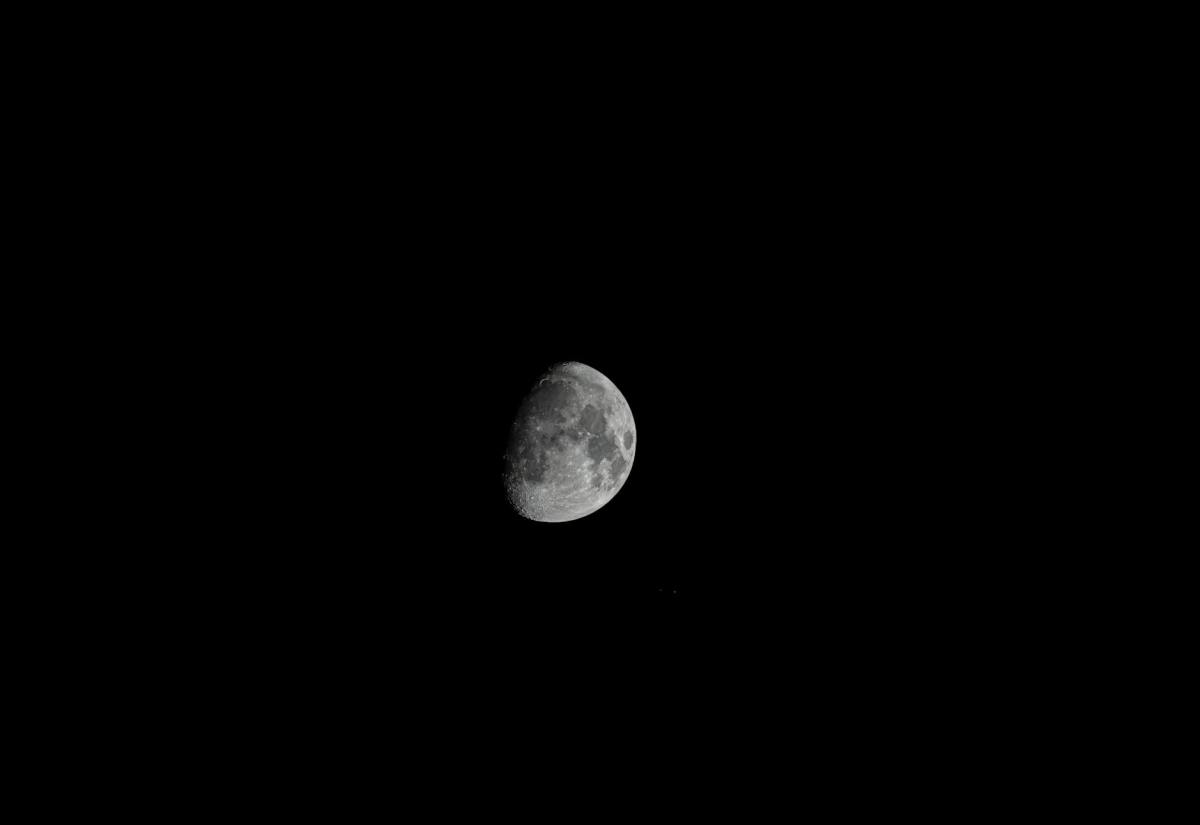
Human Space Travel

It’s right to point out that space exploration is not solely a scientific endeavour. It’s odd to have to point that out. I do so because there are some purists who think that money should only be spent of space exploration if there’s a tangible scientific gain to be had. This thinking goes back to the agreement that public funds should only be spent of Earthy concerns. A glance at the extensive list of trouble that persist around the globe is one reason to focus on Terra firma rather than up at the heavens. That said, the choice is rarely simple.

Then there’s the accusation that exploration, of any kind, is intrinsically imperial. Powerful entities looking for sources of future dominance and wealth. This is not entirely wrong given humanity’s history of plundering resources from wherever they come. Minerals and trade routes being a couple of the primary sources of interest. A strong political will can be amassed to compete to be first to get a foothold on new territory. Despite all the above there’s something more complex going on.

The recent Artemis II space mission may not have been a great boost to humanity’s scientific knowledge. This adventurous lunar fly-by mission was more about proving technology than gathering an abundance of discoveries. Afterall, the far-side of the Moon can quite adequately be surveyed by automated spacecraft. Much as is being done by robotic machines on Mars.

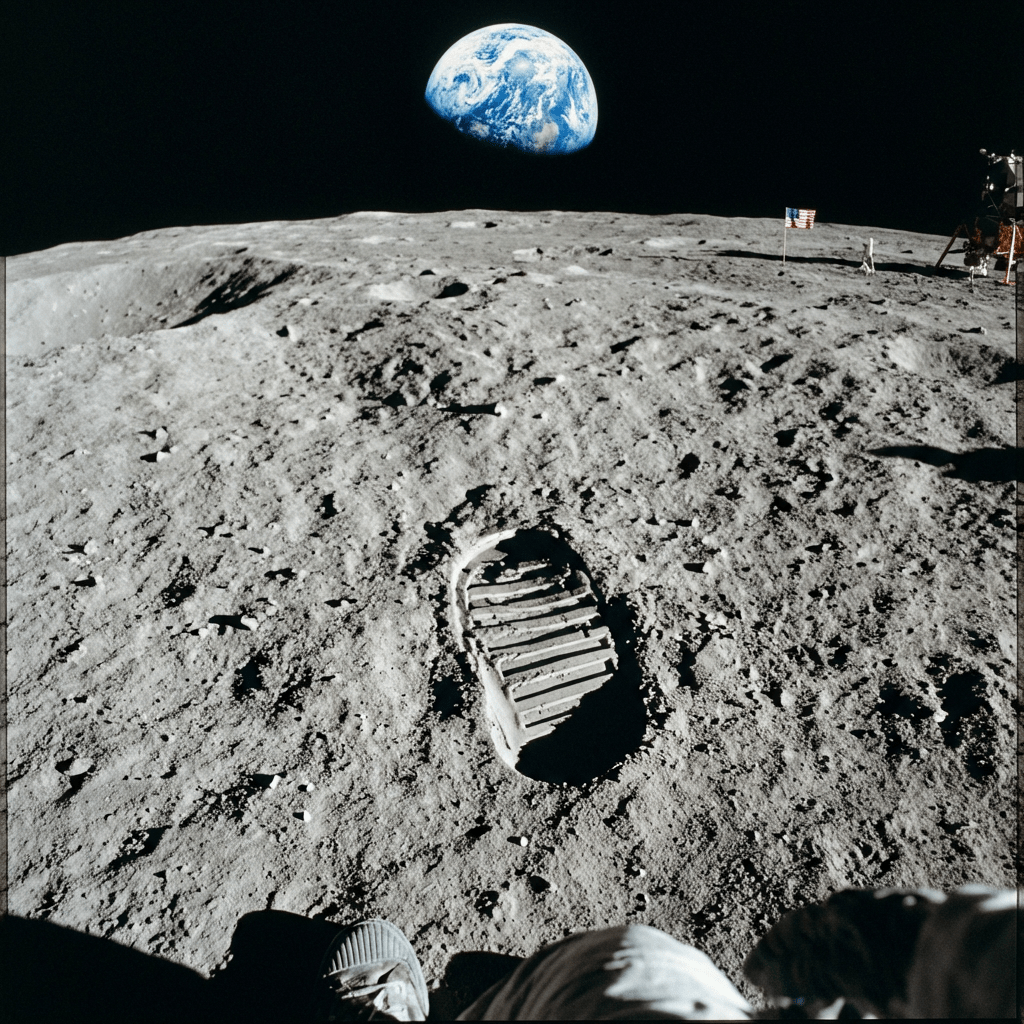
I think there’s little doubt that 1st to 11th April 2026 will be recorded in the history books. If for no other reason that the gap between the Apollo space missions and Artemis. Like so many schoolboys in the 1960s, I watched those black and white TV images of men on the Moon, as they happened. I became an engineer. Would that have happened anyway? Probably, but I’m not discounting the inspirational impact of the Apollo missions.

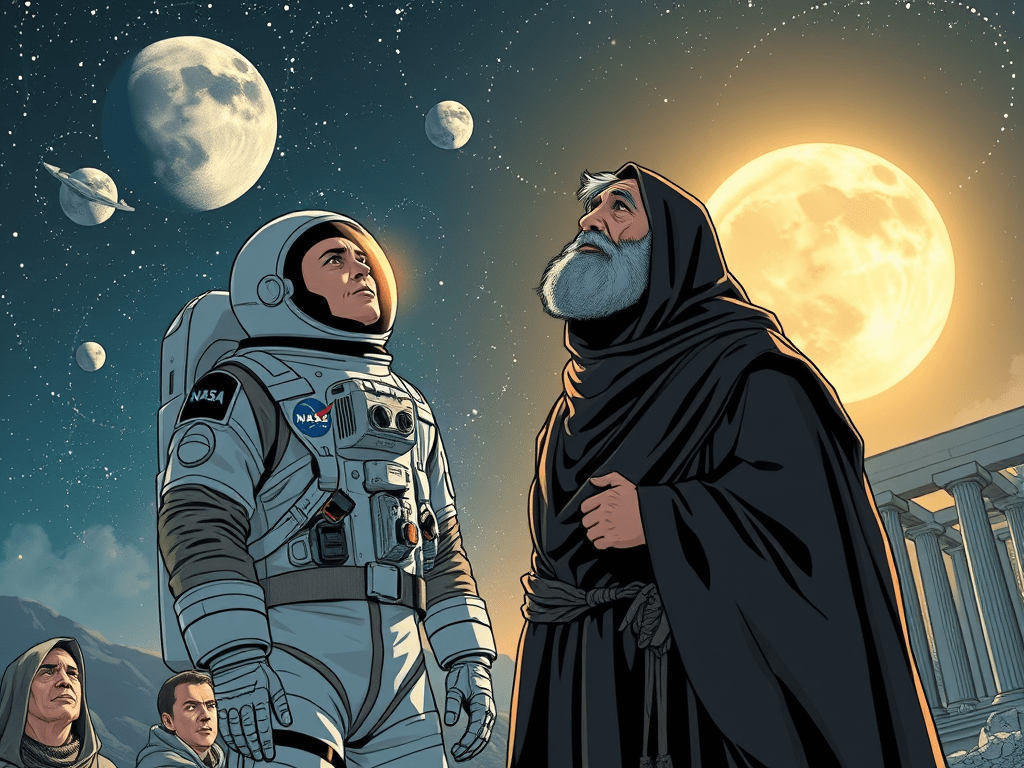
[What would we ever do without the writings of the ancient Greeks and Romans. Certainly, naming new space missions would be a lot harder.]

Do we need crewed missions in future? Given the advances in automation and autonomy that have taken place in the last 50-years, so much can be achieved without the need for humans on-board a spacecraft. However, this is not a binary argument. There are, and always will be, the need to take human experience to the absolute limits. President Kennedy cited George Mallory for a reason to explores space, “Because it’s there,” he said.

The simple notion that humans should be constrained and confined to Terra firma runs contrary to our intrinsic nature. Although societies do become more risk adverse as they acquire the comforts of economic success, there’s still an appetite for exploration even if it entails great safety risks. The allure of being the first does not diminish.

Ideally, the combination of adventure and discovery go hand in hand. Space exploration is not just indulging the most adventurous amongst us. Thus, I go back to my proposition that there something more complex going on.

The ancient Greeks and Romans could help. For what is humanity’s destiny? Ad Astra has a meaning. Far more than the movie of that name. Not one of my favourite movies either.

There’s an inevitability that humanity will go to the stars. That is, if in the meantime wars or environmental degradation do not consume us. Exploration is part of a natural progression of intelligent life. It maybe (likely to be) happened elsewhere in the universe too.
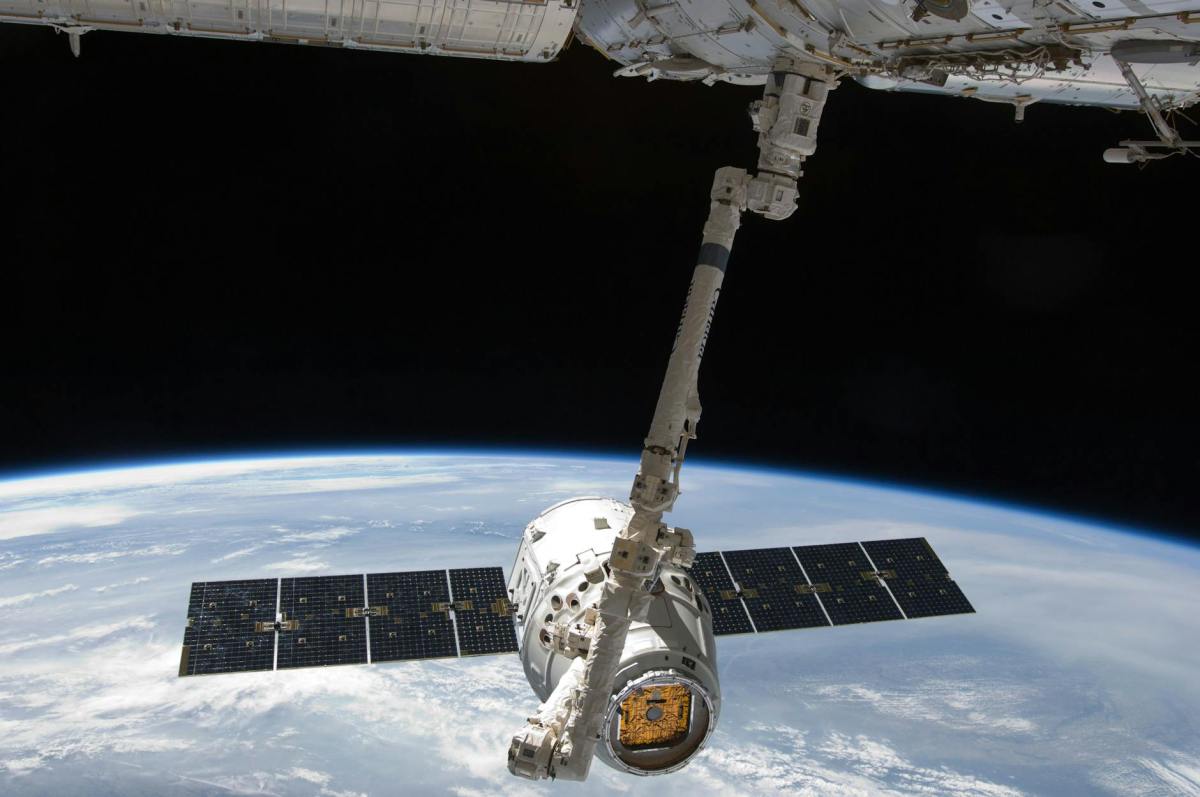
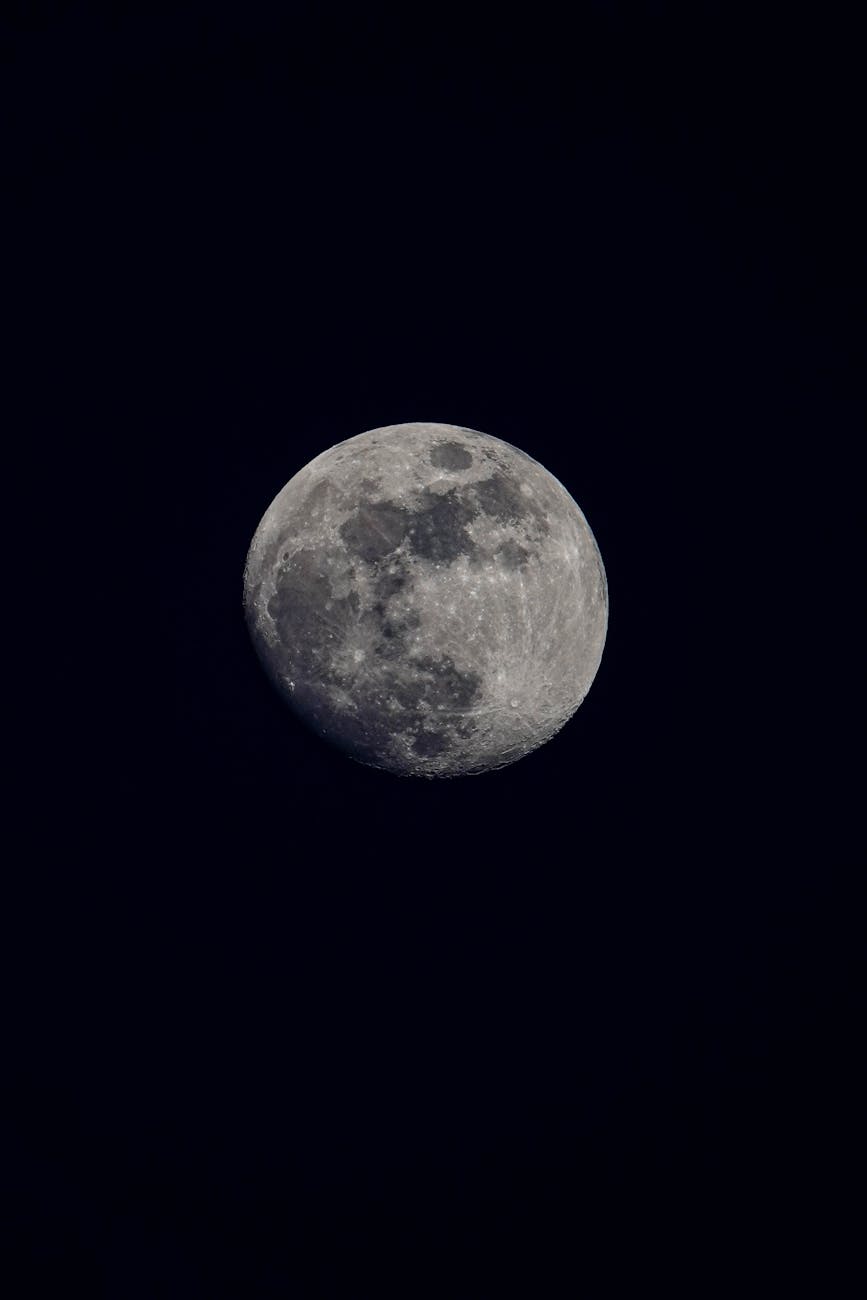
Journey to and from Space

Words count. Even so, this is the age of the image. An almost infinite variety of pixels arranged to capture a moment in time. That’s what has come back from the Moon along with the safe return of the astronauts last night. When I switched the radio at around one in the morning the story was unfolding. Methodical commentary following s flight back to Earth step by step.

There’s nothing like live suspense. The Moon mission was not complete until the safety of everyone involved was assured. Along with launch, re-entry into the Earth’s atmosphere is still the biggest challenge in human space flight. As happened with the space shuttle tragedy, it feels doubly tragic to successfully undertake a mission and not make it home.

Outstanding design, meticulous planning, precision execution and good fortune all come together to make a transition from the void of space to the surface of Earth a success. It’s been said a lot of times; surely there’s a better way of getting home. Hurling a capsule along a path, to make a trajectory at incredible speed, heating like a furnace, is necessary but has an element of crudity about it.

The method used to re-enter the Earth’s atmosphere works. What’s unsettling is that it’s a million miles from the fanciful methods that are frequently depicted in science fiction. Almost as if nature is adverse to humans leaving the planet. Earth’s atmosphere is the greatest asset life has but it’s also a tough barrier. Transitioning it will never be simple.

Various imaginative ideas have been presented over the decades. Yet, they are picture perfect illustrations and little more. For example, the space elevator[1] is a viable concept. The downside is that humanity does not have the technology to make it work. If it did the problem would be marshalling the international cooperation needed to make it possible. Then sustaining that cooperation for generations.

Today we are stuck with methods that are one shot technologies. Costly and throw away. Huge rockets that are discarded. Spacecraft that become museum pieces, if the make it back.

It occurs to me that I have been born into the space age. An age when humanity is taking baby steps exploring the practically infinite. To go further a next step, maybe decades ahead, will open greater possibilities. For now, the sheer cost of coming and going from space will shape everything that is done.

The prospect of commercialisation is real. Depending solely on State entities to fund every mission has sever limitations. However, the commercial enterprises that can take on the challenge of space flight are few in number. What’s needed is a construction of regulatory frameworks that fairly and soundly distribute both costs and benefits for future projects.

I’d place emphasis on this work needing to be for all humanity. Not easy to do given the global history of commercial enterprises. Having a new East India Company[2] for space exploitation is not an attractive prospect.


[1] https://science.howstuffworks.com/space-elevator.htm

[2] https://en.wikipedia.org/wiki/East_India_Company

Humanity’s Next Frontier Awaits

This April the first was marked by a moment that will go down in the history books. Tens of thousands of people who directed their efforts to building a new generation of spacecraft will see their labours rewarded. People with a vision that looks beyond the horizon have set in train a mission that will demonstrate that we are not confined to this rocky planet. Space – the final frontier. A vast frontier that’s there to be explored. Discoveries await.

By venturing beyond any humans in history, four brave astronauts represent us all. They started their journey in America, but when they look back all they will see is Earth. The dark of space with this lush globe brightly illuminated by our Sun. Ahead is a bright rocky sphere.

Not for one moment should we look upon this Moon-bound space mission as straightforward. There’s one thing that is absolute about the void of space. It’s a hostile environment for humans. Every system that is built into a spacecraft must work as intended. Contingencies need to be planned for every possibility.

This space mission is made possible because of partnerships. Europe[1] , US[2] and Canada working together for a common goal. What is known as the Artemis program aims to make the Moon accessible. To effectively shorten the distance between the Earth and its satellite.

There is a whole world benefit in moving from the Moon as a scientific curiosity to a place where humans can live and work. This is not a binary argument. We must solve our problems on Earth as well as exporting our environment.

Space exploration does help us see our fragile Earth in context. Everything beyond Earth shows no concern for our fate. In fact, it’s imperative that we gain as much knowledge as is possible about the near-Earth environment. A Moon base is a viable place to do just that.

My hope is that this remains a fundamentally civil enterprise. Such that the findings derived from the Moon’s exploration are for all humanity. It’s not a place to continue the conflicts that scare our home planet. I maybe idealistic. However, it’s for humanity to frame the rules that will apply on the Moon’s surface. Rules will be needed.

My hope is that this Moon mission goes smoothly and that everyone is returned safely back to Earth. That a new generation looks up at the Moon and sees it less distant. With the experience gained the next Moon mission should be able to go further.


[1] https://www.esa.int/

[2] https://www.nasa.gov/

Return to the Moon

Return to the Moon is the aim of the latest American project to venture into space. It’s an ambitious attempt to get to the Moon and eventually to establish a base on its surface. 

For fans of the British TV series Space 1999 it’s a possible realisation of Moon base Alpha. Although the reality is likely to be rather more modest in size. As far as we know there’s no aliens to repel or possibility of being spun into the empty void of space.

Setting up camp on a Moon, with no atmosphere and much less gravitational pull than Earth, is not for the faint hearted. Just the act of landing on it without crashing into it takes considerable skill. I remember early computer games based on a simple lunar lander. Block graphics written in BASIC floating across the screen.

Look as hard as you can, there are no signs of cows jumping this morning. That nursery rhyme is to be left on the shelf. If the Moon bound astronauts should see a cow on their mission, then I’m sure that it’s more a case of something they ate rather than a bovine space traveller.

This space mission should take humans further away from our home planet than any human has travelled. Hopefully this will happen as per the script. It seems strange that it has taken until 2026 to mark this great achievement.

Makes me think of the HHGTTG and the reference to humans being so lazy that they can’t be bothered to travel to their closest star. Afterall the plans for the demolition of the Earth have been sitting there for all to see for eons.

In fictional space travel terms this mission to the Moon is baby steps. A hop to our constant satellite. Both an opportunity to admire it close and look back at the Earth. To look back to see the whole Earth. Not a single boundary fence or line on a map. Not a palace or bunker.

Passing over the dark side of the Moon has been done before. Immortalised by Pink Floyd, the dark side is a unique place that few have seen with their own eyes. Yes, a spacecraft has landed there but there remains something spooky about the face that’s turned away from us.

One thing is for sure. Should they succeed, these 21st century astronauts can report back to US President Trump. They can finally confirm that the Moon is not made of green cheese. Rumours may persist amongst the flat earthers. Conspiracy theories do the rounds on a regular basis. Modern popular culture hasn’t embraced the green cheese theory – yet.

Return to the Moon is a grand ambition. Not a lot of practical benefits to be gained in the short-term. This is more a venture for the long-term. If we are to become a spacefaring race, then these are steps that must be taken.

Life in the 22nd Century

It’s not an original thought but science, and its advancement, is like a venerable oak tree. Roots spread over a large area, are not seen, but are critical to the health of the whole tree. Branches expand as the tree grows. Branches divide, some branches fade and others gain ever more strength. A tree that lives as long as a civilisation, ever changing.

I put this view forward only to admit that there are flaws with this way of thinking. For a start, in the past, a branch of science may have been pursued in a pure manner. Accumulating ever more knowledge on a specific subject. Now, the branches of science have become far more intertwined. Complexity is a given.

This makes a futurologist job harder. It’s no good to dream along straight lines. To see progressive development as the most likely direction. In the past, there was mileage in projecting forward along a clear line of thinking. Take for example the opening up of the atomic world. Futurologist in the 1950s imagined a world of limitless energy. Inexhaustible sources of electrical power that would be cheep and available to all. For good or ill, the age of plenty didn’t happen. That doesn’t reduce the importance of fundamental discoveries. It cautions us in extrapolating from a simple beginning to a fantastic new world.

What will life in the 22nd Century be like? I can say with certainty that I will not see the year 3000. Well, that is unless the cryogenics of science fiction stories soon becomes reality.

One approach is to look back 75 years. Compare and contrast. Then look forward 75 years. That is factoring in an acceleration in discoveries and the exploitation. And as I’ve alluded above not being shy of growing complexity.

This is again an approach to be taken with a fair degree of caution. Back in the 1950s there was talk of electronic brains, as the computer emerged as a viable and useful machine. What was imagined then is now quite different. That use of the word “brain” isn’t common parlance. Instead, the advent of so-called artificial intelligence is becoming everyday language.

Another set of cautionary factors are trying to guess the branches of the tree that will decay and fall. What seems promising based on current technology only to be bypassed by discovery and innovation. Here I’m thinking that the building of massive power-hungry data farms may be a technological cul-de-sac. Vulnerable and hugely expensive physical infrastructure that’s out of date the minute it’s switched on.

Each of us has a brain that weighs a lot less than a room full of cabinets of conventional electronics. Nature manages vast amounts of data without a power station in tow.

In the year 3000, I maintain we will have a rich and rewarding intellectual life. It will be different in form, although the things that amuse and entertain us may not be so different. The themes of a Greek play are still likely to be echoed in the stories of the next millennia.

Artificial intelligence will be a junk yard term. The whole of the world of data communication and processing will be hidden under layers of obscuration. It’s possible that a form of agent will be overseeing the mechanisms for providing the services we demand. The great challenge for democracies will be how to ensure that agent works for the public good. Not so easy.

From Daedalus to Artemis

Being in good company is always nice. That spirit of experimentation doesn’t suite everyone. Now, I find myself in company of a NASA astronaut and an 12th Century English Monk. All in one week.

I stumbled across the NASA App[1] last evening. I hadn’t reckoned at that being available on my smart Sony TV. There it was. So, it only seemed right to download it and check up on what’s going on with the current Artemis mission. Other News told of delays and troubles with the launch vehicle that’s to send astronauts to circle the Moon. Setbacks are common in space flight so that’s not an issue to be alarmed about.

[Whatever would we do without the Ancient Greeks. Artemis, Apollo, Mercury, Gemini[2]].

This is a fundamentally important space mission given that it’s the first-time humans will have ventured so far since the days of the Apollo missions. Sending four astronauts around Earth’s satellite is a hard task to undertake. It’s aimed at establishing a means to get to the Moon on a regular basis.

Apollo spacecraft did this journey when computers were relatively primitive machines. Artemis has the advantage of a technical capability that is many fold greater. The problem is that sheer complexity and society’s tolerance for safety risk has moved on since the 1960s.

Anyway, the tale told, in interview of one of the Artemis astronauts is one of jumping off a barn roof as a young lad. Constructing a homemade parachute and trying it out. Having that freedom of a life growing-up on a farm and that appetite for experimentation. I was thinking, been there, done that and lived to tell the tale. In my previous scribblings I’ve mentioned the large red Dutch hay barn that was part of my youth.

Back to the Greeks. It’s myth but there may have been an element of truth in it. A map of modern Greece makes it clear that the islands of Ikaria and Crete are separated by a great distance. So, suggesting that a father and son in ancient time flew from one to the other can’t be true. However, that doesn’t dismiss the possibility that the Greeks experimented with the possibility of human flight.

So, the myth goes, Daedalus was the design authority for a method of flying which does not come recommended. Strapping on wings made of wax and feathers is a 100% risky venture. Daedalus was, if a real person, an imaginative ancient inventor. An inspiration to others. In this century it’s best to interpret the famous myth of flight as one of experimentation in a way that is fully respectful of the risks involved.

Coincidentally, this week, more by accident than intention. It’s a long story. I visited the town of Malmsbury. Inspired by the story of Daedalus, Monk Eilmer of Malmesbury[3] has solid claim to be the first European to fly. It wasn’t an entirely successful flight, but it was a flight. In the 12th Century he leapt from a church tower with wings of his own invention and survived.

Monk Eilmer of Malmesbury did end up with broken legs and a place in history. It would be unwise to repeat his early experiment as an example of human flight. That is unless a crude glider was replaced by four rotors, electric motors, some electronics and a powerful battery.

I share the hazards of a technical ability. Luckily my youthful attempts at flying with a parachute made of black polythene sheeting from a red barn roof didn’t result in any broken bones. Good luck to all who fly. Especially those who travel the furthest.


[1] https://www.nasa.gov/nasa-app/

[2] https://www.greeknewsagenda.gr/from-olympus-to-the-universe-where-greek-mythology-meets-nasa-missions/

[3] https://en.wikipedia.org/wiki/Eilmer_of_Malmesbury

Exploring Space: A Journey

I haven’t got many of my childhood Ladybird books. One I have kept in good condition is “Exploring Space.” It’s got the characteristic illustrations and simple stories that are made to captivate. This book is the revised edition that must date from sometime after 1971[1]. The front cover has an illustration of a moon lander floating above the moon. It’s a picture that says – look what we can do, this is the tip of the iceberg. Such an optimistic outlook.

Most of my career has been in the aerospace business. More specifically civil aviation. For short while, I did get involved in building ground test equipment for satellite systems. Some of the people I worked with built the Giotto spacecraft in the UK. The mission was to study Halley’s Comet. This spacecraft, launched in 1985, took close-up images of the comet. It discovered organic material within the comet and proved that a spacecraft could cope with the harsh conditions of such a flyby. 

My interest in space, and the complexities of getting there has been with me for a long time. It’s the ultimate adventure. It also shows what can be done by international cooperation. Giotto was the European Space Agency (ESA) first deep-space mission.

Mention the word interplanetary and what comes to mind? For people of my age. The Carpenters’ version of the song “Calling Occupants of Interplanetary Craft”. It’s an eccentric, but successful 1970s pop song about talking to aliens. It’s a cry for help that is as relevant now as it was then. “Please come in peace and help us in our earthly problems.” If ever we humans could do with help from a more advanced civilization, it’s right now.

A sense of wonder about the heavens is as old as our human story. What’s up there? Could we live there? Are there others living there already?

I like the idea of an English bishop[2] in the 1630s. An early science fiction writer he imagined a flight into space in a craft pulled by a flock of wild swans. Ten to be precise. Since there are plenty of swans here in the English town of Newbury, I thought about investigating that idea. Maybe not.

Last evening, for the first time, I visited the British Interplanetary Society (BIS)[3] at Arthur C. Clarke House in London. Their HQ is in Lambeth. Can’t say I like that part of London at all. It’s a peculiar mix of sterile skyscrapers and spaces waiting to be re-developed. Old London has been pushed aside.

The BIS has a long history. It’s no fly by night organisation. Not as far back as the English bishop mentioned above, but more than 90-years extant. They have promoted thoughts and ideas that go way beyond past achievements. Trying to imagine what a future may look like if our capabilities and drive for exploration continue to advance here on earth. I think there’s always a need for that creative imagination to push the boundaries of what’s possible.

This week has been Space Week[4]. A week to highlight all things space. Back in 1999, the United Nations (UN) declared that World Space Week would be every year from 4 to 11 October. For this celebration, this year, the BIS had put on an evening event called: Living in Space: A World Space Week Special Panel.

I won’t say too much only that it was a fascinating evening. We were a small gathering full of questions. BIS had assembled a prestigious panel of experienced individuals. There wasn’t much in terms of the practicalities of living and working in space that didn’t get discussed.

I’m reminded that despite the hostility of the space environment for our biology, what we know is that all the materials of which the earth is made are there waiting for us. Constructing habitats, with the robotics we now have, isn’t just science fiction anymore.


[1] https://www.royalmint.com/discover/decimalisation/

[2] Francis Godwin (1562–1633)

[3] https://www.bis-space.com/

[4] https://www.worldspaceweek.org/

Why ‘Artificial’ in AI May Be Misleading: A Deeper Look

On reflection it seems strange to me that the biggest commercial push in technology should be called Artificial Intelligence (AI). Universally, this term has seeped into the daily media as being the only form of shorthand for the coming transformation in our lives.

Generally, the word “artificial” isn’t associated with desirable qualities. If I say that it’s opposite is “natural” then there is a wide gulf between the two. It couldn’t be clearer. Place a plastic garden chair next to an antique wooden chair – case proven.

Imagine a marketing campaign for artificial cosmetics as opposed to natural cosmetics. Which one do you think would be the more successful? It’s honest to say that a product is artificial given that it’s manufactured but it’s much more appealing to talk about its natural roots.

A desire to elevate natural content has a historical context. It’s the industrial revolution that provided society with a rich wealth of choice. Trouble is that a legacy image of dark satanic mills[1] and grim-faces of exploited workers is written deep into our culture. The natural world was assaulted and abused by the unstoppable steam roller of the industrial revolution.

It’s reasonable to refer to a complex digital system as an artifact. Not in the way of an archaeological discovery. More like a popular game, chess, checkers or go, in that it’s extant and associated with a set of practices and rules.

Today, AI doesn’t exist in nature. It may be inspired by nature, in terms of analogies with the workings of our brains. Neural networks and memory. Interconnections of circuits and wires and their arrangements are a human creation.

Having written the above, it does make me think; what will happen in 1000 years? A long time for our social structures and organisation but no time at all for any inhabitants of the Earth. Will someone be writing academic tones on the natural history of computers? Humans will be looking at them, and their evolution wondering how and why they got to do what they do. Much as we might now study ravens, rats and rabbits.

Surely AI will evolve. A natural process. Current systems will inevitably have deficiencies and flaws that get corrected in future generations. Experimentation is a human domain. Give it several decades and machines will be doing it for themselves.

The word “artificial” has a big downside. Although I’m having a lot of difficulty in thinking of a better general word. In my long-term scenario, what’s coming is a new branch of evolution. We know, the complexity of human behaviour is largely conditioned by our environment. We adapt. What AI may become, continuity dependent, will likely follow a similar path.

Whenever I visit the Natural History Museum[2] in London I like to look in on our ancestors. Today, our species, Homo sapiens, is the only human living. We once lived amongst our other human ancestors. Homo is the Latin word for “human” and sapiens is derived from a Latin word meaning “wise”.

There’s a story for you. Will AI eventually become Machina sapiens?


[1] “Dark Satanic Mills” is a phrase from William Blake’s poem.

[2] https://www.nhm.ac.uk/discover/the-origin-of-our-species.html

International Collaboration in Space

It’s only taken 20,000 years for Homo sapiens to migrate to the American continent and then decided to industrialise the Moon. Just imagine what the next 20,000 years has in store.

Putting nuclear power on the Moon is a possible enabler for a future Moonbase. Considering the length of time it has taken since the last footsteps on the Moon, a Moonbase is long overdue. That said, going to a faraway place where there’s an abundance of solar energy potential it’s an interesting development that nuclear power is given a priority.

My view is that exploration beyond Earth is a matter for the whole of humanity. Going to the Moon should be an international endeavour. There’s good reason to cooperate when it comes to exploration. For a start space exploration is incredibly hard to do. Rockets explode with an unsettling degree of frequency.

Modern humans have gone from tens of thousands on one continent to what may top ten billion on Earth. It’s no wonder space, the final frontier, beckons. Trouble is we have evolved as specialist on this planet. Not well adapted to the space environment. If our wandering species is to venture into the void, we need to be mighty determined. This will be hard. The hardest effort ever made.

It would be absurd for individual nations to establish separate camps on the Moon. The space race is a concocted nonsense. More flag waving PR than serious sense. Why do I say this?

One: Demand on resources, to build, develop and maintain, a space presence is high. Sharing costs has benefits when planning for the long-term. Continuing costs can be volatile.

Two: In the event of the almost inevitable failures and setbacks, better to have partners to create different ways and means to recover or mount rescues in the worst-case scenarios.

Three: Partners can specialise. Not everyone has to do everything all the time. Afterall, that’s how our modern society came about in the first place.

Four: Cooperative planning means more gets done at the same time. Duplication and fragmentation of efforts don’t serve the great goal of exploration.

Five: Earth’s people are interconnected and interdependent. Even small Moon based colonies will inevitably be the same. Reliant on connections, locally as much as to a distant home.  

As a spin off, making exportation an international endeavour can bring us together on this divided planet too. 

Exploration and Innovation

Is there a human on the planet who has never seen the Moon? I guess, there must be a small number. The Earth’s satellite comes and goes from the night sky. Its constancy can’t be denied. Lighting the way when it’s full.

Accurate measurements say that the Moon is drifting away from us. The pace is nothing to be concerned about. It’s not going to become a free flying object careering across the universe. Space 1999[1] is pure fiction. Let’s face it we haven’t even got a working Moon Base here in 2025.

What motivated humans to go to the Moon in the 1960s? The simplest answer is the explorer’s quote: because it’s there. A quote that can be applied to any difficult journey that’s being taken for the first time. It implies a human longing to explore. An insatiable desire to go where no one has gone before. That’s nice, only it’s a partial story.

Technology accelerated in the post-war era as science and engineering built upon the discoveries and inventions that conflict drove. Then the promise of peace dissolved into the Cold War. Sides arranged in immoveable ideological opposition. The technological race was on. Intense competition drove the need to be display global superiority.

Potentially destructive forces were, for once, channeled into a civil project of enormous size. The Apollo missions. The aims and objectives of which were “civil” in nature, however the resulting innovations had universal applications. Companies that made fighter jets and missiles turned their hands to space vehicles. Early rockets were adaptations of intercontinental missiles.

1969’s moon landing put down a marker in history that will be talked of in a thousand years. Putting humans on the Moon for the first time is one of the ultimate firsts. That first “small step for man” may be as important as the first Homo sapiens stepping out of Africa. A signpost pointed to what was possible.

More than five decades have gone by. Instead of looking up to the heavens we now look down to our mobile phones. Rather than applying our intelligence to exploration we strive to make machines that can surpass us. Of course this is not a true characterisation. Exploration has merely taken a different a direction.

Will humans step into the final frontier again? Yes, but not as the number one priority. Plans to return to the Moon exist. It’s the intense competition that drove the Apollo missions that is missing. The advantage of being first to establish a working Moon Base is not so overwhelming. Even this base as a stepping stone to the planet Mars is viewed as a longer term ambition.

One advantage of this century over the last is the advances in automation and robotics that have become commonplace. Modern humans don’t need to do everything with our hands. Complex machines can do much of the work that needs to be done. Footsteps on another planet can wait a while.

Enough of us continue to be amazed and inspired by space exploration. The challenge is not to achieve one goal. It’s to achieve many.

POST: I watched Capricorn One, the 1970s movie about a fake Mars mission. It could do with a remake. In many ways it is easier to fake now than it was with film and colour televisions the size of washing machines.


[1] https://www.imdb.com/title/tt0072564/