
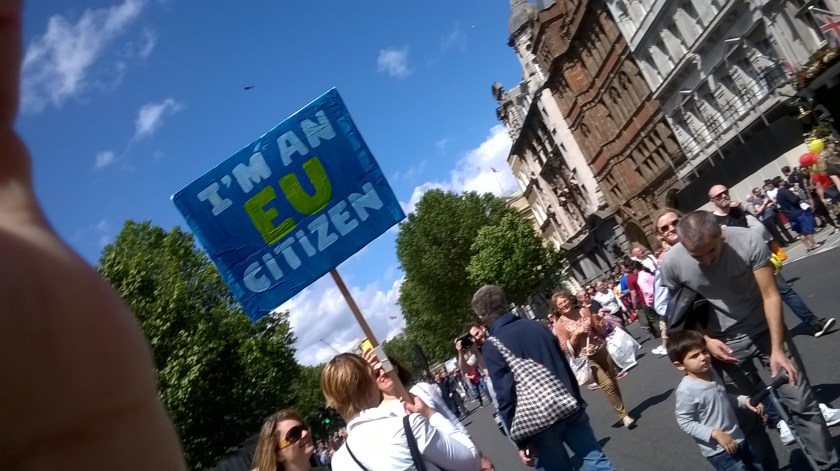
 The outcome of the EU Referendum has left many of us shocked. There’s still a sense of disbelief that a small majority is driving such a massive change in this Country. The emotional bonds that bind Europeans are deep rooted. That’s a reason why having this terrible divorce forced upon the nation is overwhelmingly depressing. One foolish gambling British Prime Minister threw the dice and lost his shirt and ours too.
Every citizen in the European Union is European. Granted the EU is one part of Europe. Our European family comes together in different ways and it can be counted as over 50 Countries. Although Britain sits at the North West corner of the continent its every bit as European as the continental mainland. There isn’t a moment in our history when our affairs haven’t been intertwined. Even the builders of Stonehenge traded with tribes beyond these islands.
It was fascinating to listen to the author Clive James on Channel 4 News, last evening. Although he edged towards the leave camp his overwhelming reflection was how embedded we are in European culture. Any view from afar places Britain firmly and squarely in Europe. Socially, culturally and geographically our place can’t be denied.
Now, in these uncertain times there are more questions than answers. Uncertainty isn’t just about numbers it’s about how people feel about the future. Ironically, prolonged uncertainty may be one of the only certainties in the next couple of years.

 With only a few days left to register to vote for the EU referendum, it’s sad to see doorsteps hit by glossy misleading propaganda. The leave campaigners are telling massive whoppers at every turn. Here are a few examples from a newspaper that came through my letter box this week.
 It’s so basic. It’s there in just about every religion. It’s there in the modern secular world too. It’s written in just about every ancient writing about human behaviour.
 John Vincent