
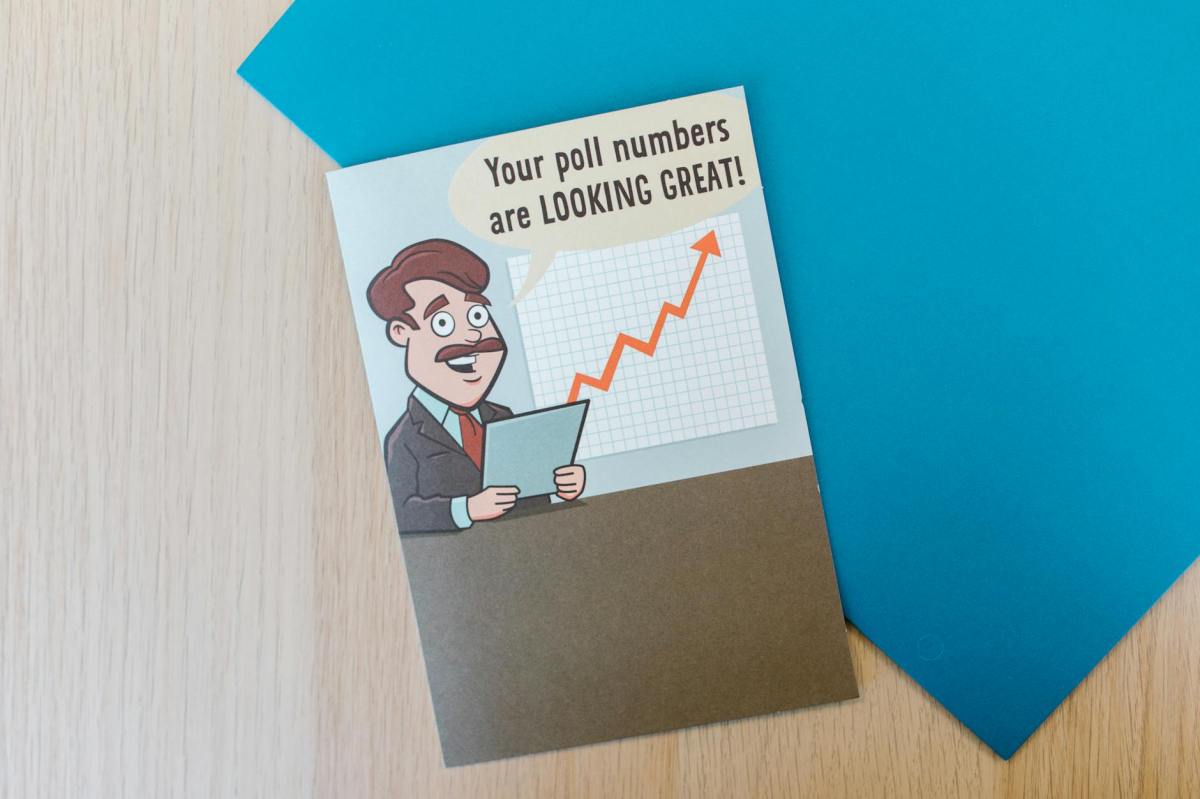
Cartoons capturing us

To me, it’s fascinating how a few lines of pen and ink can sum up so much. One of the great underestimated influences is the power of the cartoon. They speak of their times, they speak of social niceties, they speak of the ever-moving conveyer belt of humour.

Every day the cartoons of MATT[1] sum up, in a witty way, what the News has to say. A little composed abbreviation of an event, a thought, or an idea. Not the least bit easy to do unless that’s your talent. Believe me, I’ve had a go, and the results were not good.

A picture can tell a thousand stories. Substitute for page of words. Often this is said about photography and not so much drawing. Pictures have a language all their own. Their properties escape the communication difficulties that language can throw up.

Back to the few lines. A minimalist drawing in black and white with a sentence is the basic format. I wonder which comes first. The witty line or the image? I’ll bet that varies from person to person. An idea must spring from the mind first.

Let me say right away that not every cartoon hits the mark. I’ve got a daily tear-off New Yorker cartoon[2] calendar. It has a cartoon for the day. In the morning, I’ve torn off the last day and pondered at the worst of them, thinking what on earth were they on when they selected this one.

The reason I started writing these words is a reaction to the cartoons of H.M. Bateman[3]. He’s from another era. A world of English etiquette that has faded with time. Although, I expect if you go to the races at Royal Ascot[4] Bateman’s world lives on in its modern form.

What came to my mind is the link between social media and Bateman’s view of the world. A lot of his cartons depend on the notion that just below the surface the English are about to explode at any moment. Like the 1970’s sitcom character Basil Fawlty.

Under the social equilibrium that enables society to function there’s a seething mass of rage. A bubbling anger that can spill over at the least provocation. Then reason turns into unreason.

A sense that a minor faux pas reveals a sense of injustice that has simmered for years. One small social blunder and an avalanche descends on the poor victim. So, is social media behaviour merely an extension of a human characteristic that has aways been there? That we can easily take a violation of etiquette or social norms wholly out of proportion.

And my further thought. Have certain unscrupulous politicians learnt how to exploit this suppressed emotion. Have encouraged the volcano to explode on que. Prodded and poked it. Even having lifted the vail on the weaknesses of you and I, meant that they could get away with innumerable gaffes, and blunders. There’s an essay for a bored writer to take-up.


[1] https://www.chrisbeetles.com/

[2] https://www.newyorker.com/cartoons/daily-cartoon

[3] https://www.hmbateman.com/

[4] https://www.ascot.com/royal-ascot

Laughing Through Politics

Maybe it’s not a new seam to mine. That rock of British popular culture that puts up a mirror to entertain us or even shock us. There’s always a space for the public to be tickled by the absurd or hamming up of clichéd characters. It’s struck me, particularly on rewatching British TV comedy, how what we find humorous is an indicator of how we might think more generally. Or there’s a peculiar connection.

Obviously, it would be good to look at this subject in an objective way. To see what the evidence says. However, it’s almost impossible to separate personal experiences from any general observations. Afterall, I went to school where we endlessly repeated lines from Monty Python’s Flying Circus. This had our poor teachers totally bemused. Long forgotten is the “woody and tinny words” sketch. It only took a teacher to say a woody word and we’d have hysterics.

Not that Python didn’t offer one or two educational opportunities. In imagination, if nothing else. Try “The Man Who Speaks in Anagrams[1]” as an example.

When Mrs Brown’s Boys[2] became popular, I knew we were in serious trouble. I may be a real snob, but this kind of British “comedy” is a throwback to the worst of the 1970s (almost). To me the show has no merit whatsoever. It’s a sop to a grim set of stereotypes.

Jamilla Smith-Joseph’s short article[3] does point out that British culture is one of seeing the funny side of both us Brits and those strange foreigners. Problem is that in a simmering Brexity climate, we find it so much easier to lampoon our nearest neighbours, European foreigners.

I matured from Python to then enthusiastically embrace “The Young Ones” in my anarchic student days[4]. Now, I rewatch the series and the impacts are curious. In so many ways 21st Century Brits have become tame and unadventurous. The sheer destructive energy that let rip on TV screens delighted in upsetting established norms. Now, lots of people are embarrassed by what was called “alternative” comedy at the time.

Then we grew-up and got jobs. Tony Blair came onto the scene. Born out of that period of change was such masterpieces as “The Think of It”. Hope and optimism descended into spin and panic.

Popular culture and politics do connect. Is it a mirror like refection or is it a subconscious trend indicator? Or even a driving force that sustains a current way of thinking?

British popular culture is not going through a creative period. In 2025, there’s not a lot to recommend. Oddly it’s a series that started with a low budget movie from New Zealand that I find is the best comedy of the moment. “What We Do in the Shadow[5]” is variable in places but has horrendously funny moments.

So, come on British writers it’s time to better lampoon the toolmakers son who sits on the fence. One leg here, and one leg there. Labour’s latest adoption of conservative attire is surly worth funny lines. Something original. Maybe even out of this world.


[1] https://youtu.be/Q1sXeUHBHgk

[2] https://www.imdb.com/title/tt1819022/?ref_=ttep_ov

[3] https://ukandeu.ac.uk/a-very-british-euroscepticism-the-popular-culture-politics-nexus/

[4] Yes, I really did live in a rundown brick terrace, with a hole in the wall as space for a payphone, and a dodgy builder come landlord. Carpets with slug trails and an icebox as a shower.

[5] https://www.imdb.com/title/tt7908628/

Review: The Autobiography of a Cad at Watermill Theatre

I’ve not done it. I’m always tempted. When I see Boris Johnson’s latest book on the shelf, to turn it around. Anything to discourage the good people of this parish from reading it. The picture of his smiling mug on the front of the book is a horrible reminder of the Brexit years. We’re still in them, and I dearly wish we weren’t.

A wasted decade. What for, I ask? It hits me that this is England. A society that is liberal to the core is obsessed with class. We don’t so much have a class system of the Edwardian era but what we have divides people almost as much. Every day the media trades on stereotypes borne of this embedded class perspective. Having lived in another country for over a decade, I can see it perhaps more than most.

We do joke about it. The pages of the satirical magazine Private Eye would have nothing to write about if “class” was truly a thing of the past. Today’s Parliament remains way overrepresented by a certain class of individual. Usually male.

Last night, I went to see “The Autobiography of a Cad.[1]” This is a story of an Edwardian. You might first think that there’s no relation to any politician of our time. It’s a about a man who has one true love – himself. It’s about how, even events as calamitous as WWI, offer him an opportunity to advantage himself usually at the cost of others.

The toff in question is fictitious. The play is a satirical comedy. It’s a highly entertaining evenings romp through the life of a rampaging chancer. Trust, truth and rules are as nothing in the face of his need to get what he wants. A faithful product of English public schools.

The cad is hazardous to anyone in his orbit. He has no idea of the havoc left in his wake. Ensuring others get the blame for his misdemeanours occupies much of his time. You are left wondering if this is instinctive or learnt this at Eton and Oxford.

Edward Percival Fox-Ingleby claims the title of political titan in his own made-up world. Comedy comes from his efforts to create a story of a colossus.

The play starts as it finishes. Fox-Ingleby standing at a lectern in the rain. Now where have we seen that before?

Watching this, with the intimacy of the Watermill theatre, I was in admiration for the three actors on stage. Galloping at the speed they were, throwing props around and transitioning from year to year was astonishing. I’d recommend this play. Best take a cushion. It’s a long romp.


[1] https://www.watermill.org.uk/events/the-autobiography-of-a-cad