

Traitors

I always was a great fan of The Prisoner. A British TV series that makes little sense other than being the twists and turns of a tapped man’s journey through an endless maze. Trying to understand what’s going on. Knowing that sometime the game must be played. All the time fighting to beat the system.

Until recently, I’d resisted watching The Traitors. This British TV series has retained its popularity as it’s regularly refreshed with a new cohort of players. It’s a parlour game that has walls. Walls of rules. The contestants are trapped in an unreality they must navigate. Unlike Patrick McGoohan, they are not alone.

Why resist? I guess it’s a strange reaction to popularity. It was like my thinking was based on the idea that if something gets such a massive round of hype it must be flawed. Let’s face it, recent peak viewing time TV tends to scrape the barrel. Frantically chasing ratings, it often goes for the lowest common denominator. TV is no longer king.

I’ve revised my opinion. It’s the complex social interactions that elevate this TV show above most “reality” TV. Yes, it’s a gameshow but not one with inane stupidly and overly polished lines.

The contestants are not abducted. In fact, they are all keen to be part of each week’s challenges. Each with the feeling that they are uniquely placed to win. Once they step through the doors of the gothic Scottish castle it’s as if they were abducted. The tables get turned and any sense of being in control starts to fade.

I’d say that the popularity of the British version of The Traitors owes a great deal to the show’s host. Winkleman fits the dark cloak as if she were made for it. Despite her deadpan expressions there’s a hit of glee behind her eyes.

My analogy with The Prisoner centres on the psychodrama of deception. Who can be trusted? Like sitting around a card table trying to throw fellow players off the scent. The show’s reality is that no one can be trusted but some people can be trusted more than others.

The contestants are tested at every stage of the day and night. We watch on in a voyeuristic way, knowing what they don’t know. Evaluating who’s smart and who’s destined for the chop.

Celebrity Traitors is an odd mix. Because some of the contestants are known names, it’s easy to assume that their reactions are predicable. For the most part, this assumption is misleading. Viewers start to see the veneer of performance rubbed away. Not for everyone. At distinct stages, actors act, comics make jokes and personalities do their thing. But at moments of high pressure any veneer is eroded, exposing the real person.

One revealing part of the show does disappoint me. Maybe this is a part of human behaviour that I don’t like to admit exists. The round table gives the impression of equality. Like a setting in an Arthurian legend. It doesn’t playout like that when time is short and decisions must be made.

Instinctively contestants expose or kill off first those who are perceived to be the clever contestants. Could that be primitive instinct. Reduce the competition to improve the odds of winning. Not sure I like the message that this human behaviour contains.

“I can’t seem to face up to the facts.”  The theme for the show should be The Talking Heads song “Psycho Killer”.
Who 15

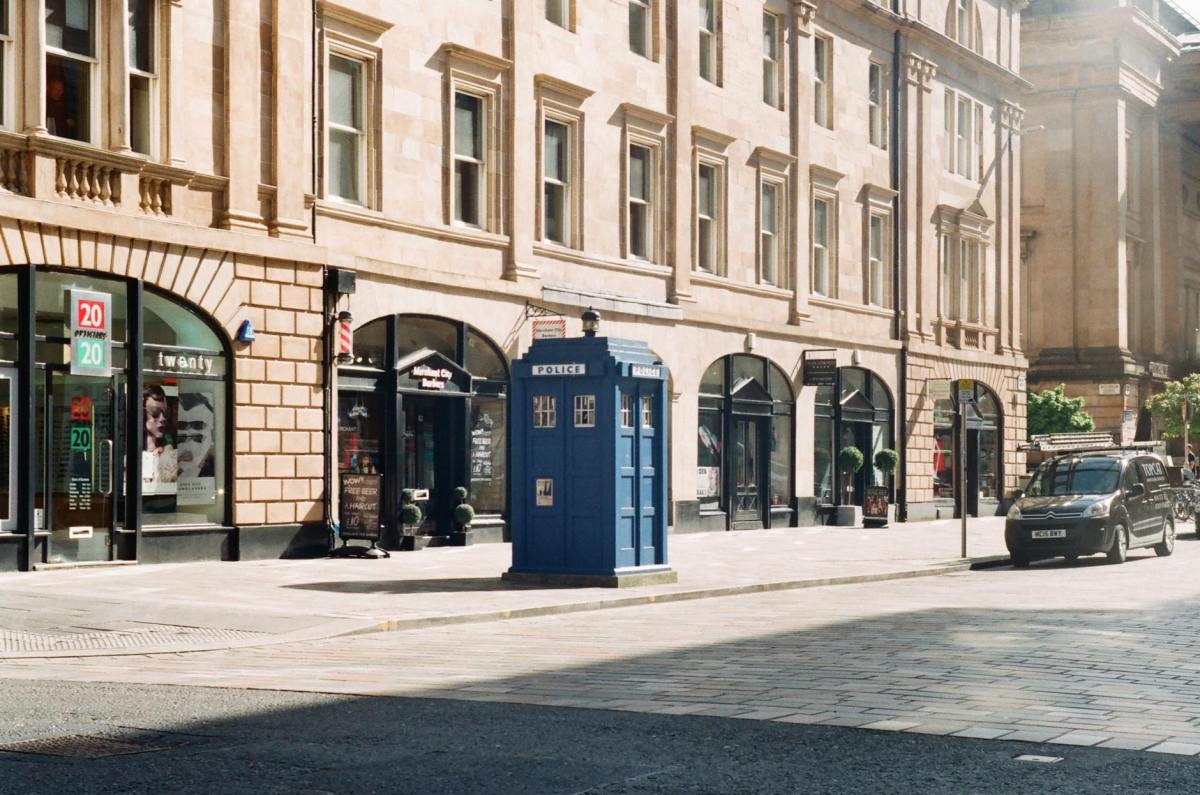
As per tradition there was a moment of running down corridors pursued by robots. Add to that the shock horror realisation that it’s bigger on the inside than the outside and the staple diet of BBC Science Fiction is playing again.

Dr Who is rolling[1]. As expected, Russell T Davies works magic with a super-fast story line. In fact, so fast that I’m going to have to watch it again to figure out exactly what the featured rift in space and time did to the plot. Thematically up to date as the main baddy in control of the evil robots was both misogynistic and AI. I’ll give something away if I reveal that the two letters AI were not what they seemed. Not only that but the robots were redeemed.

Although there was a smidgen of absurdity and an expectation that the audience would draw of decades of Dr Who mythology, the show hit the mark. Afterall it’s entertainment not a profound reflection on the state of the world. It’s colourful Saturday night drama that the whole family can watch. Although in this case there was no need to hide behind the sofa. Also, a lot of the 21stC social commentary would be lost on younger viewers.

Because the series has been running for such a long time there’s a bit of repetition that creeps in. This is not bad per-se. It’s a reminder that coming up with truly original scripts is incredibly hard. Imagination has no limits but when pen hits paper past references helps move stories along quickly.

Adventures in space and time could go on forever. All time, in fact. The subject has no limits. Each version of the Dr Who saga will be set in the context of the audience’s everyday reality. So, the Daleks were a product of nuclear war, and now humanities greatest threat comes from billions and billions of electrical ones and noughts.

Playing with humankinds’ curiosity about space and time is fruitful territory. Imagery can be fantastical and push the boundaries of video production. If anything, Dr Who is modest in pushing at those boundaries. Mustn’t forget that it’s prime time entertainment. Real space and time are far more than a headful.


[1] https://www.radiotimes.com/tv/sci-fi/doctor-who-times-release-schedule/

Review: The Autobiography of a Cad at Watermill Theatre

I’ve not done it. I’m always tempted. When I see Boris Johnson’s latest book on the shelf, to turn it around. Anything to discourage the good people of this parish from reading it. The picture of his smiling mug on the front of the book is a horrible reminder of the Brexit years. We’re still in them, and I dearly wish we weren’t.

A wasted decade. What for, I ask? It hits me that this is England. A society that is liberal to the core is obsessed with class. We don’t so much have a class system of the Edwardian era but what we have divides people almost as much. Every day the media trades on stereotypes borne of this embedded class perspective. Having lived in another country for over a decade, I can see it perhaps more than most.

We do joke about it. The pages of the satirical magazine Private Eye would have nothing to write about if “class” was truly a thing of the past. Today’s Parliament remains way overrepresented by a certain class of individual. Usually male.

Last night, I went to see “The Autobiography of a Cad.[1]” This is a story of an Edwardian. You might first think that there’s no relation to any politician of our time. It’s a about a man who has one true love – himself. It’s about how, even events as calamitous as WWI, offer him an opportunity to advantage himself usually at the cost of others.

The toff in question is fictitious. The play is a satirical comedy. It’s a highly entertaining evenings romp through the life of a rampaging chancer. Trust, truth and rules are as nothing in the face of his need to get what he wants. A faithful product of English public schools.

The cad is hazardous to anyone in his orbit. He has no idea of the havoc left in his wake. Ensuring others get the blame for his misdemeanours occupies much of his time. You are left wondering if this is instinctive or learnt this at Eton and Oxford.

Edward Percival Fox-Ingleby claims the title of political titan in his own made-up world. Comedy comes from his efforts to create a story of a colossus.

The play starts as it finishes. Fox-Ingleby standing at a lectern in the rain. Now where have we seen that before?

Watching this, with the intimacy of the Watermill theatre, I was in admiration for the three actors on stage. Galloping at the speed they were, throwing props around and transitioning from year to year was astonishing. I’d recommend this play. Best take a cushion. It’s a long romp.


[1] https://www.watermill.org.uk/events/the-autobiography-of-a-cad