Trees 2

The story of a Sycamore has captured the imagination of a wide range of people this week.

To be frank, I’m much more a fan of the venerable Oak tree than the humble Sycamore. It’s the quintessential English tree. The Oak is the most Shakespearean of trees[1]. Even my pathetic education in English literature means I know the role played by Birnam Wood.

Again, maybe it’s my childhood. Certainly, Somerset’s farmland is peppered with old Oaks. Not as many as in the 1960s and 70s but they are still the most longstanding living organisms in the open western countryside. As far as I’m aware. Happy to be corrected on that one.

Yesterday, I wandered around under the canopy of the trees in our local park. The park has a random selection of tree species. It may have been planted with a logic. No logic is evident when wandering around. Most prolific are the Beech and Birch trees that tower, straining to reach the sunlight.

Yesterday was the last day of September. The woodland canopy’s colour is slowly changing. Leaf fall is testing the air. A few rustles underfoot and one or two falling Chestnut leaves bounce off me. Colours are mellowing. The intense green of springtime has long since faded.

I’m no wild man of the woods. To me they are more places of contemplation. It’s a contrasting atmosphere we have in our local park. I can be totally alone, except with a nod to an occasional dog walker, but only a couple hundred feet away all the noise of Saturday morning football pitches fills the air. It’s the peacefulness of a woodland cathedral with the business of life just outside its walls.

Time runs differently in woods. The rhythm of the seasons is underscored by a longer timescale. Tens of years, if not hundreds, tick away oblivious to human concerns. If left alone, a wood would make its own story of struggle, tree on tree, as the younger ones fight with their mature colleagues for space.

I did find a healthy Sycamore sapling. I felt compelled to apologies for the goings on of the week’s news. That sounds a little crazy. For a tree in the sandy soil of Surrey the fate of a distant cousin up North isn’t going to mean a lot. The point is that it made me feel better. It’s the cycle of life.

A mystical element occupies a wood[2]. There’s never a moment when our eyes and ears, sensitive to movement, are not alerted to a disturbance. However small. In our park it’s likely a squirrel. That’s no threat at all. But because our senses, however acute, can’t penetrate the depths of a wood there’s always a sense of mystery as to what’s ahead or behind.


[1] https://www.cam.ac.uk/research/features/into-the-woods-with-shakespeare

[2] https://www.thedavidhockneyfoundation.org/chronology/2008

Trees

Out of the window of my boyhood bedroom there was a line of huge Elms. So much did they dominate the landscape that what was beyond was thrown into the shadows. They were more part of the skyscape as they raised their branches to touch the clouds.

I wondered at the massive trunks of these trees. They were the Californian Redwoods of my childhood Somerset. Tall and straight, their bark was grey and smooth. These towering Elms stood bolt upright against any weather. Season after season they were the predominant landmark. Sadly, it’s a disease that brought an end to these tall living monoliths. Now, they exist only in a few black and white pictures and the memories of people like me.

Trees play a bigger part in our lives than we ever acknowledge. It’s often when they have gone that we miss them the most. As the words of the song goes: “you don’t know what you’ve got ’til it’s gone.” Capturing the melancholy remorse of loss, words can’t replace the impact of these living leviathans. Visually stunning their image is lost but not forgotten.

Today, on the same country road where these Elms grew directions are often given to “turn right at the bendy tree”. In this case referring to an out of place Fir tree on a marshy riverbank. What’s common is its success in shooting towards the sun. Looking dishevelled and leaning one way, this lone Fir tree is a perfect navigation aid.

This week’s story about the Sycamore Gap[1] has resonance for me. I’m not alone in that feeling. One tree has captured the national news. The words I have for those who brought a chainsaw to this beauty are not repeatable[2]. More mildly I’d say: moronic vandals who must have brains the size of tiny walnuts, if they have any brains at all.

Sane people can’t for one single moment understand why a prat, or prats did this cruel act. Sadly, vandalism is all around us, but this takes the biscuit. Surely even amongst complete and utter idiots there remains some sense of what’s beyond the pale[3].

Village stocks were made of wood[4]. They still are, where they still stand. A good punishment for the perpetrators of this crime would be that stocks are erected on the site. The villains must spend a winter in the gap. I’ll be kind and suggest that they not be held there for 300-years. Naturally, the stocks should be made of sycamore wood.


[1] https://news.sky.com/story/sycamore-gap-tree-second-person-arrested-in-connection-with-felling-of-iconic-landmark-12972772

[2] https://www.chroniclelive.co.uk/news/north-east-news/sycamore-gap-tree-northumberland-live-27801497

[3] https://dictionary.cambridge.org/dictionary/english/beyond-the-pale

[4] https://www.propfactory.co.uk/listing/item/GGG009.html

Summer

The perpetual cycle of the seasons is what divides up our lives.

It’s a summer day. The shadows are shorter. Different parts of the garden are illuminated with bright sunlight. Early summer flowers are in decline. The next set of blooms are starting to sparkle. Gardening experiments are showing signs of maturity. Maybe there will be some marrows[1] this year. I don’t just grow them for their large yellow flowers.

February 2023 was the driest on record across the UK. Yet, we have had hard soakings that left the ground waterlogged. The overall impact on my garden’s sandy soil has not been good. The year has developed slowly. Some of the vegetation has thrived but others have been set back. My large bay tree is thriving but shedding lot of dead leaves. The cold snap we had, when the temperature dipped to minus ten degrees C took its toll.

I may be unusual but faced with this summer glory, I feel a little sad. It’s the peak of the season. It’s like getting to the top of the roller coaster and knowing there’s only one way to go from here. Surveying the wonderful greenery, its transience is all to evident. My mind flips to the middle of winter. That dramatic transformation where the trees are stripped of their leaves. It’s like my brain saying: “do we really have to go that way?” Off course we do. The perpetual cycle of the seasons is what divides up our lives. We have a finite number of summers. It’s not a time to waste in gloom rooms sitting at computer screens.

Yesterday, I moved an apple tree. It was looking poorly in an unhelpfully shaded spot. Fortunately, this move wasn’t back breaking. I’d planted the small tree in a large square pot. Am I bleary eyed? Already, early this morning, it looks better. If trees could talk, I’d expect a complement.

Luckly here, although we are in a town, we are surrounded by greenery. Out to the front of the house is a railway embankment. A place were urban foxes have their societal meetings. The fence and the railway make a large space of relative wilderness. Apart from an electricity substation and a one or two telegraph poles, the divide is a haven for wildlife.

Out the back of the house we’ve the benefit of the shade of chucky mature trees. A community of squirrels have a highway that takes them up and down the large oaks. They make weird noises, like the foxes do. At dusk and dawn, it’s a musical festival out in the back garden. A loud but tiny song thrush sits on a TV aerial and broadcasts to the whole neighbourhood.

Lavender is in full bloom[2]. It grows well here. The local bees are having a field day. I never fail to be impressed by their industriousness. There’s a variety too. Now and then, a massive bumble bee will do a fly past. They are not stumped for places to visit.

I’m ready for the “Big Butterfly Count[3]” as it starts later in the month. There’s been a few and far between out and about so far this year. I’ve seen some large white butterflies. This national survey is one small way to help to stop butterfly decline. 

It’s the best time of the year. Let’s enjoy it while it lasts.

POST: It did get up to 30 degrees C. A hot dry summer day.


[1] https://www.rhs.org.uk/vegetables/marrow/grow-your-own

[2] https://www.rhs.org.uk/plants/lavender/growing-guide

[3] https://bigbutterflycount.butterfly-conservation.org/

Lost nature

Looking at lines and lines of felled trees is not a pleasing sight. The world outside the car window is a sight of devastation. I understand what’s going on and we have been forewarned of it for a long time. Whatever, the junction of the A3 and M25 motorway[1] looks a dreadful mess. The scheme to turn the junction into a mini spaghetti junction is underway.

This comes on top of two news stories that display an attitude to our green spaces that is disheartening and sad. One in Sheffield[2] where the local council was criticised for deceiving the public. The other story, an overnight savaging of city trees in Plymouth[3].

I’m going to be unkind to highway engineers. The impression given is that their attitude to trees, in general, is one that sees them only as an impediment to progress. A blight that stops their beautiful drawing board schemes from rising from the dirt. The obstacles in the way of more tarmac.

Now, the M25 junction 10/A3 Wisley interchange is as ugly as hell. Even when it’s finished it’s going to be one of those places in the world where a sane person would not want to spend a minute more than necessary. Watching the seasons change from a motorway jam is a poor way to live.

The largescale initiatives there are to plant more trees are great. Unfortunately, all to often the stock of mature native trees and ancient woodlands has fallen markedly in my lifetime.

Natural events play their part too. I remember massive Elm trees that disappeared as Dutch Elm disease struck. These majestic trees can reach over 40 metres in height. A row of these huge Elms dominated the skyline of my childhood. A green wall that seemed everlasting. Sadly, millions of Elm trees have been killed in the UK over the last 40 years.

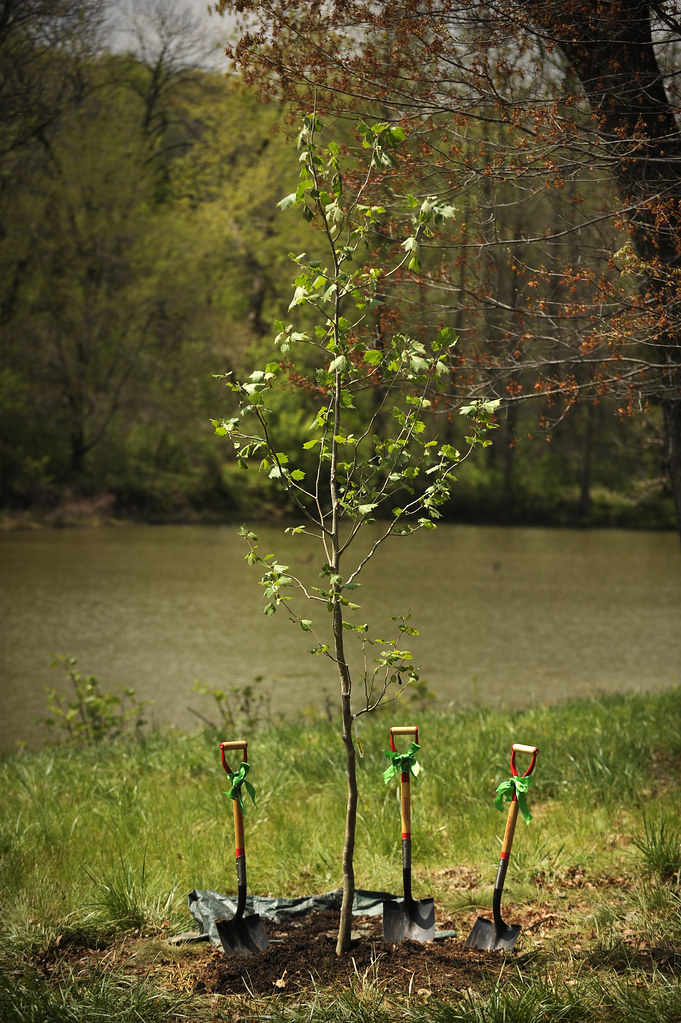
A tree produces oxygen and can absorb carbon dioxide. What could be more useful that that? We must reverse the loss of nature in the UK[4], if we are to stand any chance of addressing climate change. So, plant a tree for 2023. 


[1] https://www.surreycc.gov.uk/roads-and-transport/roadworks-and-maintenance/roadworks/junction-improvement-programme-m25-junction-10a3-wisley-interchange

[2] https://www.bbc.com/news/uk-england-south-yorkshire-64863130

[3] https://www.itv.com/news/westcountry/2023-03-15/anger-as-monsters-in-the-night-chop-down-more-than-100-trees

[4] https://www.woodlandtrust.org.uk/plant-trees/advice/how-to-plant/