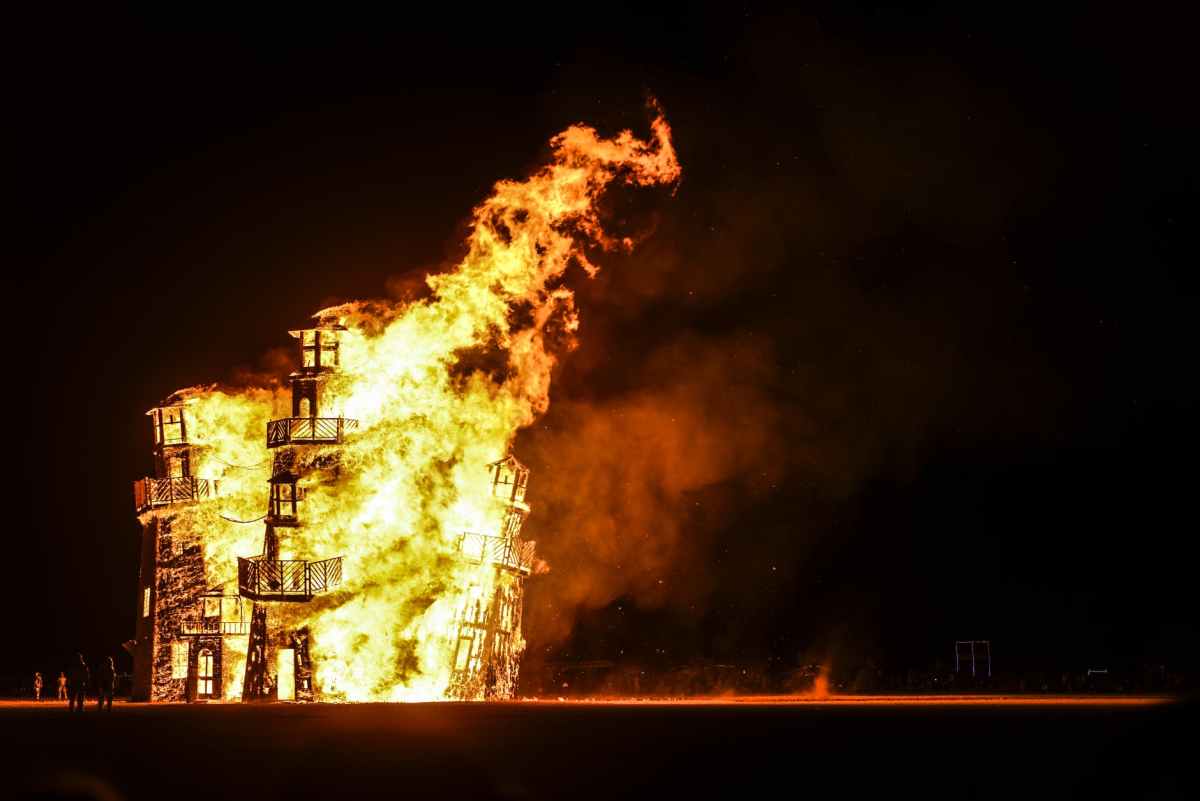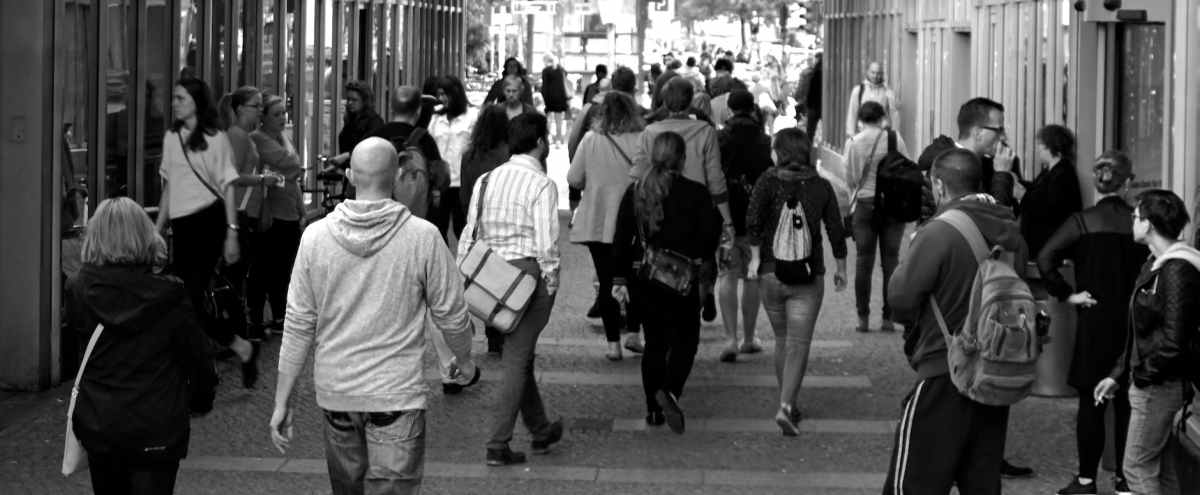
Protest

Experience of protest can range from the exhilarating and heartwarming to the frightening and intimidating. There’s a huge range of different experiences. Here’s a few:

During our Brexit phase of rocky turbulence, I stood in High Streets and marched through the city. Everything on the part of the remain protestors I met was peaceful and good natured. That can’t be said of those who took a different view. I distinctly remember a couple of in-your-face moments when approached by emotional and irrational individuals who seemed only to want to shout aggressive slogans in as intimidating manner as possible.

Overall, I’ve been fortunate. Every time I stood as a parliamentary candidate, more than 6-times, I was part of public events where people freely assembled. One of the mainstays of a British election campaign is an open event at a school or college where people can see and talk with candidates in-person and up close. These public events are essential for a functioning democracy. Voters can ask questions and draw their own conclusions from the performance of candidates answering in a local setting about key issues.

My work gave me the privilege of traveling to different countries. In my time off, I’d often look around and get a sense of what was driving political debate in that part of the world.

I remember a couple of occasions when the pure innocence of being a tourist brought be in contact with situations that if I’d known at the time I would have surely avoided. There’s one moment when walking through a huge square in Rome when I suddenly became aware that there were an unusual number of paramilitary police around. I was walking through crowds in the Piazza del Popolo. I looked back from where I’d been and noticed big green water cannon pointing towards the people around me. Inadvertently, I’d strode into a gathering of far-right political protestors. Once I’d clocked what was happening, I was out of there like a shot. 

Today’s, discussion about the nature of protest is one that should be handled in a careful and considered manner. There are threats and dangers that lurk in free and open public settings, but the answer is not to shut them down. Maintaining a balance is vital.

I do not agree with the Just Stop Oil protestors that their cause justifies the exceptional measure of parking themselves outside the homes of elected or would be politicians. Now, that maybe different when considering their places of work but it’s a basic human right – the right to a family life without intimidation. The families of those who work in politics must not be fair game.

In our media saturated world there are more ways of making a strong point about an issue now than there ever has been. There are more opportunities for creative and imaginative peaceful protests, more outlets, and more coverage. Maybe that’s part of the problem. Saturation.

Assemblies of people have and always will be, since classical times, a manner by which collective views will be openly expressed. They can become disruptive. That requires a degree of restraint and management. However, tightening restriction to the point of elimination of uncomfortable and troublesome protest will only make the overall situation much worse.

Protest can be the release of a pressure cooker. They signal where we all need to pay attention. They may not solve problems, but they are part of the equation.

QT

Over the years the BBCs Question Time (QT) debate programme[1] has played an important part in political discussions. It was a must watch for political activists and students at all levels. In fact, anyone interested in understanding the political views that permeate the country.

Unfortunately, the programme has declined to become a dull backwater for viewing if there’s nothing else on. The format is locked in to an awkward seeking of balance at the expense of an inquiry into the reasons and justifications for widely different views. There’s little in the way of vigorous cross-examination or investigation into the core values of the speakers.

I don’t want to blame the person who chairs the debate or the BBC for hanging on to the QT heritage. The programme has played an important part in the life of the country, in the past.

I don’t want to be one of those social media complainers for whom any deviation from the age of Robin Day is a blasphemy. Those black and white days are a wonderful snapshot of a long-lost era. The relationship between the public and their politicians has changes beyond recognition.

There’s no doubt that we have all become somewhat more superficial than may have been the case in the past. Politics has become something that is marketed to us as a commodity. It shouldn’t be that paper thin.

At its best such a debate programme gets to the fundamentals. If it merely tracks yesterday’s headlines the results are predicably shallow. Audience and panel members simply echo what we already know. What we’ve already heard elsewhere throughout the day.

What I want to know is more of the why and less of the what.

Say, a social liberal politician objects strongly to a dilution of human rights and a hard right leaning conservative welcomes such a dilution. We may already know that’s the positions they have adopted and campaigned on but are those positions of convenience or core beliefs?

Exploring what panel members really think and what they might really do is surly more interesting than allowing them to play to the audience, at home or in the room. I want an objective chair to put the panel members under pressure to uncover any deceptions. Deference born of an obsession with balance is as bad that born of class or impoverishment.

One of the parts of the format that seems unquestionable is the requirement to answer questions posed by members of the public. The audience is supposed to represent the members of the public not in the room. They rarely do. I’d much rather see a town square type format. That’s where the members of the public engaged are not so pre-selected or self-selecting. Walk out into a typical high street and randomly ask what question do you want answered? Do it live.

QT needs a major shakeup. It’s not quite dead. Its revitalisation is possible, but it needs to get off its current path.


[1] https://www.bbc.co.uk/programmes/b006t1q9

Why do politics?

One reason has a long history. It’s basically, sitting on your hands, complaining about others, and doing nothing means that you are likely to be managed or governed by people of poor ability. Stepping-up and trying to change a situation at least puts to bed that passive abdication. Now, you might fail but that failure is no disgrace, if your intent is honest. At least you have had a go.  

Another somewhat more appealing reason is to know someone who has done some good. Achieved something worthwhile. To have a mentor, or admiration for a person who has made the best of what they have and made a real difference to their community, it’s optimistic, it’s positive.

Let’s not be too cynical, there are good politicians. If there wasn’t we would be in an even bigger mess than we are now. Let’s face it, the people who become politicians, in a democracy, have the undesirable flaws and admirable qualities that most of society exhibits.

For me, this starts with reading “Penhaligon”, Annette Penhaligon book[1] about her husband, David Penhaligon. There’s a story to tell. A West Country MP who fought tirelessly for his constituents.

Then, naturally, there’s the Member of Parliament (MP) who is responsible for me first taking-up community political activism. He was newly elected and fresh faced at the time. The MP for Yeovil in Somerset from June 1983 to May 2001, namely Paddy Ashdown.

I was living in Cheltenham in Gloucestershire when Ashdown came to a public meeting at the Pittville Pump Room[2]. He spoke fluently about becoming an MP and some of the ridiculous idiosyncratic nonsense of Parliament. His message was that British politics is time-consuming and frustrating but if you want to bring about change – get involved.

So, in Cheltenham I first started stuffing leaflets through letterboxes and knocking on doors. About, 40-years have gone by since that encounter with the MP for Yeovil.

This weekend, I got my walking boots on. I visited parts of the Somerset town of Frome that I’d never seen before. A wide range of different streets, each with a different history. From restored historic buildings to new housing estates there’s a surprising variety of different lifestyles in a small town.

That’s one of the spinoffs of political activism. I get to visit and explore places that I’d otherwise never get to know. It’s a good way of broadening the mind. With social media’s influence it’s all too easy to get locked into simple stereotypes, artificial divisions, and primitive arguments. Forget that nonsense. Real streets with real people are much more interesting and much more varied.

Yes, you will meet people that are disagreeable but believe me, they are the minority. If you don’t want dumb politicians, and ideas thrusts upon us that don’t represent us then get out and be active. Every little can count.


[1] https://www.waterstones.com/book/penhaligon/annette-penhaligon/9780747506164

[2] https://cheltenhamtownhall.org.uk/visit-us/pittville-pump-room/

Charm

It’s a curious question. What part does “charm” play in life? Does the charming man or woman get the job and the dull or grumpy but competent person fail? Do charming people get more done, or are they more inclined to laziness?

Like most assertions or questions, it’s as well to start with some definitions. If we put aside nuclear physics and jewellery the definition of “charm” could be said to be the power or value of delighting, attracting, or fascinating other people. It’s an intrinsic human characteristic but I’m sure it can be learned by those who start of with basic abilities.

One of my favour fictional characters, from the 1960s has this in bucket loads. Personified in the TV series The Saint[1], Simon Templar played by Roger Moore exuded charm. In this exhibition of charm, it’s more than an external attractiveness. It’s also a moral and ethical code.

Perhaps it’s not just charm that I’m discussing. When I asked the question of a supporter, what do you see in Boris Johnson? The answer came back – charisma. It’s a power to stand above the crowd and exert influence over people. Here’s another fuzzy characteristic. Everyone recognises charisma exists but may choose to describe it differently in different people.

The reality seems to be that charm and charisma may be combined but they have little to do with moral and ethical behaviour. However, the general perception is that there’s “good” in these characteristics. Is this obvious, and thus not warranting much further thought? Or is it, that because this seems obvious, that in the hands of the “ungodly,” as The Saint would say, these characteristics can feed unfairness, injustice, or corruption?

What I mean is that “bad” charming or charismatic people are allowed to get away with misdemeans and occasionally down right criminality without the accountability that would punish others. We can add to the equation the current social media explosion. Most platforms are a gift to the self-publicist. They can be a shop window and a soap box for the adoration of charming or charismatic people, good or bad.

Maybe instead of Twitter’s blue tick there ought to be an emoji of the devil or an angel. No – that would be worse than nothing at all. In the end we do depend on authors, journalists and investigators looking behind the masks that prominent personalities keep up. What I can say is that, if there are contemporary Robin Hoods that prevents the “ungodly” from succeeding, they may need help. It’s not so easy to stay one step ahead.


[1] https://www.imdb.com/title/tt0055701/

Gaslighting

Any movie with Ingrid Bergman must be worth watching. If your evil partner is manipulative and you feel you might go insane then watch the 1940s movie “Gaslight”. Lamps dim for no reason and your grip on reality starts to slide. As the thriller unwinds so the process of gaslighting is unveiled.

It’s not uncommon that people are their own harshest critics. Naturally, if you are a psychopath that’s not the case. Similarly, if you have a mountainous ego where nothing much will shift you from thinking you are right, in any circumstances.

Gaslighting is an insidious form of emotional harm. It’s associated with abusive relationships. Where one person deliberately manipulates situations to undermine another. Motivations can range from being just plain evil to money or an insatiable desire for power over others.

It’s not individual relationships that these words will cover. What’s a phenomenon is the frequent use, particularly on social media, of the term “Gaslighting” to refer to current political manipulation. It’s way up there on the lexicon of how to describe the Conservative Party’s campaigning.

You don’t have to be a glamorous film star to suffer the effects of techniques aimed at undermining your perception of reality. It’s all to easy in the febrile world of social media.

Political villains’ intent on distorting facts are there to take advantage of the compelling nature of the small screen. You shouldn’t have to second-guess yourself when reading the News but its not so difficult to persuade people to do so.

Just now we have the nonsensical rhythm of double speak in the question – when a party is not a party. It’s almost got to the stage of asking the question – when a cake is not a cake.

In all of that, let’s recognise what’s happening. By deliberately muddying the waters and sowing doubt so a lot of Conservative MPs are gaslighting the public. The Prime Minister is gaslighting the public. It’s difficult to know what’s true when the sand is shifting so often. The manipulator can seem charming and as nice as pie, but their motive is to deceive you.

Our perception of reality depends on acquiring information that is accurate and reliable. In my aviation world, fatal accidents are caused by a loss of situation awareness. Even a lapse of awareness can get pilots into serious difficulties. Accurate and reliable information is needed to stay safe.

COVID has caused a great deal of social isolation. That is fertile ground for despicable political operators to disorientate people. We are players in a psychological thriller. We are people trying to make sense of the world. Trying to make a better world. We need to be able to recognise it because “Gaslighting” is a big danger.