
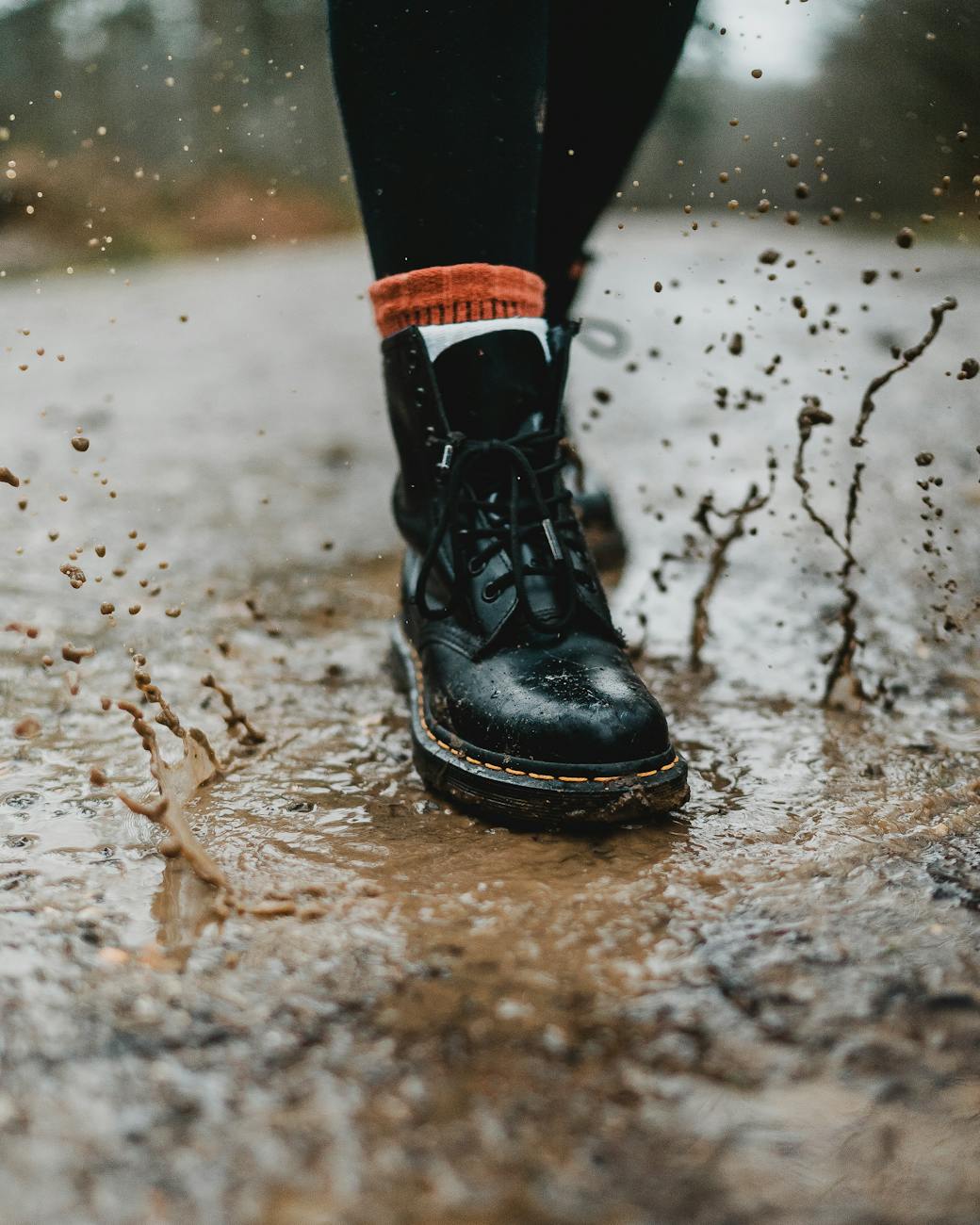
Muddy

Rain, rain, rain. It’s been a wet spring, so far. Let’s put that down to global warming. The cause is one thing, but the symptoms another. They are there to see every day as I look out of the kitchen window. At the back of our house, the open field that stretches out towards the river Lambourn is about 7 acres in size. At least half of it has been flooded or is caught in that cycle of the ebb and flow of the river for the last 3-months. Great for wildlife. It’s a soggy marshland.

We are into mid-April and there are rainless days. Bit by bit, it looked as if the river’s flood waters[1] were receding, and they were but now and then a burst of rain tops up the pools and streams. That’s this morning in a nutshell.

Our lawn is growing fresh grass enough to fuel a herd of wildebeest. I jokingly said we need a goat to eat it all off. Getting my battery powered mower to control the lawn is a real effort. A healthy growing season. That’s the good side of a damp climate.

For livestock, and wildlife the flourishing fodder is a positive. Already there are two families of ducklings swimming around and eating as much as they can. On the negative side, parts of the field outback are too wet to allow cattle to trample the new grass. A seasonal problem I’m familiar with having grown-up in a place called Horsington Marsh.

Bright green growth is one of the delights of springtime. Leaves on the trees and the fresh grass as it reaches skyward. Even the moss looks shiny and alive. This is the two-edged sword of farming. Grass needs the rain but too much and the land becomes a potential mud bath.

Eventually, the fast-flowing waters of the River Lambourn run into the River Kennet and then the River Thames. Strange to think that the water the ducks and geese stomp around in around here eventually passes through the heart of London on its way to the sea.

It’s notable that the grass grows where the flood water has receded. That part of the adjoining field where the waters come and go has turned into a combination of mud and aquatic vegetation. There are plants that can tolerate little air getting to their roots and there’s others that start to die back if there are submerged for too long.

Sadly, although the river’s waters look clean and clear, sewage treatment works, septic tanks, arable farming, road run-off and industrial processes have all had their impact. Technically the river is in an “unfavourable condition[2]” when it comes to aspects of water quality.

What of the mud? It will be interesting to see how quickly the submerged areas recover as the weather improves. I’ll be looking out for how all the phosphates in the water and the dead grass come alive again. Or do we end up with a low-lying grimy mud riverbank supporting rushes, reeds, and algae? Climate change and the human activity are changing the nature of watercourses. It’s difficult to say if the worsts aspects of this can be mitigated.


[1] https://check-for-flooding.service.gov.uk/target-area/061WAF22Lambourn

[2] https://www.westberks.gov.uk/article/41082/River-Lambourn-Special-Area-of-Conservation-SAC
Gerrit

Apparently, Gerrit is the Dutch, and Frisian form of the more familiar name Gerard. It’s the name the UK Met Office[1] has given to the winter storm that has just barrelled its way across the country. I don’t normally write about wind and rain, but this storm is worth a short note. Not least because there was plenty of it for me to see as I was stuck in heavy traffic up on Salisbury Plain.

There’s some niggly social media kick-back on this habit of naming of storms. It’s winter after all. Having gloomy warnings pop-up for yucky British winter weather can get a bit tedious. In this case, I did take note of the weather warnings for Wednesday. Fortunately, the strong winds were blowing the right way for me. West to east.

My plan. Yes, I did have a vague travel plan. My plan was to get a major part of my journey, eastward on the main A303, done before the weather turned into heavy rain and strong winds. That well-meaning plan failed. Salisbury Plain[2] is an expanse of open chalkland which is exposed to weather from all directions. Today, I’ve spent too much time watching grey clouds traverse those uplands.

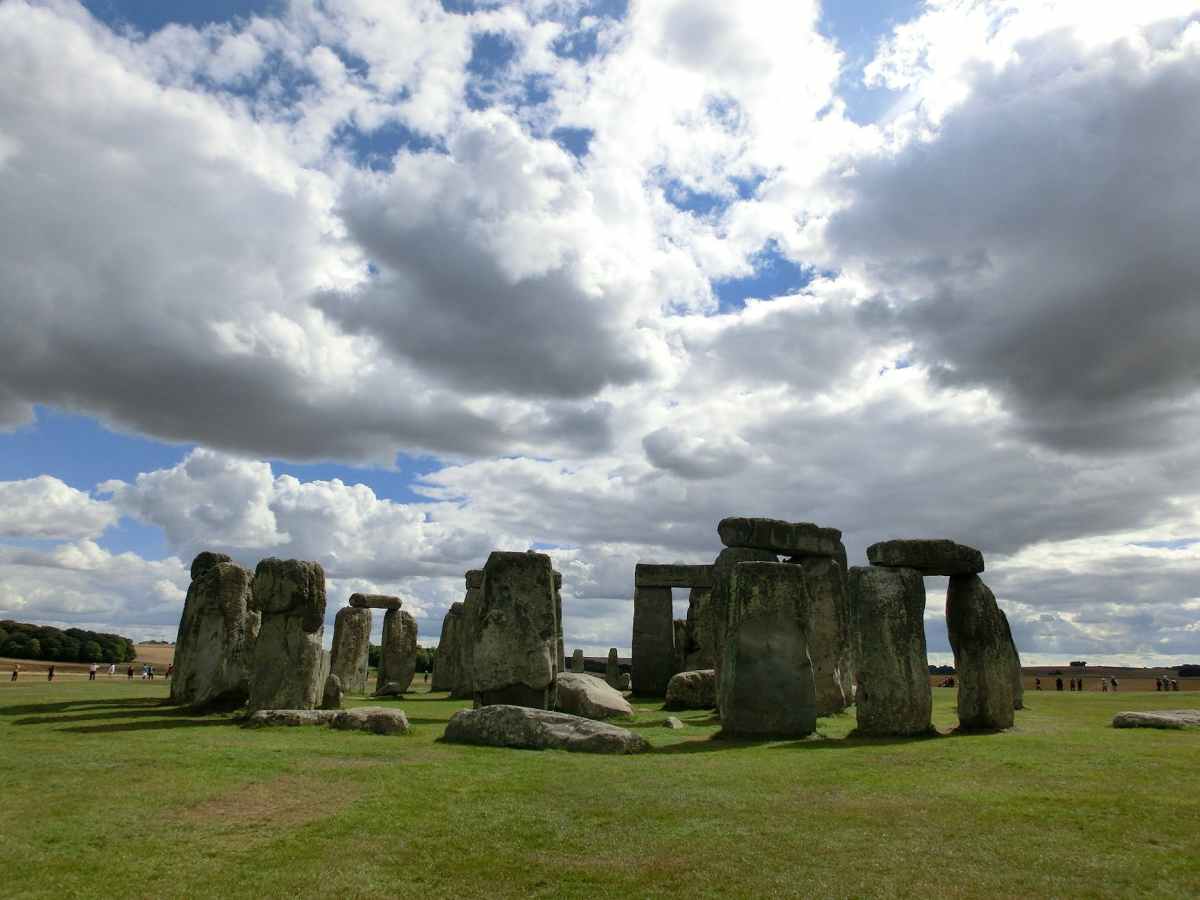
I blame Stonehenge. If prehistoric people hadn’t built it where they did then we’d have no traffic jams. The roads would be free. Those ancient builders must have been Europeans. In fact, they were since countries didn’t exist. Sorry, that’s just me pretending to be a Daily Express reporter.

Sure, enough it’s the stretch of the A303 that passes by Stonehenge that is the worst for traffic build up. Winter or summer. One of the reasons is the shear level of traffic on this main road. It’s a popular route across southern of England but it suffers from a classic road syndrome. The better it gets (condition wise) the more traffic it attracts. Road “improvements” continues to be made, often at great expense and controversy. The encampment of road protestors at Stonehenge has disappeared. That said, I’m absolutely sure their objections to further expansion of the road haven’t gone.

This year, for late December the temperature is remarkably warm. It’s wet too. Warm and wet. Is that what climate change has in-store for us in the south of England? Dull British winter weather is grey with extra grey bits. It can be mighty depressing. Short days don’t help either. Gradually they are getting longer. If only the worst of winter wasn’t still to come.

Whiling the hours away in nose to tail traffic doesn’t help with spirts. The only consolation is to look out at the drama of the landscape and the storm all around. I tend to get stoical about the whole sufferance. I pity those who sit agitated at the wheel trying to squeeze one car length ahead by getting out of roundabouts faster than others. The constant stop-go of taillights is a sure sign of a driver’s irritation. Me, I try to cruise forward inch by inch using as little power as possible.

The idiocy of playing psychological games in heavy traffic makes me wonder if some drivers ought to have a licence. This happens when two lanes merge into one. Me, I obey the one and one rule. Traffic should weave together in fairness to everyone. One from the left and one from the right.

So, bye bye Storm Gerrit. Thanks for bringing the winter wind and rain. The important part of all this is that we got home safely. Later than expected by safe.


[1] https://www.metoffice.gov.uk/about-us/press-office/news/weather-and-climate/2023/storm-gerrit-named

[2] https://en.wikipedia.org/wiki/Salisbury_Plain