
It would be good if we could all agree that the UK needs to recognise the importance of locally produced food and drink. There’re large environmental gains to be made by reducing the distance between production and consumption. Thousands of heavy trucks thunder up and down the inadequate road infrastructure in the UK. Colossal amounts of food waste get thrown away from supermarkets. Questionable preservatives enable supply chains to grow longer and longer. There’s are bad trends.
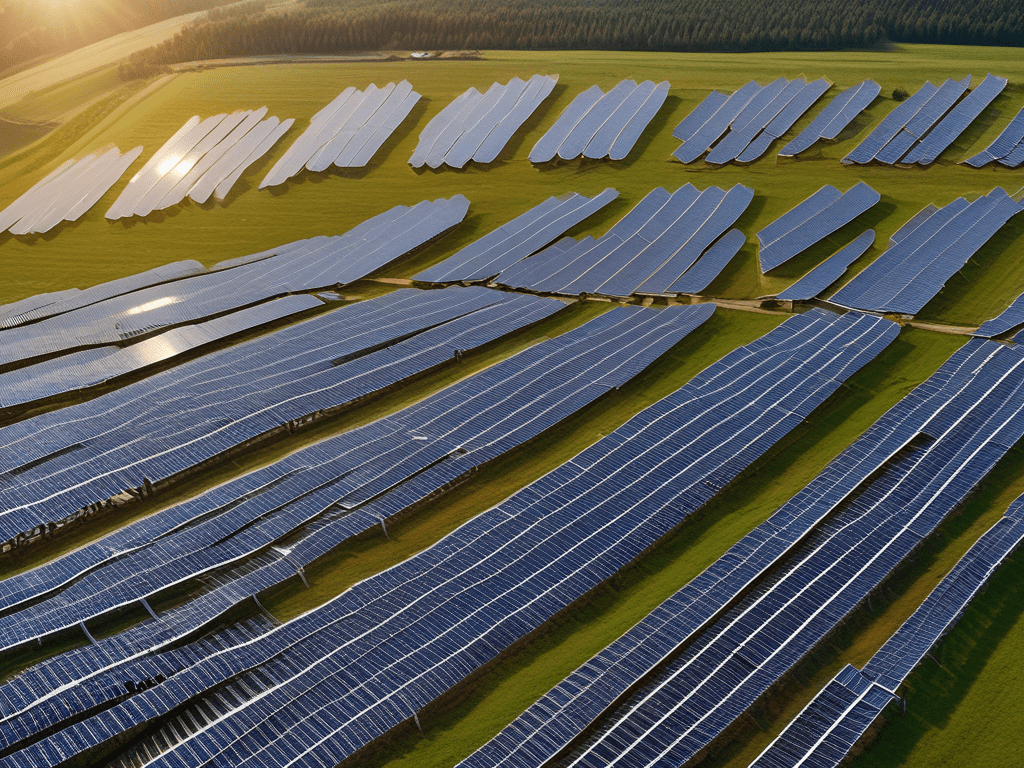
On a related subject, I do have a problem with proposals for large solar arrays that will take out productive farmland. However, that is by no means an objection to large solar arrays, or onshore wind farms for that matter.
It’s not as if we have always been so precious about what we do with our glorious countryside. One observation I’d make is that there has been a huge increase in the urbanisation of the countryside in my lifetime. Areas that were either wild or exclusively used for agriculture are now pony paddocks, car parks, golf courses, housing estates, out-of-town shopping warehouse, fulfillment centres[1], and bypasses. In 50-years, there’s little that remains untouched.
I’d sing “They paved paradise and put up a parking lot” if I could. We really do need to think carefully about what we industrialise and what we preserve and protect.
For me large solar arrays are in the same category as acres of poly tunnels. Both serve a fundamental purpose, and both are structure that can be relatively easily removed. Keeping the lights on and eating fresh food are both part of society’s basic needs.
So, I’m not going to raise an eyebrow at new Minister Ed Miliband approving 3 large solar arrays[2]:No shock but no blank cheque either. No jumping on a political bandwagon to condemn the immediate decision.
It’s likely the decision was sitting on the former Conservative Minister’s desk. Is this a case of difficult decisions deliberately delayed because of an election? We may never know. It would be a bit disingenuous for such politicians to complain now. Wouldn’t it?
Let’s get it right. Failure to decarbonise our national energy system is a contribution to global warming we can’t afford to make. Long-term that global warming will impact food production.
In years to come it will be interesting to see what research flags up with respect to solar farms and biodiversity in an area. There’s some chance that the results will not be entirely negative. There’s all that sheltered and undisturbed soil under the array structures. A habitat for wildlife.
Choosing between what might seem as the lesser of two evils is often the situation a politician finds themselves in. Afterall, that’s the role they must play in a democracy. The outcome may not be popular in the short-term, but a balance must be struck.
Maybe we should reverse some of the urbanisation of the countryside. Return some little used roads to nature. Demolish unused industrial units. Put back the hedges that have been lost. Rewild one or two golf courses. It’s something to consider when building new infrastructure.
[1] Fulfillment centres enables outsourcing, warehousing and shipping. This is for online businesses to have the physical space to store stuff.
 John Vincent