
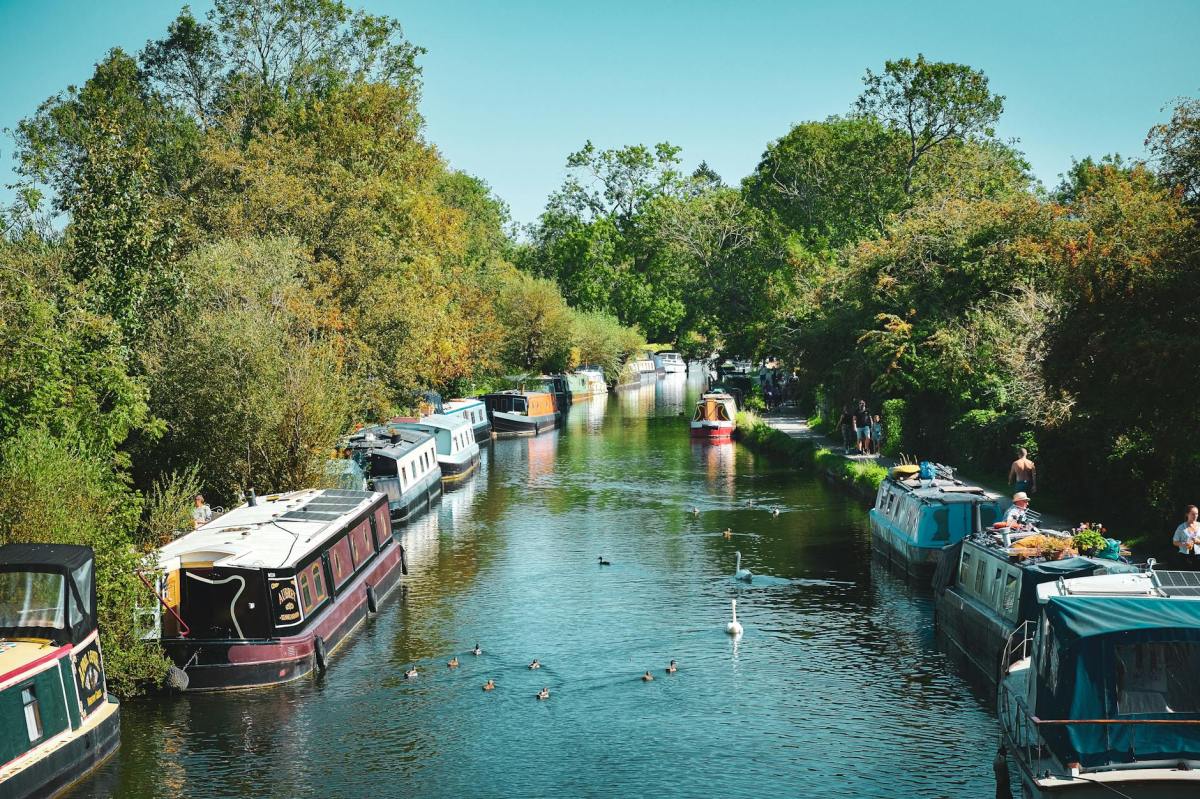
Riverside walks can be pleasant ways of spending a sunny spring evening. That’s what I did on Friday. Sun shining with a cool breeze sweeping through the trees. Underfoot even the unmade-up paths were dry, which is testament to the rainless weather of recent weeks. Even so, the riverbank showed signs of the flooding of the winter.
Reading is a town[1]. It’s England’s largest town. Now, I didn’t know that until I looked it up. The largest English town that I’ve been familiar with over the years is Crawley in Sussex. I think of that as a large town but it’s less than half the size of Reading. It’s the railway that makes Reading. Reading railway station was the last stop on the Great Western Railway (GWR)[2] when it was first opened in 1840. After that the railway forged west to be what we know now as the main thoroughfare across southern England.
Reading town has a long history. That’s no surprise given its position on the river Thames. It’s where the river Kennet, the canal and the river Thames meet. An obvious place for trading since Roman times. It’s a commercial town. Glass sided office blocks and Victorian brick work. For all that it doesn’t stand out as an architectural masterpiece.
Another surprise for me was leaning that town twinning is alive and well. That Reading in twined with Düsseldorf in Germany. A city more than twice the size of Reading. In fact, until this last year, I’ve been more familiar with Düsseldorf.
Our walk ended at The Fishermans Cottage[3]. I’m happy to recommend this small riverside pub.
From there, on the walk back to the railway station I did see the one of the more notable sites in Reading. That’s the Banksy’s Great Escape artwork[4] on Reading prison wall. Oscar Wilde spent time in that jail. The artwork has got a Perspex cover to keep the pigeons off. And anyone else who might think of spraying it.
That reminds me. It’s not unusual to have a phobia about dogs. Although dog owners mostly have a difficulty in getting their heads around the fact. On my riverside walk dogs were not the problem. Amongst our small group of walkers had a different phobia.
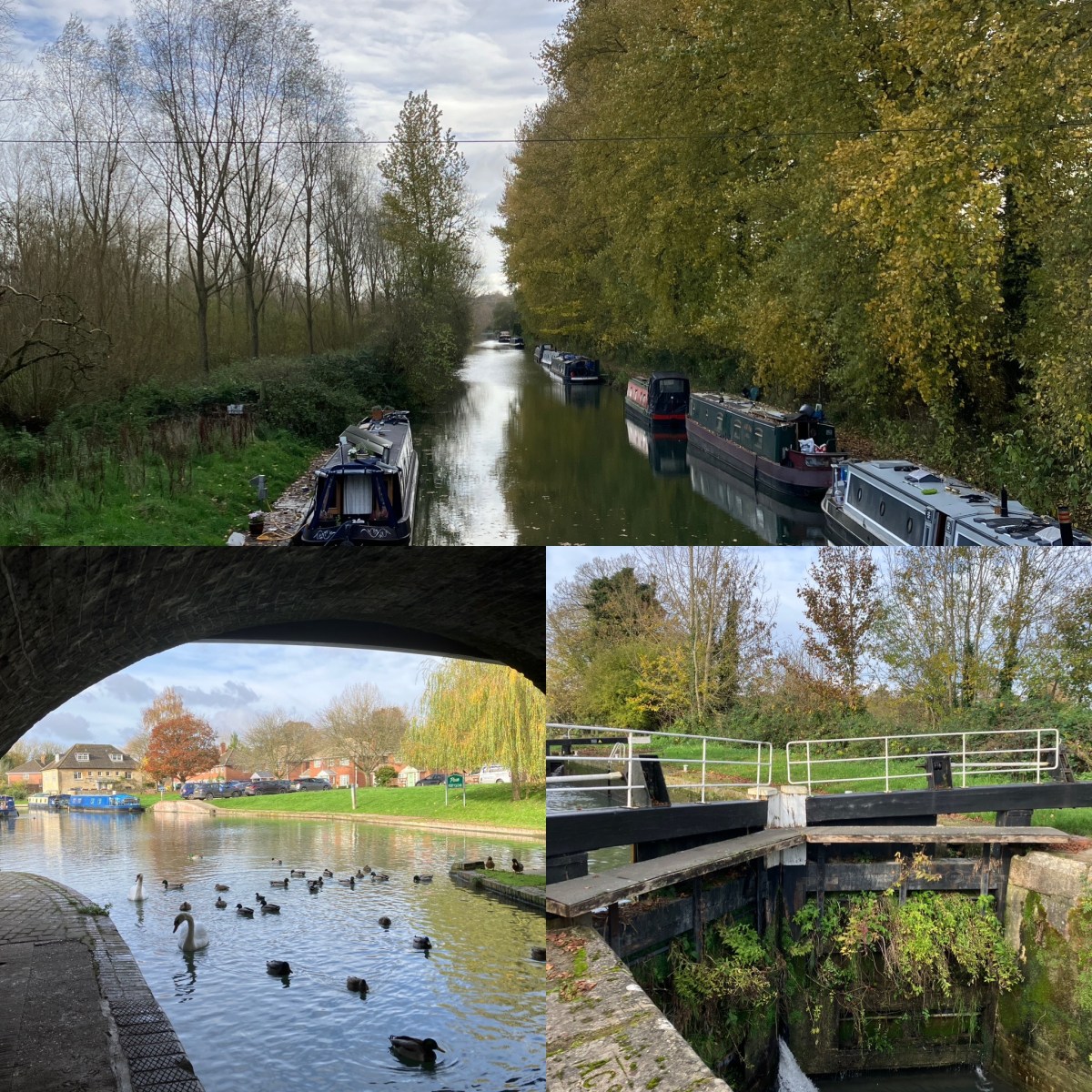
As we got to the confluence of the Thames and the Kennet, we discovered the phobia of one of our walkers. Alfred Hitchcock would approve. The Kennet’s tow path attracts Swans. These Swans are attracted by people with food. With no inclination to get out of the gently flowing river these lazy Swans wait for passers-by to pay attention to their needs. That’s no problem.
It’s called Ornithophobia. A fear of birds. Birds flock when free food is on offer. The worst of these can be thought of as flying rats. I talk of pigeons. That how I think of pigeons. Tom Lehrer[5] had the right idea about these annoying birdies. Frightening them away, at least for a moment, cleared our pathway. Like a flash they returned as we strolled into the pub.
[1] https://www.reading.gov.uk/
[2] https://www.gwr.com/stations-and-destinations/travel-inspiration/blogs/history-of-the-railways
[3] https://www.tripadvisor.co.uk/Restaurant_Review-g186363-d7363678-Reviews-The_Fishermans_Cottage-Reading_Berkshire_England.html
 John Vincent