
It’s not the first time I’ve experienced poor air quality. It’s a wonderful city but, on certain days of the year, the air in the German city Cologne is unpleasant. It can be stagnated, stale and dirty when the weather’s hot and there’s no wind blowing.
It was compulsory. You get a fine if you don’t have one. I remember getting a green environmental badge for my car[1]. This is a scheme by which the most polluting vehicles are banned from the central city. Introduced in 2008, initially vehicles were not banned but everyone had to have a coloured badge. These were red, yellow, or green depending upon the type of vehicle. Now, only green environmental badged vehicles are permitted to enter a prescribed city zone.
Yesterday, I drove from Reigate in Surrey to Croydon. Purley Way in fact. That’s a part of the main A23 road in the London Borough of Croydon. I now wonder at my sanity in doing so. The traffic was abominable. Purley Way is a mass of shopping warehouses, tarmac, and suburban sprawl.
What’s visible is the provisions for the introduction of the Ultra Low Emission Zone (ULEZ)[2] at the end of the month. Cameras and signs. This doesn’t ban dirty vehicles from London, but it does charge them a £12.50 daily to drive into or within the ULEZ zone.
So, here are two different approaches to addressing poor air quality. The German one doesn’t require extensive infrastructure, but it does mean additional policing. The London one is more permissive but at a price. Collecting money from polluting vehicle owners to pay for cameras, enforcement, and publicity. Both require signage to warn drivers of the zone boundaries. Both have their detractors who object to any kind of restrictions.
To me, the problem of poor air quality can not be put on the back burner. You don’t need sensors and precision measurement to know that the problem is huge, real, and persistent. Even in my small Surrey town, the marked difference between days of traffic jams and empty roads is so evident. In the middle of COVID, I walked the High Street of Reigate, and the air was as clear and fresh as a Cornish village in winter. This week, with road works underway the town has been one big traffic jam and breathing the steamy air walking the pavement is not nice. Health suffers and it’s not just the environmental damage.
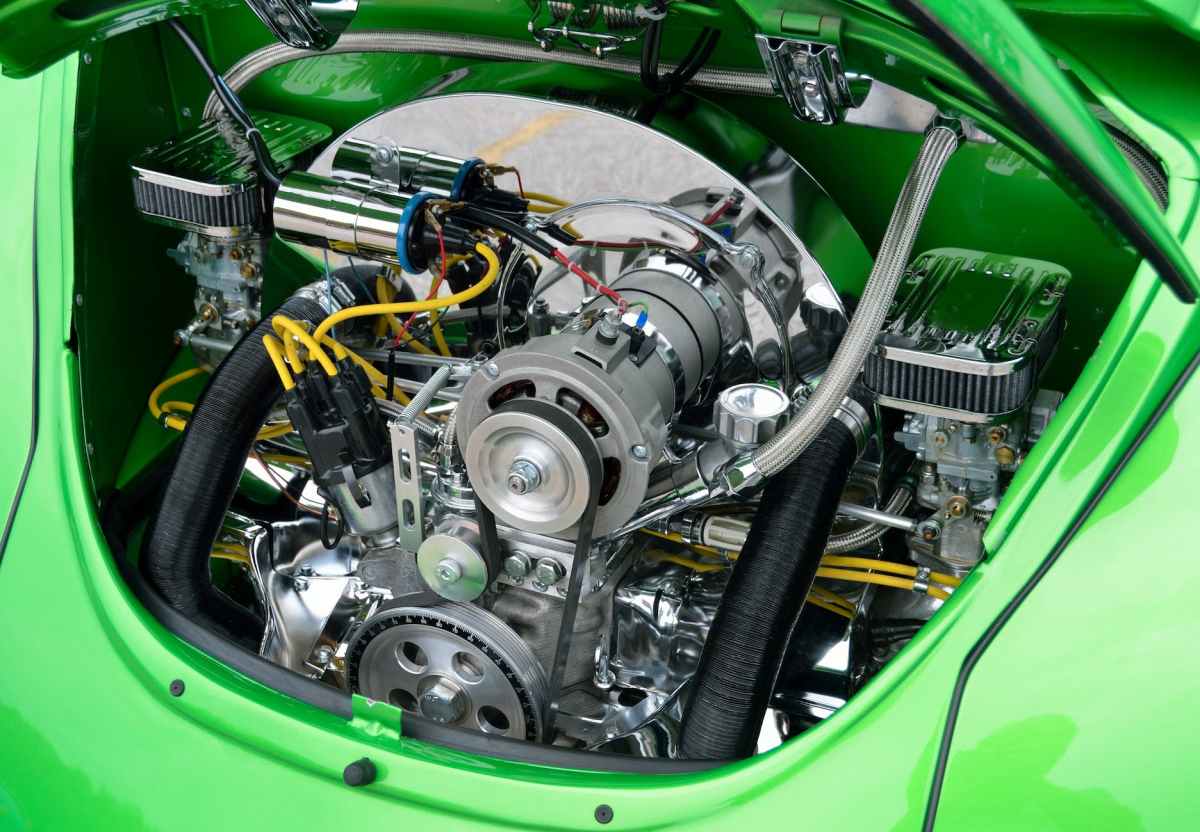
The utility of the internal combustion engine has seduced our communities. Now, the balance between the benefits of driving and the freedom it once symbolised has tipped. The sheer mass of vehicles in urban environments and their daily impact is so damaging that restrictions must be mandatory. There’s no turning back.
In Cologne, these changes are particularly pertinent. It could be said that the whole ball started rolling in that city. In the district of Deutz there’s a monument to Nicolaus August Otto[3]. He was a German engineer who successfully developed the internal combustion engine.
[1] https://www.stadt-koeln.de/leben-in-koeln/klima-umwelt-tiere/luft-umweltzone/die-koelner-umweltzone
[2] https://tfl.gov.uk/modes/driving/ultra-low-emission-zone
[3] https://www.deutz.com/en/media/press-releases/125th-anniversary-of-the-death-of-nicolaus-august-otto

 John Vincent