
Why the UK Should Rejoin

Fine, I’m happy to admit that my march, with thousands of others, through the streets of London on Saturday was not everyone’s cup of tea. There are a lot of people who support the idea of a return to European Union (EU) membership but are reluctant to raise the issue just now.

Often cited is the wave of right-wing politicians who are gaining ground in Europe’s larger countries. It’s as if they are going through their own Brexit like political moment but without anyone of any consequence advocating throwing away their EU membership.

Maybe the UK is ahead in this respect. We’ve been through the confusion and turbulence of the political right-wing eccentrics moment in the sun. They were never mainstream. However, they did hold the reins of power for some disastrous years. Thank God they are now behind us.

I have marched year-after-year because it’s the right thing to do. Tens of thousands from all over the UK have done the same as me. Millions if the numbers added-up from 2016 onward. Our future can be based on cooperation and mutual interests. Ideologically driven conflict and disruption have brought nothing but a lose – lose outcome.

So, what are the arguments for the rejoin movement? It’s all very well to shout at the thing we don’t like. Now, is the time to make the sound solid arguments for the thing we favour.

Let’s take trade for a start. The last UK Government wallowed in gushes of self-praise every time they signed an agreement with any country that was not European. Conservative Members of Parliament wanted to tower over the world like imperial overseers. It was an illusion.

Most of the so called “new” deals that were signed were simply a rollover that meant no change. In fact, more was given away than was gained. All in a desperate attempt to show progress. British farming was effectively shafted by Ministers.

One of the most touted possible “streets paved with gold[1]” was the prospect of a super new trade deal with the United States (US). Under President Trump, the prospect of an advantageous UK-US trade deal was an illusion.

Ironically, a claimed success was the joining of a regional trade block. I know it’s crazy that leaving a gigantic trade block on the UK’s doorstep was followed by joining one covering the Pacific. Yes, the other side of the world. Not only that but the projected gains are minuscule.

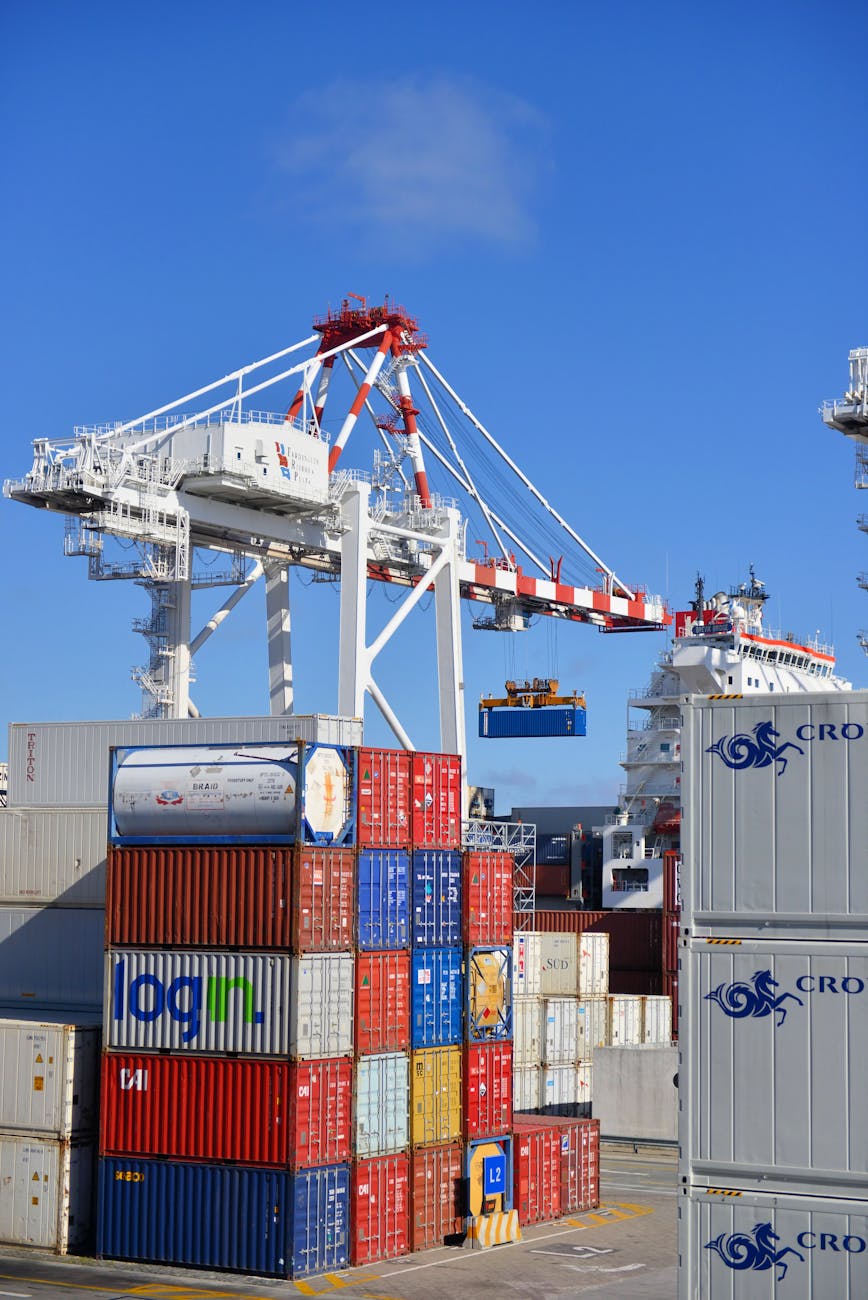
EU membership offers, as it did before, access to enormous trade benefits by comparison with what has been achieved since 2016. The numbers speak for themselves.

If the new Labour Government continues with a form of the fibs told during the “Get Brexit Done” phase, then trouble lies ahead. Next door, the UK has the world’s largest trading block. The value to the British economy of Single Market membership exceeds a mishmash of remote and small deals. There’s a positive way forward and it’s staring us in the face.

POST: It’s worth noting that the 1960 European Free Trade Association (EFTA ) was created, to promote free trade and economic integration included: Austria, Denmark, Norway, Portugal, Sweden, Switzerland and the United Kingdom.


[1] https://dictionary.cambridge.org/dictionary/english/streets-are-paved-with-gold

On Your Farm: 60 Years of Farming Innovation and Change

Like me, the BBC’s “On Your Farm” will soon be over 60 years old. I’m already there and, as a 4-year-old at the time wouldn’t have known there was anything new on the radio. That chunky Bush radio with the large batteries.

That’s a launch one year after the coldest winter for 200 years, in 1963. I don’t remember that winter but was told numerous stories about it. Winter 1963 must have been tough for the West Country farming community. Probably a lot of fun for me a very young boy. Snow for weeks and weeks.

The BBC’s regular farming radio broadcast takes a wide-ranging view of what’s happening in the industry. Needless to say, the elapse of 60-years has seen changes that would have been incompressible in 1964. The sheer scale of enterprises, the power of modern machinery and huge reduction in the labour force may not have been predicable.

That early sixties period was one of great hope for the advancements that technology could bring. We now see that some of the leaps forward that were made were progressive but had long-term negative consequences. Ripping out hedges to make bigger fields and becoming ever more dependent on artificial fertilizers did increase productivity. That came with big costs.

If I’m correct in recalling what my father’s generation said, at the time there was great pride in the modernisation that was taking place. A vibrant competitiveness between farmers to have the most modern machinery and buildings available. National policies encouraged expansion.

There’re pictures of me and my brothers sitting on a new Ford 4000 tractor. Clearly, that modern tractor was the state-of-the-art for a family farm of the time. It’s now a classic at agricultural shows.

1964 was also the year of the debut of Top of the Pops. So, the BBC was busy catching up with the changes that were happening in society. We talk of populism now but pop culture kicked-off at the time I’m recalling.

The idea behind the BBC’s “On Your Farm” was an innovative one. Go out and chat to people about the challenges of their farming world on their working farms. Outside broadcasts were a relief from cultured studio accents and monotone accounts of the great and good. Outside broadcast vehicles and equipment of that era were bulky and sensitive. Making them work in a random field or farmyard must have been a technician’s nightmare. The reward for producers was getting a sense of real life transmitted into the nation’s kitchens and living rooms.

Putting aside the changes in agriculture, the changes in broadcasting are vast. Fortunately, radio hasn’t disappeared. It’s evolved. Now, with an inexpensive handheld mobile and a good microphone anyone can practically go anywhere at any time. Not only that, but given a reasonable internet connection the broadcast can be instant and of superb quality.

So, are we all better informed about agriculture, farming and the British countryside. I’ll let that one rest. One thing is certain. There are more opinions expressed, more often about more subjects than ever before.

I will not say one word about badgers.

The River’s Arms

It’s now called the River’s Arms Close. A scattering of relatively new houses. That’s all that remains of a rough working public house that I knew well in my youth. Not indoors. In the bars. I never visited more than the paved courtyard outside the pub. Afterall, I am talking about me at the age of 12 or 13ish. Until now, looking it up, I’d remembered the pub as being called The Railway.

This pub was just across the road from the entrance to what was then Sturminster Newton cattle market[1]. A huge agricultural market. It was on Station Road. Even then, the railway station and its steam trains had long gone. They must have gone in 1965/66. Then a political axe fell on rural railway lines. On a Monday, the town was a busy place. That was market day.

Scruffiness was a badge of honour. Galvanised steel sheeted buildings and tatty block-built sheds were the order of the day. The feast for the eye was not the buildings, more the people. The noise was overwhelming. Smells were on the rich side too.

This comes to mind because I moved a large and heavy plastic planter containing a healthy blackcurrant bush. Green leaves and wood. My crop of blackcurrants had been eaten by birds earlier in the year. This week’s plan was to find a suitable spot in the garden to transplant the bush ready for next year.

Here’s the connection. It’s to do with fruits. Local produce. In the 1960s, to earn money of our own, my brothers and I would go blackberry picking. There were times when Somerset hedgerows were teaming with mases of blackberries. They still are in a lot of places. We’d fill to the brim used plastic containers. Recycling ice-cream containers. Trying not to squish the delicate fruit.

On market day the courtyard outside the pub would become an auction ground. People would bring local produce and miscellaneous junk in the hope of getting a fair price. Everything would be spread out over the floor outside. Fruit, veg, eggs and strange ironwork and old tools. Around lunchtime a sale would take place. Informal and unpredictable. A huddle of farmers, townsfolk and on watchers. Nevertheless, all the small items were carefully booked in and booked out. For our containers of blackberries, or later in the year field mushrooms, we’d get just less than a pound, if we were lucky. That was in “new money.”

It’s July, so we are not into that season yet. It’s creeping up on us. Fruit trees are starting to look as if they are going to produce a good crop. Blackberries are slowly forming. A time of fruitfulness is coming. That season of harvest is just over the horizon.

Exposure to markets, and their volatility, is as much a life lesson as the benefits of organic produce. In that small Dorset country town, the ebb and flow of market day were as integral to life as the water that flowed in the river. Today, much of that rhythm is history. A new rhythm is running. We go from coffee shop to posh bakery to the purveyors of expensive imports.

Our dependency on national supermarkets and large-scale logistics is mainstream. The heavy lorries that carry food are not full of local produce going to a local market. They come from remote fulfilment centres on main trunk roads. They dwarf the road traffic of the past.

It’s silly to think that we can step back. Times were rougher and cruder but there’s merit in giving thought to the better bits. Today, there’s little incentive for a boy with a recycled container full of fresh blackberries.


[1] https://www.somersetlive.co.uk/news/local-news/sturminster-newtons-bell-toll-today-148980