Tariff Turbulence

Tariffs are back in the daily News again. In fact, they never went away it’s just that more attention getting events have been happening. Tariffs were something specialist trade negotiators talked about before this year started. Now, the word is commonplace.

The simple assumption is always made that everyone knows what the word means. Apparently, the origins of the word are Arabic[1]. Linked to information. Now, it’s a fee that someone must pay. The important bit being “must”. In this context it’s about the import and export of goods. The relations between countries.

A presumption made by politicians, who like these bureaucratic instruments, is that they can help protect a nation’s domestic industry from competition from other countries. Thus, tipping the balance away from investments made abroad to those made at home. This chimes with nationalistic instincts.

If only it were as simple. Globalisation is a reality. Kicking against it has its attractive points, if it weren’t for the overall benefits that it has delivered in recent decades. Much of the technology we take for granted is available at low prices because of where and how it’s manufactured.

One advice given out by banks is to avoid knee-jerk reactions. In other words, the ups and downs and on and offs of changing tariff regimes may seem to demand an immediate response. However, it could be wiser to ride out the turbulence of these early months of 2025. To sit back and let the dust settle.

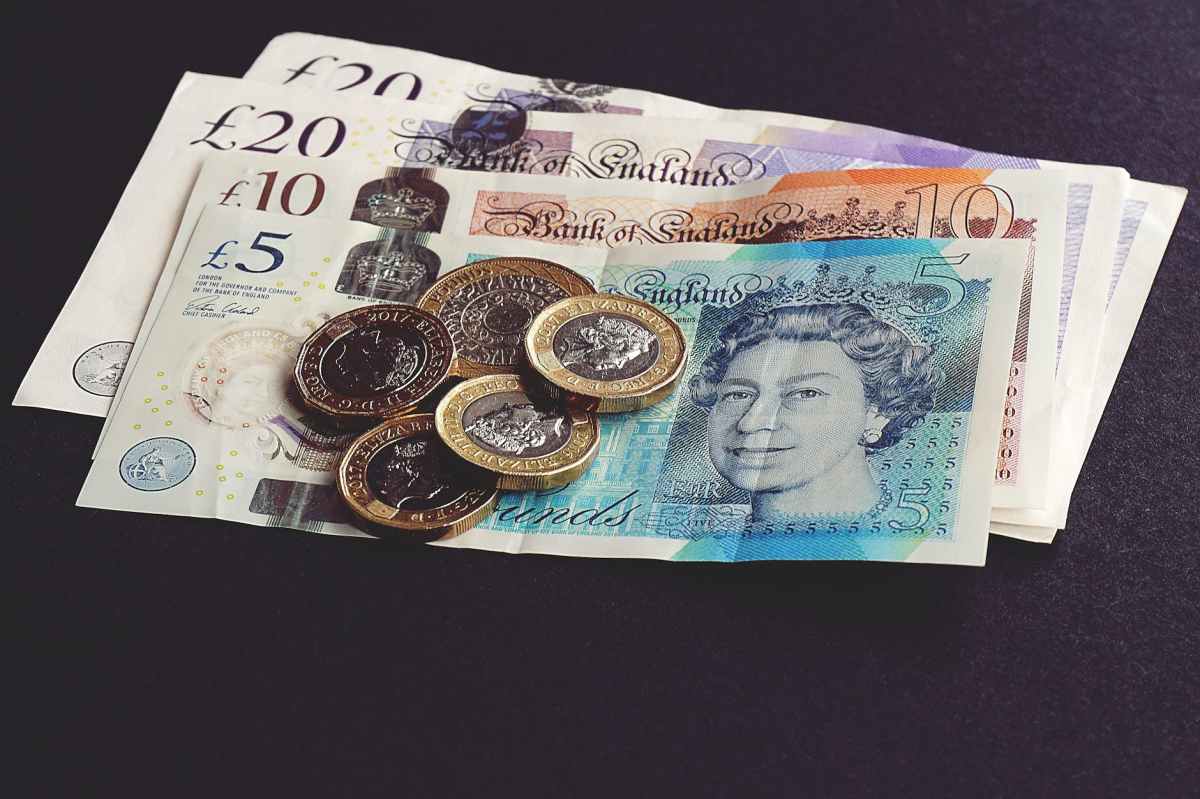
Politically driven efforts to disrupt global trade are likely to impact both importer and exporter. It doesn’t take more than a few minutes walking around a large warehouse store to see goods originating from all over the world. That is quality goods that are offered for sale at astonishingly low prices. It astounds me that I can easily buy a perfectly good basic kitchen microwave for £50.

I hate to say it, but I don’t think there’s anyway whatsoever that a domestic manufacturer could compete with that electrical product’s price and quality even if there was a 100% tariff placed on its import. The story vacuum cleaners is one of designs emanating from Britain but being made in Asia. Globalisation is a reality.

I will make at least one concession. That’s the environmental one. Shipping vast qualities of raw materials and goods around the globe has a real cost. An environmental cost. So, it would be wise, at least, to investigate if domestic production is a viable prospect before automatically assuming an import is better. This is a matter for both industry and public policy.

Not only this point but for some critical products, say steel and semiconductors, there should be a domestic capability even if it’s only aimed at meeting a fraction of the potential demand. Strategic needs are not trivial.

Are tariffs a good way to shift the global balance sheet? To me the answer depends on adopting either a short-term or long-term perspective. Certainly, in the later tariffs are a foolish measure. My recollections come from the history of subsidised industries in the 1970s and the poor products that resulted. It a sorry saga of designed decline. One quick look at the story of the British Leyland Motor Company (BLMC) is a good lesson.

I know for a liberal I sound Thatcherite but competition brings better outcomes than protectionism. That generally depends on a level playing field. Yes, tariffs are a form domestic protectionism and that’s much like a permanent subsidy. Trouble is that permanence is never permanent.

Trump maybe a part-time socialist. If not by word then by action. For the time being the tariff humbug will continue to command attention. In the longer term – I think not. Relearning what has been learnt in the past.


[1] https://blog.collinsdictionary.com/language-lovers/the-fascinating-journey-of-the-word-tariff/

Economic Growth in Post-Brexit UK: A Call to Action

I do remember when there was a British newspaper called The Daily Telegraph. It represented establishment views. Was rather stuffy and what you might expect a certain type of middle-class accountant or lawyer to be reading on their commute to work.

It has become a pamphlet for the alt-right, supporters of oligarchies and whacky think-tanks pumped full of money from climate change deniers and overseas sources.

The sort of right-thinking people who gifted us with Liz Truss as Prime Minister. I shouldn’t be so dismissive because as recent history has shown these daily publications still have influence.

Now, Labour’s Chancellor of the Exchequer is shouting growth, growth, growth from the rafters. Not that her cry is an entirely bad one, it’s just that she is saying this with mufflers on her ears.

The Chancellor is right that the most important issue of the moment is the economy. There are a lot of people pointing out that a quick way to improve the UK’s economic situation is to knock down the barriers we have erected with mainland Europe. Next door is a huge market for our products and services.

Labour was telling us to believe in Brexit and that they could make it work. Most people know that this was last year’s meaningless words spread about before an election. Polling now shows that most people favour closer ties with our neighbours[1].

In some senses there’s little change. People are more likely to see the Lib Dems as anti-Brexit and the Conservatives as pro-Brexit. They remain unsure about Labour’s position. So, when the call goes out from the Lib Dems for closer economic ties with the European Union (EU) a whole host of predicable nonsense is said and published in newspapers like The Daily Telegraph.

Labour’s dithering makes the possibility of growth, growth, growth seem as unreliable as their protestations of love for Brexit before last year’s election.

The direction of travel is mighty obvious. Brexit has failed. Corrective action is long overdue. Forward thinking politicians really need to step-up and fight for a prosperous and economically successful Europe. One that includes us.

Labour has this term of government to make its mark. If it doesn’t then the possibility of extreme political elements getting a foothold in the UK are significant. Dithering for 5-years will be the biggest mistake after that of 2016. Corrective action may have a political cost in the immediate short-term, but the long-term benefits are there for all to see.


[1] https://yougov.co.uk/topics/politics/trackers/how-the-government-is-handling-the-issue-of-brexit-in-the-uk

What If Semiconductors Didn’t Exist?

There are moments when it’s dark and grey outside. Moments to ponder a what-if. That’s a what-if something hadn’t happened or physical laws aren’t what they have been found to be.

In my youth I do remember making a “crystal” radio receiver[1]. A relatively fragile germanium diode and a couple of other components scraped from junk radios, record players and TV sets. It worked quite well. It was a good introduction to the theory of amplitude modulation (AM). The diode detector demodulates the radio signal and provides a faint signal to listen to. The whole arrangement is crude but cheap and simple. It depends on that useful device – a semiconductor diode.

My what-if is right there in plain sight. Let’s put aside the physical laws that give certain materials their properties. What-if the whole world of semiconductors didn’t exist?

The most immediate repercussion is that this keyboard, screen and computer would look entirely different, if it existed at all. What I’m doing now is dependent upon millions of semiconductors all doing exactly what they’ve been designed to do. Easy to take for granted – isn’t it. Our modern world is enabled by semiconductors.

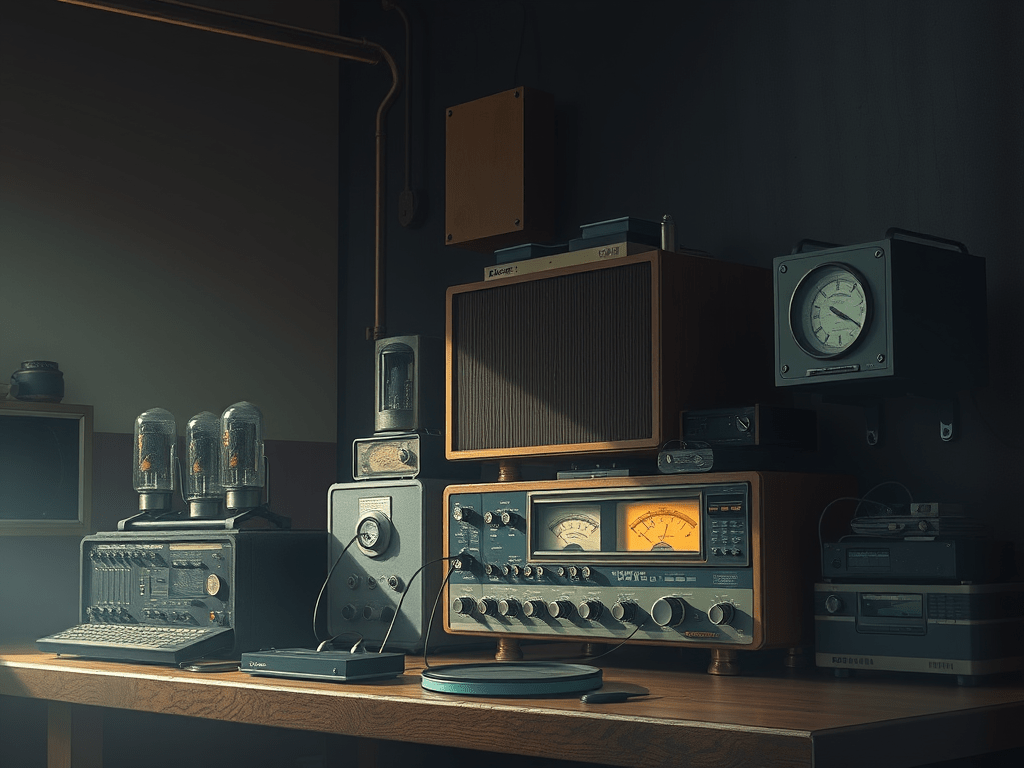
Electronics would still exist. Before semiconductors were understood thermionic valves provided the ways and means to control electrical signals. Don’t think that valves[2] have disappeared in the 21st century. There’re enthusiasts who prefer them for amplification. The sound is better (different) – so they say.

Unlike semiconductors, thermionic valves don’t lend themselves to miniaturisation. A world without semiconductors would be populated by machines that are considerably larger and heavier than those of today. But it wouldn’t be a world without sophistication. Just look at the English Electric Canberra[3]. An incredibly capable aircraft for its day. It lived a long life. Without a semiconductor in sight.

It’s difficult to imagine e-mail without semiconductors. It’s difficult to imagine the INTERNET or the mobile phone. Not that such key markets wouldn’t be satisfied by some other means. The transition to a global dependency on digital systems would probably have been considerably slowed. Maybe the pace of life wouldn’t have accelerated so much.

I don’t think we would have been trapped in a 1950s like society. Only that patterns of work would have taken a different developmental path. Would it have been the one painted in the grim tale of 1984? No. Even that takes a position of a freezing of the state of human progress.

A non-semiconductor existence would have meant less proliferation of electronic devices. It might have led to a less wasteful society where repairing equipment was given more weight.

I suspect that large global corporations would inevitably have a hold over whatever technology was most popular. That side of human behaviour is technology agnostic.


[1] https://www.nutsvolts.com/magazine/article/remembering-the-crystal-radio

[2] https://brimaruk.com/valves/

[3] https://www.baesystems.com/en-uk/english-electric-canberra

Budgets

You can’t live with them, and you can’t live without them. That’s budgets. Most of us budget even if we don’t write it down. I’ve got a certain amount in my bank account. If I spend more than is stamped at the end of my statement, then trouble may ensure. Not always given our modern dependency on credit. A problem arises only when spending gets out of control.

Mr Micawber cautioned about debt’s downside: “Annual income twenty pounds, annual expenditure nineteen and six, result happiness. Annual income twenty pounds, annual expenditure twenty-pound and six, result misery.” In his time, Charles Dickens was acutely aware of what unsustainable debt could do to people.

We’ve had weeks where the news media has created a landslide of content on a budget. The repetition of point scoring has got tedious. It’s way out of normal everyday human experience. I don’t know about you, but I can’t easily relate to a number like £1,226 billion[1]. Every year public expenditure totals numbers of that order. It happens. It’s real.

Today, our UK “billion” is a thousand million. That’s spelled out as a one followed by nine noughts. At one time in the past the UK “billion” meant a million million. That’s spelled out as a one followed by twelve noughts. That got dropped for the sake of international harmony.

I have used such numbers in lectures on aviation safety. To think, I often got people glazing over when I talked about ten to the minus nine per flight hour. That’s a billionth of something. A mighty small number. In these cases, a number denoting a probability of something happening.

So, here we are in October getting excited over a change of couple of hundredth of typical annual national expenditure. Not without reason. That figure sound like a small number, and it would be, if it wasn’t for the subject Dickens raises, namely debt.

Wisdom comes from learning from experience. Lessons learned are incredibly valuable. That’s not rocket science. Only we need to factor in how easily we forget bad experiences.

In terms of budgeting, recently two reckless politicians taught us a lot[2]. Truss and Kwarteng sound like a comedy double act or a dodgy back street lawyers office. Those two monster brains had the marvellous idea of borrowing more to give it away. In a short flash of genius what they did increased borrowing costs and spooked just about everyone.

Debt matters. Nation States are not like people, so the home economics analogies don’t stand up. However, borrow too much without being absolutely clear as to the answer for question like – who, what, where, when, why and how and the results are likely to be extremely unpleasant.

Let’s see if the day ends with a pint of beer being more expensive or not. Love them or hate them, budgets are not going away anytime soon.


[1] https://obr.uk/forecasts-in-depth/brief-guides-and-explainers/public-finances/

[2] https://www.niesr.ac.uk/blog/truss-kwarteng-mini-budget-one-year