Unity and Conflict

New news? Party sources say x% believed there should be a different leader. So said a notable political correspondent under the banner “Labour leaders try to restore morale.” The article went on to say: “…arguing that the party must pull itself together and “steer a straight course” if it wanted to win the next general election.”

“But Mr Kinnock, facing mounting criticism, has chosen a different forum to launch his fightback after an unhappy three weeks that has seen the Conservatives take a 12 percent lead in the polls.”

Party politics can be a terribly cruel sport. That’s not new in all of history. This quoted article, from the 1980s has a kind of resonance with what’s happening now. The roles are different as Labour was trying to find a way of ousting the Conservative Party from power. It took them until 1997 to find a formula that worked. There’s no doubt that Kinnock did the groundwork that made the electoral success of New Labour possible. Reading my newspaper cutting, it wasn’t exactly a pleasant time.

Is this what’s happening to the Labour Party now? Sir Keir Starmer did the groundwork to win power. But Mr Starmer, facing mounting criticism, has chosen to continue his fightback after an unhappy few weeks that has seen the others prosper from his numerous shortcomings.

What next? Is it for the next Party leader, and thus Prime Minister, to make effective use of the power that remains? The threat is no longer the past enemy, the Conservative Party. Now, Reform UK are giving the impression of being the greater opposition come the next general election.

Why are we so distressed at squabbling within an important political party? This has been an almost permanent feature of British politics.

A combination of at least two fixed elements makes conflict inevitable with Parties. As well as between Parties. One is the adversarial style of British politics. Two is the primitive First Past The Post (FPTP) electoral system.

Both elements assume that two of the largest political Parties will forcefully lock horns. To maintain their preeminent positions, as the largest, they must encompass a lot of people who simply do not agree with each other. There’s as much politics within the politics as there is in the real world. Leadership is as much about maintaining a degree of unity as it is governing the country.

With decades of accumulated experience, it might be reasonable to think that the established political Parties would have this one nailed. Surprisingly, that never seems to be the case.

The advice in the 1980s was: “His closest friends believe that the only way forward is to try to turn the situation around by going on the offensive against …………….” The target for an offensive here has changed but the idea is a classic one.

Will we be seeing Labour Prime Minister Sir Keir Starmer mount an all-out offensive against UK Reform? Thus, keeping his colleagues from plotting and scheming. I wonder. Certainly, this will make for an interesting month ahead.

Local Elections: Challenges and Opportunities

Listening to the leader of the opposition in the UK is like listening to a paddle boat[1] rider whose getting swept out to sea. Paddling ever faster, piling on the rhetoric, with no idea how to get back to the shore. It’s probably a big plastic duck with flaky paint and no safety certificate.

Equating talking tough with talking faster doesn’t cut it. Using the word “plan” without having one is aiming for deep trouble. Doubling down on past errors of judgement isn’t the least bit convincing. Drawing intendable distinctions, as if in front of a judge, impresses few listeners.

May’s elections coming around the corner. These are predominantly local elections. So, when Party leaders bypass the hardy perennials, like the state of the potholes in the roads, and veer off into international politics it’s clear they haven’t much to say. Local authorities provide a substantial number of vital services and so there’s plenty of subjects to address, if they would be minded to do so.

Here we are in a state of play that has a real air of novelly about it. The two tribes that have dominated politics in this country are struggling in the doldrums. Both the Conservative Party and the Labour Party are floundering. Tarnished by a lengthy list of past mistakes. Their current leaders unable to project a vision for the future.

Here we have no council elections this year. Either elections are held once every four-years or a proportion of a local authority are up for election every year. There’s merit in both schemes.

In the first case there can be a more dramatic change of leadership as a whole council changes in one go. That can give the winners a clear mandate to meet a particular promise. On the downside, one emotive campaign issue can dominate, even if it’s small relative to the impact of a new four-year administration.

In the second case there’s a more gradual change of political complexion of a local council. More chance of continuity of actions and polices. Also, the local electorate get in the habit of expressing a view and an election every year at the same time. On the downside this can put more power in the hands of the council officers than the elected councillors.

Overall, I prefer annual local elections in May, despite the cost associated with their running. It’s a better way of engaging the community rather than a build-up to a bigger event. It’s also easier to find candidates who are willing and able to stand for election and likely to see through a full-term in office.

This week is a week for political scientist to chew over something other than opinion polls. Real ballots, in real ballot boxes are so much more real. Professor John Curtice will be on every media outlet. We will see if the predication of the steady decline of the Conservative Party and the Labour Party come about.

I expect that result will be the one that people are talking about at the end of the week. In my view there will be a distribution of votes across the choices that are on the ballot. This will not mean greater clarity or definition of where we are heading as a country. As a liberal, I can’t complin if there’s a great diversity of views expressed.

What I can say it that we will need a better electoral system that copes with a multiple Party array of choices. Electoral reform[2] is likely to become a necessity.


[1] https://swanpedalboats.com/ducks/

[2] https://electoral-reform.org.uk/

Understanding Primary and Secondary Legislation in the UK

Clear again is the conservative politician’s propensity to trade on ignorance. Remember the slogan of the big red bus of the Brexit campaign. All the abject nonsense that was said and written in 2016. It would be extremely charitable to call these intentional inaccuracies. There’s a three-letter word that sums them up. In theory, Parliament has rules. In practice, those rules are abused. That is until miscreants are exposed. Those politicians that misled the House of Commons over parties in Downing Street during the COVID pandemic shouldn’t be forgotten.

It’s a simple question. How many people know the difference between primary and secondary legislation? As far as I know these aspects of the UK’s method of making laws is not taught in schools. I think it’s vital that people of all ages get the opportunity to explore how their democracy works. Including its inherent peculiarities.

[Here’s a national event, later in the year, which can help. It’s free and already possible to plan for UK Parliament Week in November 2026[1].]

Back to the difference between primary and secondary legislation? A tabloid newspaper editor may see that question and fall about laughing. On the basis that the subject is not widely understood, instead of explaining, they may choose to write any drivel that serves their agenda. Day after day this sleight of hand provides bold headlines and support for misleading political campaigns. Then, if the truth pops its head above the parapet cries of Fake News ripple through the right-wing media.

By the way, the sad fact about this common distortion is an erosion of trust[2]. It’s no wonder that Parliament can be seen as remote from real-life. It’s regular inhabitants a strange breed of people who go native as soon as the walk through its hallowed doors.

During the UK’s membership of the European Union (EU) it expanded. In certain specific technical areas, its “competence” grew. Member States agreed to give it new roles and responsibilities. As an example, before aviation legislation was harmonised in Europe, national legislation had to be amended to accommodate every major change that developed. In the UK, both primary and secondary legislation were applied. They are now. That consists of a UK Air Navigation Act and an Order[3]. The Act being the primary legislation and the Order being the secondary legislation. These two rules are not new as they have been part of the UK’s national aviation landscape for decades.

Above here I’ve kicked at the UK’s tabloid media. Well, they are merely doing what they have always done. There’s something in morbid consistency. What’s more disturbing are the lines being taken by a national media that might be expected to be objective. Read this short article and the predisposition shines through, and this is the BBC[4].

Sir Keir Starmer is planning a law which will mean that the UK government can adopt EU single market rules, without a normal parliamentary vote.

One, it’s the personalisation. This is the government of the day and not an individual. Two, it’s the incorrect use of the word “normal.”  As I’ve stated, secondary legislation is perfectly normal. In fact, the UK’s normal regulatory structures depend upon it being in place and up-to-date.


[1] https://www.ukparliamentweek.org/en/sign-up

[2] https://fullfact.org/media/uploads/full_fact_report_121021.pdf

[3] https://www.legislation.gov.uk/uksi/2016/765/contents

[4] https://www.bbc.co.uk/news/articles/c937jkvp3w8o

The Ever-Evolving Debate in the UK

It’s astonishing to me. On this site, I’ve been scribbling away for nearly a decade. My first item was posted at the end of April 2016. It was mostly in reaction to the national referendum that had been called on the United Kingdom’s membership of the European Union (EU).

I’d returned to the United Kingdom (UK) after 11-years living in German. In Cologne. As you might expect my reaction to this peculiar referendum was one of bemusement and shock. Had my home country gone completely off its trolly whilst I’d been focused on other matters?

We now know that it was sheer nativity (and a degree of vanity) that brought about this unfortunate situation. One of our privileged public schools educated Prime Ministers (PMs) took it upon himself to deal with an irritating divide in his political party. He was aided and abetted by a former leader of the UK’s most pro-European liberal political party (Nick Clegg). Go figure that one. At the time, Tim Farron was the leader of the Liberal Democrats. Sadly, capable fellow that he is, he had about as much political influence as a flag in the wind.

The campaign to remain as an EU member should have had all the campaign advantages. Lack of planning and imagination on the part of David William Donald Cameron, and those who surrounded him, meant that advantage melted away.

Reading my past words, it seems that I’d hit the nail on the head with this short line.

Migration is the biggest issue for some people when it comes to the EU referendum vote.

Cameron and Co majored on the economics. A number crunchers paradise but shamefully remote from the people who mattered – the British voters.

I’ll stick with the theme of peculiarity. Guess what, after Brexit, now a decade on, that short line is still top dog. What that tells me is that those on the right wing of politics in the UK will never ever be satisfied. To the point of building an impenetrable wall all the way around the country (rather than a path[1]). To shun anyone who they can label as a foreigner.

Those who profit from inequality and polarisation will never ever stop this push to ever most extreme positions. They have been frighteningly successful in that the political centre in the UK has moved gradually to the right. Gravelly, the cost to the average citizen has been high.

After a decade of reflection, the nation needs to get away from building walls and pilling on layers of domestic bureaucracy. The vision of the UK as a big gated community with arbitrary partisan government controls is a dumb one.

It’s fine to say that in early 2016 none of us could have foreseen COVID-19 or Russia’s foolish drive to war. We couldn’t have even foreseen President Trump’s second term in the US, although there are commentators who had that one called.

There’s a long list of predictions about Brexit that have come true – most of us are poorer.

Ironically, global matters are having more impact than ever. The need for regional and global cooperation is self-evident. Building stable institutions to serve that purpose remains of paramount importance.


[1] https://www.nationaltrail.co.uk/en_GB/trails/england-coast-path/

Dysfunctional Culture of UK Politics

It’s as true today as it’s aways been. Well, that sound like a famous bread avert. The phrase “as good today as it’s always been,” was used for years by one notable bread maker in the UK. A memorable slogan that painted a picture of tradition and continuity.

What I’d like to do is to take the word “good” out of the equation. I’m not talking about our daily bread. Or the need to meld tradition with a modern industrial reality. However, there is an enduring appeal when it comes to selling ideas. A linking with some mythical golden age.

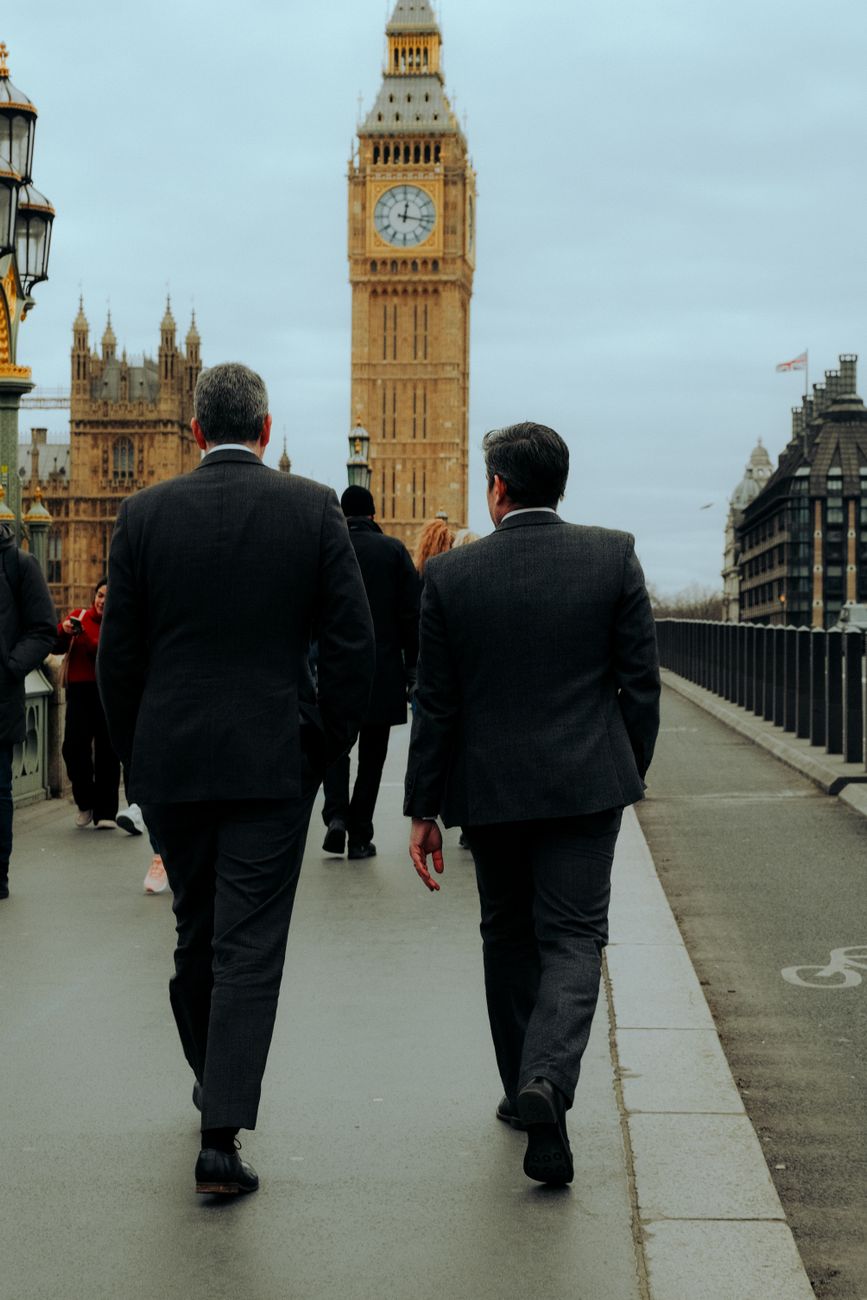
Paddy Ashdown, the former Liberal Democrat leader whose memory is not entirely lost in the mists of time, was not a fan of the Westminster culture[1]. That’s the political culture that pervades the British Parliament and its environs.

He shared the view of many British people that Westminster is grossly “out-of-touch” with life as it’s lived across the nation. Our democratic institutions often alienated people. Not by intention but just by being what they are and acting the way they do. The core of British politician’s concerns come across as detached and insular. More tied up in big egos, infighting, and inflated pompousness. Protecting their own interests.

Now, I know the insipid excuse is to say – surely, politicians are like that throughout the world. Aren’t we lucky to have such ancient and noble traditions. A heritage that others admire.

Paddy knew what he was talking about having been a Member of Parliament (MP) a long time. I first met him in the 1980s, when he was a young idealistic newly elected MP. He was the guest speaker at an evening event in Cheltenham. Full of ambition and vitality.

This week, neither of the two largest political parties in the UK covered themselves with glory. Quite the opposite in fact. It was not pleasant to see or hear.

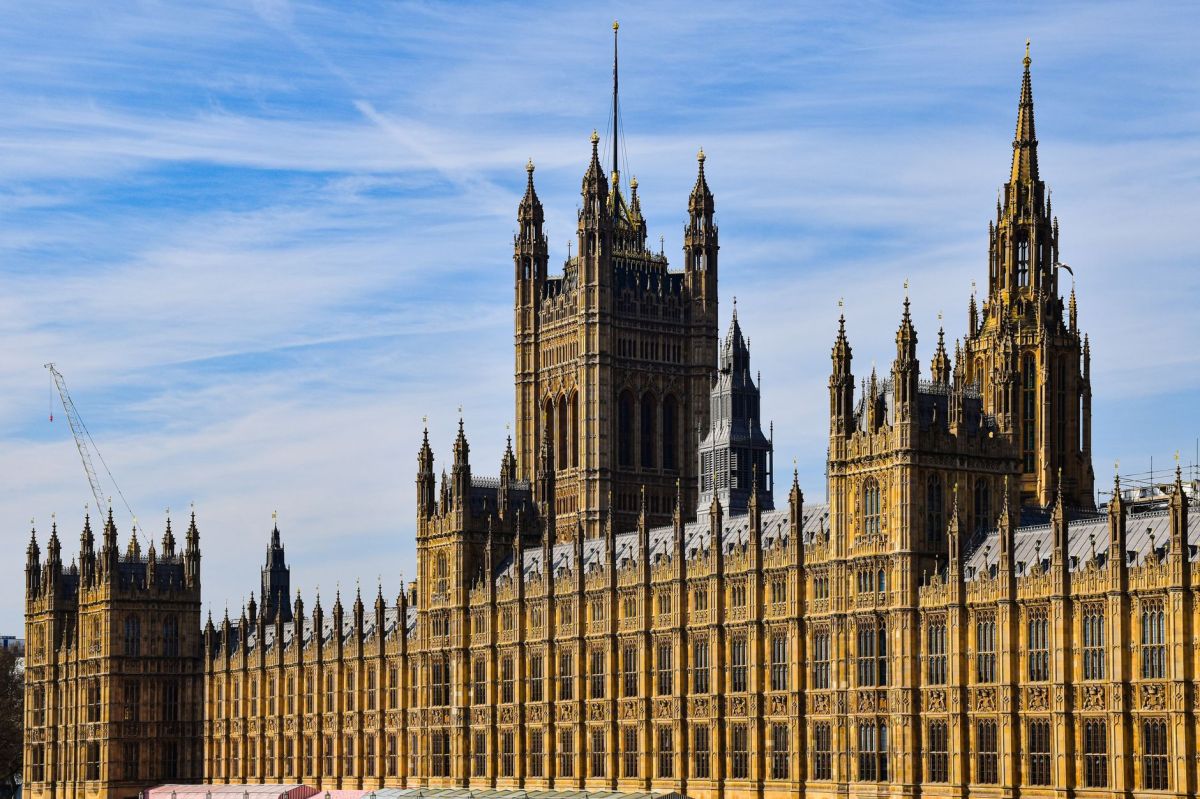
Labour became a stuck record. Vacillating and dithering. Increasingly then sound like their predecessors. It’s a kind of Westminster conditioning. A bland mediocrity that seeps out of the gothic towers of Parliament. Supporters of Labour twist and turn with despair.

The Conservatives are in more trouble for a whole host of reasons. Not least their past performance. What we are witnessing is a peculiar dance by their leader. It involved constantly looking over her shoulder and spinning around at the same time.

Whether we like it or not the problem is our problem. With our institutions becoming ever more dysfunctional over a period of decades the door is open to extremist forces. The more we pretend that Westminster is working the more voters look elsewhere.

The British media are no help in this respect. Instead of shining a light on a dysfunctional culture they race to be part of it. Getting excited at every crash and upset. Every scandal and broken promise. Building careers in the same way as the politicians they report on.

There’s no easy answer. First, it’s important to recognise the problem.


[1] https://www.independent.co.uk/news/uk/politics/ashdown-says-outoftouch-westminster-alienates-voters-disillusionment-could-lead-to-extremism-liberal-democrat-leader-warns-1493502.html

Manchester

Crunching numbers after a British by-election is rather like taking one racehorse win and saying that all races will be won by that horse in future. There’s one or two who get hysterical. A test of public opinion, in one spot on the globe, is a good indicator. It’s not an absolute pointer to every future event.

How can I possibly disagree with Sir John Curtice[1] this morning on the BBC. He’s that human hardy perennial of domestic election analysis. Number one guru that the media runs to. A track record for an on the money sum-up.

In essence, the British electorate wishes to support candidates who can articulate their concerns. No prevarication, all manner of obfuscation or jam tomorrow speeches. Preferably tailored to the location where they stand.

Sir John is thinking like this John. In moments, as per yesterday in Manchester[2], clarity matters. True, that in a by-election it’s easier to do for a candidate who carries little political baggage. A fresh set of well-presented phrases and a new broom. A relatable individual.

Not for one moment do I believe that the Green Party will surge forward so powerfully as to become a national leader. What may happen is that, with the fragmentation of the British political landscape, the Greens will play a bigger part than they have in the past.

And you know what? As a liberal, I’m fine with that shift. Balance is so important if positive change is to happen. Representation means just that – representation. If the Greens say the exact opposite to the Reform Party, which mostly they do, then they will occupy the two ends of the classical normal distribution – the bell curve.

Perhaps, I need to be careful with this basic analysis. My presumption is that most people are not highly involved in everything party political. That on the typical doorstep often the key task is not to engage in detailed debate but to remind people that there is an election taking place. That the tie to traditional voting patterns continues to weaken.

The last one on my list is perhaps the biggest. Gone are the huge factories and industrial heartland that provided the Labour Party with their core support. Gone are the dependents of the shire country manor houses that provided the Conservative Party with their core support.

In 2028 or 2029[3] the make-up of the British electorate will have changed markedly. Seems obvious to say – doesn’t it, but politicians love to fight the last war not the next one. The political landscape will have shifted. Traditional voting patterns will have further disolved. There will be no let-up in the dynamic nature of public discourse. A small number of big issues will dominate the campaigns of the parties able to make an impact.

Clarity will matter. Distinctiveness will matter. Relatability will matter.

In the background, a bucket load of past performance and costed polices will be chewed over by professional commentators. That will not be the deciding factor. At the end of this decade there’s a break away coming. Busting out of past patterns. Setting new horizons.


[1] https://www.bbc.co.uk/news/articles/cwygpdjq9jjo

[2] https://www.manchestereveningnews.co.uk/

[3] https://www.instituteforgovernment.org.uk/our-work/topics/parliament-and-constitution/general-elections

Political Landscape

One of the motivators in politics is that prospect of the shining city on the hill. The ability of an able politician to articulate a vision of a future where aspirations are met, harmony pervades the land and the world becomes a better place for all. Naturally, this expression has religious originals. That interweaving of religion and politics is hardly new. It’s us. It’s us humans who give form to our desire to see our communities thrive and adversity overcome.

However, this ability to project hope isn’t the only tool in the politician’s toolbox. The other side of the coin is fear. Sadly, this gets used just as much as in rhetorical flurries and backroom decisions making. As the week has passed so there’s been a fair amount of both.

I like to think that, of the two, hope transcends. It is not an even coin. Our in-built propensity to strive regardless of the barriers and failures along the way, that’s powerful.

What am I saying? It’s that loosing sight of the shining city on the hill and getting stuck in the weeds of everyday gloom and despondency, that’s the monster problem.

Scandals will come and go. It’s a national preoccupation. That’s not to say that such each and every one deserves significant attention. In the most recent one, involving the UK Prime Minister (PM) and a prominent former Labour politician, there’s clearly much work to do.

It seems to me that the whole process of making appointments to significant national posts needs a thorough review. The discretionary powers that a PM has are a key part of the job, but that exercise of power without sufficient scrutiny has led to dangerous errors being made.

Thus, we have a serious man who espoused a brilliant future, at the last UK General Election, only to deliver more of the same. True, the current PM hasn’t yet plummeted the depths of the Johnson or Truss era. A wave of relief sounded across the nation when those two Conservative politicians were effectively banished.

Righteousness is not something that sits well with a cynic. And our daily News loves to adopt a cynical tone. Every journalist must have a streak of it running through them like a stick of rock. On the positive side, in many ways when political scrutiny fails it’s the News media that we depend up. Maybe to shine a light on the less than shiny city on the hill.

At this moment in early 2026 there’s good reason to be concerned. Now, at the dispatch box in the House of Commons we have two gladiators who want to make mincemeat of the opponent but are each covered in a disagreeable mess. Both as a legacy of incidents that their Party has had a hand in. It’s easy to say – twas ever so. Only that’s not good enough in 2026.

It’s as if both Party leaders have wadded through a muddy smelly swamp to meet face to face. To meet covered in mud, slime and weeds that they have dragged with them. Not an attractive sight. Neither in a position to project the prospect of a shining city on the hill. Credibility is low with both parties. These are strange times.

[What might happen if more than 45 Conservative MPs jump to the Reform Party? Crossing the house could become an avalanche breakdown. Will we see the Liberal Democrats as His Majesty’s official Opposition? That would surely put the cat amongst the pigeons.].

Reflections: Decade Since Brexit

Ten years ago, the world was a different place. “The past is a foreign country”. That bit is true. I still had an apartment is Cologne. Although, that phase of my life was coming to an end. The first two months of 2016 were about wrapping up the loose ends. Deregistering, as is the way when leaving German. Coming to a settlement with my landlord. Packing up and moving back to the UK. Saying goodbye to my regular haunts. Saying goodbye to a wonderful city.

Being an astute watcher of the UK political landscape, I could see that a vail of discontent was hovering over my homeland. There was a frustration amongst those in government. Can this endless debate about the UK’s place in Europe be resolved? Can it be knocked on the head once and for all?

The UK Prime Minister (PM), David Cameron was sitting on a small majority after the General Election of 2015. Conservatives were nervous but wanting to retake the agenda by trying to put to bed the Europe question. As it turns out Cameron made a grave mistake. He entertained the notion of a national referendum to advise the government on what to do next. An act that was uncommon to the UK’s normal way of doing business.

Probably one of the most foolish political acts a UK PM has taken in a very long time. Naturally, in 2016 few had an idea of the chaos that would be unleashed by this attempt at quelling internal Conservative Party wranglings. It’s true that these wranglings were not new. Just perpetual or should I say perennial.

My return to the UK wasn’t a celebration of the achievements we had made in Europe. That collectively we were in a much better place than before. That we had build something to be proud of. No, it was more of a submersion into an angry and emotional row. A heated row littered with misinformation and just simple run of the mill nonsense.

As I write this it’s plainly evident that the experiment, that was Brexit, damaged the country. Not only that but it resolved nothing. Instead of settling an issue it stirred up animosities and tribal conflicts. Today’s soap opera on the right-wing of UK politics is evidence enough of unresolved rivalries and ideological divides. An insular mindset and unresolvable differences.

In January 2016, there was no practical plan to leave the European Union (EU). It was almost unthinkable. Surely sensibility would prevail. That’s the political trap that Cameron fell into. Dare I say an almighty display of his cultured public-school arrogance. Convinced that if arguments were put to the public authoritatively, logically and rationally a remain result would be a simple foregone conclusion. That the political risks were manageable. That’s how wrong a man in power can be.

Moving on a decade. Yes, it is that long. Lots of water under the bridge. To the idiots on stage now, I say: the UK is not broken. It surely isn’t in as good a place as it could be. Had Brexit not taken place then we’d all be much more prosperous. We would be contenting with continuity. That includes squabbling right-wingers, but the fact is that they will never ever desist.

What’s sad is that the opinion polls say that a significant number of people want more of the same. More nonsense from the people who brought us Brexit in the first place. More from those doomsters and has-beens who complain without any realistic ideas of how to solve problems. A karnival of conmen.

Now, in the UK we have two right leaning political parties that are almost the same. One being the Conservatives and the other Reform. Each trying to outdo each other to attract the same voters. Stirring up discontent wherever they can find it. Projecting a negative image of the country whenever they speak. Feuding in a way that should convince people that neither is fit to govern.

POST: These folk explain it all in clay. Claysplained (@claysplained) • Instagram photos and videos

Pitfalls of Messaging

Listening to a Government minister bleat on the radio this morning, I do wonder how they ever became a person of influence. It’s as if the elevation to Westminster has wiped all their political sensibilities and replaced brain cells with wet putty.

The general theme is that this UK Labour Government has got to get its act together. It seems obvious to say. However, as they plod on talking of aims and ambitions the trend of public opinion is shifting against them with potentially dire consequences. The sad reality is that this Labour team has only been in power for a little over a year. Although they are really struggling, in our heart of hearts, most of us know that they are nowhere near as pathetically appalling as the past Conservative rabble of May, Johnson and Truss.

Here’s something that I don’t thinks works. It’s trying to scare supporters, and the public by saying repeatedly that if we don’t win you over the evil ones will grab power. In this case it’s the spectre of the Reform party extremists. It’s not a return of the Conservatives. They are going down their own freshly dug rabbit hole never to be seen again.

It’s almost to admit that – we (Labour) are pathetic but those who could come next are even more pathetic and dreadful with it. That approach doesn’t win an argument. Maybe it does scare a cohort of political activities to deliver one or two more leaflets. It doesn’t make, as was once said, the man or woman on the Clapham omnibus feel any better.

To me this morning’s Labour minister sounds like they are saying: sod it, this is harder than I thought it would be, but don’t you dare blame me. If you do blame me then monsters will devour the land and there will never be another chance to make the world a better place.

Let’s just say, for good measure there are no Elysian fields where every day the British tabloid newspapers sing the praise of a Labour government. Where cuddly commentators heap praise on Government’s achievements. Where opposition politicians have nothing to say because they are stunned into silence. Contentment sweeps across the land.

For me one of Labour’s most stupid lines is that there are certain subjects that can’t be mentioned or at least mentioned as if something was going to be done. That these subjects merely fuel the opposition and although we (Labour) may have strong feelings about these subjects we must be silent and non-committal.

Talking about Brexit for more than a minute, and the harm that it has done the country, is too dangerous. It’s like giving the Reform party dog a bone. As if right-wing extremists wouldn’t do what they do regardless of any bones, thrown or otherwise. They will do what they do.

The Labour party comes across as with the same caution that they had in the run-up to the last UK General Election. It has been described as carrying a valuable Ming vase. So scared of dropping this metaphoric vase that extreme caution dictates every move. Constantly looking over their shoulder anticipating an avalanche that might consume any possible success. A kind of neurotic sterility that’s as attractive as grey paint on a grey wall on a grey day.

There was a time when I joked about former UK Prime Minister (PM) John Major’s attempts at regain public support. His wooden soap box in the streets. His slogan – back to basics. He was living under a shadow. Maybe his timing was poor. Maybe for each political idea there’s a time and place.

That standing and talking honestly on a tatty soap box, that human touch is perhaps what the current PM needs. Can he do it?

A New Customs Union

Let’s not put up taxes. Let’s trade more. Seem obvious. Well not in late 2025 in Britain. This possibility must be forcefully put on the agenda for debate in parliament. Raise revenue, rather than raising new taxes, has got to be the better way to go. The bigger the pot the more chance that a government has got to balance the books. Taxes have their place but not to be the default opinion, in all cases.

The Labour Party has been talking the talk on growth in the economy but frequently marching in the opposite direction. It’s as if they embrace the comfort blanket of domestic tax increases too readily without thinking of the long-term impact. Habits are hard to change.

Before, what a majority agree was a mistake, Brexit, trade with our next-door neighbours was in a much healthier position than it is now. We’ve (UK) created barriers and obstacles that have diminished our trading position to no advantage whatsoever. Coming up for a decade of backward thinking.

In parliament, the Liberal Democrats are tabling a bill that calls for creating new Customs Union (CU) with the European Union (EU).

What is a CU? Simply put, it’s a trade agreement between countries to abolish tariffs on the goods they trade with each other. So, instead of barriers and obstacles to trade, the whole process becomes easier and cheaper.

Yes, such an agreement with the EU would have implications for relations with non-EU countries. What I’d say in that respect is that such negotiations with non-EU countries on tariffs haven’t been going so well in the last year. The UK has been buffeted by the policy of other nations, where their policy often spins on a dime. On / off fragile agreements don’t add enduring value.

Such a new CU with our next-door neighbours would boost the UK’s GDP by a significant amount. A boost of £25bn a year for the public finances is predicted. Thus, the growing demands that drive for domestic tax increases would be abated or at least be affordable.

Do you remember? So, many advocates of Brexit said we’d never leave the CU. It’s easily forgotten but some of the most ardent Brexit supports were saying this to the electorate. In essence being untruthful.

Back in January 2017, the Conservative Prime Minister (PM) of the time confirmed that the UK would not remain in the EU CU. What a massive mistake PM May made. The repercussions have been devastating for businesses and the public up and down the UK. It was an act of disfigurement that damaged our economy for nothing more than political dogma.

Sadly, we are where we are. I wouldn’t start from here. Wouldn’t it be great if negotiations started to take the UK into a new CU with our nearest, biggest trading neighbours and partners.

Sadly, the way the parliamentary vote will go is rather predicable. The Labour Party, in its current form, is not the internationalist Labour Party of its history and traditions. Currently, government support is not forthcoming. They prefer to talk the talk without walking the walk.

Post: Fix Britain’s Trade – Liberal Democrats