
Peaceful Border

It’s superfluous to say so. Canada is not the US, and the US is not Canada.

It quickly becomes clear. I’ve been fortunate to visit places east-west and north south. Although not the far snowbound North. The two countries do share geography. Rocky Mountains stretch across the North America. From British Columbia to New Mexico. The Great Plains span North America. A stark contrast to the mountains, as a huge expanse. In the East, the rolling landscape of the Appalachian Mountains runs from Newfoundland to Alabama.

It’s not the same with social and economic geography or history. A profound difference has been forged by Canada’s citizens over a couple of hundred years.

If we look back to the late 17th and early 18th centuries the new world was a hugely different place than it is now. Britain, France, Spain, and their allies were fighting over vast territories. European conflicts translated into competition and trade wars. Eventually, America colonialist brought about a revolution, so there would be no need for royalty, aristocracy, or an imposed church. Rejecting their British masters, even if they did keep their system of laws.

At the start of the 19th century, the US did invade Canada with a couple of conflicts. So, the idea that the US may wish to annex a part, or all of Canada is not entirely new. I’m going to have to read up on the Battle of Stoney Creek of 1813. It seems a namesake of mine played a pivotal role in preventing the US from taking Canada[1]. No relation – I’m (almost) sure. Irish heritage.

My assumption is that US President Trump is doing what he has done times before. Mark out an extreme position from which then to shape future negotiations. That’s not so mad as it might appear. It’s not nice when considering the cordial relationships that have characterised so much of the recent past. Kicking at the sides of an ally.

Stretching over thousands of kilometres (or miles if you prefer), the boarder between the US and Canada is one of the most peaceful in the world. To reignite conflicts of a couple of hundred years ago is not a wise option. I’m sure Canada could call upon a great deal of support if the worst-case scenario were to prevail.

Mutuality may not be fashionable. It needs to be made fashionable, again. The notion of a win-win scenario where both parties benefit, it’s real, it’s not mythical. Both US and Canada are sovereign. It’s best for the world that it stays that way.

[1] https://www.biographi.ca/en/bio/vincent_john_7E.html

Europe Day Highlights the Need for Unity

Keeping the peace is never easy. There’s an irrational propensity to conflict in human nature. Keeping the peace is not a passive task. First, it requires communication and engagement. When those two go, trouble is not far behind. It’s by expressing concerns that each side knows where the other stands. Escalation can come when ignorance and propaganda take over.

After the second world war, institutions were established to ensure that communication and engagement became a non-stop affair. With only a small number of exceptions, the countries of the regions of the world engaged in these institutions. Those measure have contributed to making a more prosperous world.

“Never again” are two words that refer to the atrocities of war. The moto is to remind everyone that the worst can and does happen, and that perpetual effort is needed to ensure that history does not repeat itself. The concept of “lessons learned” is essential for safety and security. This is as much true for micro day to day activities as it is for the macro events that shape the path global ahead. Taking teaching not from narcissistic demigods and snake oil salesman but from the pages of history. Appeasing tyranny is not an option.

This week has been a reminder of the lessons learned from the world wars. For most people it’s been a continuing commitment to ensure such events never happen again in Europe. Sadly, let’s not be coy. Despite an overwhelming desire for peace, conflict in still Europe is a reality. But the lesson is there in black and white, appeasing tyranny never works.

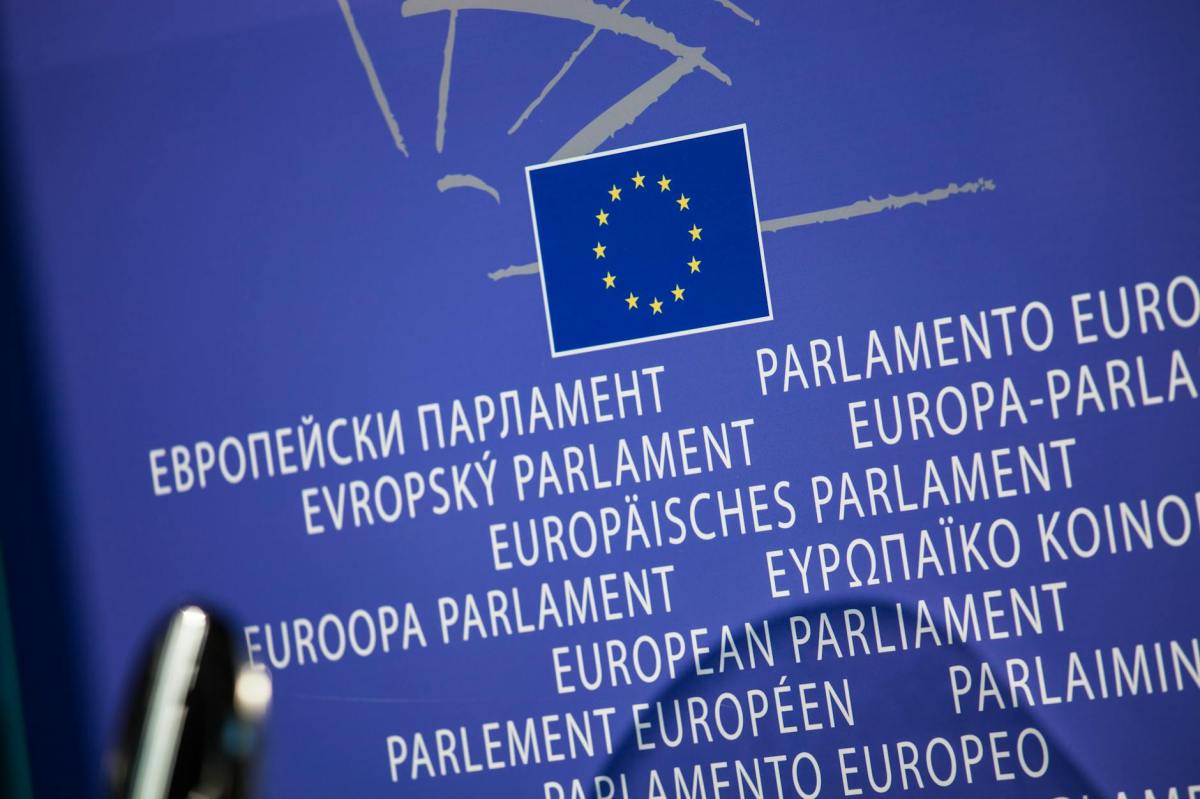
Today, Friday 9th May is Europe Day. That’s because a speech by Robert Schuman[1] changed the course of European history on this day. Five years after the war in Europe had come to an end, he put forward a proposal that would make a future similar conflict impossible. The idea was to create an interdependence that would secure peace, unity and solidarity.

It worked. His proposal led to the creation of a European Coal and Steel Community. That measure lay solid foundation for what would later become the European Union (EU). Behind this is move is the echo of “Never again”. Europe has seen centuries of war. This was a moment in time to bring that to an end.

For now, 75-years on, this has been a success. It’s not a regional project with a defined end, even if it has a defined beginning. Where the EU chooses to go next is in the hands of its Member States and its citizens. Changing the course of European history doesn’t stop because the EU exists. Without the cooperation and dialogue, it provides there’s always a chance that ancient rivalries will be reignited. In fact, unscrupulous right-wing politicians[2] are trying to do that just now.

Sadly, in the UK, we stand on the sidelines, looking across the water at continental Europe. Brexit has done a great deal of damage. But as I have said, nothing is static, the world is entering an ever-uncertain phase. The opportunity for the UK to restore EU relations is open. I see the wisdom in the words of the Governor of the Bank of England. He has said the UK now needs to “rebuild” Britain’s relationship with the EU. Amen to that.


[1] www.europa.eu/!9JbCd9

[2] https://www.politico.eu/article/germany-spy-agency-walk-back-extremist-label-afd/