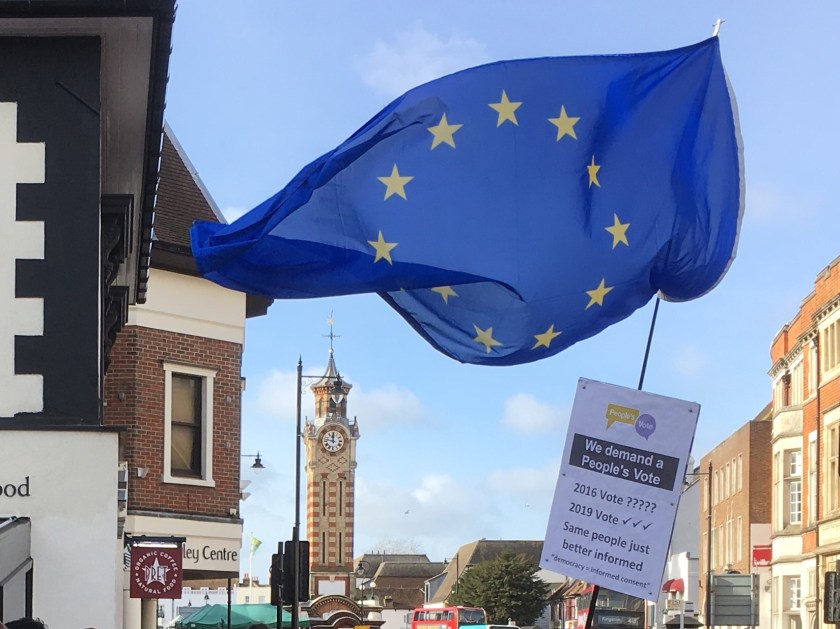
Brexit and Aviation 39

IMG_E4817
Accident Recorder

Reading reports of air accidents is not everybody’s cup of tea.  Nevertheless, the insights they contain are a constant reminder that no matter how safe civil aviation maybe, it can always be better.  There’s always something to learn.

This week, US accident investigators issued a report on what could have been an immense catastrophe.  Planes full of passengers came within 60 feet of each other as an Air Canada flight[1] was about to land on a taxiway by mistake.  This happened just before midnight on 7 July 2017 in San Francisco.  The US National Transportation Safety Board (NSTB) said that: “Over 1,000 people were at imminent risk of serious injury or death.”

As people have commented this is a stark reminder of the worst civil aviation accident that ever occurred.  In 1977, 593 people died when two Boeing 747 planes collided on a runway in Tenerife on the Canary Islands.

Because of the San Francisco incident, the NTSB is considering recommending that accident cockpit voice recorders record the last 25 hours of flying time.  The current US rule is for 2 hours and then the recording overwrites.

So, what has this got to do with Brexit?

After a series of accidents in the last decade, including the Malaysian Boeing 777 mysteriously lost over the ocean (flight MH370), Europe acted.  A detailed rulemaking process resulted in a EU Regulation[2] that includes key changes to mandatory accident flight recorder rules.  These required changes to planes that must be made in a practical manner to meet a deadline specified in the EU Regulation[3].  The rule applies to large planes manufactured after 1 January 2021.  Clearly, that date is after Brexit’s infamous 29 March 2019.  I cannot imagine that, whether the UK is in the EU or not, it would make any changes to this planned implementation date.  However, a mandatory action, like this one must be incorporated in the applicable national legislation.  That is how it would be applied to British registered planes.

That’s the interesting point.  Will all those European actions with implementation dates after 29 March 2019 be copied into UK law?  It would be good to see the answer “yes” written down.

POST POST NOTE: I hear the answer is “no”.  Although all the applicable European law will be copied into UK law a mandatory date that is in the future will be edited out.


[1] https://www.ctvnews.ca/mobile/canada/air-canada-close-call-came-a-few-feet-from-possibly-being-worst-aviation-accident-in-history-1.4131146


[2] COMMISSION REGULATION (EU) 2015/2338 of 11 December 2015 amending Regulation (EU) No 965/2012 as regards requirements for flight recorders, underwater locating devices and aircraft tracking systems.


[3] ….with respect to the carriage of CVRs with extended recording duration for large aeroplanes, provision should be made for the introduction of CVR with a recording duration of 25 hours on board aircraft, manufactured after 1 January 2021, with a maximum certificated take-off mass of over 27 000 kg.

Brexit and Aviation 38

Today’s batch of posted Government notices have a weakness that is too obvious to mention.  Piecemeal publications addressing what seem like random subjects on decidedly technical issues are great for the administrators and lawyers of service providers.   However, there’s no easy to understand information for the general public.   It’s good to know what the implications of “No Deal” are for package holidays[1] but little of what is provided will help the average British shopper.  If someone buys a holiday packages from an EU based travel company, they may or may not be protected depending upon whether that company has a UK business.  Try explaining that to someone scanning the INTERNET and comparing travel deals.  Yes, the fine print always matters but if you think you’re dealing with a reputable travel company and the price is right, a Government technical notice may not be high on your mind even if you know it exists.  The national media are making their own reading of the notices and that paints a gloomy picture for spring next year in the UK.  Here’s the view from ITV.

So, my advice is; have a good winter break and don’t book anything for April 2019.  It would be as well to look at the individual airline and travel company too.  Some will be better prepared than others.  Some will have special terms and conditions to cope with potential problems.  Some will still be pretending the change is minor or will go away.

Another of the big Brexit issues that isn’t given much attention is the coincidence of risks.  What I mean by this is that; normal emergency planning is focused on one major event.  A hurricane, a banking crisis, a plane crash are all examples of catastrophes where a Government should have an emergency plan.

The problem with Brexit at 00:00 on 29 March 2019 is that everything will happen at once.  I’m not saying the weather will change, although who knows? but each sector will go through a significant transition at the same time.  Even within each sector, like Aviation, every part of it will have to transition in one moment.  Some parts will be impacted, and others will not.

Trying to anticipate all the combinations and permutations of interdependencies and interconnections that will be impacted is a daunting task.  Because of the limited time and the sheer complexity of the task even a good analysis will miss important connections.

On the political front all we hear is – it’ll be alright on the night.  It may be comforting to think that a smooth and orderly Brexit is possible in ALL scenarios.  However, you would be foolish to be taken in by such an assurance.   Unprecedented disruption is likely in a real “No Deal”.

I’ve got a couple of events in the calendar where Brexit will be a topic.  One is a conference in London called: Negotiating Brexit:  Where Now? Conference[2].

The other is a “Regulatory Changes and Challenges” panel session at MRO Europe[3], taking place in Amsterdam between 16-18 October.

[1] https://www.gov.uk/government/publications/consumer-rights-if-theres-no-brexit-deal–2/consumer-rights-if-theres-no-brexit-deal


[2] https://www.eventbrite.co.uk/e/negotiating-brexit-where-now-tickets-50182431002


[3] https://mroeurope.aviationweek.com/eu18/Public/Enter.aspx


Brexit and Aviation 37

Let’s lift our eyes up from the endless ping-pong at Westminster and look across the globe.

It’s 25C and sunny in Montréal, Canada[1].   It’s one of the best times of the year to visit the city with the kaleidoscope of leaf colours.  In the heart of the city is the mountain site of Mount Royal Park.  Now, it’s a beautiful place to walk and take the air.  Based in that fair city, many of the world’s States have a permanent mission to the International Civil Aviation Organization (ICAO).   The city has a long association with civil aviation.

The 13th Air Navigation Conference[2] has just opened in Montréal.  Almost 1300 delegates from 110 countries and 32 international organisations are meeting at ICAO.

That includes all the European Union (EU) and all its Member States.  At the Air Navigation Conference European Coordination meetings are held.   Europe is presenting: 13 Working Papers and 7 Information Papers[3].  3 of those Working Papers are from the European Aviation Safety Agency (EASA).

Europe is also represented by European Civil Aviation Conference (ECAC), European Organisation for Civil Aviation Equipment (EUROCAE) and European Organisation for the Safety of Air Navigation (EUROCONTROL).   So, you can see that coordination is of the utmost importance.

I see that Kirsten Riensema, a former UK Air Navigation Commissioner was elected Chair of the 13th ANC.  That’s a demanding role.

I was fortunate to be part of the European delegation at the 12th ANC back in 2012[4].   These international conferences advance topics such as; the safety, efficiency, interoperability and capacity air traffic systems for the future.   A united approach is the best one to bring about results.

Today, the UK is a vital part of that European delegation.  It’s unclear where the UK will stand when the 14th ANC comes around.

[1] https://weather.gc.ca/city/pages/qc-147_metric_e.html


[2] https://www.icao.int/Meetings/anconf13/Pages/default.aspx


[3] https://www.icao.int/Meetings/anconf13/Pages/WP_Presenter.aspx


[4] https://www.icao.int/meetings/anconf12/pages/default.aspx


1st rule – Count

At moments of fundamental change, I wonder: what is the first rule of politics?  A lot the possible first rules of politics are cynical or so basic it’s easy to forget their importance.  I like James Hacker from the BBC series Yes Minister: “Never believe anything until it’s officially denied”.  Another rule in that vein is: “It’s never the crime, it’s always the cover-up.”  One of the more useful first rules, attributed to a US politician, is: “You can’t win unless you’re on the ballot.”  That rule I’ve often practiced.  It doesn’t matter how low the likelihood of winning a vote maybe the simple fact is that; first your name must be on the ballot paper.

Here’s a first rule that’s fundamental in a democracy.  Lyndon B Johnson’s first rule of politics is one of the best, namely: “practitioners need to be able to count.”  Commentary and speculation fill enormous amounts of air-time and space but in the end the kind of Brexit we get, if at all, will be down to a count.

Learn to count as a basic first rule.  Even with the most fantastic deal, if the votes are not there to make it happen it will not happen.  That means; European and British politicians lining-up in Parliament to vote for a deal.  It means; Countries lining-up to ratify a deal.  It means; getting from A to B without too many major hiccups.

Reports are that UK Government whips are in talks with 25 Labour MPs to push a deal through Parliament.  May’s Cabinet is giving her one last chance to sell a Brexit plan.

The run up to the 18 October, European Council (Art. 50) will see complex arithmetic being done repeatedly.  Will the sums add up?  And if they don’t why shouldn’t the question be put back to the people?

Anyone able to count can see that the current situation is extremely precarious.  My personal judgement is that the current optimism, that there will be a non-disruptive Brexit Withdraw Agreement, that satisfies enough of the key players is inappropriate.

Maybe that’s why it’s being reported that the European Commission plans a fast-track a process to address the potential turmoil of a “No Deal” Brexit.  That would mean putting in place emergency means to amend rules in just a few days.

There’s wisdom in being prepared.


Y2K was real

Brexit uncovers the stark difference there is in the way people assess risk.  There’s a range of responses to alerts, concerns and warnings.  Legitimate concerns are being raised by respected professional organisations who have a great deal of accumulated experience.  Yet, a large group of people react with a dismissive attitude to these concerns.  Often that that’s the form of simple statements like; we’ve been through all this before, it’s all fear mongering and this wasn’t a problem before 1973.  Brexit concerns are real.

I’ve found one of the most irritating and wrong dismissive statements is about the “Millennium bug[1]”.  It goes something like this: you remember all that fear mongering back in the late 1990s?  Everything was going to stop and grind to a halt, but it didn’t.  It was all a waste of money because nothing happened.  That’s what’s happening now with Brexit.

I admit that standing here in 2018, what happened around 1999 does sound bizarre.  A massive public information campaign altered everyone to the problem that computers of the time had with the practice of representing the year with two digits.  In our INTERNET age none of this makes much sense.  However, this basic design deficiency of the date roll-over at the start of the year 2000 had the potential to cripple 20th Century computer systems.

Risk management is about identifying problems and then putting in place measure to deal with those problems.  It’s all very well to dismiss problems after the event.  In fact, after enormous efforts have been made to overcome those problems.  That simple hindsight view can be downright foolish and dangerous.  It can be to invite catastrophe.

Since, at the time I was working avionic systems at the UK CAA, I can tell you of the real experience of solving the Y2K problem[2].  Yes, it was a real problem with the real potential of crippling aircraft computer systems.  Not every case was critical and not every case was fixed.  A great deal of work was done surveying those aircraft computer systems.  Checking that potential failures were identified and fixed or that the systems were retired.  Processes and procedures were put in place to make sure aircraft continued to fly safely.

The work done was a success.  That success was evident because no lives were lost, no major disruption took place and life continued smoothly after midnight on 31 December 1999.  So, now when I hear people quote this event as an example of fear mongering and it’s immensely irritating.  It’s more than that, it’s downright senseless to walk around with such ideas.

Today, our more complex and interconnected computer systems are threated in different ways.  Cyber attacks are real.  It seems strange to have to say that, but they are real.  Alerts, concerns and warnings should be heeded.  It’s negligent not to prepare.  I’m with the Scouts moto[3].

[1] https://youtu.be/LaBjujpd9yo


[2] https://www.bbc.co.uk/news/technology-45083650


[3] https://members.scouts.org.uk/supportresources/2943/scout-promise-law-and-motto


Brexit and Aviation 36

No week goes by without Brexit developments.  This week has been no exception for European aviation and aerospace.  In the background there’s been the UK Conservative Party conference in Birmingham.  All that has been revealed is that we are still in limbo land or a limbo in the air, as one might say.

The UK Government technical papers for a Brexit ‘No Deal’ scenario for Aviation Safety, Flights and Aviation Security have been out for several days.  The variety of different commentaries ranges from the don’t bother – this will never happen to the downright cataclysmic grounding of all flights.

Nevertheless, the impact of a “no deal” scenario is still being understated because of the long-term regional repercussions.  The lines on the map that divide up airspace in Europe are changing.  If other nations, see that we can not deal with that reality why would they open their skies to us?

The Royal Aero Society have updated their thoughts on the implications of Brexit[1].

On the rules for slot allocation at airports, the current rules for the allocation should remain unchanged in the event of “no deal”.  However, a proposed “recast” of the current EU Slot Regulation is planned.  A problem arises in that the UK will not have a say on future EU legislation to create a market for slots and this has its own downside.

On the profesional aviation personnel side, concerned aircraft engineers are seeking information about a non-negotiated EU exit.   British issued Licenses that are now valid in the EASA Member States, will not be valid in those States as of midnight (00h00) on 29 March 2019 unless a deal is done.

Now the EU institutions are engaged in identifying and putting in place new preparedness measures in anticipation of Brexit.  This week it is worth taking note that EASA has started to process applications for Third Country approvals from existing UK approval holders[2].  There’s additional administration and costs but at least organisations holding recognised approvals have a pathway to retaining those approvals.

On a subject that may at first glance seem unrelated the European Aerospace Associations have announced a Safety Management System (SMS) Industry Standard[3].   Here we can see the practical advantages of having a common rulebook.

During my time at the UK CAA, I was a member of the Prospect Union[4] (Formerly IPMS).  I’m pleased to see their recent publication on the future of aviation and Brexit “safety and resilience – not a race to the bottom”.  One of their recommendations is new to me and I must admit the idea hadn’t occurred to me before.  It is “breaking up the Civil Aviation Authority and establishing a new UK Aviation Safety Agency” thus further separating the functions of economic regulation and safety regulation.  Somehow, I don’t think that’s the biggest concern just now.

[1] https://www.aerosociety.com/news/a-no-deal-brexit-the-aviation-implications-part-2/


[2] https://www.easa.europa.eu/brexit-negotiations


[3] https://www.asd-europe.org/aerospace-associations-announce-safety-management-system-sms-industry-standard


[4] https://www.prospect.org.uk/


Crisis? What Crisis?

As we might expect there’s a fair amount of rabble rousing going on in Birmingham this week[1].  Although they are the political party in power now, it maybe as well to ignore the poorly judgement and fake anger of most of the speeches at the Conservative Party conference.  Stepping back for a moment there are realities that need to be faced.  All the bullish froth, finger wagging, and paranoia cannot cancel hard cold facts.

Although Chancellor Hammond has been portrayed as Eeyore[2], he at least had one or two grown-up things to say this week.  “The global internet giants must contribute fairly to funding our public services”, now who can’t agree with that?

At the same time, Mrs May and he are wedded to a plan called “Chequers”.  However, no majority exists in the UK Parliament to pass such a plan.  In addition, the EU has indicated that the plan, as it stands, is not on.   Unless both sides, doing the real negotiation soften their “red lines” there will be no agreement.  Just to heighten the tension, no majority exists, or will exit in the UK Parliament for a “no deal” outcome.

Crisis? What Crisis?[3] The album cover art of the album of that name, by the 70s rock band Supertramp, is remarkably apt for the times.

It is still possible to converge to reach a deal by November, but it is mighty sporty.  That would be in time for the December European Council on Friday 14th.   Then the ratification processes can take place.  I don’t suppose any Parliamentarian would wish to be having a “meaningful vote” on the deal over Christmas.  It is astonishing that, having exhausted more than 2-years of debate over Brexit we continue with such a lack of clarity.  If whatever comes out of the negotiation mixer is passed, then some sanity will be restored for a short-while, at least.

The near-sacred status of 29 March 2019 could be challenged but it is unlikely.  The last voting session before the European Parliament (EP) breaks for elections is 18 April 2019.   Dealing with a whole new EP might not be such a good idea.

So, within the next few weeks we will know if a relatively smooth transition is to take place or an almighty crisis is coming down the tracks.  Then I’ll remember Shelley’s great poem:

“My name is Ozymandias, King of Kings;

Look on my Works, ye Mighty, and despair!

Nothing beside remains. Round the decay

Of that colossal Wreck, boundless and bare

The lone and level sands stretch far away.”


[1] #CPC18

[2] Eeyore is a character in the Winnie-the-Pooh books by A. A. Milne.

[3] Crisis? What Crisis? is the 4th album by the rock band Supertramp, released in 1975 (Year of the first referendum on Europe).

Brexit Expo

Truly we are in strange times.

Earlier this year, I did the tour of the Royal Albert Hall.  Yes, I would recommend it even though it’s part of the standard London tourist trail.  The story of the building is fascinating.  How and why it got built.  The person to thank for it is Prince Albert of Saxe-Coburg and Gotha, the husband and consort of Queen Victoria.  This forward-thinking German was a great supporter of public education.

The legacy of the Great Exhibition of the Works of Industry of All Nations of 1851, was the Hall and the Museums in that quarter of London.  The Crystal Palace was the first World’s Fair.  Albert died suddenly in December 1861.  Much of the money, coming from the Great Exhibition, that was allocated to build the Hall was spent on his memorial.

On the South Bank of the river Thames lies the legacy of the Festival of Britain.  This took place in the summer of 1951.  We need to remember that Britain was still in the grips of post-war food rationing[1] at that time.  The plan was to celebrate the centennial of the 1851 Great Exhibition.  Unlike the Great Exhibition, the Festival of Britain was about promoting British architecture, arts, science, technology and industry.  In late 1951, as Churchill was returned as MP, his first move was to clear the South Bank site believing the project to be socialist propaganda.

So, the history of great exhibitions and festivals is a chequered one.

The next World’s Fair is planned for 2020 in the UAE.  A site has been chosen between the cities of Dubai and Abu Dhabi.  132 Counties, including the UK, have announced their participation in the 2020 World’s Fair.

Today’s Conservative proposal for a 2022 Festival of Britain is strange to say the least.   Apparently, funds have been allocated and, in Party conference week, the PM is hoping to appease Brexit supporting MPs with this retro-adventure.  Unsurprisingly, Social Media is lighting up with ridicule.  Some see Theresa May dressed up as Britannia and handing out goodies to all commers.

Whatever the merits of large exhibitions and festivals surely it makes more sense to have a greater presence in world-wide events than it does to build domestic palaces?  If Brexit goes ahead or not, Britain must market what it does.  The audience is the world.  Shows of nationalism are unlikely to archive any positive or useful goals.  Just more division.

This light-weight Conservative proposal is misguided and wasteful.


[1] http://news.bbc.co.uk/onthisday/hi/dates/stories/july/4/newsid_3818000/3818563.stm


Brexit and Aviation 35

The UK Government has published a round of aviation Technical Notices, laying out what the UK will do in the event of a “No Deal” Brexit.  No deal means no Withdrawal Agreement.  One thing I can do here is to highlight some of the responses to these “No Deal” papers.

ADS is a trade body for UK Aerospace, Defence, Security and Space companies[1].  They are trying to get the information out to the aviation and aerospace industries.  It really is a case of being prepared.

The airlines organisation, IATA warned on that the Government’s papers on a “No-Deal” exposed the “extreme seriousness” of what is at stake.  The UK would probably leave the European Common Aviation Area.  However, even if something is possible in theory, it doesn’t mean its going to happen.  So, the idea of all aircraft being grounded after Brexit day is more extremely improbable than unlikely.

Some commentators think that UK-EU flights and airport security may stay roughly the same in a “no deal” case, but this relies on the Government forming lots of mini mutual agreements with the EU to ensure continuity[2].  It’s a sort of let’s be good to each other even though we failed one negotiation and let’s do a “no deal” light.

Politically, the aviation papers reveal how much uncertainty remains just six months from Brexit day.  The result they have had not so much to provide guidance and public reassurance but to kick-off a stream of negative stories in the Press[3].

The professional aviation Press is none too complementary about the possibility of a “No Deal” outcome.  The Government papers seems to have confirmed theories that had already done the rounds[4].  Perhaps one is new and that concerns the Part-TCO safety authorisation.  Prior to being an EASA Member State, the UK did not have a Part-TCO regulation.  Now, the papers suggest that a new UK Part-TCO safety authorisation may be established.  No doubt that would be useful to bringing in much needed fees to fund all the new work coming the way of the UK CAA.

Several subjects have had no mention – yet.  Will aviation training schools have to change their workings?  Will cooperation on safety planning, occurrence reporting and accident investigation continue smoothly?  Will air traffic service providers continue to cooperate?

At the global level is likely that both EU and US will not want to change their current agreements.  Thus, the UK will need to fit in and prove that it’s effectively discharging its new responsibilities.  It’s evident that the UK CAA is recruiting staff and they will have much to do.

[1] https://www.adsgroup.org.uk/blog/aerospace/how-will-aerospace-be-affected-by-no-deal/


[2] https://fullfact.org/europe/no-deal-brexit-preparations-travel/


[3] https://www.politico.eu/article/brussels-isnt-buying-britains-no-deal-act/


[4] https://www.flightglobal.com/news/articles/uk-confirms-no-deal-brexit-would-limit-caa-certifica-452144/


Brexit and Aviation 34

Another busy day of government publications.  Amongst the many papers to arrive have been the 3 on civil aviation published by the UK Department for Transport (DfT).   These are technical notices that set out plans put in place, in the “unlikely” event that the UK leaves the EU without a deal.  These links are to the technical notices on:

  1. Aviation security if there’s no Brexit deal
  2. Aviation safety if there’s no Brexit deal
  3. Flights to and from the UK if there’s no Brexit deal

Generally, the advice is for the aviation industry to review potential implications for supply chains and staff with specialist qualifications.  The information shows the potential impact of a no deal scenario is extremely high.  There is a wish that, even with no Brexit deal there’s still enough mutual interests to keep all parts of aviation running.

However, for pan-European organisations this senario will be as destructive as an Icelantic volcano.  Estimates of costs rise rapidly for everyday that no deals are implemented, recognised and working.   The impact goes beyond just EU – UK relations because the EU’s existing agreements and working arrangements will no longer apply to the UK.  To get over this the UK is declaring its intention to recognise EU standards of security and safety.   Hopefully this will be enough for other nations aviation authorities to carry on regardless.

The UK CAA has published its own information that covers the subjects in more detail[1].  Some of the questions and answers remain open.  The words: ask EASA, appear numerous times.

What is clear is that the implication of these technical measures is to duplicate activities.  Certificates and licences will need to exit in European form and in UK form.  A period of adaption is contemplated on the UK side, but the outcome will be the need for compliance with new national regulatory requirements.  It’s rather like turning the clock back to a time before the Joint Aviation Authorities (JAA).  There’s no guarantee that there will be mutual recognition even if there may be a common benefit in maintaining a level playing field.

There’s no aviation safety value in duplication.  In fact, there is a potential safety down side.  Given that there’s finite expertise and resources dedicated to safety work spreading those more thinly isn’t going to help anyone.  If there’s divergence in processes and procedures who knows what might fall down the cracks.

It’s worth saying that during all of this change in the UK the internal market for the EU27 will continue to work.  The citizens of the EU27 will continue to benifit from their common system for aviation safety and security.

[1]   https://info.caa.co.uk/eu-exit/