H2 Aircraft Design

Cards on the table. I’m a believer. Despite the immense technical challenges, Hydrogen is a viable fuel for future large civil aircraft. That said, operational service of such revolutionary aircraft isn’t going to happen in a hurry.

Reading the history, Concorde was an incredible test of the boundaries of what was possible and that was met, but it didn’t come easy. Breaking new ground is never easy. [A common saying that’s maybe open to challenge]. In aviation making step-changes happens every decade. What’s nearly always required is exceptional determination, almost beyond reason, large sums of money and special people.

Control systems – no big deal. Mechanical components – evolution possible. Turning a gaseous fuel into high-levels of propulsive thrust – can be done. Building a one-off technology proving research vehicle. It’s happening. At least for the light and commuter class of aircraft.

None of this is enough. Because the gap between an aircraft that can fly and an aircraft that can be produced in the thousands and go on to make an operational living and build an impressive safety and reliability reputation, that’s still a million miles off.

Today, there’s artist impressions of all sorts of different H2 aircraft configurations. It’s like people painted pictures of Mars with imaginary canals, long before anyone knew what the planet looked like in reality. Innovation starts with ideas and not all of them are sound.

As I expressed in my last article, crashworthiness must be given much consideration when speculating about future designs. It’s not always explicit in aircraft certification, cabin safety being the exception, but studying the history of accidents and incidents is essential. One of the successes of the authorities and industry working together is to take lessons learned seriously.

I remember looking at the pictures of the wreckage of Air France Flight 358, which crashed on landing in Toronto, Canada[1]. The fact that there were no fatalities from that accident is a testament to good operations and good design practices. The Airbus aircraft burned out but there was enough time for passengers and crew to get away.

My thought is what kind of H2 aircraft configurations would permit the same opportunity?

Considering this large aircraft accident, and others like it, then there’s a message as to where fuel tanks might best be placed. There’re some aircraft configurations that would have little hope of providing the opportunity for rapid evacuation of hundreds of people.

So, in my mind, don’t attached large pressurised cryogenic fuel tanks to the underbody structure of an aircraft fuselage. However robust the design and build of such fuel tanks they would be unlikely to survive as well as the cabin passenger seats, namely 9g[2]. That would not provide a good outcome post-accident.

Maybe, like aircraft engines sitting on pylons off the wings, that too is a good place for fuel tanks.


[1] https://asn.flightsafety.org/asndb/322361

[2] https://www.easa.europa.eu/sites/default/files/dfu/NPA%202013-20.pdf

Challenges of Hydrogen Fuel in Civil Aviation

This week has been a Hydrogen week. It’s great to learn more of the projects that are out there and the ambitions of those developing systems. Hydrogen is a live subject. Looking at the possible pathways for civil aviation to take there’s a myriad of choices. However, when it comes to the fuel for propulsion there are not so many potentials.

It’s surely the case that at some time in the future the use of fossil fuels to propel us across the skies will no longer be acceptable. Even if I’m talking to climate change sceptics the point must be made that fossil fuels are a limited resource. Not only that but the air quality around airports is a matter of concern.

It’s there in our basic education. Water is H2O. It’s that combination of Hydrogen and Oxygen that is essential to life on Earth. So, if we have a process that provides aircraft propulsion by using Hydrogen it should be a whole lot better for the environment than using Jet A1.

The problem is, and there’s always a problem, to carry enough Hydrogen it will need to be pressurised and in liquid form. That means extremely low temperatures, robust storage containers and extensive leak free plumbing.

Today, we have cars on the road that run on liquefied petroleum gas (LPG). It’s a novelty. It’s less harmful to the environment and can cost less. However, LPG systems need regular servicing. The point of mentioning this pressured gas in a transport system is that it has been integrated into regular everyday usage. That’s knowing that escape of even small quantities of the liquefied gas can give rise to large volumes of gas / air mixture and thus a considerable hazard[1].

Any analogy between the car and the aircraft can be forgotten. That said, one or two of the issues are similar. Yes, what happens when an escaped volume of gas / air mixture is ignited?

What scenarios would bring about conditions whereby a destructive explosion is possible?

Let’s start with the situations where aircraft accidents most often occur. Take-off and landing are those phases of flight. A surprising number of accident scenarios are survivable. The important part being to get an aircraft in trouble on the ground in such a way that an evacuation is possible. That can mean hitting the ground with a great deal of force[2].

Here’s the matter of concern. An aircraft with large cryogenic tanks and associated complex plumbing hits the ground at a force of many “g”. What then happens? Certainly, pressurised liquefied gas would escape. Being a very light gas, the uncontained Hydrogen would rise rapidly. However, trapped amounts of gas / air mixture would remain a hazard. Would that be ignited?

There are a lot of unknowns in my questions. Although there are unknowns, any post impact situation is likely to be very different from a situation with a conventionally fuelled aircraft.

Today’s, burn through requirements ensure that an external fuel fire is held back. Thereby ensuring enough time to evacuate. For a hydrogen aircraft ventilation may be essential to stop build-up of a gas / air mixture inside a fuselage. That means a whole different approach.


[1] https://youtu.be/AG4JwbK3-q0

[2] https://skybrary.aero/accidents-and-incidents/b772-london-heathrow-uk-2008

Travelling Post-Brexit

Ever since Brexit, I’ve had to have my passport stamped in and out of European countries. It’s like a reversion to the days when I got my first British passport. That was back in the late 70s.  It has a frighteningly youthful picture. Occupation – student.

I’m not so phased by the coming changes to European Union (EU) border controls. Naturally, it’s worth asking if Britian has become a more dangerous nation since the time before Brexit when we enjoyed freedom of movement. It’s a pity we didn’t value that freedom a lot more. It was thrown away far too easily.

Today, the electronic border controls expect us to stare at a camera. A securely held, I hope, database is used to check a list of biometric numbers against my image. I guess that’s a sure-fire way of saying that Mr Blogs is indeed someone who looks very much like Mr Blogs. Facial recognition technology has come a long way.

The next steps in tightening-up controls will be fingerprinting[1]. Not in the manner of Sherlock Holmes, with an ink pad. No, in the digital age an ominous machine will scan our fingers and check its records to see that not only does Mr Blogs look as he should but that he’s got the essential characteristics of Mr Blogs.

Certainly, in this new regime British citizens will not be able to overstay in European countries. Ones travel records will be a lot more quantifiable and precise than stamping a piece of paper. That is assuming such digital border control machines will be relatively error free.

One of the benefits of Brexit is that it will be easier to track the movements of British criminals in and out of the EU. The reciprocal will not be true. It will not be easier for British authorities to track continental European criminals in an out of the UK.

Ah the luxury of being a Third Country. Longer ques. More uncertainty. Less privileges.

What’s more is the introduction of the new EU border control systems will be “phased[2]”. This change will not be one big bang. So, different ports and airports will be doing different things at different times. Now, it doesn’t take a genius to see that confusion is most likely.

Travelling in 2025 is going to be more than the usual adventure.


[1] https://commonslibrary.parliament.uk/the-eu-entry-exit-system-and-eu-travel-authorisation-system/

[2] https://www.independent.co.uk/travel/news-and-advice/eu-biometric-border-fingerprint-entry-delay-b2627645.html

Fatal Aircraft Accident Investigation – Update

Given the tragic nature of VoePass Linhas Aéreas flight PTB2283, it is a fatal aircraft accident investigation of global importance. The Brazilian Aeronautical Accidents Investigation and Prevention Center (CENIPA) is investigating. CENIPA investigations are based on the international standard, namely ICAO Annex 13.

Both the Cockpit Voice Recorder (CVR) and the Flight Data Recorder (FDR) of the civil aircraft, registered PS-VPB, have been successfully replayed[1]. This is a task that required great care and diligence. The replay data now available to the investigators for detailed analysis, is of the utmost significance.

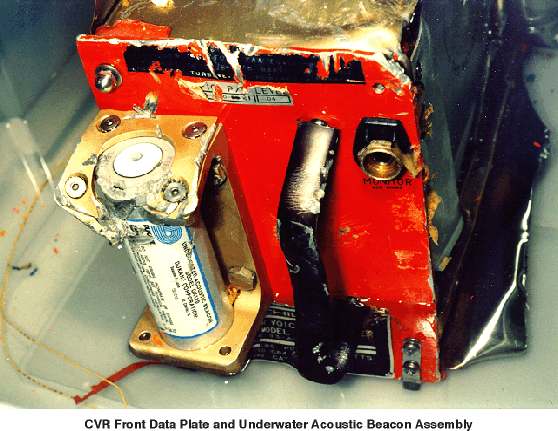
From the pictures available the external impact damage to the flight recorders is evident. What is important is that the crash protected memory module works as intended. This is solid-state digital memory that is packaged in a way that protects it from extreme conditions.

Finding from this accident investigation could have implications for the whole ATR aircraft fleet worldwide. It’s certain the authorities in Brazil will notify the aviation community if findings indicate corrective action that needs to be immediately taken.

Reports in the public domain indicate that the ATR aircraft had an ice detection system and that alerts could be heard in the cockpit during the flight[2]. Additionally, there is the indication that the crew acted in relation to those cockpit alerts.

[My apologies for a post where I suggested that there may not have been an ice detection sensor and alert on this class of turboprop aircraft. I was in error.].

This chain of events may suggest a simple set of explanations for the loss of control of the aircraft as it approached its destination. However, these matters are never simple, as most catastrophic aviation accidents are a combination of factors.

Even though the crew noted that there was icing, there is, as yet, no indication that the atmospheric conditions experienced by the aircraft in-flight were of a truly exceptional nature. The ATR aircraft is certified for specific icing conditions. There is training and procedures for the encounter of icing conditions.

It is pure speculation on my part, but I am reminded of an aviation accident of more than 40-years ago[3]. The conditions of the accident are different, but a factor may link the two. The last line of the NTSB report abstract says: “and the limited experience of the flight crew in jet transport winter conditions.” A small amount of ice contamination in the wrong place at the wrong time can have much more impact that might be immediately assumed.


[1] https://www2.fab.mil.br/cenipa/index.php/ultimas-noticias/1766-cenipa-extrai-com-exito-dados-dos-gravadores-de-voo-da-aeronave-ps-vpb

[2] https://www.flightglobal.com/safety/voepass-atr-crash-probe-analyses-crews-response-to-ice-alerts-before-fatal-flat-spin/159888.article

[3] https://www.ntsb.gov/news/press-releases/Pages/mr20220112b.aspx

1930s Aerodrome Architecture

We talk of optimism and pessimism as if one presides while the other sleeps. It’s not quite like that in consideration of the legacy around us. There’s no doubt that the 1920s and 1930s were years of austerity and depression. The Great War had an overwhelming impact on all sections of society. The buildings that remain from that era, including the house that I once lived in, do record a simpler style. Material chosen for their functional value rather than decorative.

Victorian’s built with flair and every mechanical contrivance that their technology could provide. Value in longevity was integral in their thinking. Who could imagine the sun setting on British empire?

The brief inter-war period was one of concrete and steel. A bit of classicism retained an influence. Form, fit and function played a bigger part. Modernism meant reflecting the advances in technology that were making great pace. Construction was fast.

Aviation was one of the most notable advances. Post-war flying moved from the military to sport, the recreation of the rich and the wonder of the onlooking public. It went together with the race for speed on land. Everything had to be faster and go further.

Maybe it was the Bauhaus in Germany, that set down some much-copied rules. Symmetry and square lines were on the drawing boards of a lot of public architects. It’s the case that some ornamentation was thrown in where the patrons were wealthy. Even that was relatively muted.

What lasted is no abomination of a poverty of ambition. It’s not utopian. It’s not brutalist. There’s instead a simplicity that was authoritative enough but not too ostentatious.

Pictured above is the 1932 Aero Clubhouse at Brooklands[1] in Surrey. It was designed by Graham Dawbarn[2] in what was a typical 1930s style. It set a trend for aerodrome buildings. Buildings like this one added grandeur to aerodromes where sheet metal hangers and small wooden huts were more often to be seen.

I like these enduring, straightforward, practical buildings. Yes, they are a form of British colonial architecture. One that could be easily reproduced anywhere on the globe. In today’s terms not the least bit environmentally friendly or efficient. Nevertheless, there’s an appeal that marks them out particularly when compared to the sheets of glass and skeleton frames of steel of modern aviation facilities.


[1] https://www.brooklandsmuseum.com/

[2] https://www.ribapix.com/graham-dawbarn_riba47117

Brazilian Air Crash

Two weeks have elapsed since the tragic loss of VoePass Linhas Aéreas flight PTB2283[1].

Reports are that the Brazilian air accident investigators[2] have successfully downloaded recordings from the aircraft Cockpit Voice Recorder (CVR) and Flight Data Recorder (FDR).

A detailed analysis of both recordings should provide a replay of the flight events on the fateful day. This means that any flight anomalies can be interpreted. Both actions of the crew and the response of the aircraft can be used to understand the sequence of events.

Those conducting the analysis will need to verify the past serviceability[3] of both recorders. It’s easy to assume that what’s presented in the recovered replay is what happened. However, that depends on the calibration of sensors and the correct functioning of the aircraft’s audio system.

CVRs and FDRs are primarily tools for the investigation of accidents and serious incidents by investigating authorities. Accident recordings can be a rich source of information. It’s not just the obvious contribution technical records make to an investigation. The CVR, via a cockpit area microphone picks up much more than just the speech of the crew and their communications with air traffic. Engines, propellers, aircraft warning systems, aerodynamic noise and the impact of structural failures all produce audio signatures.

I assume that the aircraft operator has a Flight Data Monitoring Program. Such a program can support continuing airworthiness and operational safety of an aircraft. It can be a vital part of a Safety Management System (SMS). Also, the regular analysis of flight data is one way of ensuring that the serviceability of the data acquisition system for an FDR is known.

A preliminary report on this fatal accident is expected in early September. It is up to CENIPA if the publish any transcript of the accident recordings.

VoePass, the airline in question, operates a regional network in Brazil. Not surprisingly it has now come under greater scrutiny by the Brazilian aviation regulator, Agência Nacional de Aviação Civil (ANAC).

It’s worth noting that the Brazilian civil aircraft fleet is one of the largest in the world. It’s a sizable country. Both ANAC and CENIPA are well experienced in addressing the aftermath of a major aviation accident. Expectations are high that the causes of this fatal accident will be fully understood. Appropriately then corrective action will be taken.


[1] https://asn.flightsafety.org/wikibase/409335

[2] Brazilian Aeronautical Accidents Investigation and Prevention Center (CENIPA)

[3] https://www.caa.co.uk/publication/download/12811

Navigating Speculation in the Age of Abundant Information

Speculation is a natural human response. When faced with a paucity of information we often put together what we know and then make a best guess as to what happened or what might happen. However, wise or unwise it’s not possible to stop speculation. Well, that is assuming that autocratic power doesn’t use force to crush the free exchange of ideas.

Since the rise of the INTERNET, with a proliferation of all kinds of material, it becomes less and less possible to quell speculation. A sprinkling of information can grow into a monstrous conspiracy but equally it can grow into a stepping stone to greater understanding. Living with this two-edged sword is our modern dilemma.

In a more deferential society, that we may have been immediately post WWII, officialdom was accustomed to restricting information. The principal of “need to know” and statements like – wait for the official report – were enough to quell Press intrusion and intense public curiosity. On occasions this deference turned out to be tragic and been an enabler for authorities to cover up dreadful errors and failings. My mind goes to the Hillsborough disaster[1] when I think of tragedies made worse by the manipulation of information.

What’s all this about – you might say. I’m giving a thought to the post- accident scenarios that become more common. When major fatal transport accidents happen to planes, boats and trains there’s an instant demand for detailed information.

This is happening in relation to the recent Brazilian ATR aircraft accident and, this morning, to the sinking of a large modern yacht off the coast of Sicily. Both tragedies seem astonishing in their own way. So much of our technological world works so perfectly, a great deal of the time, that we get accustomed to reliability, safety and security. Almost taking it for granted.

Basic technical information, like registration numbers, type and age of the vehicle all surface quickly after an event. Even numbers of fatalities are verified within a couple of days. What gets the speculators going is the answers to the question – why?

A list of circumstantial factors can soon emerge. The time, the weather, the location and the organisations involved. All of this creates a mix that feeds both intelligent and unintelligent speculation. I’m not saying this is de-facto bad. It’s reality.

What’s all this about? There are reports across the media of the “last words of Brazil plane crash pilots.” This speculation surrounds the words spoken in the cockpit and seem to come from someone’s knowledge of a transcript. How can that be? Through international agreement the independent aviation investigation organisations across the globe are committed to a protection of this type of recorded information (Cockpit Voice Reporter (CVR)[2]). Accident flight recorders are there for the purposes of the investigation of an accident or incident.

Back to our modern dilemma. Is it good or bad that sensitive protected information leaks into the public domain before it’s been thoroughly analysed and properly understood? There is a cost to a dilution of the protection of information. For one, it may discourage the voluntary application of safety enhancements, like fitting a recorder to a plane, boat or train.


[1] https://www.bbc.co.uk/news/topics/c8m8v3p0yygt

[2] https://skybrary.aero/articles/cockpit-voice-recorder-cvr

Spectacular Sighting

There’s steep hills. Some more interesting than others, you might say. In my youth this one was known for the road that climbed the hill. That’s the B3081, if you want the detail. It’s an opportunity to journey through wonderful English countryside. The area being Cranborne Chase, a protected landscape.

Zigzag hill was great fun for us as children. Probably not so much fun for my parents as our jet black Wolseley16/60 strained to get around the corners and climb to the top. The car packed with the six of us. This was a route we’d take to get from home to Bournemouth, and the seaside.

On the way, I remember the finger post signs to Compton Abbas Airfield[1]. My thought being what an interesting place for an airfield, right up here high on the chalk hills. Looking down on the surrounding Dorset countryside and the town of Shaftsbury.

Normally, I have to go to flying displays to see historic aircraft fly. This Sunday afternoon, I travelled no further than my back door. Sitting outback in the steaming 30C-degree summer weather all I had to do was look-up. Not that I’d planned to look skyward.

That doesn’t happen every day. First there was a distant rumbling sound. Then it developed into the hum of multiple piston engines. It’s only when the distinctive sight of a Lancaster bomber appeared over the roof of my house did all become clear what was happening.

As soon as I fixed my eyes on the aircraft it was already off over the garden and out across the neighbouring field. This was Avro Lancaster PA474 passing right overhead[2]. It was heading off in a north easterly direction at a notably low altitude. Quote a spectacular sight.

I had to do a little research once the aircraft had disappeared over the horizon. Looking at what was happening on Sunday, I assume it was flying back from Compton Abbas Airshow[3] to its home in Lincolnshire. Given the high summer weather, this was a great day for flying.

This Second World War heavy bomber first flew in 1941. It’s part of the Battle of Britain Memorial Flight (BBMF), based at RAF Coningsby. It’s the only Avro Lancaster that remains airworthy and flying in the UK. It’s only recently returned to the air after a tragic accident involving the BBMF.

Later in the day, off in the distance, looking north, three other historic aircraft trundled across the sky. After dark, with the heavens clear, I caught the Perseid meteor shower. So, for watchers of the skies, 11th August was a noteworthy day.


[1] https://www.comptonairfield.com/

[2] https://www.bbc.co.uk/news/articles/clyg7e7x319o

[3] https://comptonabbasairshow.co.uk/participants/

Tragic VoePass ATR72 Crash

2024 was going so well. Looking at the indicator of worldwide fatalities in commercial aviation for the first six-months of this year, and it is exceptionally low. The time between major fatal accidents across the globe is another indicator that my team once looked at on a regular basis. Aviation is an extremely safe mode of transport but when accidents happen, they can be devastating.

Yesterday, the situation changed in Brazil. A VoePass ATR72-500 aircraft[1], registration PS-VPB, flight number PTB2283 crashed in the Brazilian state of São Paulo. The twin-engine aircraft crashed in a residential location.

Yet unknown events resulted in a loss of control in-flight. On-line videos of the aircraft flying show a dive and then a spiralling decent to the ground. The aircraft was destroyed on impact, and it is reported that all lives were lost.

The publicly available flight data shows a sudden decent from a stable altitude[2]. The aircraft was about and hour and twenty minutes into its flight.

Looking at the video information it might appear that local weather may not have been a factor in the accident. However, there was known to be severe icing conditions at the altitude that the aircraft was flying.

It’s speculation on my part but unrecognised severe icing is one of the conditions that can bring about a catastrophic outcome for such an aircraft. It is sad to have to say that there is a record of a major accident to an ATR-72 that has some of the characteristics of this new accident.

In fact, it is one fatal accident that is etched on my mind given that it happened in late 1994, when I was still fresh in my job with the UK Civil Aviation Authority as an airworthiness surveyor. It’s known as much by its location as by the name of the aircraft, namely Roselawn[3]. The accident was extremely controversial at the time.

Crews are told that they may be operating in severe icing conditions but there is no specific regulatory requirement for on-board advisory or warning system on this generation of turboprop aircraft. An ice detection system can serve as a final warning to alert a crew that ice protection is needed.

Work to update the technical document; In-Flight Ice Detection System (FIDS) Minimum Operational Specification EUROCAE ED-103 is completed. Issued in April 2022, ED-103B – MOPS for In-Flight Icing Detection Systems is available[4].

In the case of the current accident, it is a matter for Brazil’s highly capable independent accident investigators to determine what happened. Anything I have written here is purely speculative.

POST 1: Reports of statements made by Agência Nacional de Aviação Civil (Anac) say that the aircraft was in good condition.

POST 2: Accident flight recorders have been recovered from the accident site. Flight recorders retrieved from crashed Voepass ATR 72-500 | Flight Global


[1] https://asn.flightsafety.org/wikibase/409335

[2] https://www.flightaware.com/live/flight/PSVPB/history/20240809/1450Z/SBCA/SBGR/tracklog

[3] https://www.faa.gov/lessons_learned/transport_airplane/accidents/N401AM

[4] https://eshop.eurocae.net/eurocae-documents-and-reports/ed-103b/

Electric Aviation: The Promise of Clean Flight

Electric aviation is not new. Not new at all. The engineers of the past struggled with two factors. Power and weight. A French electrically powered airship was the first aircraft to make a controlled circuit. On 9 August 1884, it flew a circular course of 8 km at a max speed of 14.5 mph. Its electric motor weighed 100 kilograms and its battery weighed 263 kilograms.

It’s not a problem to be able to distribute or use electrical power on-board an aircraft. The problem come in generating enough of it from a reliable source. Today’s “conventional” civil aircraft generate and use large amounts of electrical power. For example, the Boeing 787 has two starter/generators per engine[1]. Electrical power from the generators goes to four alternating current (AC) electrical distribution buses, where it is either sent for use as is (235 V AC) or converted for use by the aircraft systems that need it.

A revolution is taking place in electric aviation. It offers the opportunity to fly cleanly. That said, the traditional technical challenges remain the same. Power and weight. In 140-years battery technology has advanced considerably. But is that enough?

A difficulty that battery powered flying is stuck with is that at the start and at the end of a flight the batteries weigh, more or less, the same as they did from the day of their manufacture. Today’s “conventional” civil aircraft consume fuel. Thus, they are significantly lighter at the end of a flight than they are at the start. Airframes can be designed to take advantage of this fact.

One of the up sides is that a good electric motor can get to an efficiency of 80% whereas a turbo fan engine comes in at around 35%. That sound great until we look at the amount of energy we can store within a given volume. Jet fuel packs a punch. To get the same punch from an electrical battery it would likely be 15 times the size. That’s not good for a practical design. The low battery energy density coupled with the high weight of batteries means that this strategy for large aircraft needs to be put to one side for now.

A modern aircraft engine like the CFM International LEAP, can develop a max take-off thrust of over 30,000 lbf. Two of those engines can safely accelerate a Boeing 737 or Airbus A320 with ease and cruise with good economy. Thus, electrification of the propulsion of this class of aircraft is a long way off. The nearest possible future for propulsion of a B737 and A320 sized aircraft may be hydrogen based.

This explains why the drawing boards are full of small electric aircraft designs where performance demands are more modest. There’s a hope that the continuous development of battery technology will provide year on year gains. Much more than aviation alone demands that battery technology advances.

Developments in hydrogen-electric aviation are catching the headlines. Much of what has been achieved is experimental. I look forward to the day when hydrogen is not used to fill airship gas bags but becomes the life blood of transport aviation. It’s conceivable that will happen in my lifetime.


[1] http://787updates.newairplane.com/787-Electrical-Systems/787-Electrical-System