
You might ask what’s a “Statutory Instrument”? Well, in the United Kingdom they are a key form of delegated or secondary legislation. That’s distinct from Primary legislation, which in the case of civil aviation is the Civil Aviation Act 1982[1]. Part III of the Civil Aviation Act 1982 calls for an Air Navigation Order (ANO).
The latest UK Air Navigation Order (ANO) 2016[2] is a Statutory Instrument. The UK ANO forms the legal basis for many areas of civil aviation that are regulated at a national level. In effect, it gives the UK Civil Aviation Authority (CAA) is powers and its responsibilities.
The UK ANO is amended from time to time to provide the links between European legislation and national legislation. This Statutory Instrument needs to reflect the general details of the civil aviation regulatory framework that’s expected to work.
It’s well worth remembering that, unlike the USA, the European civil aviation system is not a federal system. To work effectively, it needs the common European part and the national part to work together harmoniously. That has been achieved with remarkable results. It has been an achievement that has enabled great efficiency, a fertile environment for international commercial success and safety improvement.
Taking one example in the filed of aircraft airworthiness. Today, “certification” is defined as meaning: any form of recognition that a product, part or appliance, organisation or person complies with the applicable requirements including the provisions of this Order (ANO) or the Basic EASA Regulation and its implementing rules, as well as the issue of any certificate attesting to such compliance.
If Brexit happens many choices are open to the legislator. That’s the Government and Parliament in the UK. One would be to maintain links to the Basic EASA Regulation. Another would be to delete all references to the Basic EASA Regulation and reference an alternative new text. Naturally, there are numerous combinations and permutations that can be imagined. Whatever happens the resulting new Statutory Instrument(s) will need to comply with existing international obligation namely; the Chicago Convention.
Here I’ve described a great deal of detailed work and no doubt its sitting on someone’s desk. Above I referred to “certification” but that’s just one aspect of a much wider range of aviation activities. Clearly, its one where errors and omissions are likely to be costly to industry and ultimately the traveling public. Normally, consultation and deliberations on significant legislative changes take place over many years. Thus, it’s reasonable to be concerned about what might happen over the coming year. Simple this is not.
[1] https://www.legislation.gov.uk/ukpga/1982/16/contents
[2] http://www.legislation.gov.uk/uksi/2016/765/contents/made
 The much-billed speech on Britain’s future relationship with the EU is out. Prime Minister, Theresa May stood at a lectern and read a winding text that dipped into the live subjects of the moment. Watching a recording of her big speech was like watching an Open University seminar. Last year, to appease her Party, Theresa May used the slogan: Brexit means Brexit. This has gone. Many of the costs of leaving the European Union were addressed. There was little, if anything about the benefits of leaving.
 Why do things fail? Now, in a technical sense, I’ve had quite a long experience finding out. Accidents, incidents, breakdowns, crashes, catastrophise, mistakes, mishaps, errors, call it what you will – “to err is human” (to forgive divine) so the English idiom goes. Never will there be a time when we get everything right all the time. Don’t be misled. That idiom is not pessimistic, as if to say there’s nothing we can do, in a fatalistic way.
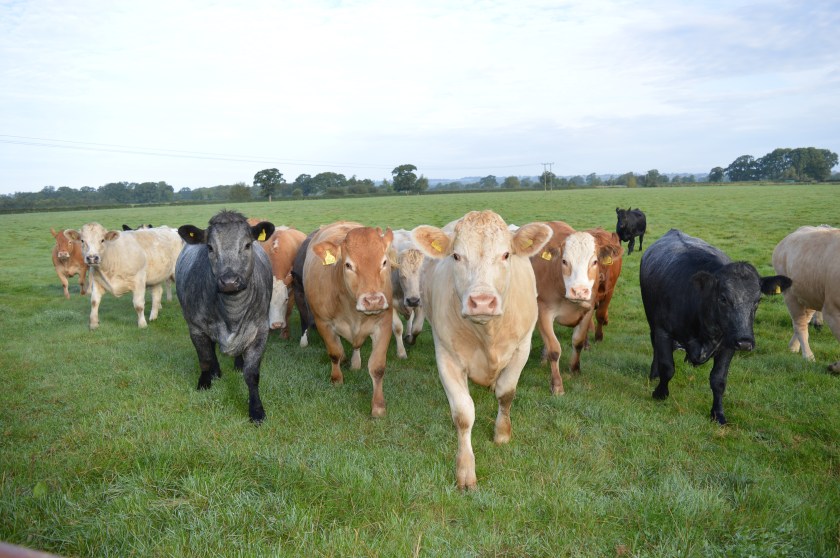 A couple of subjects have come up during the week. Both have implications for British agriculture of all shapes and sizes. One is immigration and the other is State subsidies.
 When I hear Mogg, May, Fox, Hannan and other right-wing Tory politicians talk it reminds me of the fable of the scorpion and the frog. Actually, that’s not quite true because, although that fable was deep in my subconscious somewhere, it wasn’t until my wife remined me of it that it truly came to mind.
 John Vincent