Reigate

You may well know that Alexander Boris de Pfeffel Johnson is the British politician that led the Conservative Party from 2019 to 2022. He served as Prime Minister (PM) of the UK. This is history. His term of office was a disaster. It was peppered with gaffs, lavish holidays, “terminological inexactitudes[1]” and jobs for his chums. Conservative MPs could take no more, so they got rid of him.

Circulating in the rumour mill is the possibility that this gentleman will be doing the “chicken run.” Boris Johnson’s current parliamentary seat, Uxbridge and South Ruislip would be among the 125 seats the Labour Party would likely win to secure a majority at the next General Election[2].

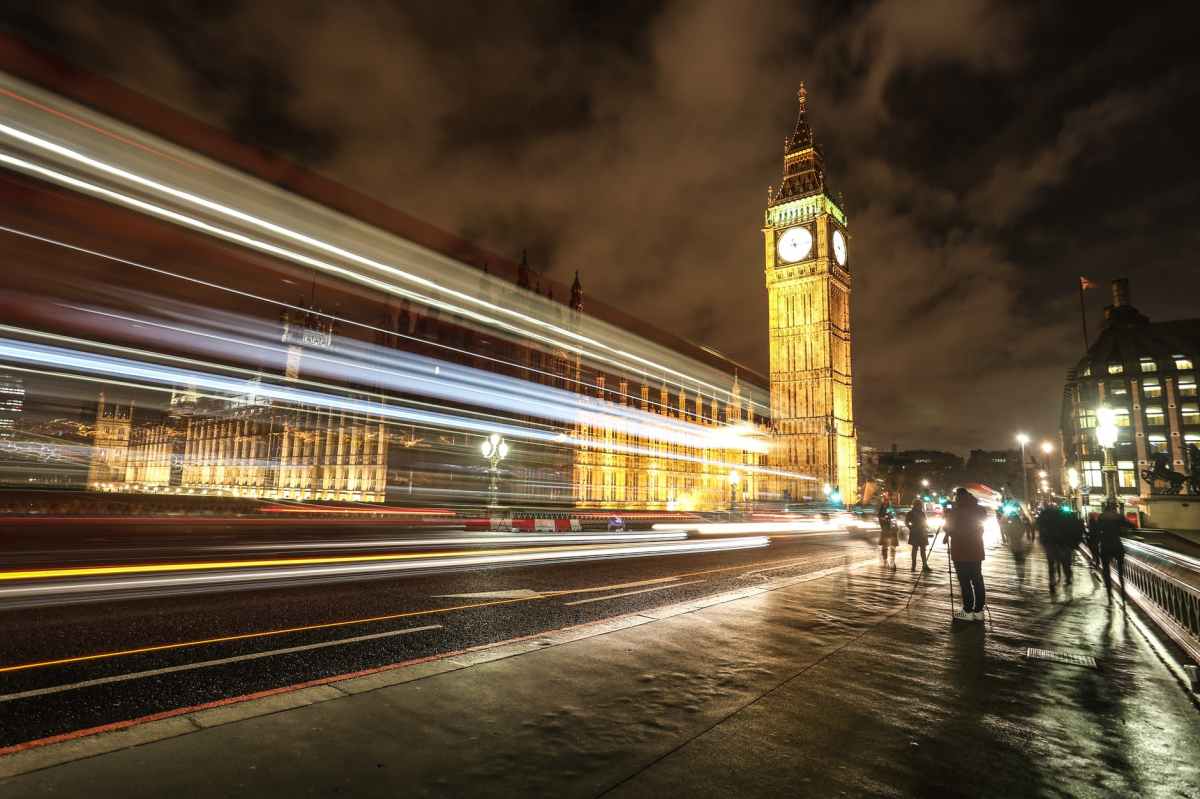
The rumour is that this former leader of the Conservative Party has his eye on Reigate. It’s a county constituency that has been a Conservative parliamentary seat in modern times. The only exception to this was in 1906 when a Liberal MP was returned to Parliament.

Reigate is a prosperous Surrey town, south of the North Downs and north of London Gatwick Airport. It’s at the heart of a Westminster constituency that extends north to Banstead and encompasses the town of Redhill. Next door are seats that have a simillar history as being safe for Conservatives.

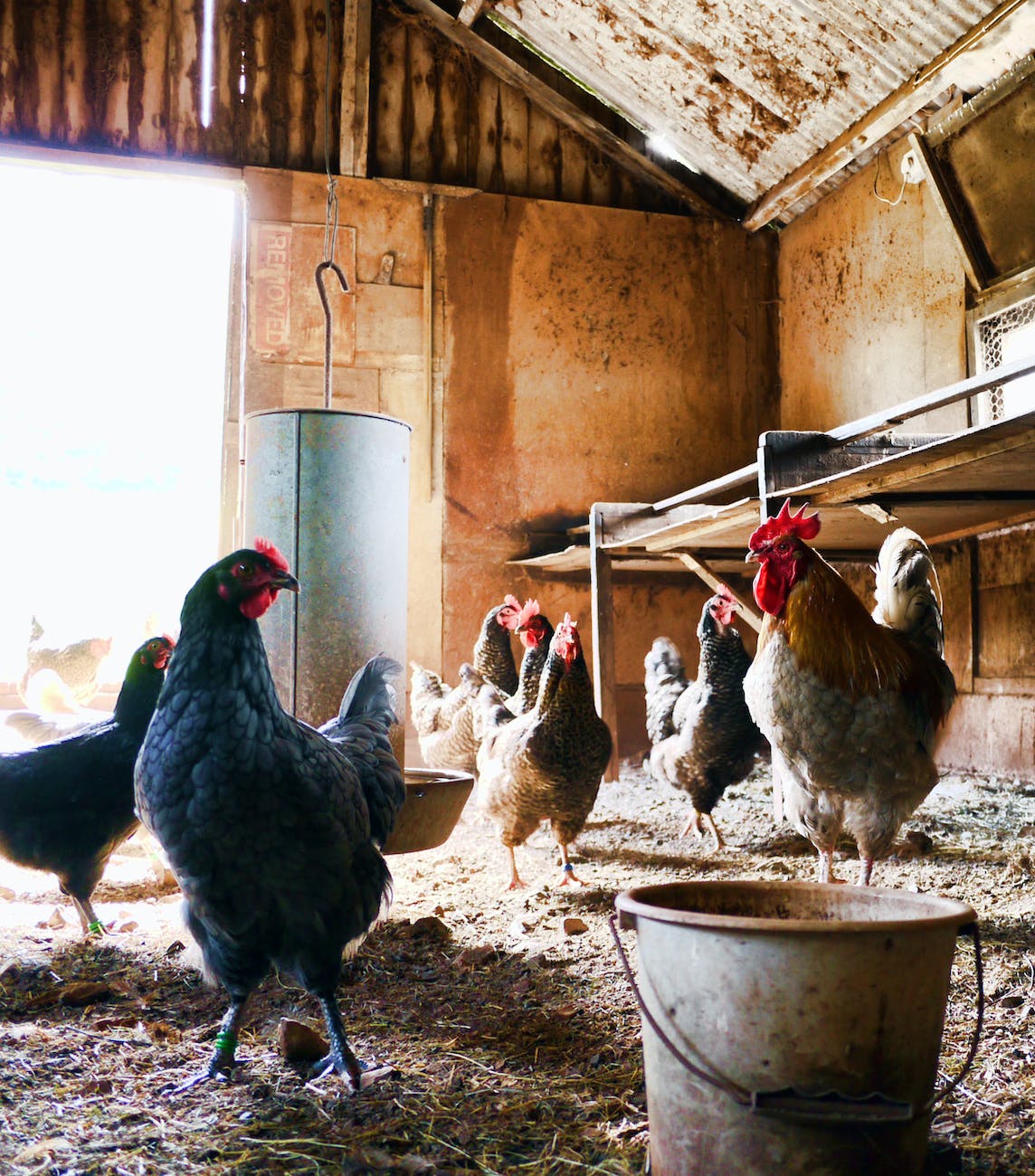
The term “chicken run” became popular in the mid-1990s. As General Election defeat loomed, leading Conservative politicians started abandoning their parliamentary seats and getting themselves what they thought to be safer ones. This move was seen as a clear sign that the Conservative Party was conceding defeat. In fact, it took a while but it did turn out that way.

With Reigate’s current MP promising to stand down at the next General Election. There’s a vacancy. Who will the local party members choose? Boris Johnson in Reigate would be a dreadful prospect. However, this might bring about 1906[3] all over again. In the General Election of January 1906, the Liberals swept to victory with a landslide result.

Yes, Reigate could go Liberal Democrat. Now, that would be a good day.

POST 1: A Bring Back Boris petition has toped 10,000 in two days. It’s seems the rock and the hard place is playing out as Conservatives up and down Britain panic.

POST 2: Now, Reigate’s MP has been doing the rounds of the national media sudios calling for the current PM to stand down. Asking for the British electorate to tollerate yet another switch of PM. Absolute bonkers are far too mild words to describe the Conservative Party.


[1] https://en.wikipedia.org/wiki/Terminological_inexactitude

[2] https://www.theguardian.com/politics/2022/may/28/could-boris-johnson-lose-his-seat-in-the-next-election

[3] https://liberalhistory.org.uk/history/1906-election/

Our political class is sclerotic

It’s been pointed out time and time again. It’s not like it’s a new phenomenon. The education of our politicians is dominated by a small number of schools, universities, and courses. Having an Oxford PPE[1] puts someone in pole position. So, does attendance at Eton.

Yes, we are not the only society to exhibit such educational polarisation, but it’s deep rooted in the UK. Centuries of domination of select institutions are well documented. The UK is long in the tooth. One set of privileged people are often in the wings to replace another set of similar people.

Simple generalisations about this fact being bad are not so easy to sustain. On the list of those who were educated in this way have been some real reformers and progressive thinkers. Nevertheless, there are a significant number of dangers that come from such a narrow streaming.

Although the overarching heading of Philosophy, Politics and Economics contains a variety of options and differences, it’s been constructed as a machine in a factory for politicians. It’s a cooky cutter for a template Member of Parliament (MP). For a long, long time, local constituency party’s and a significant number of voters have taken it as read that this is the model for an MP.

An interesting question arises in the current chaotic political maelstrom. Is this phenomenon one of the roots of periodic failures and catastrophes in the UK?

Here’s several reasons why the suggestion can not be easily dismissed.

Narrow streaming is a great way to instil a “group think” in our governance. Thing is, I don’t think we (voters) need or want this to happen. The risks are self-evident. There’s a greater propensity to agreement on the wrong course of action. An example is the decision to go to war in Iraqi.

Linking “orthodoxy” and stability in the minds of the population may limit what can be done. This is a strange one in that politicians with a common background can be strongly motivated to be unconventional just for the sake of doing it. Maybe that’s what has just happened.

Diversity is not just a nice to have. Diversity brings strengths that are not available in a monoculture. It’s a good strategy to bring in new ideas. New thinking. Bring in people with a wide variety of different backgrounds and experiences.

Change is needed. The UK’s political class is sclerotic. It shouldn’t be a surprise that we just had a national heart attack.


[1] https://www.theguardian.com/education/2017/feb/23/ppe-oxford-university-degree-that-rules-britain

Election now?

Unless turkeys vote for Christmas, there will not be a UK General Election (GE) in 2022[1]. Well, I say that assuming that there will not be a total and utter breakdown of the governing political party. In the current state of play that event is within the realms of possibility. However, with a sizable remaining majority in the House of Commons, the Conservatives intend to continue regardless of their habit of swapping out party leaders.

It was pointed out to me that since the changes made to the UK Electoral Commission[2] earlier in the year, it’s much to the Conservative Party’s advantage to use their new powers to their benefit. The Electoral Commission is the “independent” organisation that oversees elections and regulates political finance in the UK. Ministers now have much more influence over the workings of the Commission.

There’s more than one Commission in the mix too.  The Boundary Commission for England (BCE) is in the process of coming up with a new map of proposed Parliamentary constituencies. From the 8th November, members of the public will be able to view and comment on new constituency boundaries. With this boundary review underway there’s little incentive to have an early UK GE.

Embarrassingly, Parliament will have to debate a public petition[3] that is signed by about half a million people. So shocked are people by the ineptitude of this Conservative Government, this petition calls for an immediate UK GE.

The calling of an early UK GE is at the discretion for the sitting Prime Minister (PM), whoever that might be. So, as I’ve said the case for a turkey voting for Christmas pertains.

Certainly, winter national elections are not popular amongst political party activists. The shorter days and weather conditions often make conventional campaigning activities like doorstep canvasing difficult to do. There’re other complexities too. For an election held in December, the notice of election will be published before the deadline for publishing the revised electoral register.

There are, and there have been unprecedented crises threatening the UK. The new PM’s team looks and acts febrile and inept, but it looks like we are stuck with them for a while longer.

POST: Reports from Birmingham are that the supernova like explosion of the Conservative party is indeed a possibility.


[1] The 2019 General Election was held on Thursday, 12 December 2019. It resulted in the Conservative Party receiving a majority of 80 seats in the House of Commons.

[2] https://www.independent.co.uk/news/uk/politics/electoral-commission-elections-bill-independence-b2067888.html

[3] https://petition.parliament.uk/petitions/619781

Out of Step

If ever a political party has misjudged the public mood more in the last few decades, it’s the British Conservative Party, here and now. Without going into the cavalcade of reasons why they are incompetent, the overriding fact is that they are completely out of step with the British people.

After years of turbulent instability and pressures caused by the banking crisis, the pandemic, conflict and Brexit they have a mad idea that we have a big appetite for chaotic change with blind sheeplike obedience. It’s difficult to say that in “normal times” this Government’s irresponsible behaviour would be totally unacceptable to the point of civil disobedience and mass protest. But it’s true and the later may indeed happen. Winter is coming.

Running the British economy as if it were a poorly thought-out student project is beyond contempt. The childishness of the UK Prime Minister and Chancellor of the Exchequer is off the scale. There is’nt a scale made for this bunch of idealogical fanatics.

This week there maybe a week of back peddling, without seeming to back peddle but the damage is done. Reputational damage is easy to achieve but mighty difficult to recover from in the short-term.

The classic British example is that of Ratners in 1991/92. Now, instead of the “Ratner effect[1]” we will have to speak of the “Truss effect” in 2022. Certainly, in the rank and order of economic disasters the Truss Government must rank well above Ratner. Afterall, he only lost 330 jewellery stores, 2500 employees and over £122 million in a few seconds.

Interestingly, the fall of Troy is on the list of all time disasters brought on by human folly. Even I wouldn’t draw a comparison with the Truss effect and a tragic story from classical literature. Or would I?

In breaking my own rule, I can just see the Chancellor of the Exchequer Kwasi Kwarteng as a wooden horse entering the His Majesty’s Treasury ready to burn it down. He’s jumped out of the horse and what comes next is writen. He may be serving at His Majesty’s pleasure but I’m sure that’s just formal terminology and, there’s a whole bucket load of displeasure behind the scenes. Whatever his eccentricities, it’s likely His Majesty is far more in-touch with the British people than this appalling British Government. They have sat too long. It’s time for them to go. And go soon.

POST 1: At conference, it is reported that the Conservative Party chairman is telling their MPs they will lose the party whip if they vote against the fatal mini-budget of last week. Shirts are being printed with the slogan – I’m with stupid.

POST 2: Conservatives now plan to scrap the scrapping of the 45p top rate of tax. It’s a big poltical u-turn only days after the UK PM publically defended the policy.


[1] https://www.businessblogshub.com/2012/09/the-man-who-destroyed-his-multi-million-dollar-company-in-10-seconds/

Coming election

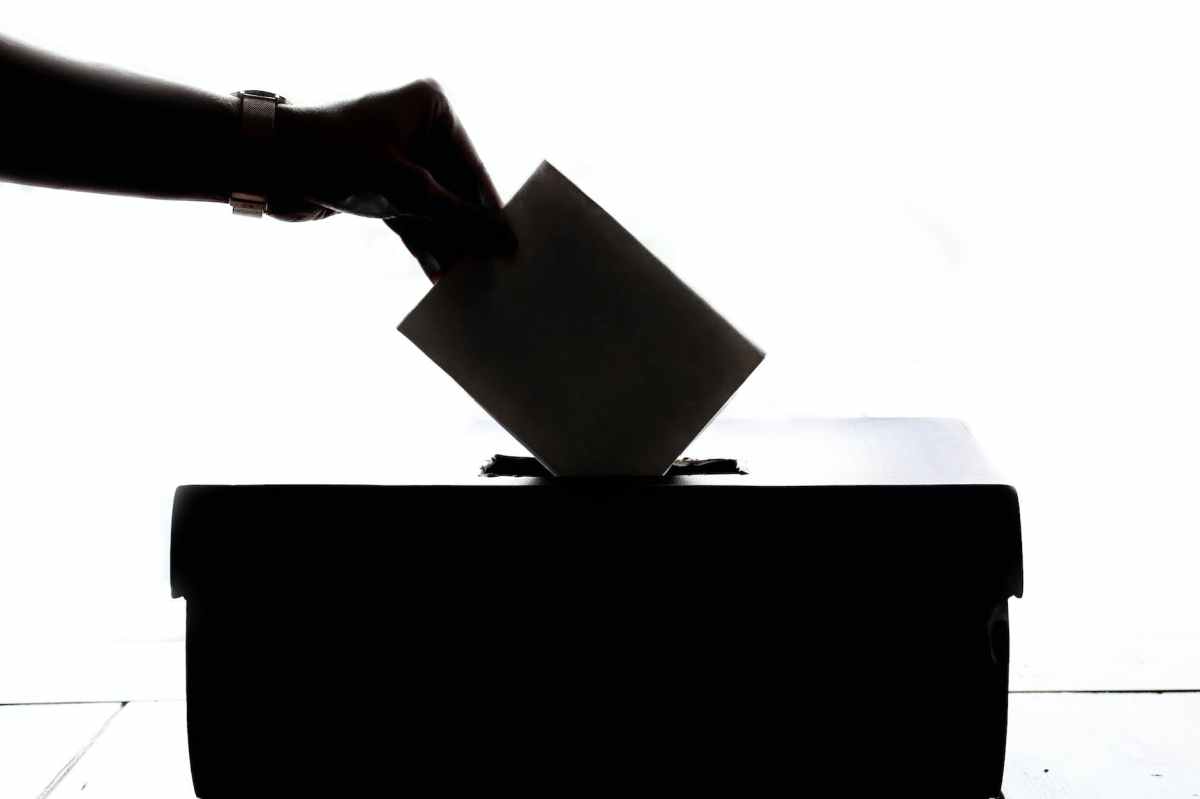
A moment of pure speculation. Barring a military take over, there will be a UK General Election before January 2025. When we have such national elections about 70% of the voting population get sufficiently motivated to put a cross in a box on a ballot paper. Yes, a few doodle or write “none of the above” on their papers but it’s a tiny number that go as far as to protest their frustration.

It’s always a good time for public relations agencies, tabloid newspapers and political gurus. The potential for appallingly cringemaking headlines and earworm like slogans is manifold. Some of these folks will be writing pages of forthcoming books on “how it was won” long before it was won.

Today, Prime Minister Boris Johnson has taken the role of caretaker to a new extreme. He’s more of a couldn’t care less taker of the p*** PM. The forthcoming election will be a race between at least three horses and maybe even four. Conservatives, Labourites, Liberal Democrats and one or two Greens will be trying to capture the high ground and launch themselves on the doorsteps of the UK. 

The issues will be stark. Armageddon isn’t on the cards, yet, but there will be dire circumstances as a background to the future campaign. Each party will be saying the other is an incompetent bunch of nincompoops. Each party will be stressing their unique qualities and indisputable solutions to all and sundry. A daily routine of shifting news stories will be a bombardment of severe intensity.

Free speech is a first principle of democracy. That said, I’ll bet that there will be an acute reluctance amongst competing politicians to mention one six-letter word. I almost wrote competing “pelicans”. Now, that conjures up an image of huge birds fighting over an unfortunate fish.

In the idea world candidates will be engaging in polite discussions with those who hold different views and hoping to persuade them of a view they hold dear. In the idea world candidates would avoid denigrating or insulting those who hold views that are difficult to understand.

The six-letter word is – Brexit. All the objective evidence points to the failure of this project. It’s clear the current Conservative Government is frightened of people saying Brexit has failed. In complete antithesis to free speech, they are clamping down on civil servants and those who work with Government to ensure they don’t highlight Brexit facts.

Come the next General Election the inevitability of tribalism and short termism will kick in. The UK’s voting system encourages polarisation. There’re absolutely no nuances. Debate on Brexit is likely to get squeezed to the side-lines as Conservatives and Labourites pretend it can still work.  

To unlock a better future for everyone we do need Proportional Representation. Otherwise, the same old, same old will haunt the country for years to come. The fight needs to be for honesty.

Was I right, or was I right? Fishy parrot

ITV Debate

For anyone interested in public affairs watching a debate of candidates for Prime Minister (PM) should be a pleasure #ITVdebate. It’s the summer heat. Pleasure it certainly wasn’t. It was a formulaic event that was enough to make milk curdle. The toxic blue-on-blue punch-up was uninspiring. A college debating society might have made better peak time TV.

The matter of who will be the British PM in only 7 weeks’ time is important. As the first question put it, we are at the start of an actual cost of living crisis. Unfortunately, Sunday night a lot of fairy tale economics were on show. Rubishing the past took front stage. All Conservative candidates said they would not have the caretaker PM Boris Johnson in a new cabinet.

All candidates vaguely rattled on about Brexit opportunities. When asked if the winner needed to call for a General Election to consolidate their mandate they all said – no.

Tom Tugendhat MP stood on a hill shouting “clean start,” but it was as if no one was listening. He said he was in mortal fear of the leader of the opposition. He shifted around in an uneasy manner.

Liz Truss MP wanted to emphasise that she was “honest” but admitted to not being “slick” as she sideswiped the other candidates. Here neo-Thatcher stance is thinning as quickly as it arrived. Word of the night was – bold.

“Time for a change” was Kemi Badenoch MP’s mantra. Being brave and asking for unity are all designed to create good vibes. The Twittersphere has dubbed her #badenough as if to mark that as the criteria for winning. To target the giveaway candidates Badenoch said there’s “no easy option”.

As the front running Rishi Sunak MP, former Chancellor, got the most kick backs from other candidates. “I want to be honest” and responsible were his themes. He put the stress on prudent conservatism, a phenomenon that may not exist anymore.

Penny Mordaunt MP was all about saying she’s a team player but not acting like one. Asking for an innovative approach and that the system is broken is appropriate. Sadly, filling the vacuum with nothing much hasn’t helped her case. She’s the spend, spend, spend candidate. She told a fib about the state of the polls too.

Robot like, Truss wanted it known that she has “served” and will stand up to Putin. She stressed her legacy of trade deals and getting things done. Her project fear was to mention the inflationary spiral of the 1970s. Truss and Mordaunt can across as arrogant and patronising by calling for change but being unclear what change is needed.

Badenoch was not ashamed of her role in Government. Strangely for a politician she hit out at the others by saying “talking is easy” Tugendhat is a fan of nuclear power and never misses an opportunity to mention his military service.

Sunak was the only one to come across as relaxed. Open shirts are his uniform. He was unshaken as he skilfully batted back all the balls bowled directly at him. If there was a winner – he was it.

Bridge the gap

Trying to understand the motivations of people that I don’t agree with is something I try to do. It can be fruitless and frustrating, but it does get away from social media’s ever-present algorithms. It’s not good to only listen to people with whom I wholeheartedly agree. Last night, in a moment of curiosity I switched on the TV and watched GB News. That’s until it got far too boring.

There’s one sure thing. The channel is nothing to do with News. My observation is that GB News is focused on delivering disinformation to a British target public. Not much cheer or many smiles on this channel. There’s a sullen diatribe of announcements covered in red, white, and blue. Its style is that of a pound shop American Fox News, but tone would have been at home in Soviet times.

The themes are entirely predictable. It goes like this; the European Union is an evil empire but European are weak. The enemy is at the gates. Amongst the worst are “Remainers” and the waves of “woke” minded. Forget hardships, Brexit will one day bring a utopia that others will envy.

An evangelical zeal gushes from the screen. Interviewees who say they once voted against Brexit but now see the light. There’s a strong projection of victimisation. It takes an intolerant form. How dare they say I’m wrong. How dare they say I didn’t know what I voted for in 2016. Underlying this is a collective “they” who are believed to be conspiring to overturn the will of the people.

What makes these observations chilling is that I’ve been told by my local Member of Parliament that British Prime Minister Johnson is being attacked by an unfair prejudicial media. Populists have a sharp partition in their minds. On one side is the righteous propagandists and on the other is the mainstream media, who’s a danger to their cherished projects.

Liberal Democracy loves diversity and media pluralism. Let many flowers bloom. However, these current changes in public dialogue are heading in a dangerous direction. More polarisations will lead to more disillusionment. The middle ground must reassert itself. In starting that journey, I wouldn’t start from here, but we must start from here to bridge the gap.

Gap Grows

There’s need for urgent action. There’s need for a new plan. There’s need for a new Government.

“One rule for them. Another rule for us.” It’s always an emotive slogan. It’s not my favourite saying in a time of great political polarisation. First you must see yourself as, one of us. Second you must see them as alien and privileged.

In a divided society this slogan gets thrown around like candy. However, it has a core truth in it. Inequality is a fixture in England. It was fine for Blair and Brown to say: education, education education, but they only shifted the dial a small amount.

Recently, I did a guided tour around a well-known English public school. Its history is fascinating, and some notable people have gone through its doors. The experience of schooling in that place is a huge leg up on prospects. There’s absolutely no way that a state school experience can match up.

One of the factors is the huge resources focused on creating opportunity for each pupil. Another, advantage is the closeted environment that creates a private network of lifelong contacts.

What then of “levelling up”? As a political slogan it seems to imply an almost communist attempt to increase the wellbeing, opportunity, and quality of life for every single citizen to a new common level. That makes me wonder why equivalents like eliminate poverty or prioritise education or fix climate change aren’t getting a look in.

Could it be that “levelling up” is in fact “covering-up”? Objective measures say that the gap between the richest in society and the rest of the population has widened over 10-years[1]. Rather than a natty political slogan surely corrective action to address this gap is needed.

This year household finances are going to be under extreme pressure. A cost-of-living crisis is upon us. It’s not just energy bills. It’s post-COVID-19 business failures. It’s supply chain chaos made worse by BREXIT. It’s incompetence and waste in Government responses.

Unfortunately, this Conservative Government has forfeited any trust people may have had in it. Trust matters if solutions to our challenges are to be met and overcome. Trust is broken when one privileged group demands the right to cling to power regardless of circumstances.

There’s need for urgent action. There’s need for a new plan. There’s need for a new Government.


[1] https://www.ons.gov.uk/peoplepopulationandcommunity/personalandhouseholdfinances/incomeandwealth/bulletins/householdincomeinequalityfinancial/financialyearending2020

Here’s where we are, I think.

May is a month of rebirth. Trees look greener than they do all year round. A fresh breeze and light rain fans this greenness as the natural world wakes up. It’s a good time for looking at life anew.  Sunny spells and showers come and go as we take stock of the spring. 

Worldwide COVID-19 pandemic deaths are up to just over 3.3 million[1].  Despite the successes of its suppression in the UK, the virus continues to rage around the world.  Sadly, desperation continues to spread across India.  On the positive side, vaccination plans are successfully being implemented. I’m more than ready for my second jab in just over a week’s time. 

What hasn’t changed is that aviation chiefs continue to provide roadmaps to bring back some semblance of normal but often sit back mystified at Government reactions and peculiar decisions. 

For international travel, to and from the UK, a curious traffic light system[2] is being put in place in the UK.  Unfortunately, there’s a lack of transparency as to why countries are categorised as they are in this unique national system.  Obviously, it’s better than a national lockdown with unending uncertainty but there’s little to be happy about. 

On entry control, the practice of quarantine hotels is unpopular and of highly questionable effectiveness. They are a crude measure that is discriminating, expensive and unsustainable.

The European Union (EU) has been slow in reaction and is still testing COVID-19 vaccination, test, and recovery certificates.  There are reports that this system is on-track to be rolled out next month.

It’s a miserable time to travel across borders. Plans are made and cancelled and re-made. Travellers are often left out of pocket and in limbo.  Yes, these are extraordinary circumstances but as advanced nations our general performance in managing the situation is remarkably poor. 

Although UK Government decisions are said to be guided by evidence and the science, there’s a fair amount of ideology driving decisions contrary common sense. 

Surprisingly, if the recent round of elections is anything to go by, the UK Government is sitting pretty. Now, its political opponents who are the ones who are struggling.  Commentators have speculated that this is a kind of national Stockholm syndrome[3]. I wonder. 

Post Coronavirus recovery of UK air traffic may not be seen until the end of 2022. 

The EU has developed a broad system of relationships with neighbouring states. Post Brexit there remains lots of loose ends in the relationship between EU and UK.  In fact, it’s probably time to stop using the word Brexit altogether. It’s not a meaningful word looking forward.    

Calls for a Bilateral Aviation Safety Agreement (BASA) and a Comprehensive Air Transport Agreement (CATA) between the EU and UK are muted but their importance remains.  Aviation and aerospace industry voices are being ignored. 


[1] Worldwide (from Johns Hopkins): Deaths: 3,322,294.  

[2] https://www.gov.uk/government/speeches/traffic-light-system-safe-return-to-international-travel

[3] What is Stockholm syndrome? https://www.bbc.co.uk/news/magazine-22447726

Brexit & Aviation 78

The political cartoonists are having a field day.  Brexit is giving them so much ammunition.  There’s never been a more fertile time for creative portraits of the ridiculous antics of politicians.  Every metaphor you can think of has been tried at least once.  For me a picture of headless chickens just about sums it up.  UK MPs have had the chance to identifying a way forward but keep coming back to stalemate.

Unfortunately, that leaves the worst-case scenarios still on the table in law.  The worst-case being a No-Deal Brexit outcome.  Study after study[1][2] shows that a No-Deal Brexit threatens to put the aviation and aerospace sector at a significant competitive disadvantage in the UK.  Failure to secure a sound Brexit deal that maintains a good strategic partnership will cause significant supply chain and investment problems.  We must remember that an aircraft may have over 4 million parts. These components come from all over the world to be integrated into a product.

Although some politicians remain in denial this should not come as any surprise.  For one, the EU’s Single Market has over 500 million customers and an economy over 5-times bigger than the UK’s.  Before 2016, the Single Market was often championed by the UK because it made it easier and cheaper for UK companies to sell their products.  Now, we are in the Brexit Twilight Zone[3] there’s a pretence that these facts don’t matter.

In a sad way, it’s ironic that many voted for Brexit and leaving the EU in June 2016 with a view to protecting their jobs in fear of globalisation.  Now, UK jobs will be lost as it’s clear that the civil aviation and aerospace sector is entrenched in the EU.  Miltary spending alone can not support the thriving sector we have come to take for granted.

In a recent statement, the European Commission said: “A No-Deal scenario on 12 April is now a likely scenario”.   A “disorderly” Brexit by accident is still avoidable but it may mean a UK General Election or a further referendum, and if there was a long extension, there maybe participation in the 2019 European elections due to take place between 23-26 May 2019.  Since there’s still no coherent strategy coming from the UK Government, I suspect a long extension is inevitable.  The possiblity of a so called #flextension is already built-in to the existing treaty.  This could be agreed until say; 31 December 2019.   Such an extension could be shortened only if both sides agree.  That would be time enough to work up a coherent strategy with a workable majority in the UK Parliament.   

Update: Now the UK Prime Minister is seeking a further extension from the EU to delay Brexit until 30 June 2019.  So, that’s the starting position with an aim to try to aviod European elections being needed in the UK.  

[1] https://eandt.theiet.org/content/articles/2019/01/no-deal-brexit-threatens-future-of-uk-aerospace-industry-report-warns/

[2] http://www.imeche.org/docs/default-source/1-oscar/reports-policy-statements-and-documents/imeche-brexit-and-aerospace-report-final.pdf?sfvrsn=2

[3] https://en.wikipedia.org/wiki/Nightmare_at_20,000_Feet