Collaboration is essential especially when action needs to be taken fast. Seeing members of the aerospace industries coming together to scale up the production of medical ventilators is heartening. It’s important to use all our expertise to stand shoulder-to-shoulder with those on the Coronavirus front line.
There are credible experts predicting that the forced shutdown will permanently reshape the aviation industry. Already the early retirement of large aircraft is taking place at several international airlines[1][2]. For example, most Boeing 747-400s are more than 20 years old and airlines are replacing them with more fuel-efficient modern types.
The coronavirus pandemic means airlines are drastically reducing their passenger flights. It’s likely this will cause a spate of order cancellations as costs are being cut. Hitting not only aircraft manufactures but maintenance, repair and overhaul providers too.
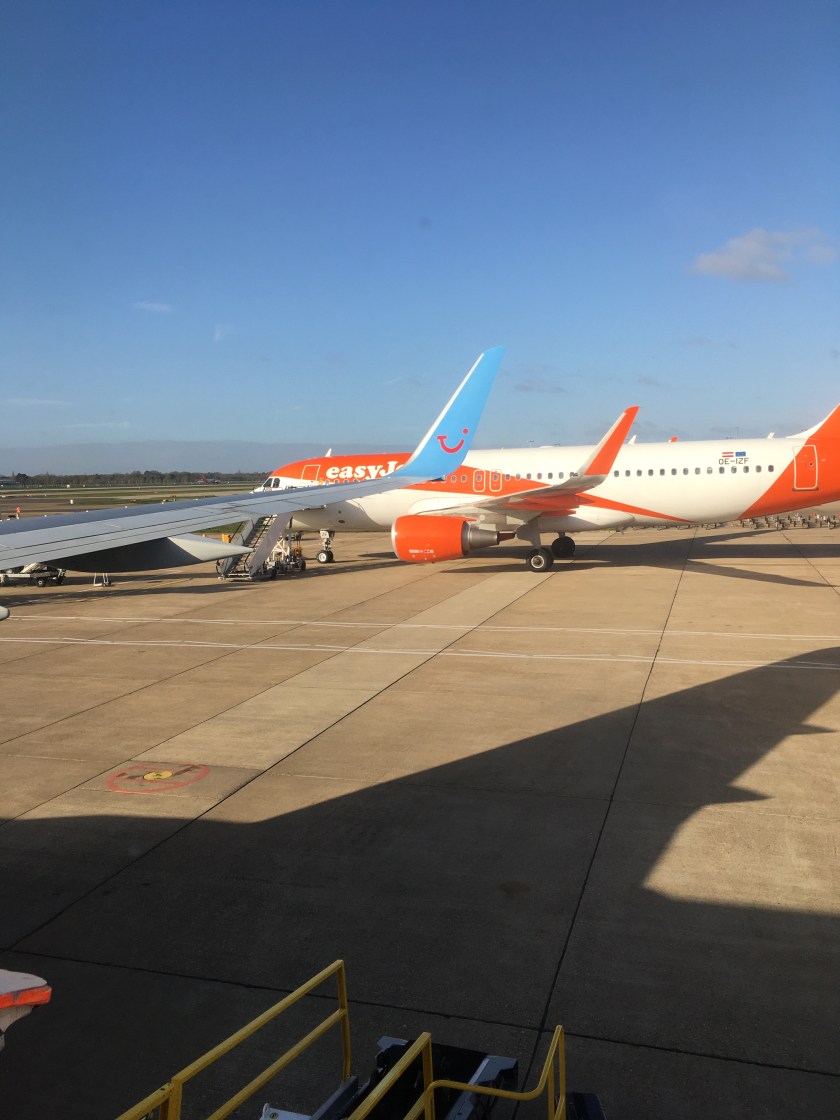
EasyJet is reported to be parking its 344 aircraft with an aim to removes significant cost. In the months it takes to contain the COVID19 virus the aviation industry will struggle to avoid permanent damage. It’s appealing to Governments for the waiving of air traffic control and regulatory charges for the whole of the year[3].
On Brexit, polls now show that most people in the UK want the Government to seek an extension to the transition period to focus on coronavirus recovery. Many experts believe there’s no prospect of Britain striking a Brexit trade deal with the EU without an extension to the transition period. So far, UK Ministers have simply refused to consider this common-sense approach. It has been said that the outcome of the first Brexit Joint Committee[4], held this week, was like watching two people looking down different ends of a telescope.
In other news, British Airways has suspended its operations at London Gatwick Airport[5]. In addition, the airport has announced that on 1 April it will close its North Terminal. That sobering for me, having last travelled through the North Terminal on 20 March.
If you take a snapshot of a few hours of air traffic over a couple of days recently there’s a massive drop in air traffic across Europe[1]. This is expected to go down more as repatriation flights complete their tasks. Although some airports are closing there’s still going to be the need to ship vital cargo around so air traffic will not drop to zero as it did ten years ago during the volcanic ash events. However, this time the shut down is going to be longer and covers a lot of the globe. This coronavirus is wreaking havoc on the aviation industry.
Internationally, ICAO has issued COVID-19 calls to Governments, urging better coordination with aircraft operators on air services and the flight restrictions in force. A situation where national Governments all take different actions is only going to increase the pain caused. The coronavirus knows no borders and no politics. It will create economic casualties across all parts of Europe.
It shouldn’t be forgotten that aviation safety depends on highly qualified professionals continuing to work in the most difficult circumstances.
We do see the curse of English exceptionalism as Brexit rumbles on. This is particularly true if the UK crashes out of current arrangements in June. UK Minister Gove wants to continue with UK-EU negotiations when we should be putting all our efforts into defeating the pandemic.
In negotiations, reports are the UK has tabled draft texts outlining separate proposed agreements on subjects that include aviation and transport. The texts are not public, so this is all behind closed doors for now.
The UK has left the European Medicine Agency which at one time was based in London. To me this a wholly unwise thing to have done under the current circumstances. European solidarity can strengthen our ability to win against COVID-19. Even if few politicians are putting that case in the UK Parliament. In fact, the House of Commons (HoCs) has adjourned for the Easter recess and will only next sit on 21 April 2020. Unfortunately, people are mostly thinking nationally and yet this is a global issue.
Wisely, given the crisis the UK CAA has notified a delay in an increase in its scheme of charges[1]. This will be reviewed in June 2020. These will be changed when the long-term UK-EU aviation relationship has been determined.
Will the UK seek an extension to the UK-EU negotiating period before 1 July 2020? We just don’t know but I imagine that the public relations line and what really happens are going to be different.
Europe, the world, we are all engulfed in an unprecedented situation. The spread of coronavirus #COVID19 is a clear and present danger to all. These are times like no other. It’s imperative that urgent action is taken. The EASA has issued a safety directive mandating disinfection of aircraft flying from high risk areas to combat spread of coronavirus[1].
Having just returned from a week in Tenerife, I’m grateful for the efforts of TUi[2] for repatriating a lot of holidaymakers at a difficult time. Our flight back to London Gatwick was as per schedule but for many of our fellow passengers their stay had been terminated and they were put on flights at short notice. Fortunately, the Brexit transition period meant that no undue difficulties arose getting our British registered Boeing 757 to and from Spain.
A week is a long time in politics. The first post-Brexit UK budget now seems like a distant memory[3]. Yet, it was only on 12 March that this took place in Parliament. It was a budget that resolutely refused to talk about Brexit, seeming to pretend that the subject was done and dusted. Now, the British Chancellor has been on his feet again and huge measures of change are rippling through Government and all parts of UK society. The decisions of days ago are dwarfed by the new moves to defeat coronavirus. The impact on aviation is like nothing that has gone before.
Nevertheless, the issues for aviation raised in my last blog remain pertinent. Brexit is not done. Yes, the efforts of the civil service must be directed at the current emergency. In fact, that’s a good reason to suspend all formal negotiations between UK and EU and put more time aside after the global health emergency has subsided.
The current emergency should bring the two parties closer together for their mutual benefit. Then it’s time to review decisions that may have been made so far but in the light of the new situation. Those that I talk to says that the UK national interest remains best served by continuing membership of the European Union Aviation Safety Agency (EASA). It was interesting to note the debate that took place in the UK House of Lords[4] during the week[5].
Transport was discussed in the UK House of Commons on 12 March. MP Alistair Carmichael, Liberal Democrat Chief Whip, Liberal Democrat Spokesperson (Exiting the European Union), Liberal Democrat Spokesperson (Foreign and Commonwealth Affairs) asked the Minister the question[1]: What is his policy on the UK’s membership of the European Aviation Safety Agency after the end of the transition period. The answer was dogmatic and unimaginative.
Now, I note that a great number of aviation professionals are transferring their license to European authorities like the Irish, Dutch or Belgian to keep their current privileges. The UK Civil Aviation Authority (CAA) is going to be losing a lot of income from those licensed Pilots and Aircraft Engineers.
What happened on 31 January 2020 was not the end of the Brexit process. On 30 March 2020, the new UK-EU Joint Committee is due to meet. Aviation may not be on the agenda but it’s certainly worth keeping and eye on what’s going on in that committee.
It’s unusual to see such unity amongst aviation organisations across different sectors of the industry. That unity is about the European Union Aviation Safety Agency (EASA). Established in 2002, the EASA has more than 800 aviation experts and administrators from its Member States. A while back a UK Parliament Select Committee report[1] found: “There is widespread agreement that continued membership of EASA would benefit the UK and the EU.” Aerospace businesses, unions and academia are unanimous in support of remaining in EASA.
The BALPA (The British Airline Pilots Association)[2] said: “we need to maintain current EU and UK access to our aviation markets and to maintain EASA safety regulation”.
UK aviation industry body, ADS’s Chief Executive said[3]: “We have been clear that continued participation in EASA is the best option..”.
Even on Saturday, the UK CAA’s own website continued to say: “The CAA has been clear since the EU referendum that we consider the most positive outcome for UK consumers and the aviation industry would be one where the UK has continued participation in the EASA system with existing systems of mutual recognition between the UK and EASA Member States remaining in place.”
So, there’s one area where people and organisations are overwhelmingly unified – we need to maintain current EU and UK access to our aviation markets and to maintain EASA safety regulations.
It was always on the cards that the new UK Conservative Government would revisits this subject. This was even though the firm planning assumption that everyone had made for the last 4-years was based on the UK’s continued membership of EASA.
Now, the UK Transport Minister with such responsibilities says that the UK will withdraw from the EASA. Implementing that policy change the UK Department for Transport has said: “Being a member of the European Aviation Safety Agency is not compatible with the UK having genuine economic and political independence.” This does not preclude the UK continuing to work with the EU to establish a new regulatory relationship, but it’s a tall order with only 10-months remaining on the clock.
I think this a bad decision. Not sound or rational or in the interests of the UK. Here, I’ll look at the apparent justifications.
Compatibility with genuine economic and political independence
This suggests that membership of the EASA would impede the UK from taking any action it wishes. There are 4 non-EU members of EASA. One of them is our near neighbour Norway. CAA Norway has the responsibility to oversee and regulate all aspects of civil aviation in Norway. That applies to the Norwegian flights that are based out of London Gatwick. In matters of aviation regulation, whether it’s at ICAO, EASA, EUROCONTROL or ECAC Norway speaks with economic and political independence. It applies Norwegian law. It does not seem to be impeded in advancing its aviation interests.
Being a member of EASA is not possible outside Single Market
This has been well debunked. The manner with which non-EU States participate in the EASA is not the Single Market provisions. There is a “Basic Regulation” that establishes EASA[4]. The Article 129 of the Basic Regulation addresses participation of European third countries. Yes, it does say that such non-EU States need to adopt and apply Union law in the fields covered by the Basic Regulation. However, this text does say how this is to be done. In fact, the UK has done this, at least until the 31st December 2020. All that is needed can be done in UK law. If EASA rules or standards are considered to be too low, there’s no impediment to enhancing them as required.
We’ll be wanting to develop our own aircraft certifications
The implication is that the UK will want to do something radically different from the international community. That maybe the case for research into new air vehicles but if the UK wishes to sell such products in the international marketplace it will need to met international rules and standards. A domestic industry providing Urban Air Mobility (UAM) vehicles will need to compete across the globe. EASA is preparing itself to better support innovation from industry (e.g. Artificial Intelligence, block chain technologies, extensive automation and eVTOL aircraft). Lack of harmonisation, duplication and fragmentation in this field serves no good purpose.
4. UK expertise can be used as leverage in negotiations
Across the globe, the aviation industry and most States say that aviation safety is not a matter of competition. There’s a great reliance on cooperation and sharing information to ensure that no State is left behind. A just safety culture is one where working togther is normal. It’s difficult to improve safety when people imply blame and echo a negative attitudes. To imagine this subject to be a matter for open commercial competition is flying against all international best practices.
5. A wish to not be subject to the rules made by others
No man is an island[1] If this reasoning is applied literally then it’s impossible to participate in any international organisation. In most cases it’s preferable to participate and have a significant influence on any rules. The Convention on International Civil Aviation (known as Chicago Convention), came to be in 1944. Since we (UK) do not control ICAO, should we now withdraw? Clearly that would be a nonsense. In our own region of the world, namely Europe, it would be wise to act skilfully to maximise the influence that is available not to walk away.
I join other aviation professionals in thinking it’s extraordinary how little the UK Government is prepared to consult with industry, consider cost and benefits and explain any new arrangements that will need to be put in place in a short time. At one time there was a stubborn insistence that major changes should not be introduced without a detailed impact assessment. Now, anything goes if the Minister likes it.
[4] Regulation (EU) 2018/1139 of the European Parliament and of the Council of 4 July 2018 on common rules in the field of civil aviation and establishing a European Union Aviation Safety Agency,
For decades we (UK) have been interwoven with the EU in an intricate pattern that is complicated and often not well understood even by those who are supposed know. The twists and turns of the last 4-years have brought about a situation where those who say: absolute independence outweighs the risk of being “shackled” to the EU, now govern the UK. The idea of common interests and common solutions to common problems has gone out of the window.
Aircraft are built by experts, tested by experts and flown by qualified experts with exceptional skill and with multiple safety backups. Brexit has been driven by opportunist politicians who persistently distort evidence to support their beliefs with scant regard of the costs or harm done. Thus, the next steps in the Brexit EU-UK negotiations will be as difficult, as difficult as can be imagined. That’s what has indeed happened if reports of this week’s discussions are surveyed.
The UK will withdraw from the European Union Aviation Safety Agency (EASA) after 31st December[1]. The divorce is a hard one. I can think of a lot of Brits who dedicated enormous amount of effort to European harmonisation who will be turning in their graves.
Yes, it’s true that the road that led to the EASA had its roots in the UK. When I started work at the UK CAA, the offices of the Joint Aviation Authorities (JAA) were based at Aviation House, London Gatwick. The benefit to aviation of having a common code was recognised in the 1980s. Signing of the “Arrangements concerning the Development, the Acceptance and the Implementation of Joint Aviation Requirements” (the “Cyprus Arrangements”) by 24 European States, took place in 1990.
In time, the weakness of the JAA system became apparent in that the common application and interpretation of aviation codes was not so common. The framework of European law was necessary to ensure that there was indeed a level playing field and a high level of aviation safety. In European law, a division of tasks between the EASA and the national aviation authorities was determined. EASA was given the power to carry out legally binding certification tasks, thus overcoming the limitations of the JAA system. The creation of EASA, led to the harmonisation of more existing rules and regulations and greater cooperation in the formation of new rules.
Reversing out of 30 years of progress is a challenging task. Yes, it can be coloured as a bold new era in flourishing rhetorical terms but practically it looks like a knee-jerk reaction. Not only that but the timing is awful. Market turbulence due to the contagious virus is severely impacting aviation. Not only that but the whole process of certificates issued by one authority being automatically accepted by another authority is being questioned because of the Boeing 737 MAX case.
Playing to the crowd with symbols of post-Brexit independence isn’t a wise move. It’s kamikaze.
It can take a long sentence to say something simple. On second reading, that simple sentence can mean a lot more than is first understood. Take this text for example:
In the case of conflicting interpretations of the laws, regulations or requirements pertaining to certification or approvals under this Agreement, the interpretation of the competent aeronautical authorities of the Contracting State whose laws, regulations or requirements is being interpreted shall prevail.
So, said an exchange of notes between the UK and US dated 28 December 1972. For reference, the UK joined the European Communities on 1 January 1973. The aim of the note was the reciprocal acceptance of airworthiness certificates. This sort of agreement is vital given that civil aeronautical products get shipped for use all over the globe.
Thus, the UK accepted that if there was a disagreement about a US rule then US law prevailed. Because this is about reciprocity, so the US accepted that if there was a disagreement about a UK rule then UK law prevailed.
Here we are in 2020 with talk of creating a suite of new Bilateral Aviation Safety Agreements (BASAs) as a result of the UK’s withdrawal from the EU. Wouldn’t it be quick and pragmatic to use similar words to the 1972 ones again?
Here lies a big problem or at least that’s how one red line makes life difficult. If the UK’s current statements about being an independent self-governing nation totally excludes any role for the applicability of European law how can a reciprocal agreement be written?
Also, there’s the historic inconsistency, as before the UK joined the EU it accepted by the note mentioned that interpretations set against another State’s law would be accepted. There’s a peculiar element to this too, given that at the point of withdrawal from the EU, UK law and EU law are harmonised on the matters of certification and approvals.
Compromise requires a rejection of a narrow doctrine. If both the UK and the EU are satisfied that they both have competent aeronautical authorities, then the reciprocal acceptance of certifications should be possible. That’s if there’s the political will to make it happen.
The industry group ADS[1] said: “We are disappointed that both the UK Government and the EU are not seeking a more ambitious approach to aviation safety.” It’s easy to see why they are disappointed. That said, negotiations are just starting, and practical opportunities exist.
Spring is beckoning. The phoney war will have to come to an end soon. EU-UK negotiations are set to start in the week of 2 March 2020. There’s every good chance a close and ambitious partnership between the EU and UK can be built.
On civil aviation the UK is seeking an agreement that should: “consider arrangements typically included in EU bilateral aviation agreements”. This is written as if the Europe has no history of deep and detailed cooperation that has been built over decades. It’s difficult to image a blank sheet of paper in front of the negotiating teams.
On airspace use, the EU is saying that the UK should have less access to EU airspace but may have more than other third countries, if it applies by specific rules[1]. This does have the potential to take on board the interest of travellers on both sides of the divide.
On safety, the UK is a calling for a Bilateral Aviation Safety Agreement (BASA)[2]. No prospective ambition to remain part of the EU’s Agency, EASA is mentioned.
For the above there’s a paragraph heading titled “Appropriate governance arrangements” but no indication as to what they might be. With the existing EU-US BASA[3] there’s a Bilateral Oversight Board (BOB) that is responsible for ensuring the effective functioning of the BASA.
I remember supporting that activity. It does tend to be conducted at a high level with the respective partners. Then detailed work is delegated to more technical activities under the watchful eye of the BOB. Now, that kind of working arrangement does not preclude UK Civil Aviation Authority (CAA) technical staff participating in EASA working groups or vice versa.
An EU-UK BASA maybe a new bespoke agreement but it is a distinct break with the past of cooperation. Europe enacted a process of working together before the time of EU competence in this area. It was on 11 September 1990, with the signing of the “Arrangements concerning the Development, the Acceptance and the Implementation of Joint Aviation Requirements” (Cyprus Arrangements), by 24 States that the Joint Aviation Authorities (JAA) came formally into being.
A BASA does weaken existing international ties because at its core is the preservation of regulatory control above and beyond joint working. No longer is the arrangement captured in the phrase “Unus pro omnibus, omnes pro uno”[4].
I’m sure, the EU will respect British sovereignty, and Britain will respect EU Member States sovereignty. Nice to say but such statements say nothing about common interests of which there are many in aviation. We don’t yet know to what extent either the EU or the UK will be willing to compromise as a result of detailed negotiations, maybe long into the night. By the middle of this year a clearer picture will emerge.
For all those who are experiencing the sandstorm[1] known as the “Calima” in the Canary Islands:
If your medium-haul flight[2] is delayed, EU law may entitle you to care and assistance during the delay (which means food, drink and accommodation). Depending on the length and cause of the delay, you may also be able to claim a lump sum in compensation.
As I understand it, it’s good to know that this advice remains applicable to British passengers. This Saharan sandstorm has reduced visibility and caused hundreds of flight diversions and cancellations.
Over the next months we will see just how much Brexit is either a means to another end or a renormalisation of decades of semi-detached British attitudes towards our nearest neighbours.
In the first case, this is an ideological conflict where disruption, at whatever the cost, is seen as the route to a transformational future. A radical populist domestic desire to reshape Britain. Certainly, this direction will inflict much pain on people for a perceived “greater good” of the few.
In the second case, a rational and robust settlement is possible that can bring about continued peace, prosperity and friendship just as is stamped on the new 50p coin[3]. This outcome requires pragmatism and the ability to seek fair and balanced trade-offs.
The political problem lies between the two cases and it’s that of overpromising and underdelivering. Winning Brexit in the UK has meant a great deal of overpromising. So, the winner’s political danger of underdelivering are big. Sadly, that’s the irritating sharp spike that leads to much of the daily bluster and sloganizing.
In my endless stream of e-mails, I received an advertisement for a training course. It said: Learn how to deal with aspects of decision making and combine your abilities with sound judgement. Given the choices ahead, there are more than a few British politicians and civil servants in need.
European Ministers will be attending this week’s EU General Affairs Council (GAC) in Brussels[4]. The GAC agenda includes preparing for the March European Council meeting and the upcoming negotiations on a new partnership with the UK. So, both parties are busy preparing.
It seems to me that independence and partnership are compatible. They have been for centuries. Every opportunity needs to be used to find the right form of words to capture that idea. Continued peace, prosperity and friendship with our neighbours is far too valuable to be vandalized for headlines in The Sun or Daily Mail.
Although we are in a – more to follow – time, the shape of the future aviation relationship between the EU and UK goes along these lines:
“The Government believes there is mutual benefit in an air transport agreement covering market access for air services, aviation safety and security, and collaboration on air traffic management.”[1]
In other statements the repetitious reference to national sovereignty is peculiar. In case the authors haven’t noticed the UK is no longer an EU Member State. Above and beyond this, over the generations, the UK has signed a parade of international treaties and each one of them pools some degree of sovereignty. Clearly, negotiations on a new treaty will necessitate the same. Even more so because of the proximity of the two parties. One witty journalist has commented: my advice on Brexit: just ignore everything for the next couple of weeks.
The UK will be negotiating with a whole host of States. I wonder how productive all the mischief by unnamed “sources” around Number 10 Downing Street is being viewed by across the rest of the world? The dangerous impression can go abroad that great care should be taken before trusting this recently elected Conservative Government.
Time for some good news. Yes, there is some good news. It underlines a commitment, at a working level to national investments on the aerospace industries beyond Brexit. This week there was an event to launch the “Aerospace Sector Deal – One Year On” report[2] by the UK’s Aerospace Growth Partnership (AGP). The AGP is a partnership between the UK Government, industry and others.
The event was hosted at the Advanced Manufacturing Research Centre (AMRC)[3] in Wales. In the past its projects have been funded by UK institutions, European Commission and other external bodies, and involve collaboration with research and industrial partners. Such collaborations are of mutual benefit. Let’s hope that no new unnecessary barriers are erected between researchers on either side of the channel.
One sad news to note is that because we are no longer citizens of an EU Member States, British professionals are no longer eligible to apply for jobs in EU Agencies. For example, to get a job at EASA in Cologne you need to be a national of a Member State of the European Union, Iceland, Liechtenstein, Norway or Switzerland. As written, this excludes the recruiting of UK staff, unless of course that they have more than one passport. So, much for the power of that new blue/black UK passport displayed on the front pages of British newspapers this weekend.
The recent updates from the Number 10 Downing Street Press Office[1] show that there’s an immense amount of confusion w.r.t. the UK’s intentions going into negotiations with other parties. Some of this maybe tactical but much of it indicates that the ruling Conservative Party has not moved from a period of campaigning to a period of Governing. Due to this evident situation, it’s a dangerous time to be entering into serious negotiations on subjects that may have an impact for decades to come.
Now it’s said that the UK wants a Canada-Free Trade Agreement (FTA) type relationship with the EU[2]. At the same time there’s little consideration of working together on common problems for common benefits. The notion of mutuality is completely lost in recent speeches.
Today, the UK Government has published details of proposals for points-based immigration system. So called “lower-skilled” workers will be barred from working in the UK. Given that the aerospace and aviation industries are generally considered to require “higher-skilled” workers the impact here should be manageable. However, entry level salaries[3] for newly qualitied pilots can be less than £20,000, particularly where training is necessary. Also, entry level salaries for engineering apprentices are generally less than the above figure. So, the UK proposals do act to restrict such posts to British passport holders only. Given the truly international nature of the aerospace and aviation industries this is limiting.
Without an ambitious UK-EU deal beyond the end of this year there’s going to be disruption to air transport[4]. Certainly, that’s the way British pilots see the next steps. Living on an island, air transport is of considerable importance. Even more so for the UK than a good number of EU Member States. By December there needs to be something basic on the table that’s agreed upon.
I think, restricting the movements of people within Europe but at the same time calling for an EU-UK FTA is incompatible. At a global level, faced, as we are with both the troubles of the Boeing 737 MAX and the outbreak crisis. Adding trade tensions and political instability to the mix is making 2020 a rollercoaster ride. Calming that ride down for 2021 should be an overall objective.
Throughout history the business of flying has proven to be incredibly resilient, but most professionals know that changing lots of significant things all at once is a recipe for failure. How come politicians don’t know this too?
[1] @10DowningStreet Press Office and Task Force Europe.

 Collaboration is essential especially when action needs to be taken fast. Seeing members of the aerospace industries coming together to scale up the production of medical ventilators is heartening. It’s important to use all our expertise to stand shoulder-to-shoulder with those on the Coronavirus front line.
 Europe, the world, we are all engulfed in an unprecedented situation. The spread of coronavirus #COVID19 is a clear and present danger to all. These are times like no other. It’s imperative that urgent action is taken. The EASA has issued a safety directive mandating disinfection of aircraft flying from high risk areas to combat spread of coronavirus
 For decades we (UK) have been interwoven with the EU in an intricate pattern that is complicated and often not well understood even by those who are supposed know. The twists and turns of the last 4-years have brought about a situation where those who say: absolute independence outweighs the risk of being “shackled” to the EU, now govern the UK. The idea of common interests and common solutions to common problems has gone out of the window.
 It can take a long sentence to say something simple. On second reading, that simple sentence can mean a lot more than is first understood. Take this text for example:
 Spring is beckoning. The phoney war will have to come to an end soon. EU-UK negotiations are set to start in the week of 2 March 2020. There’s every good chance a close and ambitious partnership between the EU and UK can be built.
 For all those who are experiencing the sandstorm
 Although we are in a – more to follow – time, the shape of the future aviation relationship between the EU and UK goes along these lines:
 The recent updates from the Number 10 Downing Street Press Office
 John Vincent