Adapting to Climate Change

Owned experience is more real than the theory, or the machinations of commentators. Yes, I know climate change and the weather are two different phenomena. My local weather is a part of the equation, even if it has its own life. Living in a shallow river valley in southern England there’s bound to be an element of a microclimate. A little warmer than the sounding chalk hills.

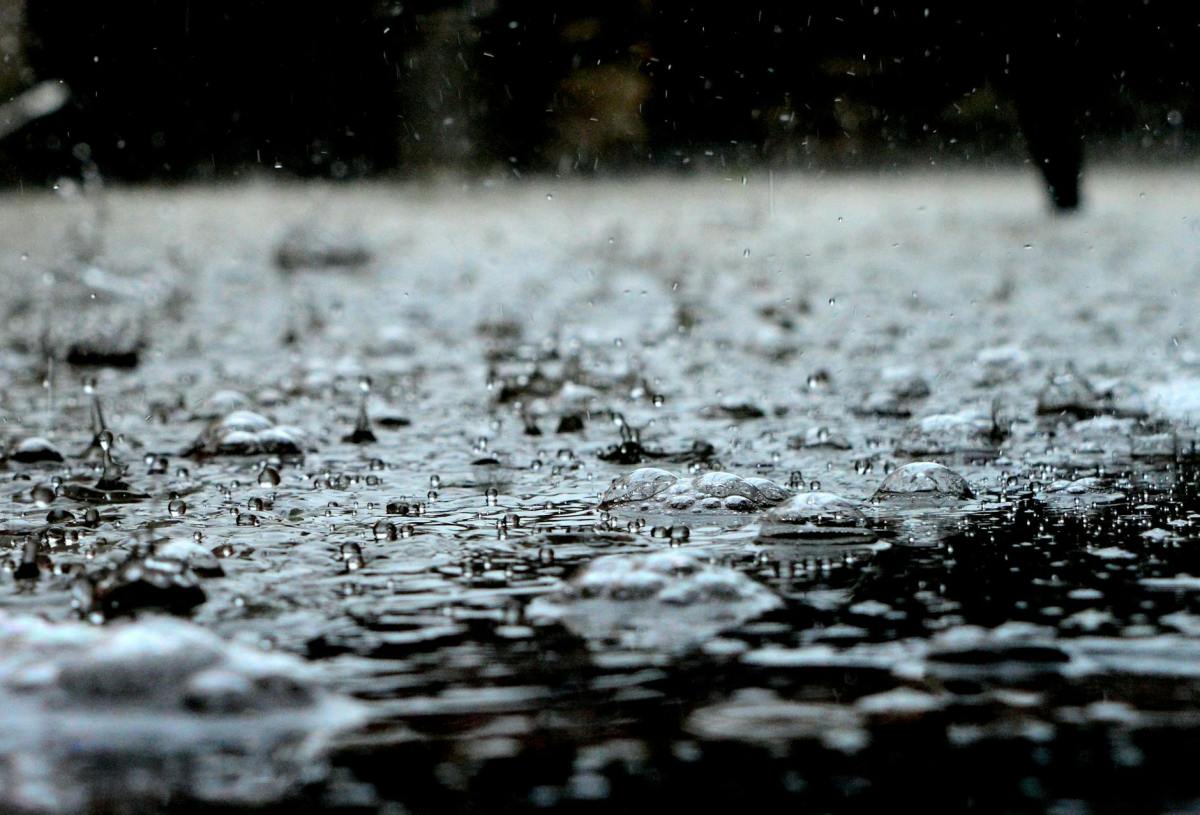
Last night, the rain fell. At about 3am it was ponding the roof tiles. Coming down like stair rods. Dislodged moss on the decking. Making the dark seem darker. Soaking the garden. Water butts that spent most of the year empty, full again. Whereas the water table sank to a depth in the mid-summer. My garden’s soil was hard. Compacted dust and flint in places. Now, it’s as if the ground water has risen to the surface. No place untouched. Grass as green as it has been. Squelching underfoot.

What’s chiming with me is the marked difference from past times. It’s November. The year is coming to an end. For decades past it would be perfectly normal for there to have been at least one hard frost. One of those occasions when the water in the bird bath becomes a solid frozen block. A glistening white cover of the grass. An end to the growing season, for sure.

Looking out of my kitchen window I still have plants in flower. Piles of sodden leaves. With one or two trees still reluctant to give up theirs. The seasons reluctant to move on. More chance of flooding than frozen ground.

Climate change predictions are that rain is likely to become heavier in this part of the UK. Floods to become a more regular occurrence of warming winters. The ground absorbing much more rainwater. River levels staying higher for longer.

What impact this seasonal flip-flop will have is open to question. Dry summer ground as hard as concrete. Wet winter ground constantly saturated. A more rapid change from one to the other.

For a gardener, certainly, this needs to be considered when planting. Seeing what plants will flourish in these changing circumstances. At least, I did invest well in one new willow tree this autumn. It’s about eight foot high and leafless. I’m expecting it to bust into life in next spring.

POST: As if I’d called it, the temperature has started to drop. 2C this morning. So, maybe the point is not that the seasons are changing, which they are, but more the moment of transition from one to the other is changing.

Ragwort

My country knowledge is a mixed bag. Certain facts have embedded themselves in my brain from the days of my youth. That much I take for granted but there’s a lot of holes in my rural knowledge. Sue, my wife often ribs me for not knowing the name of some common bird or roadside flower. It’s the moment when I grab the phone and search for a quick answer.

I’d not been the least bit concerned about the tall, thick staked bright yellow flowers that spung up around here. Growing in clumps on scruffy ground they are certainly colourful. Small daisy like flowers in their thousands. That’s not an exaggeration as the cover of flowers is like a blanket.

For some obscure reason I didn’t know these invasive plants by name. Once I’d heard the proper name for them some recognition clicked in place. Maybe they were not prolific in the West Country of the 1970s. Strangely my mind drifted to “The Return of the Giant Hogweed[1]”. Probably one of the more ridiculous Genesis musical creations.

A fact that I didn’t know about these tall wildflowers is that they are named in a 1959 Act of Parliament[2]. One reason is that they can do damage to horses and farm animals. So, colourful they maybe, what’s a less attractive feature is they are poisonous under certain conditions.

Common Ragwort is the plant in question. It seems that Ragwort is almost impossible to eradicate. The best that can be done is to control it. Each yellow-flowered plant can produce up to 150,000 seeds. These seeds can stay dormant in the soil for up to 20 years. Ragwort is a biennial, it takes 2 years for the plant to flower. On the up-side they are the home of a wide variety of insects.

Today, the weather predictions are for an almost perfect English summer day. Blue skies and plenty of sun. A day to be making the most of the garden.

Once these plants have flowered it’s time to take drastic action. I may find myself pulling up these monsters by the roots. Fortunately, I only have a few to contend with on the edges of my garden. They are not for my compost bin. For the big green bin, the local council empties on a Monday morning.

Ragwort by Anne Stevenson

They won’t let railways alone, those yellow flowers.
They’re that remorseless joy of dereliction
darkest banks exhale like vivid breath
as bricks divide to let them root between.
How every falling place concocts their smile,
taking what’s left and making a song of it.

Poem Attribution © Anne Stevenson, Ragwort

Source Attribution https://poemsontheunderground.org/ragwort


[1] https://youtu.be/BSkgwCpuZwk

[2] https://www.gov.uk/guidance/stop-ragwort-and-other-harmful-weeds-from-spreading

The River’s Arms

It’s now called the River’s Arms Close. A scattering of relatively new houses. That’s all that remains of a rough working public house that I knew well in my youth. Not indoors. In the bars. I never visited more than the paved courtyard outside the pub. Afterall, I am talking about me at the age of 12 or 13ish. Until now, looking it up, I’d remembered the pub as being called The Railway.

This pub was just across the road from the entrance to what was then Sturminster Newton cattle market[1]. A huge agricultural market. It was on Station Road. Even then, the railway station and its steam trains had long gone. They must have gone in 1965/66. Then a political axe fell on rural railway lines. On a Monday, the town was a busy place. That was market day.

Scruffiness was a badge of honour. Galvanised steel sheeted buildings and tatty block-built sheds were the order of the day. The feast for the eye was not the buildings, more the people. The noise was overwhelming. Smells were on the rich side too.

This comes to mind because I moved a large and heavy plastic planter containing a healthy blackcurrant bush. Green leaves and wood. My crop of blackcurrants had been eaten by birds earlier in the year. This week’s plan was to find a suitable spot in the garden to transplant the bush ready for next year.

Here’s the connection. It’s to do with fruits. Local produce. In the 1960s, to earn money of our own, my brothers and I would go blackberry picking. There were times when Somerset hedgerows were teaming with mases of blackberries. They still are in a lot of places. We’d fill to the brim used plastic containers. Recycling ice-cream containers. Trying not to squish the delicate fruit.

On market day the courtyard outside the pub would become an auction ground. People would bring local produce and miscellaneous junk in the hope of getting a fair price. Everything would be spread out over the floor outside. Fruit, veg, eggs and strange ironwork and old tools. Around lunchtime a sale would take place. Informal and unpredictable. A huddle of farmers, townsfolk and on watchers. Nevertheless, all the small items were carefully booked in and booked out. For our containers of blackberries, or later in the year field mushrooms, we’d get just less than a pound, if we were lucky. That was in “new money.”

It’s July, so we are not into that season yet. It’s creeping up on us. Fruit trees are starting to look as if they are going to produce a good crop. Blackberries are slowly forming. A time of fruitfulness is coming. That season of harvest is just over the horizon.

Exposure to markets, and their volatility, is as much a life lesson as the benefits of organic produce. In that small Dorset country town, the ebb and flow of market day were as integral to life as the water that flowed in the river. Today, much of that rhythm is history. A new rhythm is running. We go from coffee shop to posh bakery to the purveyors of expensive imports.

Our dependency on national supermarkets and large-scale logistics is mainstream. The heavy lorries that carry food are not full of local produce going to a local market. They come from remote fulfilment centres on main trunk roads. They dwarf the road traffic of the past.

It’s silly to think that we can step back. Times were rougher and cruder but there’s merit in giving thought to the better bits. Today, there’s little incentive for a boy with a recycled container full of fresh blackberries.


[1] https://www.somersetlive.co.uk/news/local-news/sturminster-newtons-bell-toll-today-148980

Rain

It’s Thursday. Heavy rain is expected during the day. More rain. Soaking ground that is already soaked. Greening this green country. Forecasts are saying that the temperature high will be 12 degrees C. Now, that sort of temperature in mid-February is on the high side.

I’m doing that typical British small talk routine of talking about the inclement weather. Brezzy, wet and overcast. Not the sort of winter weather to raise the spirits. Spring like but it’s not spring. Although my daffodils are happy to smile in a spring like way.

It’s a time of the year when ice and snow should, at least be possible. That’s down South too. Surly we should have a couple of days of irrational panic as public transport systems slow to a halt and long-lost woolly jackets are pulled from dusty cupboards. Instead, there’s an almost permanent warm dampness.

With over 10-hours of daylight the garden is slowly beginning to wake up. One cheerful annual sight is the Camellias[1]. This year, they have an abundance of buds and flowers. Even with the wind shaking-off some of the flowers, the bushes are an array of colour. What’s more is they have survived the sandy soil and its inclination to be chalky as we sit at the base of the North Downs. In my sheltered south facing garden I’ve got two long lived bushes that flower in sequence. Both pink but one slightly redder than the other.

In my days in Cologne one of the delights of this time of year was a visit to Die Flora, der Botanische Garten[2]. It’s free. The Camellia house there was full of an amazing collection of varieties. The garden greenhouse is open every year between January and April. There’s a pathway through the house that shows off the plants at their best. Just as mine, they flower at different times and so there’s always something to see.

The sky is a blanket of grey. The trees are shimmering in the wind. Everything hangs with a wetness that rests heavy on the branches. It’s a major umbrella day.

Dangers to avoid. Those huge puddles that accumulate on corners where the drains are blocked by fallen leaves. The cars and trucks that take no heed of pedestrians crammed onto narrow pavements. The fountain of water that shoots into the air and covers all around.


[1] https://www.rhs.org.uk/plants/camellia/spring-flowering

[2] https://www.cologne-tourism.com/arts-culture/sights/detail/flora-and-botanical-garden-cologne

Summer

The perpetual cycle of the seasons is what divides up our lives.

It’s a summer day. The shadows are shorter. Different parts of the garden are illuminated with bright sunlight. Early summer flowers are in decline. The next set of blooms are starting to sparkle. Gardening experiments are showing signs of maturity. Maybe there will be some marrows[1] this year. I don’t just grow them for their large yellow flowers.

February 2023 was the driest on record across the UK. Yet, we have had hard soakings that left the ground waterlogged. The overall impact on my garden’s sandy soil has not been good. The year has developed slowly. Some of the vegetation has thrived but others have been set back. My large bay tree is thriving but shedding lot of dead leaves. The cold snap we had, when the temperature dipped to minus ten degrees C took its toll.

I may be unusual but faced with this summer glory, I feel a little sad. It’s the peak of the season. It’s like getting to the top of the roller coaster and knowing there’s only one way to go from here. Surveying the wonderful greenery, its transience is all to evident. My mind flips to the middle of winter. That dramatic transformation where the trees are stripped of their leaves. It’s like my brain saying: “do we really have to go that way?” Off course we do. The perpetual cycle of the seasons is what divides up our lives. We have a finite number of summers. It’s not a time to waste in gloom rooms sitting at computer screens.

Yesterday, I moved an apple tree. It was looking poorly in an unhelpfully shaded spot. Fortunately, this move wasn’t back breaking. I’d planted the small tree in a large square pot. Am I bleary eyed? Already, early this morning, it looks better. If trees could talk, I’d expect a complement.

Luckly here, although we are in a town, we are surrounded by greenery. Out to the front of the house is a railway embankment. A place were urban foxes have their societal meetings. The fence and the railway make a large space of relative wilderness. Apart from an electricity substation and a one or two telegraph poles, the divide is a haven for wildlife.

Out the back of the house we’ve the benefit of the shade of chucky mature trees. A community of squirrels have a highway that takes them up and down the large oaks. They make weird noises, like the foxes do. At dusk and dawn, it’s a musical festival out in the back garden. A loud but tiny song thrush sits on a TV aerial and broadcasts to the whole neighbourhood.

Lavender is in full bloom[2]. It grows well here. The local bees are having a field day. I never fail to be impressed by their industriousness. There’s a variety too. Now and then, a massive bumble bee will do a fly past. They are not stumped for places to visit.

I’m ready for the “Big Butterfly Count[3]” as it starts later in the month. There’s been a few and far between out and about so far this year. I’ve seen some large white butterflies. This national survey is one small way to help to stop butterfly decline. 

It’s the best time of the year. Let’s enjoy it while it lasts.

POST: It did get up to 30 degrees C. A hot dry summer day.


[1] https://www.rhs.org.uk/vegetables/marrow/grow-your-own

[2] https://www.rhs.org.uk/plants/lavender/growing-guide

[3] https://bigbutterflycount.butterfly-conservation.org/

Going backwards

I find it difficult to believe anyone who gets into their sixties and says that they have never had an accident. My latest isn’t original or without minor consequence. Yesterday morning a kind nurse gave me a bandage to hold two fingers straight.

At the start of the month my gardening efforts amounted to emptying pots, replanting pots, and moving pots. I’ve got far too many pots. Plants that had not survived the winter freeze were unceremoniously sent to the compost heap. Plants that looked like the spring was bringing them back to life were given a bit of pampering.

Sitting in the shade, one large square container held a small fir tree. The tree wasn’t in the best of health but remained well worth saving. What I was unhappy about was its position on the patio out the back of the house. So, it occurred to me that it was logical to move the container to a spot where the tree might flourish in future. The large square container was made of fiberglass but had the appearance of grey slate. It had been standing unhindered in one place for well over a year.

Now, you would think an engineer, like me, would know something about friction. Or in this case stiction, that is the friction that tends to stop stationary surfaces from easily moving. There are more than two ways I could have attempted to move this heavy garden container. One was to push and the other was to pull. I opted to pull and that was my big mistake.

I crouched down and with both hands pulled hard. The container was stubborn. Again, I pulled hard. Then without warning the side of the container gave way, and I went flying. Afterwards, I wish I had paid attention to what was behind me. I hit the ground awkwardly.

When adverse events like this happen, it’s as if time momentarily slows down. Naturally, it doesn’t but it feels like an out of body experience when there’s nothing you can do to stop the inevitable happening. That split second ended with me lying on my right side with my hand extended two steps down on the patio steps. My fall was broken by my backside and my right-hand middle finger.

Oh dear, this is going to hurt – that was my first thought as I lay on the hard ground looking back at the roots of the tree I was trying to save. Second thought was – why did I do that?

Knowledge with hindsight can be a universal blight. Sure, I wouldn’t have done what I did if I’d taken the time to think more deeply about all the possible consequences linked to moving heavy objects. In this case there was only me siting on the ground painfully recounting what happened. No one to say – are you crazy? You shouldn’t have pulled that part of that container.

Accidents are a part of life. Better they be minor. Better we learn from them every time.