Risks of Pruning Government

Everybody likes a good analogy. I don’t know if this one qualifies. We communicate by saying this thing is like this other thing. The first one being easier to understand than the one second. It’s a basic part of storytelling.

Who understands how government and its institutions grow? I’ve no doubt there are huge textbooks full of detailed analysis and complicated theories. Sitting on dusty library shelves. Written by knowledgeable and venerable academics.

I’m coming from a background that’s more practical. One of having mixed with and worked in bureaucratic structures built to serve a public good. Bureaucracies that have both traditional administrative and technical elements.

Here goes. Government, or rather the administrations, institutions and services are like a large oak tree. It’s kind of human pyramid in the sense that there’s a top and bottom. An upside-down tree minus the roots.

Oak trees are long lived. They have branches that are substantial so that they can carry a heavy load and suffer the battering of the wind and rain. Out on the furthest limbs they are young, spindly and vulnerable.

Today’s media is full of stories of what might come. There’s a new year in prospect. Across the Atlantic a new President is about to take-up office. Speculation is rife. One part of that speculation concerns the future of the large administration that is the federal state.

The Presidents favourite billionaire has ideas to take a chainsaw to the tree of administration. Generally speaking, a chainsaw isn’t the best tool for the job, but it certainly is scary. Maybe that’s the point. Keeping a huge, embedded administration on its toes.

My point, and I have one, which is more than I can say for Rory Stewart, a former minister, talking on the BBC this morning. My point is that pruning a tree requires the pruner to be competent. That’s having the attitude, skill and experience needed to make a good job of it.

Lopping off limbs of a working administration with the sole aim of saving money isn’t such a sound idea. Each branch has a purpose. It’s as well to have a comprehensive understanding of what that purpose is before the pruning starts. From that understanding can come a sound reason to prune.

Ideally, pruning should be good for the tree and good for everyone who depends upon it. Weak branches that suck-up energy even though their days are numbered should become firewood. Fledgling young branches that are heading out to explore new territory may need encouragement and support.

So, it is with government. There’s a lot of truth in Parkinson’s Law[1]. He knew a thing or two about bureaucracies. The clever bit is finding out where this phenomenon has taken off. Where the tree has grown way out of balance.

Will Musk be competent in pruning? Who knows. One thing is for sure. The potential for loping off a branch that is vital to health, wealth and happiness is all too real. Let’s watch and see.


[1] the law – “Work expands to fill the available time”
Cold Data

It’s cold. The numbers on the energy meter keep clocking up and getting to new highs. Compared with last year my energy bill is going to be horrendous. Add to that inflation on just about everything else and it’s hard work to make it a winter of good cheer. Smart energy meters are useful in that they give real time feedback on household energy use. I’m not sure they have an impact on behaviour, but meters do forewarn of astronomical bills to come. Comparing Christmas past, present and Christmas future gave author Charles Dickens an idea.

Looking at media reports this year’s Christmas looks more Dickensian than ever. That is without the transformation that Mr Scrooge[1] underwent. It’s certain the attitudes of Ministers resemble that of Mr Scrooge. Protect the moneymen in their obsession with money and penalise the ordinary working soul. This story is being played out up and down Britain.

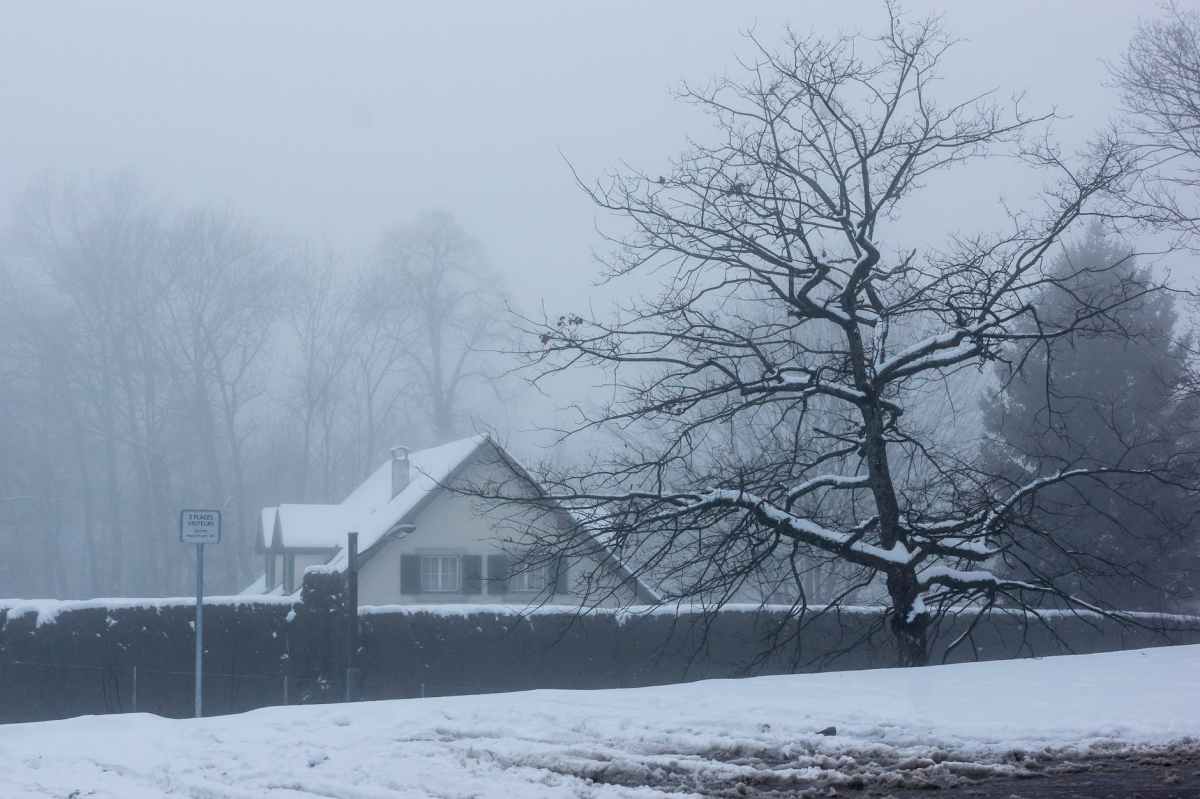
The fact that it’s not seen as strange to be talking of freeing up the City of Lonon from regulation at the same time as restricting and controlling working men and women is a bad indication of these difficult times. The Prime Minister may look like a busy light-hearted mouse, but he has a heart as cold as the winter mists.

As the Government has said it wants to collect data from our smart meters, I wonder what can possibly flow from that intrusion into our privacy. In so far as it might guide national policy and reminds Ministers of the benefits of insulating homes, data collection could be helpful. However, there’s a dangerous precedent set when Governments collect every bit of data homes produce.

There’s a creeping tendance to always ask for more data. Mr Scrooge can then compile a leger on the comings and goings of every citizen. Don’t believe for one moment that GDPR will protect our data. Personal information such as names, addresses and bank details are not stored on a smart energy meter. However, computing capability being as powerful as it is, relating energy data to its point of collection and thus bill payer isn’t so difficult to do.

To me, this recalls the saying about knowing the cost of everything but the value of nothing[2].


[1] Ebenezer Scrooge, character in the story A Christmas Carol (1843) by Charles Dickens

[2] Oscar Wilde’s famous definition — someone who “knows the price of everything and the value of nothing”

21st Century Gothic

It took over 600 years to complete, Cologne Cathedral[1] was finished in on 14 August 1880. That was about six months before the Conservative politician who served as United Kingdom (UK) Prime Minister (PM) twice, passed away. None other than Benjamin Disraeli. 

The Gothic revival has started. Europe became awash with gothic architecture. Cologne Cathedral ranks as a pre-eminent example of the style in all its glory.

Today, our UK Houses of Parliament, more accurately the “Palace of Westminster” is as gothic as gothic comes. After both houses has been burnt to the ground, in 1835 it was decided to rebuild. I guess that’s a clue as to why the architectural choice was made the way it was made.

The Germans, Czechs, Hungarians and British all had a taste for this grand nationalistic style. It had become fashionable with the Church as much as being a symbol of national triumphalism. It pushed aside the Classical style. Although many important buildings were still built in the Classical style at that time.

Honestly, I’m not being unkind. This week’s Ministerial appointment had more than one outstanding eyebrow lifer. I really wish I could do that trademark Roger Moore facial gesture[2]. What a handsome chap. I’ll forgive him his conservative leanings.

What got me thinking about a Gothic revival was not the famous painting: American Gothic[3]. Which is a wonderful parody. No, it was the image of a newly appointed Minister of Her Majesty’s Government. My thought was that this is NOT normal. This is worthy of exceptionally grave concern.

Jacob Rees-Mogg MP has been appointed Secretary of State for Business, Energy and Industrial Strategy. However, he might be most suited to the Gothic palace where he spends his time, the notion that that gentleman is the best choice for that office astounds me.

We are in 2022, aren’t we? There hasn’t been as sudden slip in the time continuum, and we are back in 1822, by any chance?

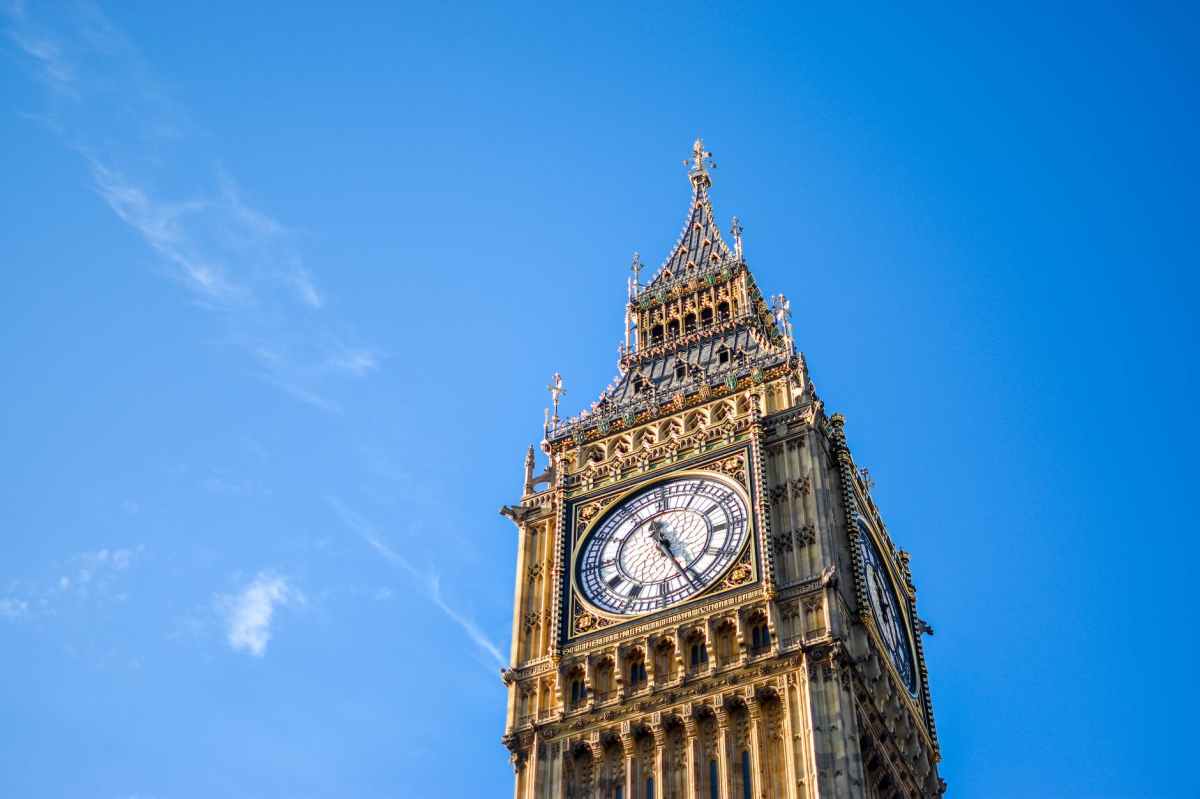
The UK Houses of Parliament have become iconic and symbolises the UK throughout the world. Big Ben, the clock tower, is in the Gothic style. I had no idea that this revival of the Medieval impacted the choice of Government Ministers. I’ve been shaken. I hate to use the words but – we’re all doomed[4].


[1] German: Kölner Dom

[2] https://britishheritage.org/en/roger-moore

[3] https://en.wikipedia.org/wiki/American_Gothic

[4] “We’re all doomed!” the classic catchphrase of Private Frazer in Dad’s Army.