Daily writing prompt
If you could meet a historical figure, who would it be and why?

It’s one thing to have the fancify idea that just as in “Bill & Ted’s Excellent Adventure[1]”, I’d be able to talk to anyone but that’s just not on. I might meet Socrates, or some other great classical mind and ask questions about the meaning of life.

Let’s face it, nice idea but we wouldn’t understand a word we said to each other. There’s also that divide between the analogue and digital world. Technology 21st Century types take for granted would seem like magic stepping back a century. Thus, dude it’s the modern age where I’d focus attention. Set the dial on my time machine.

Let me go for Richard Feynman[2]. I’d ask how do you communicate complex ideas and make them seem not so complex? Then afterwards I’d be stuck with the dilemma that often strikes. Well, I thought I understood what he was saying but now I’m not so sure.

Strange that Bill & Ted went on their adventure the year Feynman passed on. That year, I was figuring out the space between the analogue and digital world.

If Feynman was busy, I’d go for Carl Sagan.


[1] https://youtu.be/oUDIBzecP1I

[2] https://www.nobelprize.org/prizes/physics/1965/feynman/biographical/

Mars steps

It’s strange what thoughts circulate in my head. If I was to say what kicked this off it was probably the story of the Preet Chandi[1]. It’s inspiring how some people see a challenge and just get up and throw themselves into overcoming it. Her commitment and determination are impressive. She was recounting the how and why of her striking endeavours on the radio. What’s much less inspiring are a some of the moronic comments that the web throws-up about her achievements. I hope she continues to take on great challenges and sweeps them aside.

Exploring and going that extra mile is built into the fabric of being human. Fine, it’s not for everyone but that’s no surprise given that there are 8 billion of us on this planet. A magazine popped through my letterbox this week speculating on what Earth will be like when that number gets to 10 billion people. Don’t worry it’s not all doom and gloom. It’s just that the world will be a very different place by the time we get to 2050. Wow, if I stay healthy, I might still be around.

A lot of public policy of the moment seems to be resisting this reality. Honestly building barriers and walls will do nothing whatsoever to build a better world. Cultivating political anxiety and fears about the future is the maddest short-termism that can be imagined. But sadly, there’s a lot of it about. It’s fashionable in the mature democracies around the globe.

Humanity has an endless list of “challenges” and opportunities ahead. Now, I don’t what to sound too much like the Musk man but we’ve a great deal to do off the planet. What we’ve achieved so far is chicken feed in respect of what we have the potential to achieve.

The big one, that taxes the imagination of writers and futurologists is what do we do about our sister planet: Mars. It’s impossible to ignore. It’s not that far away when compared with other distances in space. It’s intriguing in that it was once a water world. Like Earth.

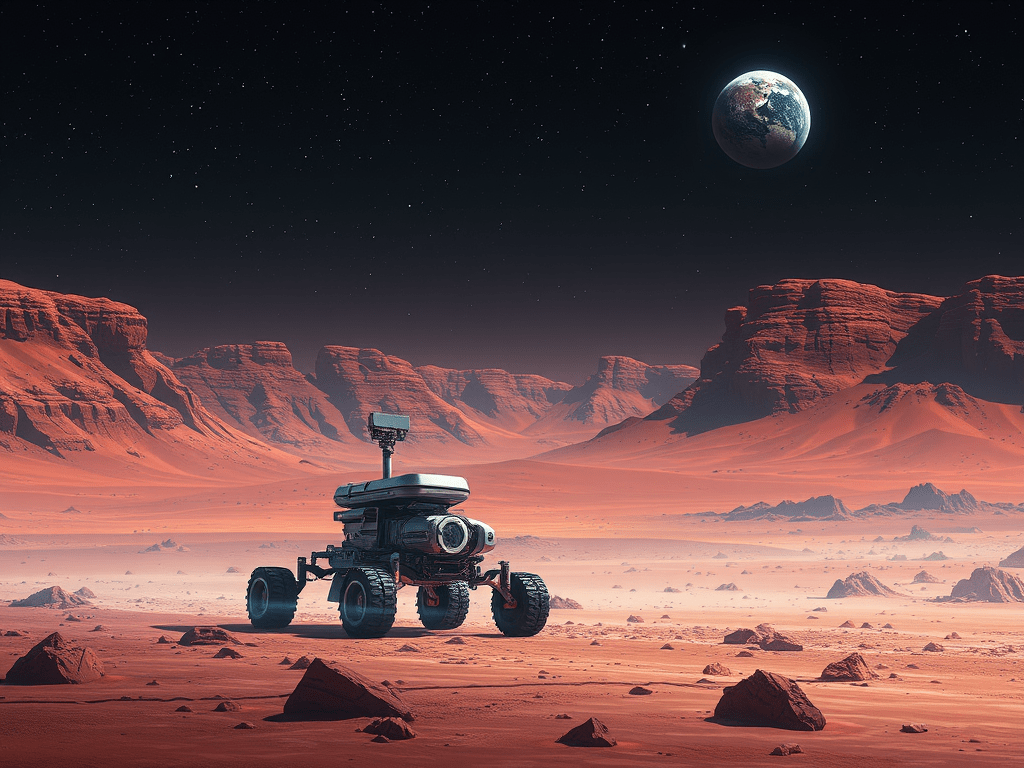
Today, it’s a planet inhabited by robots. The only one we know that is so populated. Rovers drive around sending pictures back of a desolate barren landscape that has an eery beauty. So much of what we know about the place has only been discovered in the last decade.

Human exploration is natural and normal. Do we leave it to robots? Afterall they are becoming ever more sophisticated. Or do we plant boots on the ground and go there to explore in the way we have throughout the Earth. Well, except for parts of the deep ocean.

Here’s what crossed my mind. Just as Polar Preet, broke two Guinness World Records on her journey, so the incentive to be the first person on Mars is something that will land in the history books. The name of the person who makes those steps will echo through the centuries ahead. So, the trip to Mars will not need an incentive. The drive to do it, at almost any cost is already hanging in the air. What’s more complicated is the journey back to Earth. Going on an expedition has a clear goal. Getting back from an expedition has a different goal.

Being someone who recognises the benefits in the reliability of redundant systems it occurs to me that a mission to Mars needs two ships and not one. Both traveling together to the planet. One can be simple and utilitarian. That’s the one crewed as the outward-bound ship. The other, the homeward ship needs to be autonomous, secure and even luxurious. That way the hardest part of the journey, coming back, can be made easier and more likely to succeed.


[1] https://www.independent.co.uk/news/uk/home-news/preet-chandi-sikh-south-pole-b1987047.html

Flying a kite

Political discussion is much as it often is. One side is an abomination the other is the only way. Reverse that theme and you can sing the song of either Conservative or Labour party. Test yourself and see if you can think of a positive, constructive, cross-party initiative that is making Britian a better place to live. And that it isn’t jam tomorrow.

We are in a particularly febrile season. Holding the front page is mostly for atrocities, resignations, scandals and promises broken. Future quizzes about early 2024 may feature the question – who was Prime Minister or why was the inevitable General Election delayed?

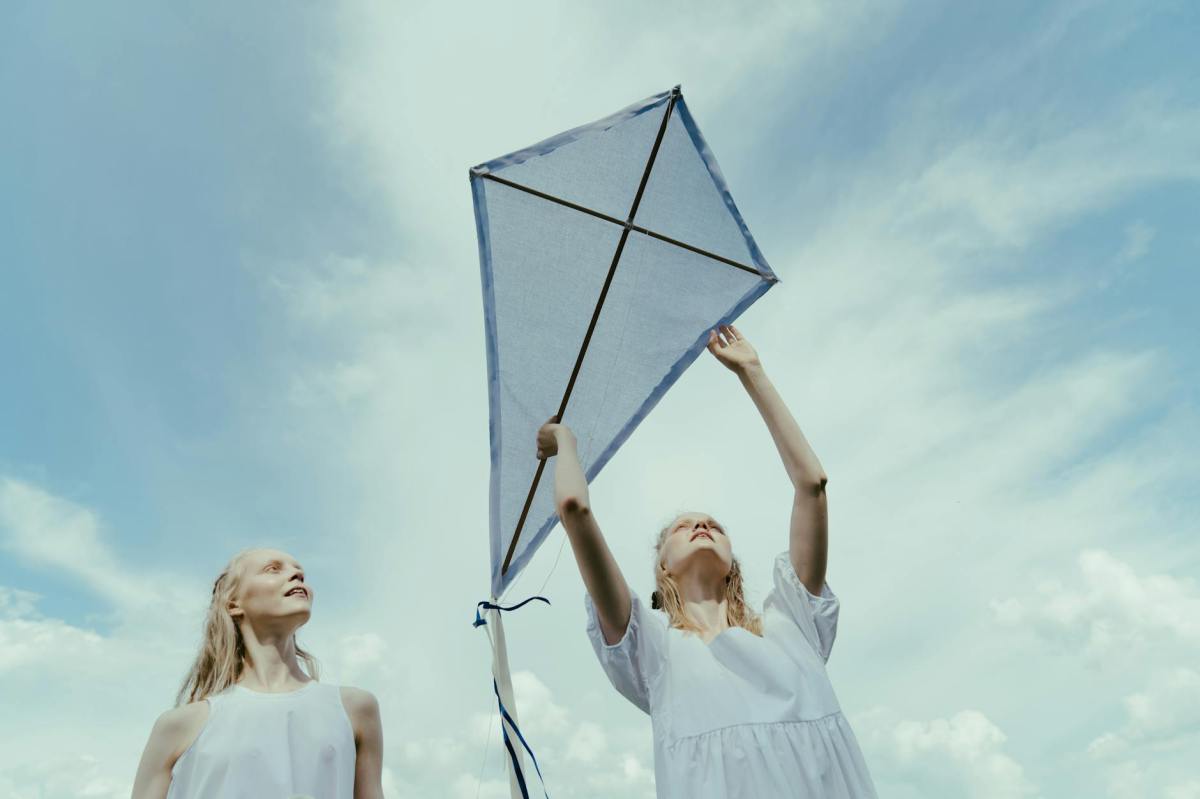
I stripped off the daily one-page calendar for the 15th and the saying presented was – Imagination is the highest kite you can fly. There is a sentence to end the week. In the face of grinding pragmatic reality and the predictability of the worn out adversarial political order what if there was some imagination?

Much daily News concerns conflict, war, crime, funding cuts, inflated claims, and disagreeable personalities. No wonder people are turning off serious News media. A diet of current events remains important in a healthy democracy. Sadly, lots of people are driven to News avoidance[1].

My recommendation is let’s have some daily News that stimulates the imagination. There’s a little tickle through on occasions. Sadly, again this is seen as a minority interest. The need for hope built on a positive vision for the future is great. The more people disengage with dependable, independent, and objective News, the more the spinners of misinformation and lies get a grip.

What is missing is imagination. It’s not so alien. To think we once had a prime-time show called – Tomorrows World[2]. It wasn’t a humours chat on a comfy sofa at teatime. Meandering about the lives of minor celebrities and entertainment plugs for coming shows.

For decades, the likes of Raymond Baxter, James Burke and Judith Hann took us on a weekly adventure. On reflection there’s an immense range in their presentations. From what now seems comical to what has turned out to be profoundly significant.

I propose a next generation version of Tomorrow’s World. It’s the Spirt of Imagination. Each week there would be an accessible, peak time, magazine style show that looks at what’s lighting up the world of science, technology, and engineering.

I’m not asking for a worthy educational STEM[3] fest. No. A show must be engaging. Not a bore fest. It must be led by talented communicators who have a passion and instinct for what people are talking about. It must look a generation ahead. Simultaneously ask grandparents to rediscover wonder.


[1] https://reutersinstitute.politics.ox.ac.uk/news/five-things-news-media-can-do-respond-consistent-news-avoidance

[2] https://en.wikipedia.org/wiki/Tomorrow%27s_World

[3] https://www.stem.org.uk/about-us

Oppenheimer

Nuclear physicists did change the world forever

It’s a movie that’s immerses. On the walk to Reigate’s small cinema, the thought of sitting in the front row for over 3-hours was making me wonder if I should follow the recommendations coming my way. Locally, having a “must see” film showing hasn’t happened for a while. Views of friends were almost universal about the film[1]. All positive.

It’s intense. Even in the 3-hour run there’s no wasted time. No spinning the wheels. The story is two or three films in one. Given that this movie is about a life, what we see is a compressed drama against a backdrop of world events.

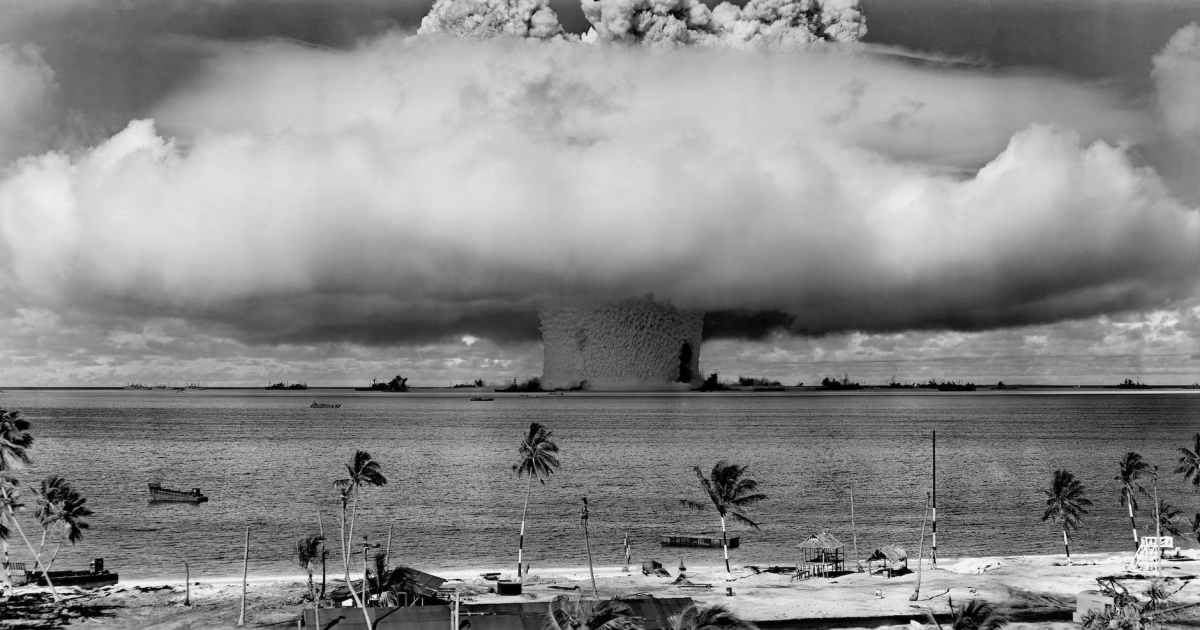
It’s serious. Not much room for everyday humour. Just a sprinkling of irony. Nuclear physicists did change the world forever. Would the change have happened anyway? Yes, most probably, but the world would now be a different place if the bomb had been realised in the Europe of the 1940s rather than the US.

When big science meets national and global politics the results are disturbing. Robert Oppenheimer acted as a nexus. Events pulled him like a powerful magnet from one impossible situation to another. At the same time, he made choices based on strong convictions and a single-minded assurance.

His faith in a “liberal” America was tested to the limit as the devils of political intrigue and ambition kicked against him. The human choices of the head and the heart were stirred into conflict. The sharp tension between right-wing politicos and left-wing intellectuals killed any middle way to bring the globe together to manage the new threat of nuclear confrontation.

Sub-stories ranged over challenges I recognised. The whole art and practice of managing experts, in his case on a large scale, of the Manhattan project, were on display. How do you create urgency and unity around a controversial project? The military couldn’t do it by compulsion alone. The ethical and moral case had to be made for pursuing an aim that would transform the world, or even destroy the world. Once made, the atomic bomb could not be un-invented.

The war to end all wars became nothing of the sort. One bomb led to another and the dangerous stalemate of the Cold War. The later shaped my life as much as anyone who’s over 60-years.

On the technical front, what is fascinating to an engineer, like me, is the vexed question of – what if? What if the massive technical risks of the Manhattan project had not paid off[2]? Or it had taken years more to make a viable bomb? We will never know.

This film, part biography, written and directed by Christopher Nolan was so much in his style. However, on the screen there was no doubt who was dominant. The Irish actor Cillian Murphy is stunning. His Robert Oppenheimer burns into the eyes. What an incredible role.

The temptation is to use a wide range of adjectives that reach a crescendo. There’s a pile of reviews that do. So, I’ll turn to the parts that were not so coherent. Strangely Kenneth Branagh as Niels Bohr worked. However, the portrayal of Einstein was less convincing. The use of black and white pictures to demark different times worked well but was annoying. And sometime the thunderous noises and dramatic flashes were a bit OTT.

Overall, it’s a “must see” film for 2023 and best on the big screen. But don’t sit in the front row.


[1] https://www.imdb.com/title/tt15398776/

[2] Early morning of 16 July 1945, in New Mexico, work at Los Alamos led to a test of the first nuclear weapon.