Adapting to Climate Change

Owned experience is more real than the theory, or the machinations of commentators. Yes, I know climate change and the weather are two different phenomena. My local weather is a part of the equation, even if it has its own life. Living in a shallow river valley in southern England there’s bound to be an element of a microclimate. A little warmer than the sounding chalk hills.

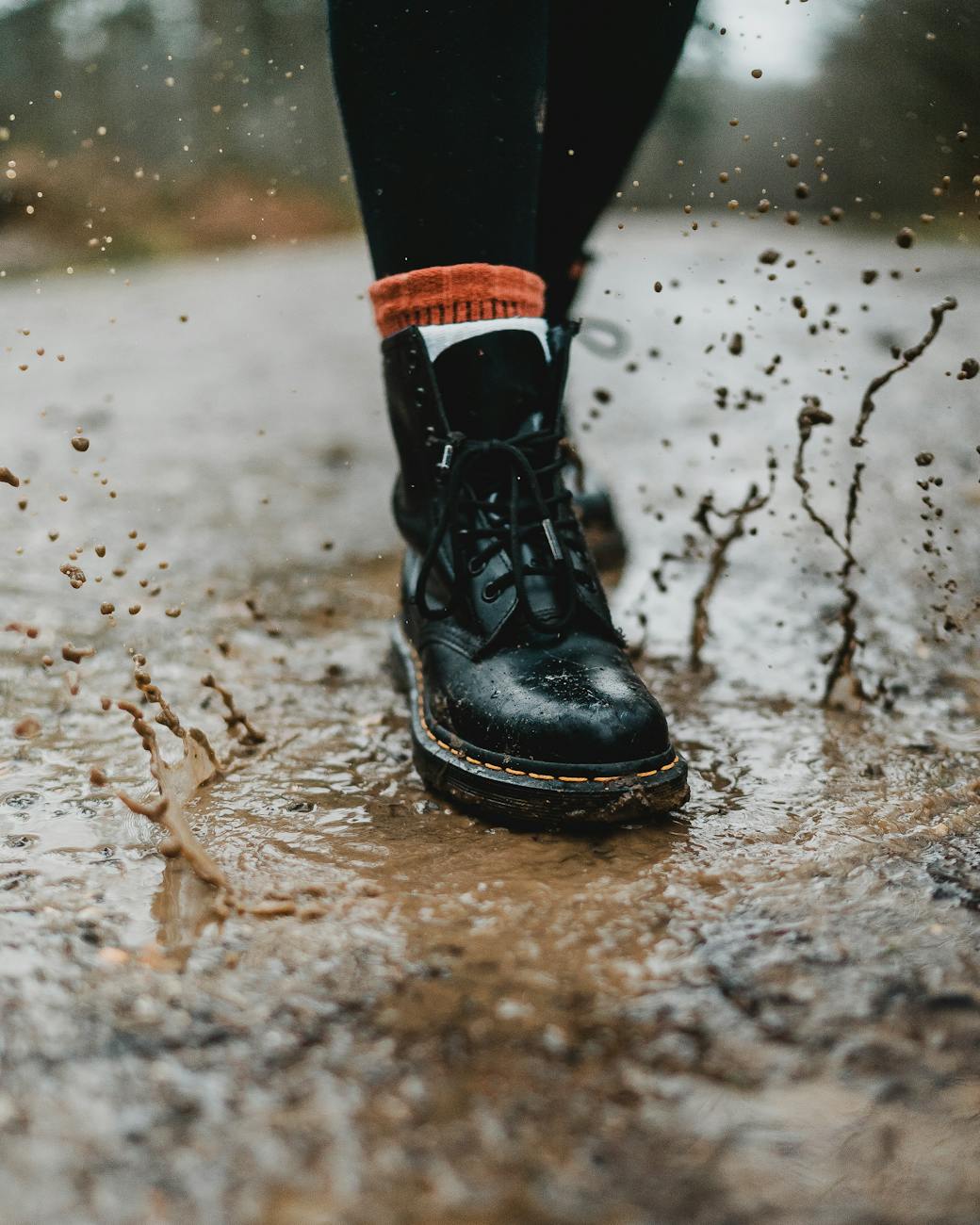
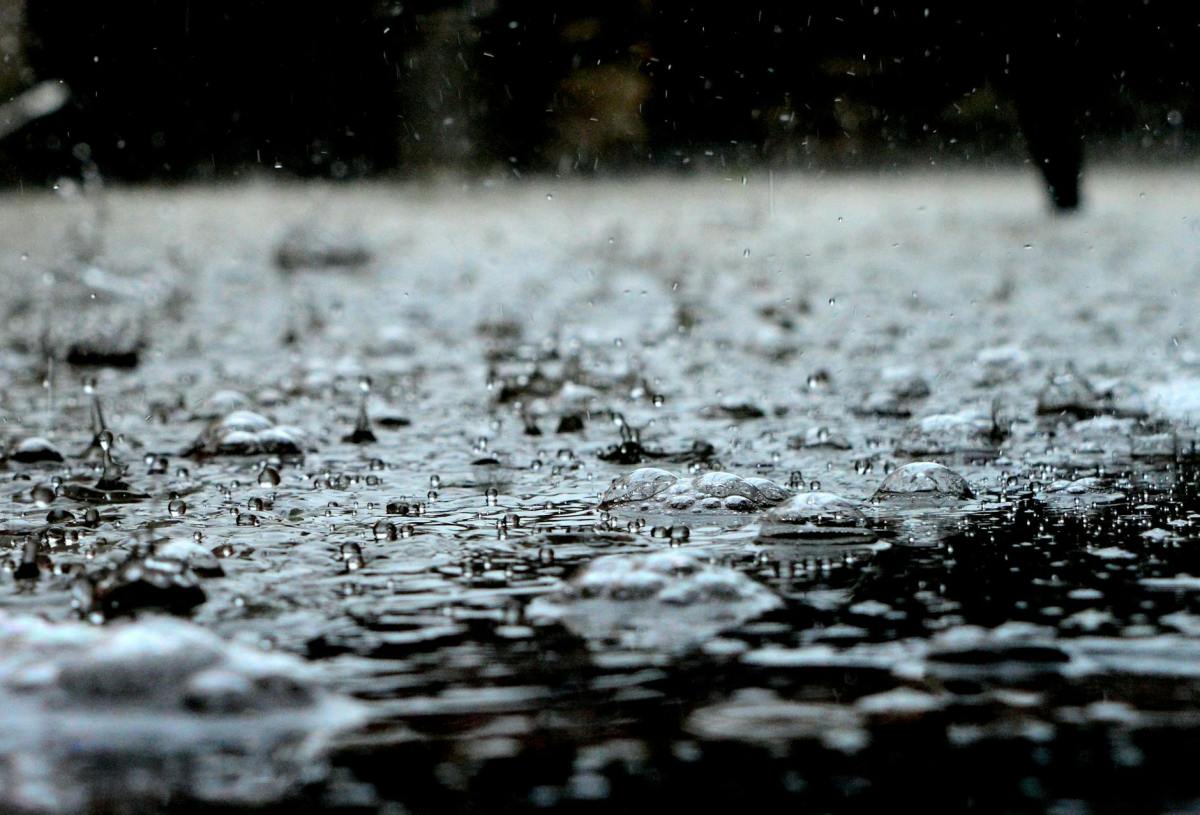
Last night, the rain fell. At about 3am it was ponding the roof tiles. Coming down like stair rods. Dislodged moss on the decking. Making the dark seem darker. Soaking the garden. Water butts that spent most of the year empty, full again. Whereas the water table sank to a depth in the mid-summer. My garden’s soil was hard. Compacted dust and flint in places. Now, it’s as if the ground water has risen to the surface. No place untouched. Grass as green as it has been. Squelching underfoot.

What’s chiming with me is the marked difference from past times. It’s November. The year is coming to an end. For decades past it would be perfectly normal for there to have been at least one hard frost. One of those occasions when the water in the bird bath becomes a solid frozen block. A glistening white cover of the grass. An end to the growing season, for sure.

Looking out of my kitchen window I still have plants in flower. Piles of sodden leaves. With one or two trees still reluctant to give up theirs. The seasons reluctant to move on. More chance of flooding than frozen ground.

Climate change predictions are that rain is likely to become heavier in this part of the UK. Floods to become a more regular occurrence of warming winters. The ground absorbing much more rainwater. River levels staying higher for longer.

What impact this seasonal flip-flop will have is open to question. Dry summer ground as hard as concrete. Wet winter ground constantly saturated. A more rapid change from one to the other.

For a gardener, certainly, this needs to be considered when planting. Seeing what plants will flourish in these changing circumstances. At least, I did invest well in one new willow tree this autumn. It’s about eight foot high and leafless. I’m expecting it to bust into life in next spring.

POST: As if I’d called it, the temperature has started to drop. 2C this morning. So, maybe the point is not that the seasons are changing, which they are, but more the moment of transition from one to the other is changing.
Rain and Life

Rain is inevitable. Rain is perpetual. Rain is ingrained in the fabric of life. Britain is a series of islands that’s buffeted by the winds that sweep across the Atlantic. Not always but mostly. 

We complain about it. We lament it when there’s not enough. We are shaped by it.  If ever there was a better sign of what’s called “small talk” it’s to talk about the weather. Having a conversational default like this one is deeply embedded in our culture.

The line to draw is one between the “normal” amount of rain and the periods when the torrents seem almost biblical. Record breaking is a talking point. Can’t ignore it.

According to the Met Office[1], Berkshire, where I am, received 3 times its average September rainfall. Southern England had its wettest September since 1918, and its 3rd wettest on record in a series from 1836.

Natural variations are to be expected. Afterall, what would there be to talk about if the only thing to say is that the weather is the same as yesterday, or last week. That is the fate of people in some parts of the world. No such predictability for our northern hemisphere islands. Up at above 50 degrees of latitude we see a moderate variation in almost everything.

The key word there being “moderate”. Months that are as wet as this past September, do impact the regular cycles of the seasons. Generally, it’s been warm too. I can’t help thinking it’s been a good year to be a tree. Roots have had a lot to soak up whenever the need arises.

Is what’s happening an indication of climate change? I’m not going to be the one to put my hand up on that one. I suspect that a greater degree of variation in the weather is a broader factor.

For the farming calendar this year has already been a strange one. Almanacks that tell you when to reap and sow might need revisiting. Whether cows will need to develop webbed feet or horded of ducks take over, I’ll leave that to the imagination.

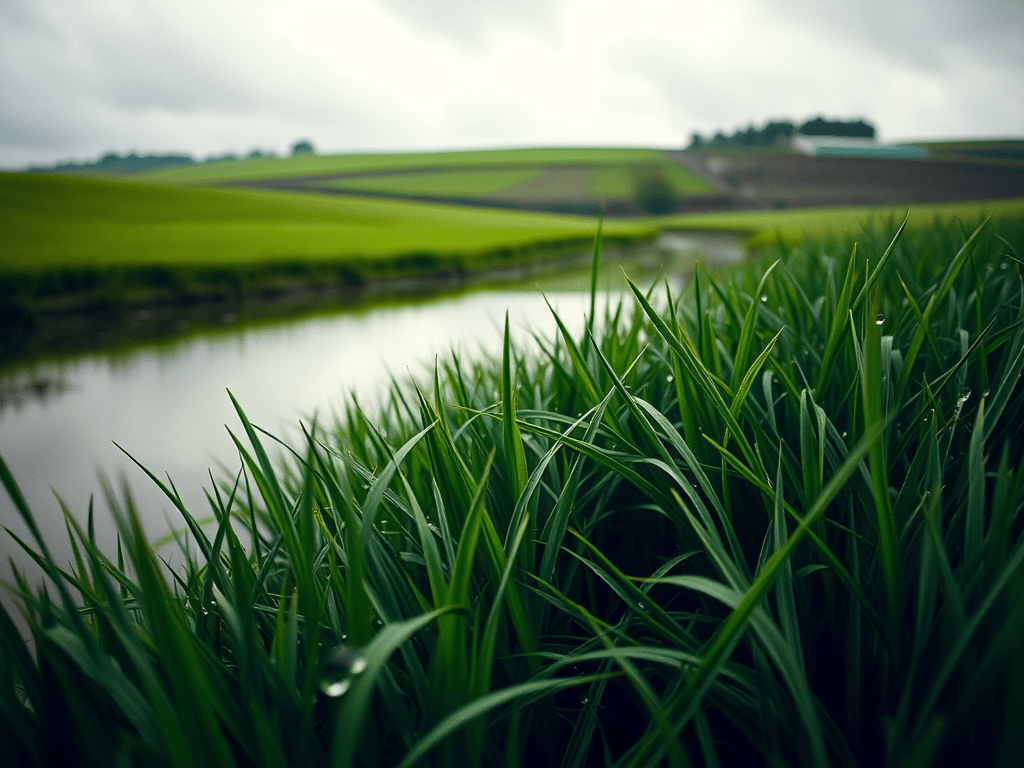
For me, since January, living near a river has become a source of curiosity. Luckily our house is many meters above the worst-case scenario for a sustained flood. The river runs fast. It’s a chalk stream. What’s interesting is that its level is highly dependent upon the degree of soaking that the surrounding land has received. Just now, the green fields around are like sponges that are nearing their capacity. I’m sure, that’s unusual for early Autumn.


[1] https://www.metoffice.gov.uk/about-us/news-and-media/media-centre/weather-and-climate-news/2024/record-breaking-rainfall-for-some-this-september

Mojo

There are days when I walk down the street, and everything is peaches and cream. I smile. People smile back. And there are days when I walk down the street, and everything is gloomy and downcast. I frown. People frown back. Like a coin has been flipped.

It’s true there are one or two tiggers to these phenomena. One is so British it’s often taken for granted. The marked difference between a warm, sunny summer day and a chilly, grey overcast winter one can be massive. Fresh green leaves, flowering plants and dry footpaths are on one side of the coin. Bare trees, barren hedge rows and cold puddles underfoot are on the other.

Those are the environmental factors that play with us poor humans as if we were puppets. It’s so much easier to feel optimistic and upbeat when the weather treats us kindly. Air, light, and heat cast a magical spell over all of us. We spend our savings, and we jump on aeroplanes to seek out these influences.

My thoughts stray into the realms of the unknown. I can be analytical and scientific about what sets feelings or moods for a day. What I see and hear can defy simple explanation. Dig deep enough and logic can prevail but not always. Not on every occasion.

I walk down the street perfectly cheerful about the world and its ways, at a time when the world kicks back. Equally, I walk down the street gloomy and pessimistic with the world and its ways, at a time when the world beams happily. What’s going on? Is it me?

An unexplainable factor is interfering. It’s as if I’ve flipped from a good mojo to a bad mojo. There it is. A word that wraps up an intangible feeling. A mysterious material hanging in the ether. My mojo. Or the mojo of those around me. The term is in common usage, so it must be meaningful in some useful sense. We certainly sprinkle the word into conversations when it’s clear that something magical has been lost or is drifting away.

My conclusion is that its one of those phenomena that just must be accepted. It’s written into nature. It’s an example of random chance in everyday life. It’s a probability that can’t be calculated. Even the most sophisticated computation isn’t going to tell that my lottery ticket numbers are winners on any one day, or not.

Today, my mojo and me are happy. But I can’t say much about what might happen tomorrow.

Muddy

Rain, rain, rain. It’s been a wet spring, so far. Let’s put that down to global warming. The cause is one thing, but the symptoms another. They are there to see every day as I look out of the kitchen window. At the back of our house, the open field that stretches out towards the river Lambourn is about 7 acres in size. At least half of it has been flooded or is caught in that cycle of the ebb and flow of the river for the last 3-months. Great for wildlife. It’s a soggy marshland.

We are into mid-April and there are rainless days. Bit by bit, it looked as if the river’s flood waters[1] were receding, and they were but now and then a burst of rain tops up the pools and streams. That’s this morning in a nutshell.

Our lawn is growing fresh grass enough to fuel a herd of wildebeest. I jokingly said we need a goat to eat it all off. Getting my battery powered mower to control the lawn is a real effort. A healthy growing season. That’s the good side of a damp climate.

For livestock, and wildlife the flourishing fodder is a positive. Already there are two families of ducklings swimming around and eating as much as they can. On the negative side, parts of the field outback are too wet to allow cattle to trample the new grass. A seasonal problem I’m familiar with having grown-up in a place called Horsington Marsh.

Bright green growth is one of the delights of springtime. Leaves on the trees and the fresh grass as it reaches skyward. Even the moss looks shiny and alive. This is the two-edged sword of farming. Grass needs the rain but too much and the land becomes a potential mud bath.

Eventually, the fast-flowing waters of the River Lambourn run into the River Kennet and then the River Thames. Strange to think that the water the ducks and geese stomp around in around here eventually passes through the heart of London on its way to the sea.

It’s notable that the grass grows where the flood water has receded. That part of the adjoining field where the waters come and go has turned into a combination of mud and aquatic vegetation. There are plants that can tolerate little air getting to their roots and there’s others that start to die back if there are submerged for too long.

Sadly, although the river’s waters look clean and clear, sewage treatment works, septic tanks, arable farming, road run-off and industrial processes have all had their impact. Technically the river is in an “unfavourable condition[2]” when it comes to aspects of water quality.

What of the mud? It will be interesting to see how quickly the submerged areas recover as the weather improves. I’ll be looking out for how all the phosphates in the water and the dead grass come alive again. Or do we end up with a low-lying grimy mud riverbank supporting rushes, reeds, and algae? Climate change and the human activity are changing the nature of watercourses. It’s difficult to say if the worsts aspects of this can be mitigated.


[1] https://check-for-flooding.service.gov.uk/target-area/061WAF22Lambourn

[2] https://www.westberks.gov.uk/article/41082/River-Lambourn-Special-Area-of-Conservation-SAC

March

The North wind doth blow and we shall have snow[1]. Well, today on the first day of March and it’s more of a gusty North Westerly wind and heavy rain. The snow maybe falling on high ground in the North of England but here in the South the temperature remains mild. Although, the line on the thermometer is slowly descending.

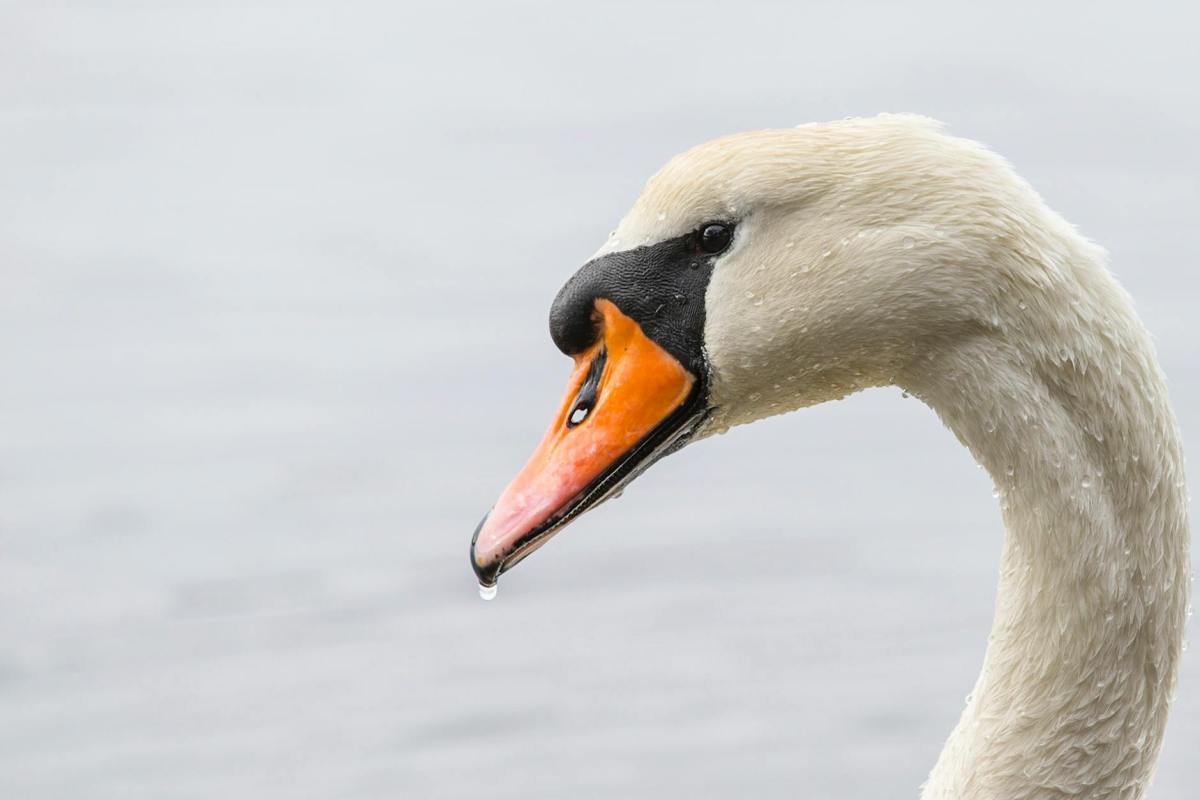
The flood in the small field out back waxes and wanes but is far from drying up. In fact, the extent of the water is greater now than it has been in a while. A lone Swan rests close to the riverbank. Not fussed by the driving rain. That makes me curious, where is its mate? On previous occasions, we have seen a pair of Swans cruising up and down the river Lambourn.

March comes in like a Lion[2]. That’s as true as it ever was of our weather, but will the next part of the saying happen as the month rolls on? Will March leave like a lamb? Winter may still have a sting in its tale. A misty wet March is in prospect.

March is always a month of transition. It certainly is for me. Having a birthday in the middle of the month is quite a good time to clock up another year. I never count winter as being behind us until I’ve put a candle on a cake. There’s an idea for a folksy modern saying.

There one more snowy white bird prancing around at the waters edge this morning. He or she is rather elegant small bird. It’s interesting to note that this bird was first recorded as breeding in Berkshire in 2007. Our visiting Egret[3] is dipping into the grass surveying the flood water with confidence.

Fishing is not just the exclusive rights of the Egret. There’s a slim tall Heron[1] who looks very regal. My guess is that the flood water has created small pools within which some small fish have become trapped. That’s a nice easy meal for a patient Heron. With spindly legs standing in the wet grassland any small fish would not see their fate coming.

As the sun has come up both Swan and Egret have moved on. The flood has been left to the ducks and geese. I don’t mention the Crows, Magpies and Pigeons. Although I just have. The wildlife seen from my window doesn’t mind gusty, wet, and windy anything like as much as I do.


[1] https://www.rspb.org.uk/birds-and-wildlife/grey-heron


[1] https://songsofchildhood.wordpress.com/2011/10/31/the-north-wind-doth-blow/

[2] https://www.theparisreview.org/blog/2015/03/02/folk-wisdom/

[3] https://www.wildlifetrusts.org/wildlife-explorer/birds/herons-egrets-spoonbill-and-crane/little-egret

Gerrit

Apparently, Gerrit is the Dutch, and Frisian form of the more familiar name Gerard. It’s the name the UK Met Office[1] has given to the winter storm that has just barrelled its way across the country. I don’t normally write about wind and rain, but this storm is worth a short note. Not least because there was plenty of it for me to see as I was stuck in heavy traffic up on Salisbury Plain.

There’s some niggly social media kick-back on this habit of naming of storms. It’s winter after all. Having gloomy warnings pop-up for yucky British winter weather can get a bit tedious. In this case, I did take note of the weather warnings for Wednesday. Fortunately, the strong winds were blowing the right way for me. West to east.

My plan. Yes, I did have a vague travel plan. My plan was to get a major part of my journey, eastward on the main A303, done before the weather turned into heavy rain and strong winds. That well-meaning plan failed. Salisbury Plain[2] is an expanse of open chalkland which is exposed to weather from all directions. Today, I’ve spent too much time watching grey clouds traverse those uplands.

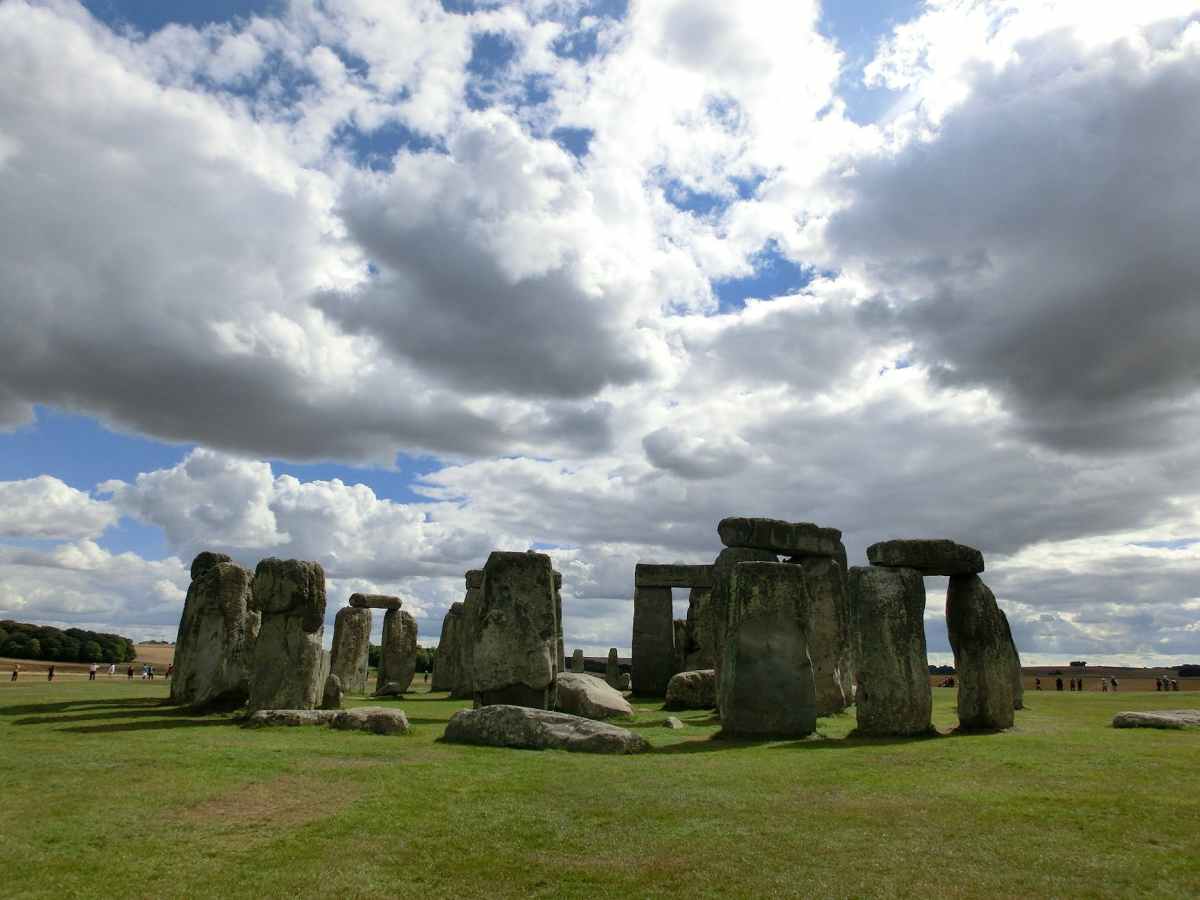
I blame Stonehenge. If prehistoric people hadn’t built it where they did then we’d have no traffic jams. The roads would be free. Those ancient builders must have been Europeans. In fact, they were since countries didn’t exist. Sorry, that’s just me pretending to be a Daily Express reporter.

Sure, enough it’s the stretch of the A303 that passes by Stonehenge that is the worst for traffic build up. Winter or summer. One of the reasons is the shear level of traffic on this main road. It’s a popular route across southern of England but it suffers from a classic road syndrome. The better it gets (condition wise) the more traffic it attracts. Road “improvements” continues to be made, often at great expense and controversy. The encampment of road protestors at Stonehenge has disappeared. That said, I’m absolutely sure their objections to further expansion of the road haven’t gone.

This year, for late December the temperature is remarkably warm. It’s wet too. Warm and wet. Is that what climate change has in-store for us in the south of England? Dull British winter weather is grey with extra grey bits. It can be mighty depressing. Short days don’t help either. Gradually they are getting longer. If only the worst of winter wasn’t still to come.

Whiling the hours away in nose to tail traffic doesn’t help with spirts. The only consolation is to look out at the drama of the landscape and the storm all around. I tend to get stoical about the whole sufferance. I pity those who sit agitated at the wheel trying to squeeze one car length ahead by getting out of roundabouts faster than others. The constant stop-go of taillights is a sure sign of a driver’s irritation. Me, I try to cruise forward inch by inch using as little power as possible.

The idiocy of playing psychological games in heavy traffic makes me wonder if some drivers ought to have a licence. This happens when two lanes merge into one. Me, I obey the one and one rule. Traffic should weave together in fairness to everyone. One from the left and one from the right.

So, bye bye Storm Gerrit. Thanks for bringing the winter wind and rain. The important part of all this is that we got home safely. Later than expected by safe.


[1] https://www.metoffice.gov.uk/about-us/press-office/news/weather-and-climate/2023/storm-gerrit-named

[2] https://en.wikipedia.org/wiki/Salisbury_Plain

Duck

I take for granted that everyone knows the saying: “Red Sky at night Shepherd’s delight. Red Sky at morning Shepherd’s warning”. It’s not superstition. In the sense that calamitous events will descend on us because the rising sun happens to colour early morning clouds. It’s more the practical reality that British weather most often comes from the North Atlantic. So, clouds hovering in the West can be the signs of a cold front coming our way.

Being born in the countryside these ditties are bread and butter to me. Rural sayings about different times of the year, or nature in general endure, even in the mobile phone age. Now, up to date weather predictions, based on proven science are only a touch screen stroke away. Even so, memorable adages stick.

Last week, I heard a new one. New to me. A rhyming prognostic on the coming winter. This is not only a saying confined to rural areas. It adds to a long list of observations about the habits of birds.

This is not witchcraft. Birds’ behaviour can help us predict the weather, even if the means they use can be obscure. Our feathered friends are much more in-touch with nature than we can be.

“If the ice in November can bear a Duck. The rest of the Winter will be slush and muck”.

What’s going on with this traditional bird proverbs stumps me. OK, this suggest that a hard frost in November is an indicator that a warm, wet, and soggy winter is ahead. The duck as a measure of weight may be incidental. However, some ducks do migrate to find warmer places to overwinter. So, does the saying mean that because the duck is still here, it’s decided that the winter will be mild?

That’s contradictory to the presence of the thickness of ice needed to hold a three-pound bird. If a duck can stand on the ice and is happy with that situation. They are in the local park. Then that could mean a blast of cold air from the North before the year ends, has some meaning in terms of what happens next. What’s that got to do with slush and mush? I wonder.

Is this saying somehow linked to the past when hunting ducks was an annual event. Some strange observation that ducks are easier to hunt earlier in the winter. Or is that nonsense on my part.

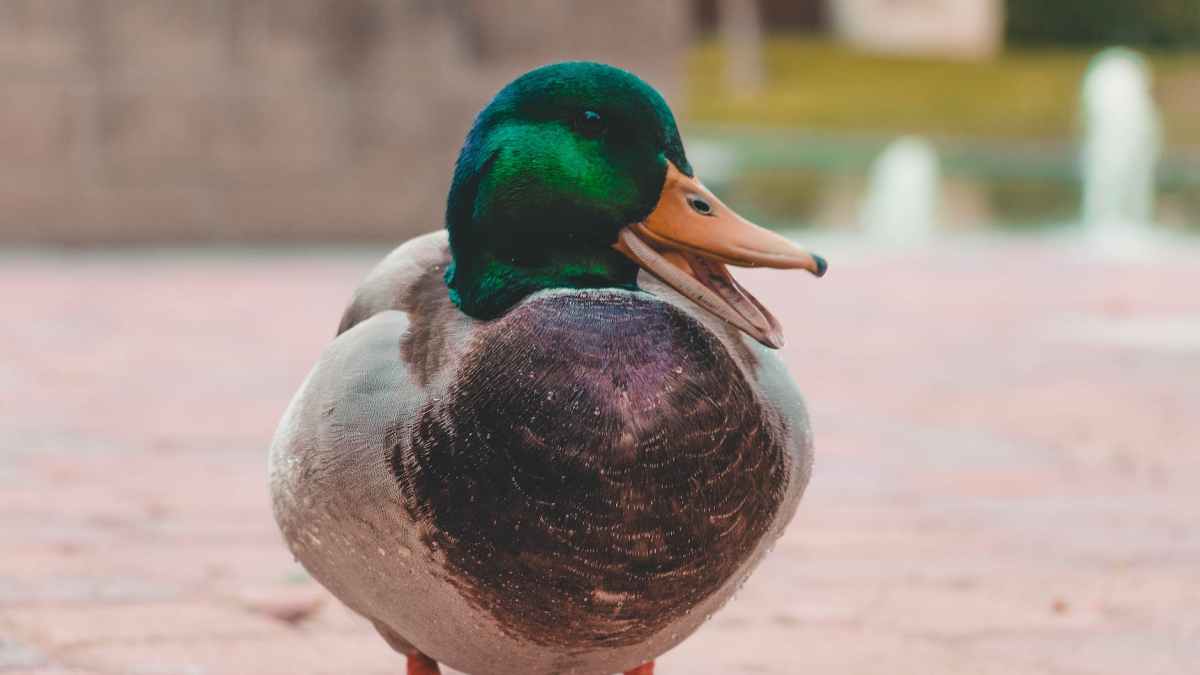
This folklore saying about winter can be put to the test. Although we are close to the end of November, the frost has been hard enough to bear a duck. Not a huge duck but an average mallard.

If this means a mild winter, we’ll soon know. Maybe duck barometers will work as long-term predictors. Showing us a sign of coming foul weather. Ho, ho.