Tip

You may think it was a bit of a joke. Certainly, some of the holiday makers around me thought the cabin crew were joking. I was at the back of the aeroplane and so one of the last passengers off.

We arrived at London Gatwick’s North Terminal at about 9:30 pm on a Sunday. Passengers were keen to get off and get home. That said, the amount of sizable luggage in the aircraft cabin overhead bins and maybe the sleepiness of one or two people meant the long line down the aisle was moving slowly and intermittently. The process was civilised but at a snail’s pace as it seemed from the back.

When you hear a request to hurry-up otherwise the plane will tip up it does instil some urgency. That and one or two questions. It also made me think; could that really happen in this situation? I was standing next to the cabin crew at the back, and I can attest to their concern being real. Being at the terminal gate there was only the front door open to exist the aircraft. When we got on-board the aircraft both the front and rear doors were available.

The Boeing 737 MAX-8 is a not an overly long aircraft. That said, under certain unfavourable conditions it can tip. In fact, there are longer versions of both the Boeing and Airbus single aisle aircraft that pose more of a challenge in this respect. There is much stretching of popular aircraft types to increase passenger capacity.

At the same time as we were deplaning[1] (ghastly word), the ground crew were unloading our luggage. As a result of all this movement of passengers and luggage it is possible to have too much weight at the back of the aircraft. Yes, you could blame it on masses of carry-on bags obstructing the aisle on a full aircraft, but it also takes the front passengers to have got off quickly. There are more passenger seats behind the aircraft wings than there are in front. On a cool Sunday evening when the airport’s public transport options are limited there’s an incentive to rush-off from the front. As the deplaning continued there was a sense that something was happening underfoot.

Does it happen? Do aircraft tip up? Yes, they do[2]. It’s not an attractive sight. I have no idea what the procedures are if it does happen. It certainly would be a shock for those on-board. Anyone in the vicinity of the aircraft would have to watch out too. In these unplanned events, there is a hazard to ground crew that can result in injury.

This sort of event happens more often in the air cargo world[3]. While these events maybe comical to witness, they are no joke for airlines. The possibility of damage and the disruption to aircraft operations can be significant. Nose wheels coming off the ground don’t always result in an aircraft tip, but this is not somewhere any crew responsible would want to go.

Weight and balance issues are real. Each aircraft will have weight and centre of gravity limits established at the time of aircraft certification. Aircraft operators will have procedures[4] that fully consider loading and unloading. That said, as we can see, miscalculations do get made.


[1] https://grammarist.com/spelling/deplane-or-disembark/

[2] https://youtu.be/JTDSS8unwQM

[3] https://www.independent.co.uk/news/world/middle-east/747-plane-tips-backward-airport-cargo-doha-qatar-fars-air-qeshm-a8829896.html

[4] https://www.faa.gov/documentLibrary/media/Advisory_Circular/AC_120-27F.pdf
Bad Seat

There’re bus trips, I can recount where people were packed in like sardines in hot sweaty environments. Never a pleasant situation but, in such circumstances, a way of getting from A to B. Maybe the only way of taking an essential journey. Life’s necessities.

I could rattle off the mantra “any safe flight is a good flight” and that remains true. It’s top of our normal priorities. Getting from A to B in one piece. No harm done. It’s the homing pigeon in all of us. I’ll put up with this unpleasantness because it gets me home.

Last night, I had that experience. It was my first flight on a Boeing 737 MAX. I’m not going to recount the saga of that aircraft type over the last couple of years. Much as to say, I reassured a nervous flyer with me that she was quite safe and nothing bad would happen. That is bar a small amount of turbulence in our three and a half hours in-flight.

I was returning from Preveza-Lefkas [PVK] to London Gatwick [LGW] on a TUi package flight. We got into Gatwick at about 9:30 pm with a full aircraft. The temperature change of having gone from a day of sunshine and about 28 degrees C in Greece to 6 degrees C and darkness on the ground at Gatwick was quite a shock. I must admit I was prepared with three layers to keep me warm.

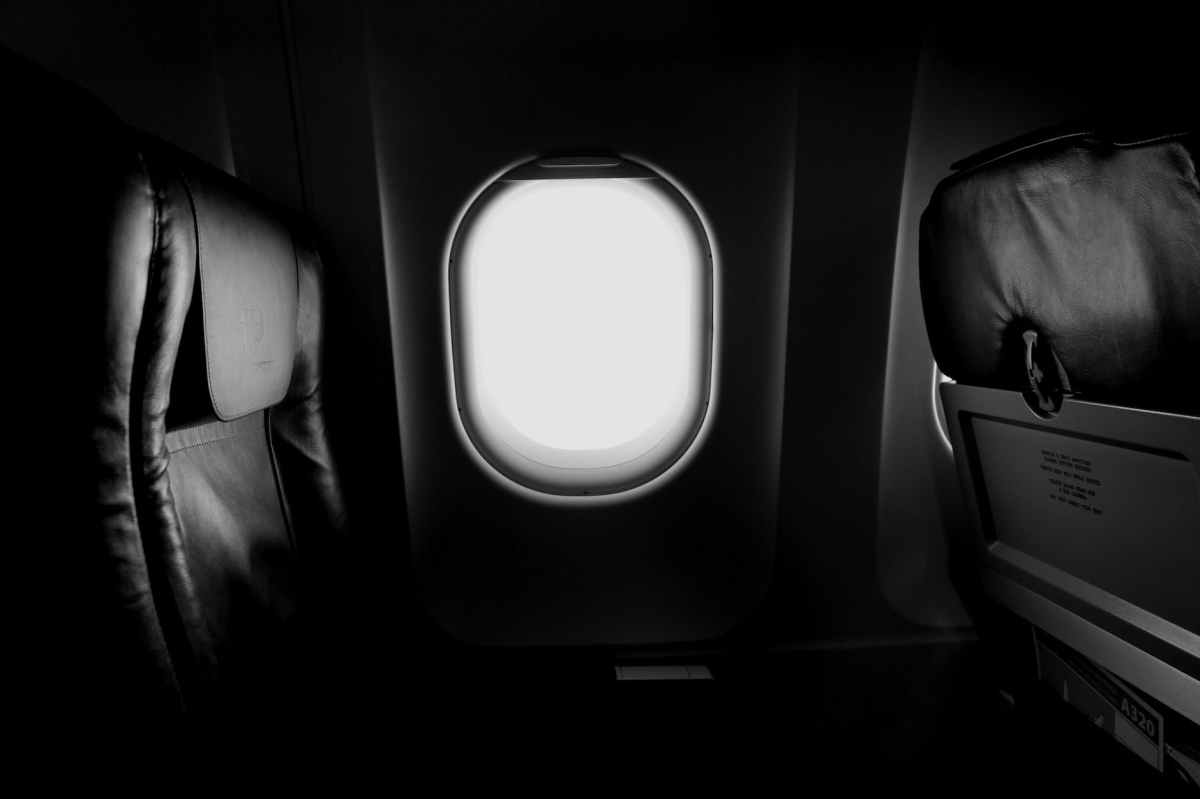
What I want to recount is the gross unpleasantness of seat 32D. Row 32 is the last row of passenger seats in the aircraft cabin, with two toilets behind. By the way seat 32E is just as bad.

The aircraft was chock full of holiday makers returning home. Bags full and overhead bins stuffed. This shiny new Boeing 737 was fuller than anticipated. Left on the tarmac was an EasyJet aircraft that had been expected to depart earlier in the day. It had “gone technical” – as they say. So, to get home, many passengers had transferred to the later TUi flight ensuing that every aircraft seat was full.

Now, given that I’d checked-in for my return home flight in good time and I have no idea why TUi decided to punish me. I should have spotted that 32D meant the last row of seats. But you know how it is, it was enough to get that bit of administration behind me and carry on enjoying the day.

My intention was to do what I do well, at least in the past and that’s to get some sleep on an uneventful evening flight. I was ready to sit back and wander off to dreamland hoping to wake as the aircraft wheels hit the ground back at Gatwick airport. Unfortunately, I wasn’t to be given that opportunity last night.

Toilet flush motors are not silent. With a full aircraft, and three and a half hours the toilet traffic was almost continuous. The sequence of noises had a horrible rhythm. Door open. Clack of the door latch or fumbling around as a passenger worked out how to close the toilet door. Maybe even a few words with another passenger who block the aisle. Then the clank of the toilet seat. Maybe the walls get bumped as awkward manoeuvrings took place. There was no stop to this soundscape of lavatorial processes, ablutions, and choreographies.

It’s so British to que. When the trollies were not being pushed up and down the aisle, the aisle filled up with passengers waiting for the loos. Then those returning to their seats had to squeeze past the assembled que. Naturally, the 32nd row aisle seats got to see every kind of human shape and form. Trying to ignore a rear end sliding past your face gets tedious when it happens a lot.

That’s not all. When the toilet doors swing wide open, they bump against the back of seats 32D or 32E. What a mad design or stupid afterthought.

Then there’s the issue of well used aircraft toilet facilities, even on a new aircraft. They may start off as sweat smelling as the air freshener applied. After a few hours of constant use, they are nothing like sweat smelling.

My overall message is – when flying on a Boeing 737 MAX, do not accept passenger seats 32D or 32E unless you have been a very bad person and deserve punishment. Ideally, a good airline would remove these two seats altogether but to make such a suggestion is to p*** in the wind.

Climate

It’s an odd day that I write in agreement with The Pope in Rome. He says: “People are not responding at the level of urgency that is needed” on global climate change. The Pope has a go at a commonly held blind faith in transformative ways out of our troubles by technical innovation alone. He seems to say that we ignore reality in the hope of technological magical thinking popping-up just-in-time. His references are to the need for lifestyle changes rather than carrying on regardless.

Now, quite a number on the right of political debate will see this as a lefty intervention. Anytime religious people step over the boundaries from the ethereal into everyday life the standard conservative response is to shout – get back to the pulpit. The same response, but more polite, occurs when English bishops speak up in the UK House of Lords. I’m no advocate of them being an intrinsic part of our national political systems but they do, at least, speak from an ethical grounding[1]. If we are to talk of political long-term thinking this is very much it. There’s nothing more that prompts short-term thinking than a looming election.

Combating climate change and pushing for environmental justice are not fringe activities. It requires dialogue across the main political parties. Saddly, we are going through a phase of squandering opportunities to change. 

I agree that taking a puritan line and making “hairshirt” rules will not deliver the results that are needed. Most often such a sturdy approach just fuels luddite opposition and media outcry. Continuous graduated change and a robust commitment are needed. Unfortunately, these two are an anathema to the populist newspaper headline seekers.

Economic interests are often quoted as a reason to shelve changes. Yet, everyone knows that the costs ahead of us will be far bigger if change is not driven consistently – now. Resilient long-term policy isn’t a lefty luxury. Or liberal daydreaming. Or unafordable. It’s vital.

What’s interesting about active in-action is that there can be no such thing. Climate change will bite back. Action will have to be taken under presure. In civil aviation, for example the climate has an impact on aircraft operations. So, not only does aviation impact the environment but increasingly hazardous weather impacts aviation, with severe results in some cases. Turbulence experienced in-flight is increasing as the world is warming[2]

Approaching risks there are, at least, 3 positive actions to be taken. Eliminate it, reduce it, or mitigate it. With the climate emergency we’d better be committed to the first two because by the time we get to mitigation there’s likely to be few more unpalatable opportunities left.


[1] https://www.churchofengland.org/news-and-media/news-and-statements/bishops-warn-environmental-racism

[2] https://www.reading.ac.uk/news/2023/Research-News/Aviation-turbulence-strengthened-as-the-world-warmed

HS1 and a bit

John F. Kennedy made speeches that have become legendary. My favourite is: “Ask Not What Your Country Can Do For You.[1]” In it he stepped up to meet the challenges of the times with clear purpose. There was no dither or wishy-washy ambiguity. The speech was a signal to the world saying: this is where we stand.

This morning, this is not the speech that I’m thinking of. I mention it because without Kennedy setting the scene in his Inaugural Address of January 1961, then his next steps would have been more difficult. There are epoch changing words. There are few modern words that match these: “We choose to go to the Moon in this decade and do the other things, not because they are easy, but because they are hard.[2]

In the context of the decision on the future of the HS2 railway project the words “but because they are hard” rings in my ears. In the whole saga of this national railway project did anyone say it would be easy. No one said it would be inexpensive. It was always going to be hard from the start.

If Kennedy had announced just to have a look at the Moon and return. No need to land. And he said that after a strong commitment to land on the Moon had been made, the achievement would not have changed the world. It would have been a footnote in 20th century history because others would have made the first steps on our satellite.

In a country that gave birth to the railways you would imagine that ambition in that field of endeavour would be high. Britain had energy. Britain had innovative engineers. Britain had a technological lead. The early days of the railways fuelled the industrial revolution.

Today, we need a bold and ambitious infrastructure plan in the UK. Living off the legacy of Victorian construction has lasted longer than is wise. Tracks that were set down almost two centuries ago are still the arteries that transport people and goods throughout Britain. Where is the Isambard Kingdom Brunel[3] of the 21st century?

Now, Conservative politicians are attempting to con the country – yet again. The idiotic line that – people don’t travel by train anymore – is insulting and wrong. The thin line that we can do more with our inherited Victorian infrastructure is pitiful. The Prime Minister’s hotch-potch of projects, with no timescales given, are no alternative.

Commitments can be hard to keep. Politicians that make “firm” promises and then back track in the days before a General Election are will-o’-the-wisps. Then to claim that they are working for the long-term is newspeak. Not to be trusted. Infinity forgettable.  

POST 1: Promises to upgrade main roads, that had been already anounced but delayed is not adding transport projects at all.

POST 2: HS2 explained: What is the route now, what are the costs and why is the Manchester leg being axed? | Business News | Sky News


[1] https://www.jfklibrary.org/learn/about-jfk/historic-speeches/inaugural-address

[2] https://www.jfklibrary.org/learn/about-jfk/historic-speeches/address-at-rice-university-on-the-nations-space-effort

[3] GWR was designed and built by Isambard Kingdom Brunel between 1835 and 1841 and is regarded as the most complete early railway in the world.

Button down

More as a matter of amusement than anything else, I’ll write about something that I’m entirely unqualified to raise. It’s the sartorial styles of the Conservatives as they huddle in Manchester this week. Pictures of prominent people or would be prominent people are scattered around the media and it’s impossible not to have a response. My main point of reference is the standard press shots of the MPs who have planned to stand up to speak. Standing up in public is not something to be done in one’s underwear.

Business casual hasn’t got to the Conservative Party Conference. Even business casual is now a bit of a blast from the past[1]. More suited to an industrial estate office complex in Slough than the real world. Wearing clothes that are more “modern and casual” has by-passed Manchester’s gathering of politicians. Shirts are all buttoned down.

The Conservative men’s recipe remains a strict and traditional. Even Moss Bross[2] have stepped into the 2020s. The Conservative have not. They are buttoned up and best seen against a grey background. Male politicians assembled in Manchester exhibit a dress code that is country club or what was once known as, when we had them in Britain, bank manager like. A regiment of blue ties are tightened to the neckline. Stiff collars look like they came straight out of the packet.

So much of what we see is the typecasted stereotype. No wonder a great mass of people are put off ever standing for election. It’s a good question to ask? Should British politicians look like standard politicians, and long lines of past politicians?

It’s true appearance can shape attitudes. However, my thought on the subject is that politicians shouldn’t look that much different from the population they serve. Afterall, if I turn up on your doorstep as if I was dressed to go to a funeral you might only give me the directions to the local cemetery. Strict and traditional apparel doesn’t help break down barriers. Nothing signals remoteness better than expensive dress shoes and a sharp button-down shirt. 

So many years ago, it seems like another century, it was in-fact, I did do the Colour Me Beautiful training[3] at a party conference. I only have favourable memories of that brief experience. It was fun. Somewhere in a draw, I still have the colour patch that was given away as part of the course. The message is that confidence can flow from dressing in tune with who you are.

It does matter what politicians look like. I know that sounds superficial. Like it or not, what we see, as first impressions can make a huge impact on subsequent reactions. This is not a fixed phenomenon. Gradually, understated casual appearances have become the new code. Smart attire can be put together to form an individual style. More politicians should do just that.


[1] https://www.bbc.co.uk/programmes/b00jd68z

[2] https://www.moss.co.uk/

[3] https://www.colourmebeautiful.co.uk/training-academy

Trees 2

The story of a Sycamore has captured the imagination of a wide range of people this week.

To be frank, I’m much more a fan of the venerable Oak tree than the humble Sycamore. It’s the quintessential English tree. The Oak is the most Shakespearean of trees[1]. Even my pathetic education in English literature means I know the role played by Birnam Wood.

Again, maybe it’s my childhood. Certainly, Somerset’s farmland is peppered with old Oaks. Not as many as in the 1960s and 70s but they are still the most longstanding living organisms in the open western countryside. As far as I’m aware. Happy to be corrected on that one.

Yesterday, I wandered around under the canopy of the trees in our local park. The park has a random selection of tree species. It may have been planted with a logic. No logic is evident when wandering around. Most prolific are the Beech and Birch trees that tower, straining to reach the sunlight.

Yesterday was the last day of September. The woodland canopy’s colour is slowly changing. Leaf fall is testing the air. A few rustles underfoot and one or two falling Chestnut leaves bounce off me. Colours are mellowing. The intense green of springtime has long since faded.

I’m no wild man of the woods. To me they are more places of contemplation. It’s a contrasting atmosphere we have in our local park. I can be totally alone, except with a nod to an occasional dog walker, but only a couple hundred feet away all the noise of Saturday morning football pitches fills the air. It’s the peacefulness of a woodland cathedral with the business of life just outside its walls.

Time runs differently in woods. The rhythm of the seasons is underscored by a longer timescale. Tens of years, if not hundreds, tick away oblivious to human concerns. If left alone, a wood would make its own story of struggle, tree on tree, as the younger ones fight with their mature colleagues for space.

I did find a healthy Sycamore sapling. I felt compelled to apologies for the goings on of the week’s news. That sounds a little crazy. For a tree in the sandy soil of Surrey the fate of a distant cousin up North isn’t going to mean a lot. The point is that it made me feel better. It’s the cycle of life.

A mystical element occupies a wood[2]. There’s never a moment when our eyes and ears, sensitive to movement, are not alerted to a disturbance. However small. In our park it’s likely a squirrel. That’s no threat at all. But because our senses, however acute, can’t penetrate the depths of a wood there’s always a sense of mystery as to what’s ahead or behind.


[1] https://www.cam.ac.uk/research/features/into-the-woods-with-shakespeare

[2] https://www.thedavidhockneyfoundation.org/chronology/2008