
Conventional thinking pervades. It’s the model for seeming to be reasonable. To grow consensus and find a middle way through opposing parties. To bend in response to the wind that blows from popular opinion. Institutions are inclined to go this way. This is not surprising when an organisation is set-up to serve a large constituency. There’s the need to emphasise the parts of public policy that coincide with the mission of the institution. To push back gently against the ones that run adverse to that mission too. The Royal Aeronautical Society’s (RAeS) position paper on Airports[1] is a nice example. Here’s a few points that come to mind.
Linking Airports and Advanced Air Mobility (AAM) isn’t such a good idea. Yes, there’s the fact that Airports have infrastructure which every form of air transport needs. That’s the upside. The downside is the competing for resources and high cost of the provisions at major Airports. There’s a degree of environmental saturation that can’t be avoided.
One of the greatest opportunities for AAM is that of entirely new air transport links. Afterall, a Vertiport needn’t take up much space. As long at there’s plenty of electrical power and links with other modes of transport there are exciting possibilities.
A long time ago the commuter class of aircraft operations was created in the US. These were referred to as air taxies (fixed wing). The idea was then to open a travel market at a layer below large transport operation. It wasn’t that successful but does show mixes of types of traffic at major Airports doesn’t work out for the smaller parties.
Regional airports, and their potential, are greatly undersold. It’s wrong to see them as merely part of a hub and spoke network. What they do best is to serve their local communities. Having recently flown through Bournemouth (Hurn) Airport for the first time, it’s clear that so much can be done to spread the load and make traveling again a pleasant experience.
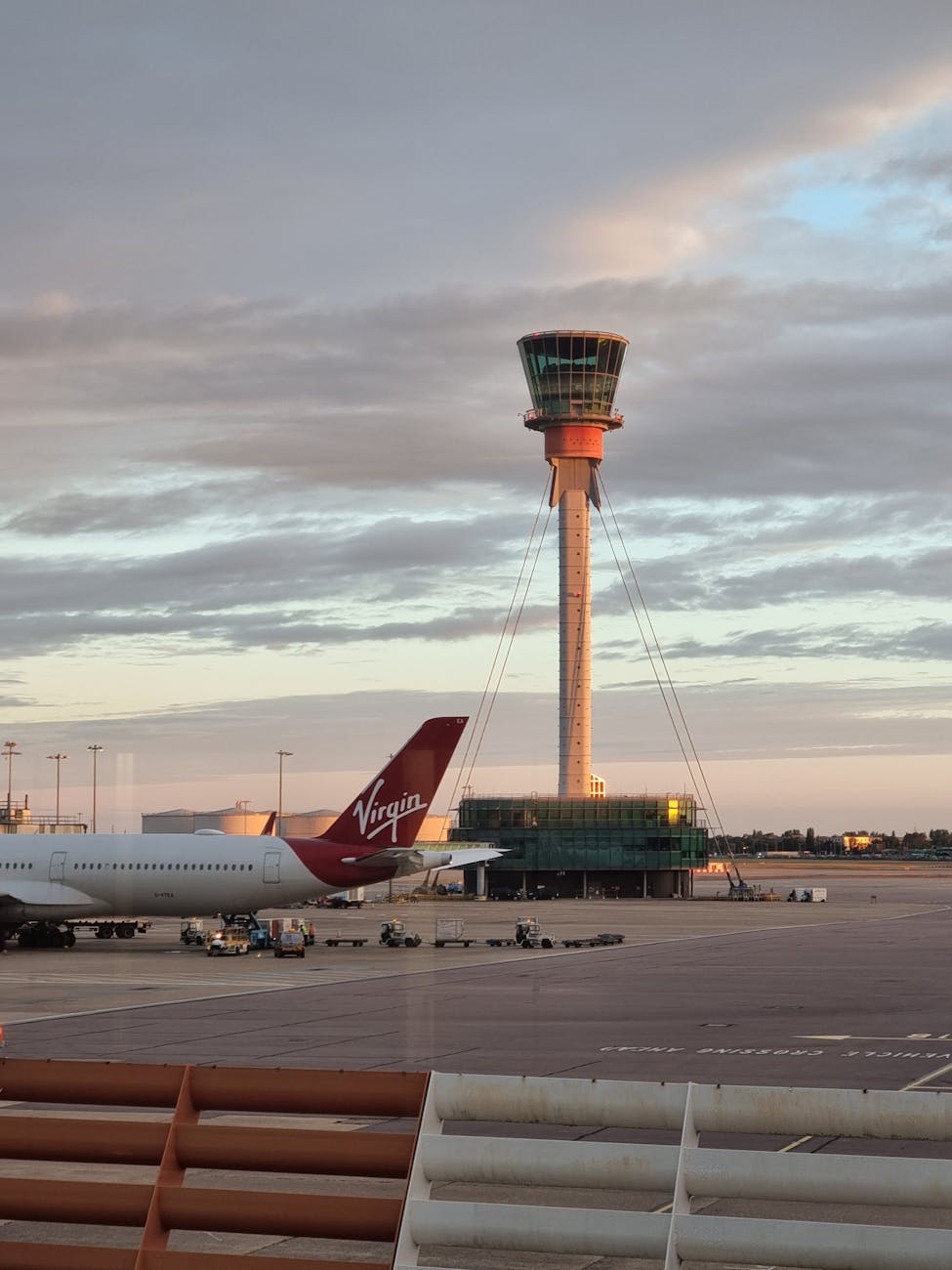
To me, I see the emperor’s new clothes. The case of the expansion of London Heathrow Airport (LHR) is not viable. Dressed up as an investment opportunity this continuation of incremental development is what we do badly in the UK. Environmental saturation has hit the rails. The proposers are dressing up a project that is the proverbial putting of eggs in one basket.
I don’t think the same can be said of London Gatwick Airport (LGW). In fact, squeezing the amount of capacity out of what’s there now is a feat of amazing ingenuity. Surely, that major London airport does need a genuine second runway. Even with less good than needed surface access this former racecourse has the ingredients for success.
Yes, I know it’s difficult to get away from London centric thinking in the UK. Nevertheless, that’s what’s needed to ensure the whole country thrives. Airport policies that lump everything else as “others” or under one label as “regional” aren’t tacking the challenges. The UK as major cities. Each has significant needs for air transport.
Some say that environmental objectives and Airport expansion are not compatible. The difficulties are clear to see. Each area of concern needs resources at a level commiserate with the needs. Quality of life, in and around Airports, should not be traded for economic benefits alone. Tackling air quality, water quality, on and off Airport noise, waste management, traffic volumes, overflight privacy, and enhancing biodiversity are not merely nice to haves.
[1] https://www.aerosociety.com/media/29306/raes-airport-expansion-in-the-uk-position-paper-april-2026.pdf


