Unintended Consequences

There’s a list that must exist somewhere in the bowels of Government which describes the dumbest things that have ever been done. The law of unintended consequences. Where an aim may have been honest, but the reality was a deep dive in embarrassment and failure.

If this list doesn’t exist it dam well should. It’s a sort of lessons learned for civil servants, politicians and think tanks. Don’t propose anything X because the last time someone did that they crashed and burned. Or more subtly it was years later that people cursed the day that such a dumb idea was advanced.

I’m not going to argue against market forces. How could I. From an early age markets were part of my life. That’s local agricultural markets. My father bought and sold livestock. The bread and butter of livestock farming is to buy at one price, add value and then, hopefully, sell at a better price. Markets rise and fall in ways that are often mystical.

The UK imports approximately 46% of the food it consumes. Even that figure is 5 years old. I suspect that food imports have increased in the meantime. That’s in a country that is richly blessed with quality agricultural land. Fine, we (UK) are none too good at growing olives or avocados but the range of produce that it is possible to grow is huge.

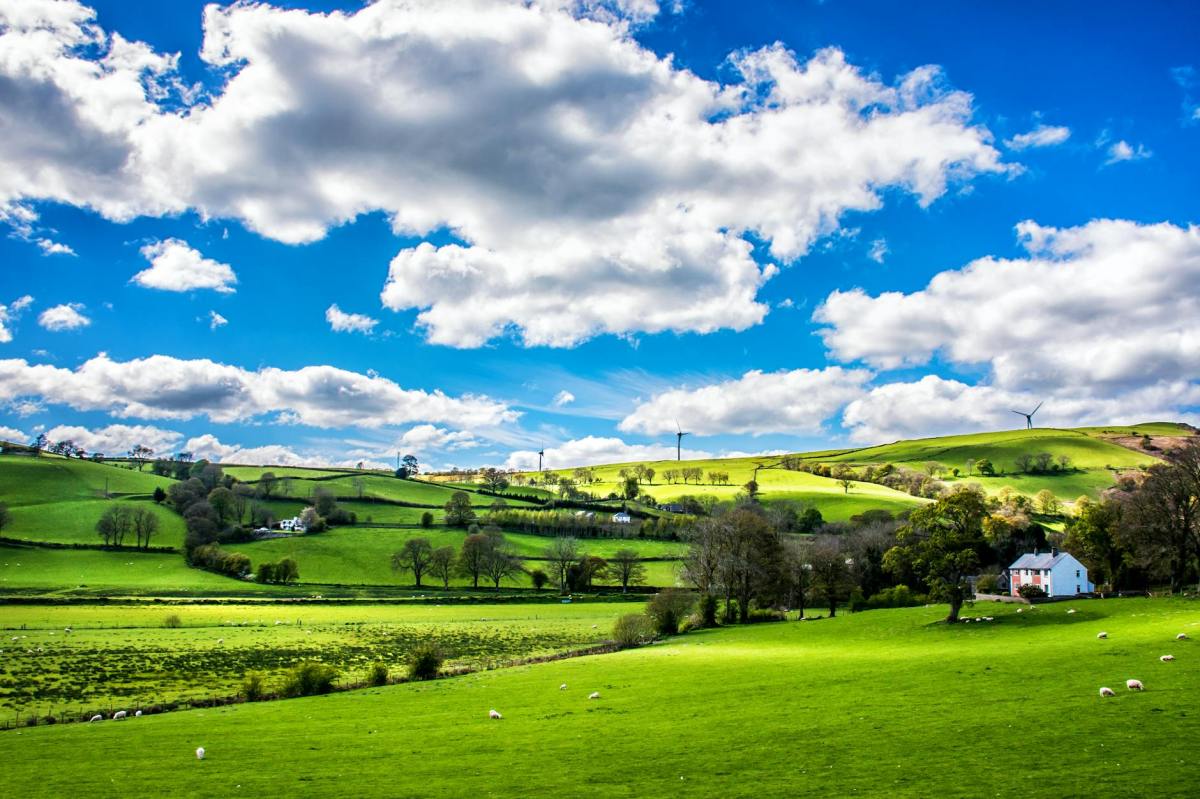
Grassland is our greatest asset. Every time I flew back from an overseas trip, just looking down from the aeroplane remined me just how the UK is a carpet of green. Field systems that have ancient origins still dominate the landscape.

Livestock farming has changed radically since my father’s time. Fortunately, we have avoided, in most cases, the levels of intensification and factory methods that others have adopted. Hormone injected beef comes from cattle that live sad lives. People know this and have hands down rejected industrial farming to that level of intensity.

Domestic food production has changed because of Brexit and not for the better. One threat to domestic food production has been some of the ridiculous trade deals that have been struck by this Government and its predecessors. Making it harder for exporters and easier for importers.

Political policy towards the countryside has rightfully taken up the need to restore biodiversity and preserve some of our most precious landscapes. Trouble is that at the same time, little or no thought has been given to the need to support domestic food production. It’s like a policy desert. It’s one thing to talk about food security. It’s another to do anything about it.

With the Labour Government threatening to take large amounts of capital out of UK farming with their inheritance tax plans, they will be making family farming a thing of the past. It’s one of the dumbest things that have ever been done.

There’s general agreement that we shouldn’t encourage wealthy people to use land as a repository for their wealth. However, tax advisors have been telling them to do that for decades. Buy land and pay less tax. Reversing that long standing trend needs an intelligent policy not a crude sledgehammer to crack a nut. Even if it’s impossible to ween Labour politicians off their ideas on inheritance tax, there ought to be a way of doing it without penalising the innocent. Letting off those non-farming interests that politicians were aiming at originally. Dogma makes bad policy. It’s time to reemphasise the place family farming has in food production.
A Day at the Bath and West Agricultural Show

It’s a part of my childhood. It’s fascinating to see how it has changed over the decades. There’s hardly a year go by when I don’t go to at least one agricultural show in the UK.

Last year, I visited the Lincoln show and the Newbury show for the first time. Most of the summer rural shows in the UK have a long history that is kept going by an Agricultural Society. The bigger ones have dedicated show sites and some permanent buildings. The smaller ones can be a large field that’s set aside for a couple of days a year. Each show reflects the nature of the farming, the crops, the animals, in its region.

This Friday, my day out was a trip to the Bath and West show[1] in Somerset. The show site is large. Spread over a south facing gently sloping hillside. To the south of the town of Shepton Mallet, at the base of Prestleigh Hill.

That’s my family connection. My mother grew-up on a small farm in Prestleigh. It’s not named on the map anymore as a couple of the buildings are now dwellings. Yew Tree Farm was situated on a dangerous bend on the main A371 road where traffic must veer right as it comes down the hill. The alternative being to hit a wall and end up in the farmyard. If I remember correctly, my grandad got free tickets to the Bath and West as they used one of his fields for a car park. As children we would hop over the fence to go straight to the show.

This year, the ground was as hard as rock underfoot. Spring has been unusually dry. There’s more dust than mud. That’s good for the show. There have been years when the wind and rain have swept the exposed show site and blown down tents and made mini rivers. Making welly boots mandatory.

What has changed? Although this annual event is predominantly a showcase for West Country food and farming it’s gone beyond that formula to become an atypical half-term family day trip. It’s no longer a place where local farmers strike deals with machinery salesman or learn about the latest breeds or cropping methods. That post-war image of mucky tractors and trailers turning up in droves is for vintage postcards.

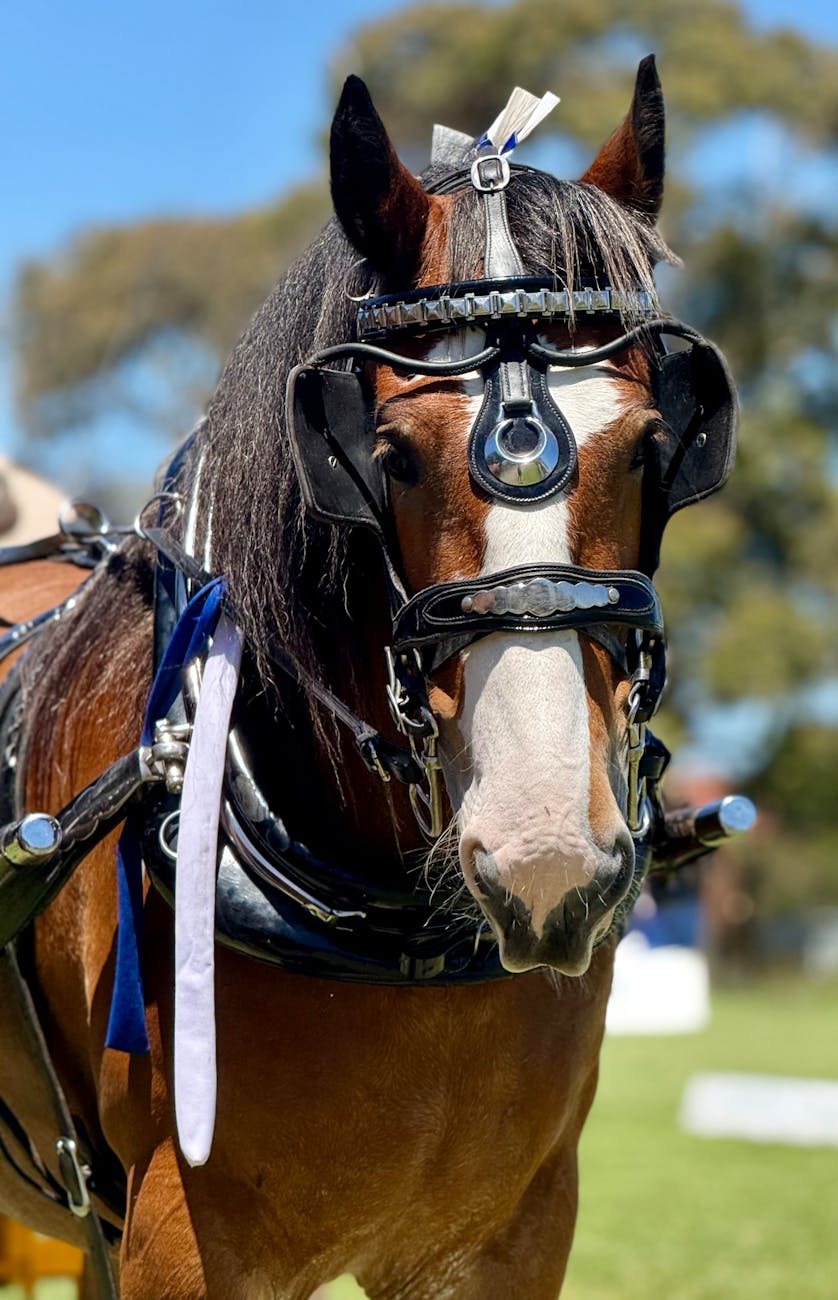
What’s nice is that there’s something for everyone with an interest in the English countryside. Beekeepers, cider markers (and drinkers), cheese makers, traction engine enthusiasts, rare breeds, heavy horses along with tea and cake in the WI tent.

Sheep started big this year. Cattle and pigs less so. Again, the word is enthusiasts. Breeds rare and commercial ones all cleaned up for display and judging. Handlers, young and old, parading their animals for picky judges to prod and score. Then colourful rosettes displayed with pride.

It’s not a cheap day out for townsfolk and county people anymore. Car parking might be free but the price of entry and just about anything on-site can quickly rack up. Everywhere, even in a field, we have become a cashless society. A tap here, a tap there, no longer do we dig into our pockets for loose change.

For the good weather and crowds, I expect this year’s 3-day event will be evaluated as a great success. Keeping the tradition going.


[1] https://www.bathandwest.com/royal-bath-and-west-show

Labour’s IHT Policy: A Threat to Family Farms?

Labour is driving down a road it’s driven before. It’s a shame when the two biggest political parties in Britain are so captured by their past that they can no more look forward than a duck can master arithmetic.

Post Second World War the country was broke. Rising taxes were inevitable to pay down debt. The British State was far more directly involved in everyday economic decisions than it is now.

Inheritance Tax (IHT) got its status as a loathed tax partially because of the necessary actions of the post-1945 Government. At that time, “estate duty” was increased to 80%. This generated increase tax revenue but led to the breakup of large country estates up and down Britain. Ironically, the breakup of country estates created an opportunity for some tenant farmers. As the estates were sold off in lots so tenants could become owners, if they could raise the finance.

So, you might say farmers paying IHT at 20% isn’t so bad by comparison. The amount of generated increase tax revenue isn’t much. With one hand the Government is subsidising farmers and with the other hand it’s taking a cut of their lifetime acquired assets.

Another side of the coin is the cost-of-living crisis. Certainly, winter heating costs have been a matter of great concern for a lot of people. Food too is an absolutely essential expense. Hence, the growth of food banks in every part of the country. This shouldn’t be accepted as the norm.

All of this is happening at a time when the nation’s supermarkets are making healthy profits. Keeping cheap food on the shelves with, in some cases, the philosophy of sell it cheap and pile it high. Industrialised and highly processed food coming in at the lowest prices to the customer. At the other end of the supply chain, forcing down farm gate prices.

You would think that getting national food production, the job done by farmers, right would be an imperative for Government. You would think that a regular dialogue with farmers might be quite important. Wouldn’t you?

The problem with Labour’s 20% IHT and the threshold of 1 million is that it’s not going to have much impact of those who own large country estates to avoid other taxes, like CGT. It’s not going to have much impact on large corporate agricultural enterprises. It may not even have much overall impact on land prices. Afterall, they don’t make it anymore.

But it’s going to clobber small and medium sized enterprises, very often family farms. It will clobber far more than the Treasury’s last-minute calculations say[1]. The reason is clear. The profitability of family farming has been dire over recent years. Add a new tax bill and selling-up will be the most attractive option for many potential next generation farmers.

Then the question must be asked what’s it all about? What are the values underpinning this policy? There I go back to the start. Does Labour perceive these working people as “rich”. Their logic may go, why shouldn’t the rich pay more after the Conservative Government that they supported has made such a mess of the country? One way of seeing where we are.

Trouble is that they have aimed at the wrong target.


[1] https://www.channel4.com/news/how-many-farmers-will-have-to-pay-inheritance-tax

UK Farmers’ Unrest: Budget Shock and Political Implications

Yesterday, central London was full of British farmers. Far more than was anticipated. It’s a countryside revolt. Or at least the seed corn of unrest. It needs to be addressed quickly.

The UK Government Budget sprung an unexpected shock on farmers. Newly elected, everyone expected them to try to correct the spending mess left by their predecessors. However, few expected them to make-up last minute figures to do something they said they wouldn’t do.

Lots of family farmers could be singing the classic Beatles song “Yesterday”. Troubles seemed so far away before the general election. Now, they seem here to stay.

Like androids, and the Tories before them, Labour Members of Parliament (MPs) are trotting out lines prepared for them by their masters. The political excuse trotted out robotically is that the theoretical threshold for taxation is £3 million and not £1 million as everyone is saying. Therefore, they say, fewer farm businesses will be impacted by their new death tax.

When something goes wrong in Government one of the best strategies is to address the facts immediately, apologies for any error, take the temporary hit and move on quickly. Stonewalling and wibbling is an extremely poor approach.

For a start, many farmers will not be able to take-up the tax reliefs Labour MPs are talking about. Farming is a hazardous profession. Sadly, unexpected deaths are not unusual. If such an event occurs this could then result in compounded tragedy, that is the death of a family business too.

Farmers are pointing out that significantly wealthy people will still use land purchase to avoid tax. They will have complex and detailed tax planning services at their fingertips.

Agricultural land values have increased dramatically in recent decades. Yes, there is an issue to be addressed with respect to land value. Housing development land is an astronomical price. It’s one of the drivers that is making house prices unaffordable for many people.

Labour needs to recognise that it’s not food producers who are driving these negative phenomena. It’s not small and medium sized family farms who are the problem makers.

Not only is this new inheritance tax very poor politics by Labour, but it’s also not going to crack the problem that they might wisely wish to crack. I’d say, think again. At least consult.

Why British Family Farms Face Increasing Tax Pressure

I do get why the UK Labour Government has proposed to change the rules on agricultural property relief[1]. It’s the case that the very largest agricultural estates pay lower average effective inheritance tax rates than the smaller estates. Large agricultural estates are not the ones who need a tax relief.

In yesterday’s budget statement a 100 per cent rate relief will continue to be applicable to the first £1 million of combined agricultural and business assets. That might sound fine to the average British householder. The problem is that in the farming world a threshold of asset value of £1 million is low.

For small holders or hobby farmers, that threshold maybe fine. However, if a productive farm is a viable “modern” business then that threshold is easily exceeded. Looking ahead, even a modest family farm, which is a going concern, is going to tip that tax balance.

On average the value of farmland is over £8000 per acre. The viable family farm I have in mind is no less than 150 acres. Naturally, that number depends on the farm, arable or livestock.

Sadly, the family farm has long been under threat in Britain. Measure like the Government’s latest tax proposal will contribute further to that decline. Why do I say that? Adding to the complexities and expense of family succession means that the next generation of farmers are likely to start their careers with even more debt than their parents.

Today’s family farming is a capital-intensive business. Just look at the price of a new milking machine or any of the latest farm machinery. If there’s a good business income, banks are more than happy to lend money. This then being secured against the assets of land and buildings. So, looking at the asset value alone says little about the viability of a farm business.

Let’s put the question – why have British family farms? Corporations and mega agri-business enterprises can satisfy all our food production needs. Cover the countryside with corporate logos and have done with this rustic tradition. Industrialise the countryside.

Honestly, I don’t think that’s what the British people want. It’s not just sentimentality. The sort of rural sentimentality that gets shown on Sunday evening broadcasts. It’s not just tradition for the sake of tradition.

Today’s family farming is excellent value. Given that we want British farmers to be, not only food producers, but custodians of the countryside, meeting societies environmental goals. That can be done more effectively by people who put their whole heart and soul into the job. There’s a commitment and dedication that comes from preserving the family line.

The Chancellor of the Exchequer has outlined how the new Labour Government will raise money. In this case there’s a need to think again. I suggest that asset value of £1 million for taxation needs to be revisited and revised upward. I do hope the new Chancellor doesn’t want to be remembered as the one who kills-off family farming in Britain.


[1] https://www.gov.uk/government/publications/agricultural-property-relief-and-business-property-relief-reforms/summary-of-reforms-to-agricultural-property-relief-and-business-property-relief

View

As I looked out of the kitchen window, this morning a face started back at me. It wasn’t a human face. Thank God. Silhouetted against the ultra-green spring grass of the field at the back of our house was the face of our new neighbours. Their shiny black coats and notably short standing is distinctive. One stately bull, two cows and two claves. A contented family group.

Just as the flood water has receded, and the ground hardened so the grass has shot-up in an instant. It’s a rough pasture but there’s plenty of grass for five cattle to munch away at. My calculation is that the small field out back is about seven acres is size. So, they have plenty of space to roam around all day long. A riverbank on one side. Large shady trees on the main road side. To the southside of the field about five houses, including ours. Some refer to this arrangement as conservation grazing. These cattle are complementary to the wildlife that inhabits this next-door greenspace.

It was funny to watch the Canada Geese get to realise that they have to share the field. There’s as many as 18 of them nibbling away at the grass. At first, they were spooked by the cattle, and their natural curiosity. Soon the two parties decided to ignore each other and get on with life.

Dexters are the smallest native breed of cattle in the British Isles[1]. They are often seen at agricultural shows[2]. They are a breed of cattle that are easier to keep on a small holding than some of the larger and more demanding breeds of cattle. That said, I am told that they can be temperamental and stubborn. However charming the black Dexter bull may look, I don’t think I would argue with him for one minute. He looks quite capable of repelling anyone he doesn’t know or thinks to be friendly.

Interestingly, these cattle are a native breed at risk. At least they are listed in the existing government guidance[3]. This situation does attract a supplement of a certain amount per area grazed. So, there is a useful incentive within the countryside stewardship scheme. This is subject to a whole set of conditions but that’s quite common for such grant schemes.

Frankly, I don’t think there’s any chance that Dexters will become extinct in the next hundred years. For one there’s the attractiveness of the breed. For another, Dexter beef is a quality product. True they are not “commercial” in the sense of being suitable for supermarket shelves.

In the last week, it’s nice to see our new neighbours settle in. They seem to be more than happy with their summer pastures. Seeing the two young claves run around with their tails in the air is a pure delight. They are having fun without a care in the world. The geese, ducks, moor hens, jackdaws, roe deer and red kites are all happy to share the small field and riverbank. Not forgetting the occasional swan. It’s a proper country scene.


[1] https://www.dextercattle.co.uk/

[2] https://www.stackyard.com/orgs/agricultural_shows/dates.html

[3] https://www.gov.uk/government/publications/uk-native-animal-breeds-at-risk-list

Star’s Law

It’s one thing to hear a report. It’s another to understand – what does it mean? Planning reform doesn’t often capture the national headlines. In this case, it’s a national celebrity that seems to be running changes in planning laws[1].

I’m more than a bit suspicious when I see the lines explaining legislation that say: “A full impact assessment has not been produced for this instrument as no, or no significant, impact on the private, voluntary or public sector is foreseen.” The word significant is purely subjective.

Like so many Statutory Instruments[2] (SIs) this subject makes for a hard read. SIs are English law that is made, not by parliamentarians debating and voting on it, but by amendments to existing law placed in front of them for a short while.

There’s no doubt that English farmers and landowners, under pressure post-Brexit, are going to be pleased by the planning alleviations offered by this new planning law. Being able to convert existing buildings into new houses, or new businesses, like farm shops, without local authorities intervening to say “no” has been dubbed – cutting red tape.

It needs to be noted that this action is being taken in the run up to a General Election (GE). For me, I see this as a two-edged sword. Sure, the name of UK Minister Michael Gove might be viewed more favourably by English farmers and landowners. That may not be the case by those people who live in the countryside adjacent to new developments.

Planning gets local people very agitated. A risk of a middle-class “civil war” is more likely to come from villagers and residents of small country towns than ever is the case from farmers. Neighbour disputes can be some of the worst disputes. I know of a case where a shotgun was used to make a point and that wasn’t by the farmer concerned. Boundaries being the issue.

Mr Gove has made a political choice. Framing the argument as cuts to “needless bureaucracy” may not be the whole picture, or even an accurate one but it does make Ministers feel good – like a sugar rush.

Converting more former agricultural buildings into dwellings or small businesses does make sense in many situations. Doing it without proper controls opens a pandora’s box of possible conflicts and disputes. Afterall the planning system is supposed to balance the rights and responsibilities of all concerned.

It’s all too easy for those in central government, heavily lobbied, to make local government the evil monster. I could say: a simple matter of power play and political expediency. Especially when the government minister making the decisions has just seen his political party devastated in local government elections.

Building more houses and shops without the need for planning permission might be a bit like that sugar rush, I mentioned. It last for a short while and then, well you know what happens.


[1] https://www.independent.co.uk/business/jeremy-clarkson-farm-shop-downing-street-b2341181.html

[2] https://www.legislation.gov.uk/uksi/2024/579/made

Food

Food security matters. Much like energy security matters. Much like access to basic commodities. There are fundamental matters of supply that must not be ignored. International trade is a two-way street. But it must be a two-way street on the level. It’s possible to imagine a set of scales where there’s a balance between both sides. Maintaining that balance is a dynamic business.

It’s easy to understand how aggrieved farmers in Europe feel if they are subject to unfair competition. It’s the same in the UK. If say, meat comes into the UK, produced at a lower standard than domestic produced meat, and that undercuts farmers prices, that’s unfair and unwise.

News doesn’t just concern agriculture. Over the last weeks discussion about the UK’s ability to produce basic commodities, like steel, has occupied minds. Imports maybe cheaper. The trouble is that countries jeopardise domestic security and merely offload environmental concerns by increasing dependency on others beyond certain points. A sensible balance must be struck.

Political, marked trade imbalances are a nightmare. British farmers may not be so overtly militant as some on continental Europe, but they have a strong interest in influencing what laws say. Bandwagon jumping politicians from the far-right and far-left are taking advantage of the discontent that exists. None of these empty barrels have answers. That doesn’t stop them making a lot of noise.

Post-COVID, in all sorts of industries, there’s been, and still is, significant supply chain problems. For example, the price of farm machinery has gone through the roof. Although general inflation appears to be slowly coming down the hike that has happened, has happened. It’s bedded in.

Looking at the gap between input prices and outputs shows an unhealthy situation[1]. Producers have been squeezed. Their margins have been squeezed. It’s certainly not a good time to be a milk producer[2]. Even with optimism for the longer-term, today’s bills still need to be paid.

In the UK, there’s an often written about concern surrounding the power of the established major supermarkets[3]. These are almost monopolistic in their position in the marketplace. On the walls of their food warehouses pictures of smiling farmers and clean, shiny tractors are all the rage.

Because so much food goes through the doors of the supermarkets, if farmers want to protest, they are probably a better target than the UK Government. Alternatively, British farmers may need to work to reduce the influence of the middlemen. Going direct to the customer may not be for everyone but more could be done.

In a General Election year, it unlikely that politicians will pick a fight with British farmers. Their ears may prick-up for a short while. That’s a good time to make the case for domestic production.


[1] https://www.gov.uk/government/statistics/agricultural-price-indices/agricultural-price-indices-united-kingdom-november-2023

[2] https://www.nfuonline.com/updates-and-information/dairy-producers-braced-for-an-uncertain-future-nfu-survey-reveals/

[3] https://www.statista.com/statistics/280208/grocery-market-share-in-the-united-kingdom-uk/