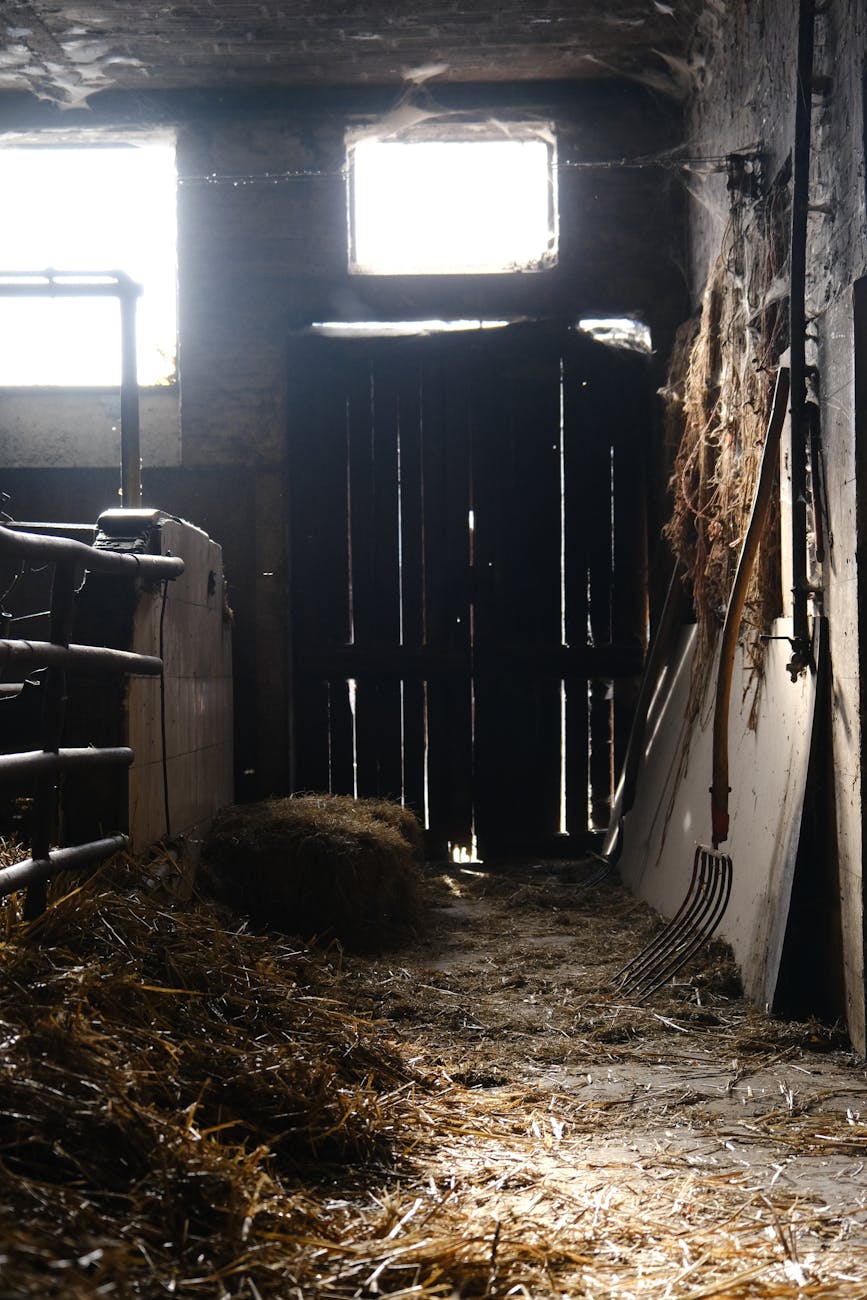
Unintended Consequences

There’s a list that must exist somewhere in the bowels of Government which describes the dumbest things that have ever been done. The law of unintended consequences. Where an aim may have been honest, but the reality was a deep dive in embarrassment and failure.

If this list doesn’t exist it dam well should. It’s a sort of lessons learned for civil servants, politicians and think tanks. Don’t propose anything X because the last time someone did that they crashed and burned. Or more subtly it was years later that people cursed the day that such a dumb idea was advanced.

I’m not going to argue against market forces. How could I. From an early age markets were part of my life. That’s local agricultural markets. My father bought and sold livestock. The bread and butter of livestock farming is to buy at one price, add value and then, hopefully, sell at a better price. Markets rise and fall in ways that are often mystical.

The UK imports approximately 46% of the food it consumes. Even that figure is 5 years old. I suspect that food imports have increased in the meantime. That’s in a country that is richly blessed with quality agricultural land. Fine, we (UK) are none too good at growing olives or avocados but the range of produce that it is possible to grow is huge.

Grassland is our greatest asset. Every time I flew back from an overseas trip, just looking down from the aeroplane remined me just how the UK is a carpet of green. Field systems that have ancient origins still dominate the landscape.

Livestock farming has changed radically since my father’s time. Fortunately, we have avoided, in most cases, the levels of intensification and factory methods that others have adopted. Hormone injected beef comes from cattle that live sad lives. People know this and have hands down rejected industrial farming to that level of intensity.

Domestic food production has changed because of Brexit and not for the better. One threat to domestic food production has been some of the ridiculous trade deals that have been struck by this Government and its predecessors. Making it harder for exporters and easier for importers.

Political policy towards the countryside has rightfully taken up the need to restore biodiversity and preserve some of our most precious landscapes. Trouble is that at the same time, little or no thought has been given to the need to support domestic food production. It’s like a policy desert. It’s one thing to talk about food security. It’s another to do anything about it.

With the Labour Government threatening to take large amounts of capital out of UK farming with their inheritance tax plans, they will be making family farming a thing of the past. It’s one of the dumbest things that have ever been done.

There’s general agreement that we shouldn’t encourage wealthy people to use land as a repository for their wealth. However, tax advisors have been telling them to do that for decades. Buy land and pay less tax. Reversing that long standing trend needs an intelligent policy not a crude sledgehammer to crack a nut. Even if it’s impossible to ween Labour politicians off their ideas on inheritance tax, there ought to be a way of doing it without penalising the innocent. Letting off those non-farming interests that politicians were aiming at originally. Dogma makes bad policy. It’s time to reemphasise the place family farming has in food production.

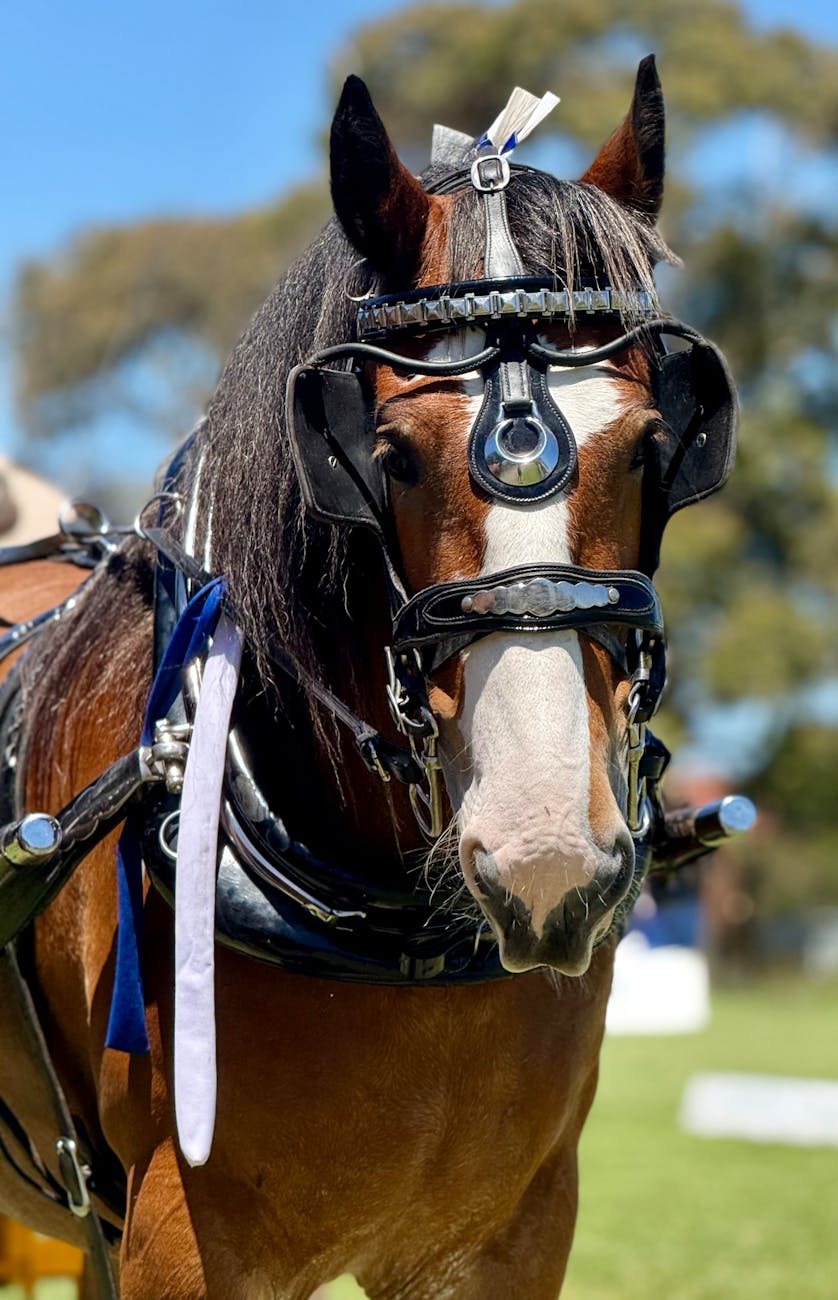
Cynicism to Appreciation

A couple of things came together this week. I had the pleasure of enjoying 35 degrees in Brussels. The joy of the odious metro, the brutalist main station and the wandering herds of tourists. Overhead one couple saying do you know that they have a statue of a little boy having a wee. I flinched because I genuinely thought everyone in the world knew of the Manneken Pis[1]. How can anyone not know?

It was a Canadian who prompted me to undo a prejudice of mine. Loving the air conditioning in the hotel, I looked to my iPad for late evening entertainment. There was the man – Clarkson. Irritating prankster and motorhead. Not known for meaningful commentary. I’d resisted watching his series Clarkson’s Farm[2] on the basis that I’d want to throw bricks at the screen.

This week I watched the first series. Made pre-COVID. Fine, it’s not a serious documentary about the trials and tribulations of British farming in the 21st century. True to form it’s pure entertainment. Edited highlights of comic moments and true to form tomfoolery.

My mind is changed. I started as a cynic. Here’s a moneymaking scheme for a wealthy landowner who made riches in the television world. To here’s a have a go spirit let loose on what people often assume is easy but, in fact, is mighty hard to do. The series is an engaging journey of discovery all but made for the small screen.

How can you not make a profit out of a highly desirable spread of a thousand acres in some of the most beautiful countryside in Britain? Experience counts and when you have none, it counts even more. Watching the lights come on in Clarkson’s head is well worth a watch.

Farming with drone shots and a camera crew following is obviously not the real world. Nicely edited highlights tell the story on the page. Put aside any cynicism. The show has a way of story telling that brings out the awkward, funny and frustrating reality of farming. Folly, errors and mishaps are all part of what happens in that colourful industry.

There was a world pre-COVID. Going back even further, there was a world before the fireworks of the year 2000. It was summed up by the brothers Gallagher. Yes, I am talking about the getting back together of Oasis. A band that was a bit more than an everyday rock band.

Having survived watching last week’s televising of the one millionth Glastonbury festival (exaggeration), the memories of the “real” contrast with the artificial, bland and merely controversial for the sake of it. Those years in the mid-1990s were good ones, if only I’m using the trick of selective memory. Remember when people who supported leaving Europe were strange and social media was only a rare tacky e-mail.

Maybe I’m getting more Clarkson-like as time flies.


[1] https://www.introducingbrussels.com/manneken-pis

[2] https://www.imdb.com/title/tt10558964/

A Day at the Bath and West Agricultural Show

It’s a part of my childhood. It’s fascinating to see how it has changed over the decades. There’s hardly a year go by when I don’t go to at least one agricultural show in the UK.

Last year, I visited the Lincoln show and the Newbury show for the first time. Most of the summer rural shows in the UK have a long history that is kept going by an Agricultural Society. The bigger ones have dedicated show sites and some permanent buildings. The smaller ones can be a large field that’s set aside for a couple of days a year. Each show reflects the nature of the farming, the crops, the animals, in its region.

This Friday, my day out was a trip to the Bath and West show[1] in Somerset. The show site is large. Spread over a south facing gently sloping hillside. To the south of the town of Shepton Mallet, at the base of Prestleigh Hill.

That’s my family connection. My mother grew-up on a small farm in Prestleigh. It’s not named on the map anymore as a couple of the buildings are now dwellings. Yew Tree Farm was situated on a dangerous bend on the main A371 road where traffic must veer right as it comes down the hill. The alternative being to hit a wall and end up in the farmyard. If I remember correctly, my grandad got free tickets to the Bath and West as they used one of his fields for a car park. As children we would hop over the fence to go straight to the show.

This year, the ground was as hard as rock underfoot. Spring has been unusually dry. There’s more dust than mud. That’s good for the show. There have been years when the wind and rain have swept the exposed show site and blown down tents and made mini rivers. Making welly boots mandatory.

What has changed? Although this annual event is predominantly a showcase for West Country food and farming it’s gone beyond that formula to become an atypical half-term family day trip. It’s no longer a place where local farmers strike deals with machinery salesman or learn about the latest breeds or cropping methods. That post-war image of mucky tractors and trailers turning up in droves is for vintage postcards.

What’s nice is that there’s something for everyone with an interest in the English countryside. Beekeepers, cider markers (and drinkers), cheese makers, traction engine enthusiasts, rare breeds, heavy horses along with tea and cake in the WI tent.

Sheep started big this year. Cattle and pigs less so. Again, the word is enthusiasts. Breeds rare and commercial ones all cleaned up for display and judging. Handlers, young and old, parading their animals for picky judges to prod and score. Then colourful rosettes displayed with pride.

It’s not a cheap day out for townsfolk and county people anymore. Car parking might be free but the price of entry and just about anything on-site can quickly rack up. Everywhere, even in a field, we have become a cashless society. A tap here, a tap there, no longer do we dig into our pockets for loose change.

For the good weather and crowds, I expect this year’s 3-day event will be evaluated as a great success. Keeping the tradition going.


[1] https://www.bathandwest.com/royal-bath-and-west-show

Hot tin roof

At Christmas, conversations across the dinner table flow in all sorts of different directions. Once or twice, they do evoke memories that resonate. Days in the 1960s and 70s that are half remembered and maybe embellished.

It’s a steel three-bay Dutch Barn that brings us together. This old barn still stands but is more than likely riddled with rust and decay. It no longer does what it did during my childhood. That is holding hundreds of hay bales.

One of the regular farm duties was to give the barn a complete coating of “red oxide” paint. That’s the galvanised roof structure and not the tall steel columns that kept everything in place.

Up to the 1970s, lead was added to some red oxide paints. On refection, hours spent spreading this gloopy liquid about the corrugated barn roof was probably hazardous. The consolation being that this painting job was done on a completely exposed roof. That’s about as open air a job as any painting job can get. I remember the paint dried very quickly. That could be annoying.

The barn ran roughly East – West, with the lean-to section being exposed to the full force of any wind from the North. Getting up on the barn roof was easy. One side of the barn had a full-length lean-to section. It didn’t take much of a ladder to climb onto the lower part of the lean-to roof. The slope was steep enough to require a degree of care but the bolts that held the galvanised sheets in place helped add some grip for our boots.

My childhood experiments were ridiculous. They made eminent sense that the time. One involved making a parachute out of used black polyethene hay rick covering and baler twine and testing it by jumping off the barn lean-to roof. Remarkably this never resulted in any broken bones. I can only think that was down to the soft, muddy grass that I landed on. More mud than grass a lot of the time.

A completely different story is about filling the hay barn. Doing what it was designed to do. That’s store hay bales for the winter. Now, imagine the middle of summer. Blazing sunshine. A hot tin roof and the awkward spaces under it. Dry air, dust and noise everywhere. Working to self-imposed deadlines to get the hay in before the weather changed.

Today, mechanisation has taken the shear drudgery out of the annual ritual of haymaking. Most of the work is done sitting on a tractor. That might even be air-conditioned.

Let’s say, I’m talking about 1975, or a year either side. My dad, brother and I would be staking the hay bales in the barn. My mum would be on a loaded trailer putting the bales on an elevator. One by one. For the first five or six layers of hay bales we’d have an open space to work in. My brother and I would compete by showing off how far we could throw the bales as they came off the elevator. As we went up, layer by layer so the job got tougher and tougher. There was less space to work in. The heat and dust became almost overpowered.

Those are the moments I remember. Sweating like no sauna can make anyone sweat. As each hay bale came up, we’d have to think more carefully about where to put it. Stooped as we were compressed against the barn roof. That’s when our thoughts were to get the job done as quickly as possible. In these intense conditions, the thought of only having to do this job once a year and prospect of ice cream were just about enough to get us through.

Labour’s IHT Policy: A Threat to Family Farms?

Labour is driving down a road it’s driven before. It’s a shame when the two biggest political parties in Britain are so captured by their past that they can no more look forward than a duck can master arithmetic.

Post Second World War the country was broke. Rising taxes were inevitable to pay down debt. The British State was far more directly involved in everyday economic decisions than it is now.

Inheritance Tax (IHT) got its status as a loathed tax partially because of the necessary actions of the post-1945 Government. At that time, “estate duty” was increased to 80%. This generated increase tax revenue but led to the breakup of large country estates up and down Britain. Ironically, the breakup of country estates created an opportunity for some tenant farmers. As the estates were sold off in lots so tenants could become owners, if they could raise the finance.

So, you might say farmers paying IHT at 20% isn’t so bad by comparison. The amount of generated increase tax revenue isn’t much. With one hand the Government is subsidising farmers and with the other hand it’s taking a cut of their lifetime acquired assets.

Another side of the coin is the cost-of-living crisis. Certainly, winter heating costs have been a matter of great concern for a lot of people. Food too is an absolutely essential expense. Hence, the growth of food banks in every part of the country. This shouldn’t be accepted as the norm.

All of this is happening at a time when the nation’s supermarkets are making healthy profits. Keeping cheap food on the shelves with, in some cases, the philosophy of sell it cheap and pile it high. Industrialised and highly processed food coming in at the lowest prices to the customer. At the other end of the supply chain, forcing down farm gate prices.

You would think that getting national food production, the job done by farmers, right would be an imperative for Government. You would think that a regular dialogue with farmers might be quite important. Wouldn’t you?

The problem with Labour’s 20% IHT and the threshold of 1 million is that it’s not going to have much impact of those who own large country estates to avoid other taxes, like CGT. It’s not going to have much impact on large corporate agricultural enterprises. It may not even have much overall impact on land prices. Afterall, they don’t make it anymore.

But it’s going to clobber small and medium sized enterprises, very often family farms. It will clobber far more than the Treasury’s last-minute calculations say[1]. The reason is clear. The profitability of family farming has been dire over recent years. Add a new tax bill and selling-up will be the most attractive option for many potential next generation farmers.

Then the question must be asked what’s it all about? What are the values underpinning this policy? There I go back to the start. Does Labour perceive these working people as “rich”. Their logic may go, why shouldn’t the rich pay more after the Conservative Government that they supported has made such a mess of the country? One way of seeing where we are.

Trouble is that they have aimed at the wrong target.


[1] https://www.channel4.com/news/how-many-farmers-will-have-to-pay-inheritance-tax

UK Farmers’ Unrest: Budget Shock and Political Implications

Yesterday, central London was full of British farmers. Far more than was anticipated. It’s a countryside revolt. Or at least the seed corn of unrest. It needs to be addressed quickly.

The UK Government Budget sprung an unexpected shock on farmers. Newly elected, everyone expected them to try to correct the spending mess left by their predecessors. However, few expected them to make-up last minute figures to do something they said they wouldn’t do.

Lots of family farmers could be singing the classic Beatles song “Yesterday”. Troubles seemed so far away before the general election. Now, they seem here to stay.

Like androids, and the Tories before them, Labour Members of Parliament (MPs) are trotting out lines prepared for them by their masters. The political excuse trotted out robotically is that the theoretical threshold for taxation is £3 million and not £1 million as everyone is saying. Therefore, they say, fewer farm businesses will be impacted by their new death tax.

When something goes wrong in Government one of the best strategies is to address the facts immediately, apologies for any error, take the temporary hit and move on quickly. Stonewalling and wibbling is an extremely poor approach.

For a start, many farmers will not be able to take-up the tax reliefs Labour MPs are talking about. Farming is a hazardous profession. Sadly, unexpected deaths are not unusual. If such an event occurs this could then result in compounded tragedy, that is the death of a family business too.

Farmers are pointing out that significantly wealthy people will still use land purchase to avoid tax. They will have complex and detailed tax planning services at their fingertips.

Agricultural land values have increased dramatically in recent decades. Yes, there is an issue to be addressed with respect to land value. Housing development land is an astronomical price. It’s one of the drivers that is making house prices unaffordable for many people.

Labour needs to recognise that it’s not food producers who are driving these negative phenomena. It’s not small and medium sized family farms who are the problem makers.

Not only is this new inheritance tax very poor politics by Labour, but it’s also not going to crack the problem that they might wisely wish to crack. I’d say, think again. At least consult.

Why British Family Farms Face Increasing Tax Pressure

I do get why the UK Labour Government has proposed to change the rules on agricultural property relief[1]. It’s the case that the very largest agricultural estates pay lower average effective inheritance tax rates than the smaller estates. Large agricultural estates are not the ones who need a tax relief.

In yesterday’s budget statement a 100 per cent rate relief will continue to be applicable to the first £1 million of combined agricultural and business assets. That might sound fine to the average British householder. The problem is that in the farming world a threshold of asset value of £1 million is low.

For small holders or hobby farmers, that threshold maybe fine. However, if a productive farm is a viable “modern” business then that threshold is easily exceeded. Looking ahead, even a modest family farm, which is a going concern, is going to tip that tax balance.

On average the value of farmland is over £8000 per acre. The viable family farm I have in mind is no less than 150 acres. Naturally, that number depends on the farm, arable or livestock.

Sadly, the family farm has long been under threat in Britain. Measure like the Government’s latest tax proposal will contribute further to that decline. Why do I say that? Adding to the complexities and expense of family succession means that the next generation of farmers are likely to start their careers with even more debt than their parents.

Today’s family farming is a capital-intensive business. Just look at the price of a new milking machine or any of the latest farm machinery. If there’s a good business income, banks are more than happy to lend money. This then being secured against the assets of land and buildings. So, looking at the asset value alone says little about the viability of a farm business.

Let’s put the question – why have British family farms? Corporations and mega agri-business enterprises can satisfy all our food production needs. Cover the countryside with corporate logos and have done with this rustic tradition. Industrialise the countryside.

Honestly, I don’t think that’s what the British people want. It’s not just sentimentality. The sort of rural sentimentality that gets shown on Sunday evening broadcasts. It’s not just tradition for the sake of tradition.

Today’s family farming is excellent value. Given that we want British farmers to be, not only food producers, but custodians of the countryside, meeting societies environmental goals. That can be done more effectively by people who put their whole heart and soul into the job. There’s a commitment and dedication that comes from preserving the family line.

The Chancellor of the Exchequer has outlined how the new Labour Government will raise money. In this case there’s a need to think again. I suggest that asset value of £1 million for taxation needs to be revisited and revised upward. I do hope the new Chancellor doesn’t want to be remembered as the one who kills-off family farming in Britain.


[1] https://www.gov.uk/government/publications/agricultural-property-relief-and-business-property-relief-reforms/summary-of-reforms-to-agricultural-property-relief-and-business-property-relief

Summer Reminiscence

After a long winter of heaping straw on top of straw, the layer of bedding could be 3-feet high with ease. There was hardly a space where calves, or larger cattle hadn’t over wintered. That was the West Country farmyard where I grew up.

Roughly square in shape, with cow stalls along the northern side and the cart shed in the westerly corner. These traditional stone-built buildings were made for a different era. Opposite the farmhouse there was a modern steel framed building that my father put up.

A story of livestock farming is written in these buildings. That transition from the intensive use of human labour to a more machinery dependent system. Going from cramped timber and local stone buildings to sheeted large span open spaces. One long lived and of great character, often listed and the other solely utilitarian, making life simpler.

A pick and wheelbarrow. Cleaning out was one annual manual task. My brother and I would push endless wheelbarrows of dung out into the yard. There wasn’t the machinery to get into the tight spaces of the confined old buildings. Our job was to dig out the masses of compressed dung. Then it could be attacked by our Ford 4000 tractor[1] in the yard.

Now, such hard to access areas of a cattle shed are confronted by a skid-steer[2]. Days spent with a pick and wheelbarrow are exceptional. There’s no comparison with the 1970s.

Here, it’s not this monotonous labour that I’m wanting to write about. Rather more outdoor farm work. Work that was a bit more fun on a steaming hot day.

One of the other summer jobs I had as a boy was cleaning out water tanks. We had a couple of large concrete and brick cattle troughs that hosted a mass of algae and all sorts of accumulated debris. Summer was a time to clean them out. The sheds would be empty of cattle.

We didn’t have a swimming pool. I think you can guess where I’m going with this recollection. Having scrubbed a season’s worth of growth off the walls of the biggest tank, the smooth concrete walls were then revelled. We did a thorough job because this cleaning process didn’t get done all that often.

In the mists of the summer heat and with the yard empty of cattle, this tank was a place for a dip. Chilled water, straight out of the mains supply, as the tank refilled added to the fun. So, we became the fish in the cow trough. At least for a summer day.


[1] https://heritagemachines.com/guides/buying-guide/fantastic-ford-force-4000/

[2] https://www.bobcat.com/na/en

Food

Food security matters. Much like energy security matters. Much like access to basic commodities. There are fundamental matters of supply that must not be ignored. International trade is a two-way street. But it must be a two-way street on the level. It’s possible to imagine a set of scales where there’s a balance between both sides. Maintaining that balance is a dynamic business.

It’s easy to understand how aggrieved farmers in Europe feel if they are subject to unfair competition. It’s the same in the UK. If say, meat comes into the UK, produced at a lower standard than domestic produced meat, and that undercuts farmers prices, that’s unfair and unwise.

News doesn’t just concern agriculture. Over the last weeks discussion about the UK’s ability to produce basic commodities, like steel, has occupied minds. Imports maybe cheaper. The trouble is that countries jeopardise domestic security and merely offload environmental concerns by increasing dependency on others beyond certain points. A sensible balance must be struck.

Political, marked trade imbalances are a nightmare. British farmers may not be so overtly militant as some on continental Europe, but they have a strong interest in influencing what laws say. Bandwagon jumping politicians from the far-right and far-left are taking advantage of the discontent that exists. None of these empty barrels have answers. That doesn’t stop them making a lot of noise.

Post-COVID, in all sorts of industries, there’s been, and still is, significant supply chain problems. For example, the price of farm machinery has gone through the roof. Although general inflation appears to be slowly coming down the hike that has happened, has happened. It’s bedded in.

Looking at the gap between input prices and outputs shows an unhealthy situation[1]. Producers have been squeezed. Their margins have been squeezed. It’s certainly not a good time to be a milk producer[2]. Even with optimism for the longer-term, today’s bills still need to be paid.

In the UK, there’s an often written about concern surrounding the power of the established major supermarkets[3]. These are almost monopolistic in their position in the marketplace. On the walls of their food warehouses pictures of smiling farmers and clean, shiny tractors are all the rage.

Because so much food goes through the doors of the supermarkets, if farmers want to protest, they are probably a better target than the UK Government. Alternatively, British farmers may need to work to reduce the influence of the middlemen. Going direct to the customer may not be for everyone but more could be done.

In a General Election year, it unlikely that politicians will pick a fight with British farmers. Their ears may prick-up for a short while. That’s a good time to make the case for domestic production.


[1] https://www.gov.uk/government/statistics/agricultural-price-indices/agricultural-price-indices-united-kingdom-november-2023

[2] https://www.nfuonline.com/updates-and-information/dairy-producers-braced-for-an-uncertain-future-nfu-survey-reveals/

[3] https://www.statista.com/statistics/280208/grocery-market-share-in-the-united-kingdom-uk/

Way back

It’s easy to sound like a takeout from the four Yorkshire[1]. That emulated sketch where a group of drinking men on holiday try to upstage each other with tales of hardship. It’s beautifully comic because it ventures off into the absurd. Each man is determined to out do the other.

Back in my day. Any sentence that starts like that conjures up a man leaning on a bar in a rustic pub where time has stopped. There are people who make a speciality of reminiscence. A rambling epistle about hardship and struggle. Peppered with a contrast with the ease of contemporary living. Point being how weak and wishy-washy we are now. How enduring and mighty we were in the way back. Most of this is pure nostalgic babble. The Monty Python sketch is funny because it crosses a line. Please reprimand me severely if I cross that wobbly line. Beside it takes comic genius to write a good sketch and I’ve never claimed that ability.

However, telling stories that paint pictures of former times is a good way of setting this time in context. Change is a constant. The decades are ones of accelerating change. That can be unsettling.

This week, for inexplicable reasons my mind wandered off to my parent’s farmhouse kitchen in the mid-1960s. That’s boyhood memories. The back of house room was not quite square. At one end, two substantial painted wood doors faced each other. A draft blow under one when the outside door was open.

A standing stainless-steel sink sat between the two doors. Opposite, a thin steel framed window looked out on the farmyard. Stone walls were a couple of feet thick. That left space for a seat under the window. It was a farmer’s window. Being able to see the road and all business comings and goings from the kitchen table. Looking direct West, the evening sun would play across the yard.

On a weekday. Not a high day or a holiday. That would be a reason to light a fire in the front room. The kitchen was the warmest place in the house. A thumping great cast iron Aga[2] filled an alcove and filled the kitchen with a warmth all day and night. In winter, other parts of the house could be an ice box. Bedroom windows had as much ice on the inside as on the outside of the glass. There’s a good explanation of why the image of that kitchen is so rooted in my mind.

A large sturdy wooden kitchen table sat right in the centre of the room. It had a Formica top in a deep maroon colour. Four chunky turned legs at each corner. An eclectic mix of wheelback chairs permanently tucked in when not in use. If they weren’t, there was no squeezing around the table.

The habit of sitting in the same spot was deep-rooted in practicality. It’s as if we had assigned seating. Naturally the best place to sit was with the Aga at your back. Opposite the Aga, up against the wall was a fridge that must have come from Noah’s days. Next to that was a peculiar free-standing kitchen cabinet unit. They are sold on eBay as mid-century vintage now. Ghastly thing that today’s sellers describe as gorgeous.

One corner of the room had a beaten and battered two-seat sofa. That was a comfortable warm spot. Above it, in the wall was the remains of a bread oven. A hinged iron door was a curiosity covering nothing but cobwebs. It was an age when Linoleum remained a popular floor covering. It was a lot nicer underfoot than the flagstone floor. The flooring took such a bashing that it got replaced with more of the same when holes started to appear.

That room was the heartbeat of the farmhouse. The kitchen table played so many different parts in farm life. It could go from being a butchers block heavy with a side of pork to a desk for tidying up the paperwork. Even the kitchen cabinet unit had a draw full of Sturminster Newton market reports. Auctioneers Senior & Goodwin sent out blue printed reports listing cattle prices every week.

In the simplest way, that’s how I was first introduce to data analytics!


[1] https://en.wikipedia.org/wiki/Four_Yorkshiremen_sketch

[2] https://www.agaliving.com/