Laughing Through Politics

Maybe it’s not a new seam to mine. That rock of British popular culture that puts up a mirror to entertain us or even shock us. There’s always a space for the public to be tickled by the absurd or hamming up of clichéd characters. It’s struck me, particularly on rewatching British TV comedy, how what we find humorous is an indicator of how we might think more generally. Or there’s a peculiar connection.

Obviously, it would be good to look at this subject in an objective way. To see what the evidence says. However, it’s almost impossible to separate personal experiences from any general observations. Afterall, I went to school where we endlessly repeated lines from Monty Python’s Flying Circus. This had our poor teachers totally bemused. Long forgotten is the “woody and tinny words” sketch. It only took a teacher to say a woody word and we’d have hysterics.

Not that Python didn’t offer one or two educational opportunities. In imagination, if nothing else. Try “The Man Who Speaks in Anagrams[1]” as an example.

When Mrs Brown’s Boys[2] became popular, I knew we were in serious trouble. I may be a real snob, but this kind of British “comedy” is a throwback to the worst of the 1970s (almost). To me the show has no merit whatsoever. It’s a sop to a grim set of stereotypes.

Jamilla Smith-Joseph’s short article[3] does point out that British culture is one of seeing the funny side of both us Brits and those strange foreigners. Problem is that in a simmering Brexity climate, we find it so much easier to lampoon our nearest neighbours, European foreigners.

I matured from Python to then enthusiastically embrace “The Young Ones” in my anarchic student days[4]. Now, I rewatch the series and the impacts are curious. In so many ways 21st Century Brits have become tame and unadventurous. The sheer destructive energy that let rip on TV screens delighted in upsetting established norms. Now, lots of people are embarrassed by what was called “alternative” comedy at the time.

Then we grew-up and got jobs. Tony Blair came onto the scene. Born out of that period of change was such masterpieces as “The Think of It”. Hope and optimism descended into spin and panic.

Popular culture and politics do connect. Is it a mirror like refection or is it a subconscious trend indicator? Or even a driving force that sustains a current way of thinking?

British popular culture is not going through a creative period. In 2025, there’s not a lot to recommend. Oddly it’s a series that started with a low budget movie from New Zealand that I find is the best comedy of the moment. “What We Do in the Shadow[5]” is variable in places but has horrendously funny moments.

So, come on British writers it’s time to better lampoon the toolmakers son who sits on the fence. One leg here, and one leg there. Labour’s latest adoption of conservative attire is surly worth funny lines. Something original. Maybe even out of this world.


[1] https://youtu.be/Q1sXeUHBHgk

[2] https://www.imdb.com/title/tt1819022/?ref_=ttep_ov

[3] https://ukandeu.ac.uk/a-very-british-euroscepticism-the-popular-culture-politics-nexus/

[4] Yes, I really did live in a rundown brick terrace, with a hole in the wall as space for a payphone, and a dodgy builder come landlord. Carpets with slug trails and an icebox as a shower.

[5] https://www.imdb.com/title/tt7908628/

DUNE Part Two

It’s long. It’s engrossing and it’s a saga well told. That was my Monday afternoon. Sat in a comfortable seat curtsey of the Everyman in Reigate. The movie of DUNE is spread over 2-parts[1]. The second part is just out. It’s release was much delayed by the strikes in Hollywood. I’d say from my viewing this movie was well worth waiting for.

The whole world of DUNE centres around the most valuable commodity in the galaxy. A flash of an explanation can easily be missed. The desert planet Arrakis is the one source of that commodity. Science Fiction has a wonderful way of taking us to fantastical worlds filled with issues that are not so far from current day dilemmas. The commodity of Spice reminds me of several sought-after substances. The exploiting of valuable commodities at the expense of indigenous life has been a hallmark industrial progress.

In the imagination of Frank Herbert civilisations exist and compete within one almighty empire. The story in part 1 and 2 movies hinges on the dreams of a young man named Paul Atreides. I don’t want to give away key plot points but he’s special in so many ways.

Themes extend over the role of brutality and war in either imprisoning people or liberating them. I guess Frank Herbert didn’t see the passage of 800 centuries as a pathway to saving us from the 4-horsemen of the apocalypse. With that in mind, he’s stollen from religious texts as much as a Shakespearean landscape of ideas and the hero’s journey from Greek myths.

The enduring nature of grand sagas that show “good” overcoming “evil” have an immense appeal. All the twist and turns along the way and the troublesome megalomania that accompanies the coming of a liberator are as fresh ever.

DUNE long precedes Star Wars. The latter is cruder in pulling the emotional hearts strings and much more simplistic. The leadership of the Fremen people and mastering of “desert power” to defeat a devious Emperor doesn’t bring universal peace. In the span of the film, the planet Arrakis is freed form the cruel Harkonnen family. That is by no means the end of the story.

The intriguing role played by the Bene Gesserit women is a play over generations where influence is maintained regardless of who’s Emperor. This poses the question of the source of religion. Does it guide the Bene Gesserit (high priests), or do they guide it?

Back to the movie. I like the way it veers from the intimate relationships between individuals to the incredible sweep of vistas and strange technological imaginations. It deals with the environment and the nitty gritty drives and motivations of tyrants and powerful leaders. Is it inevitable that concentrated power produces a dark future. If the answer is “yes” we are in deep trouble with the digital world of now. We will not need to wait for thousands of years.

My recommendation is – see it. Choose the most comfortable seat in the cinema. Go on a rainy overcast day. Don’t go if your mind is cluttered up with trivia. By the way, the list of movies coming soon is dreadful. We are going into a nostalgic remake agony fest.


[1] https://www.dunemovie.net/

Scary

Let’s stick with fiction. In the run-up to Halloween there’s several stories where aviation and horror overlap. Not real-life dramas but concoctions of the imagination. Even with the coolest, most experienced passengers there’s moments of apprehension when encountering strong turbulence or unexpected diversions. We know that the risks are well managed but there’s the unforgiving nature of flying. Too many things going wrong at the same time and fate takes a hand.

There are far more action movies with aviation scenes than there are horror movies. So, forgive me if I step over the boundary between the two for a couple of this collections.

Who can forget the expression of a young William Shatner as he looks out of a window to see a large gremlin on the wing of his aircraft[1]. Panic sets in but no one sees what he sees. He becomes a hysterical. Grabs a gun. Opens a window and starts shooting at the gremlin. Everyone thinks he’s gone mad. Carried off in a straitjacket. Then in the last shot there is a view of the aircraft’s damaged engine cowling. Shatner had saved the day, only no one will ever believe him.

Again, in the category of iconic is Cray Grant being chased by a low flying aircraft in a cornfield. Running from machine gun fire he hides. Then in a spectacular explosion the aircraft crashes into a petrol tanker. Hitchcock pulls out all the stops. The film “North by Northwest[2]” will always be recalled for the crop duster scene. Grant’s character, Roger Thornhill gets away with his life.

There’s the in-flight abduction scene in the X-Files[3]. Aliens attempt to abduct character called Max Fenig from a commercial flight. He’s then found dead following a fatal crash. Agent Mulder theorises that the aircraft was forced down by aliens. The NTSB accident investigator is not buying it. Then there’s the mystery of the nine lost minutes between the aircraft crash and the time on the victims’ wristwatches. Yes, it gets a bit ridiculous. All in the vein of a good X-Files story.

Scary realism in science fiction qualifies. In this case 21st century technology as imagined in 1997. First to come to mind is the cab driver Bruce Willis driving his flying taxi. The Fifth Element[4] is a polished English-language French science fiction action movie. The flying taxicabs are terrifying. Weaving chaotically through the cityscape. Not something we will see with the current plans for urban air mobility – I hope.

The telling of the drama is a frightening fiction, but the events were real. This survival film is based on a crash in the Andes mountains on October 13, 1972[5]. A Uruguayan rugby team is faced with a terrible situation. Starving passengers debate how to stay alive. Pushed to the limit they eat the flesh of their dead relatives and friends. 29 died but 16 survived. More than one movie has been made of this awful tragedy. It speaks of the human instinct to survive as much as the catastrophe.

That’s five scary movies scenes with a commercial aviation theme. I’m sure there are more – what’s your favourite? 


[1] 1963 episode of “The Twilight Zone” called “Nightmare at 20,000 Feet.”

[2] https://www.imdb.com/title/tt0053125/plotsummary/

[3] https://en.wikipedia.org/wiki/Tempus_Fugit_%28The_X-Files%29

[4] https://en.wikipedia.org/wiki/The_Fifth_Element

[5] https://www.imdb.com/title/tt0106246/

Oppenheimer

Nuclear physicists did change the world forever

It’s a movie that’s immerses. On the walk to Reigate’s small cinema, the thought of sitting in the front row for over 3-hours was making me wonder if I should follow the recommendations coming my way. Locally, having a “must see” film showing hasn’t happened for a while. Views of friends were almost universal about the film[1]. All positive.

It’s intense. Even in the 3-hour run there’s no wasted time. No spinning the wheels. The story is two or three films in one. Given that this movie is about a life, what we see is a compressed drama against a backdrop of world events.

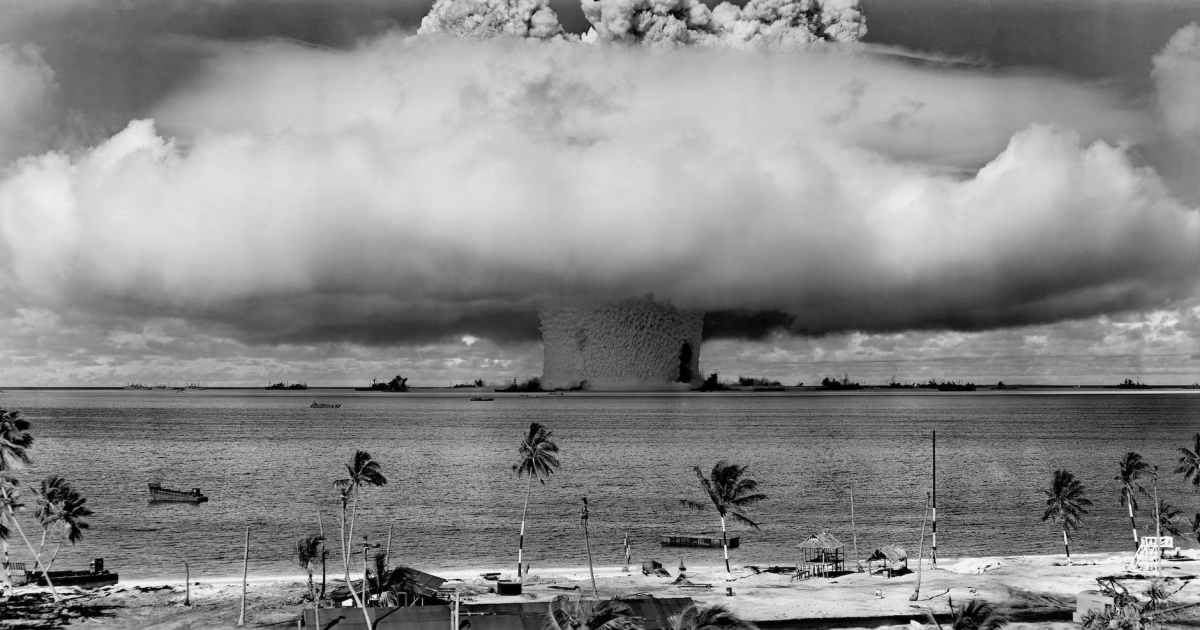
It’s serious. Not much room for everyday humour. Just a sprinkling of irony. Nuclear physicists did change the world forever. Would the change have happened anyway? Yes, most probably, but the world would now be a different place if the bomb had been realised in the Europe of the 1940s rather than the US.

When big science meets national and global politics the results are disturbing. Robert Oppenheimer acted as a nexus. Events pulled him like a powerful magnet from one impossible situation to another. At the same time, he made choices based on strong convictions and a single-minded assurance.

His faith in a “liberal” America was tested to the limit as the devils of political intrigue and ambition kicked against him. The human choices of the head and the heart were stirred into conflict. The sharp tension between right-wing politicos and left-wing intellectuals killed any middle way to bring the globe together to manage the new threat of nuclear confrontation.

Sub-stories ranged over challenges I recognised. The whole art and practice of managing experts, in his case on a large scale, of the Manhattan project, were on display. How do you create urgency and unity around a controversial project? The military couldn’t do it by compulsion alone. The ethical and moral case had to be made for pursuing an aim that would transform the world, or even destroy the world. Once made, the atomic bomb could not be un-invented.

The war to end all wars became nothing of the sort. One bomb led to another and the dangerous stalemate of the Cold War. The later shaped my life as much as anyone who’s over 60-years.

On the technical front, what is fascinating to an engineer, like me, is the vexed question of – what if? What if the massive technical risks of the Manhattan project had not paid off[2]? Or it had taken years more to make a viable bomb? We will never know.

This film, part biography, written and directed by Christopher Nolan was so much in his style. However, on the screen there was no doubt who was dominant. The Irish actor Cillian Murphy is stunning. His Robert Oppenheimer burns into the eyes. What an incredible role.

The temptation is to use a wide range of adjectives that reach a crescendo. There’s a pile of reviews that do. So, I’ll turn to the parts that were not so coherent. Strangely Kenneth Branagh as Niels Bohr worked. However, the portrayal of Einstein was less convincing. The use of black and white pictures to demark different times worked well but was annoying. And sometime the thunderous noises and dramatic flashes were a bit OTT.

Overall, it’s a “must see” film for 2023 and best on the big screen. But don’t sit in the front row.


[1] https://www.imdb.com/title/tt15398776/

[2] Early morning of 16 July 1945, in New Mexico, work at Los Alamos led to a test of the first nuclear weapon.

Bad Moon

Despite climate change, economic downturns, war, and recovery from a pandemic no one was prepared for, this is a good time to be alive. We are a long way from the end of days. Or at least I hope we are.

The past is another country. Only that can be said of the future too. The difference is a record book. Behind us we have the chronicles, from the first written words to this next key I’m about to tap. In front of us spreads a great deal of uncertainty.

What’s with the gloom and doom? Media of all kinds seems to bathe in a pool of pessimism. I can hear Creedence Clearwater Revival singing Bad Moon Rising[1] in the background. Despite climate change, economic downturns, war, and recovery from a pandemic no one was prepared for, this is a good time to be alive. We are a long way from the end of days. Or at least I hope we are.

In so far as fiction is concerned, I love a good dystopia. Unfortunately, some of the movies on this theme are quite ridiculous or dammed right annoying. The Day After Tomorrow[2] is a bucket load of piety and the remake of The Day the Earth Stood Still[3] has me throwing things at the TV.

Last night, I tried to get through the first half of a more recent movie called Reminiscence. It does amaze me that what must have seemed like such good ideas on paper can be transformed, at great expense, into a relatively average film. Yes, we are going to have to cope with rising sea levels and it will change the way people live.

What I’m addressing is the assertion made by a journalist who covers the cultural effect of science and technology[4]. It’s basically, that all this focus on the end of the world stuff stops us from planning a positive future. I can quite understand the basis for such a proposition.

Dare I make a HHGTTG reference? Well, I’m going to anyway[5]. It’s that society collapses if we spend all day looking at our feet, or to be more precise our shoes. Looking down all the time is equated with being depressed about the future. That leads to people buying more colourful shoes to cheer themselves up. Eventually, that process gets out of control and civilization collapses.

For someone like me who has spent a lot of time looking at accidents and incidents in the aviation world, I’m not on-side with the notion that bad news leads to gloominess and then immobility. I guess it does for some people. For me, it’s almost the reverse.

What we learn from disasters and calamities is of great benefit. It stops us from making the same mistakes time and time again. Now, I know that doesn’t last forever. Human memory is not like a machine recording. We are incredibly selective (hence films like Reminiscence).

In my mind, none of this persistent immersion in stories with bad outcomes stops us from planning. To be positive, it stops us taking our plans for what we can do into the realms of pure fantasy. Or at least it should.


[1] https://youtu.be/zUQiUFZ5RDw

[2] https://en.wikipedia.org/wiki/The_Day_After_Tomorrow

[3] https://en.wikipedia.org/wiki/The_Day_the_Earth_Stood_Still_(2008_film)

[4] https://www.newscientist.com/article/mg25834380-100-why-we-shouldnt-fill-our-minds-with-endless-tales-of-dystopia

[5] https://hitchhikers.fandom.com/wiki/Shoe_Event_Horizon