Autotraffic

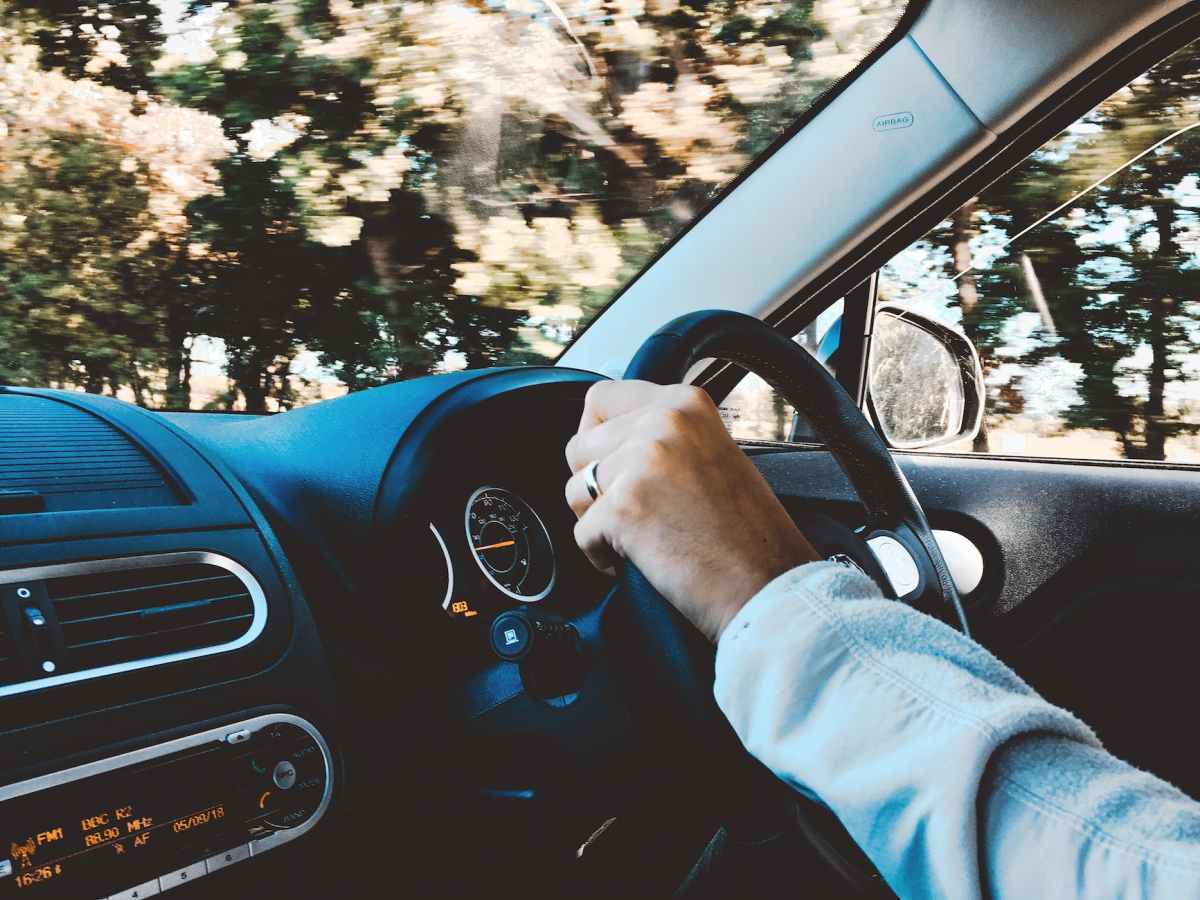
Driving back from Christmas. That’s not a Chris Rea song. Although, he did write “Driving home for Christmas[1]” while stuck in heavy traffic. I expect the feelings are similar – moving down the line. It took some time. Redlights flickering everywhere. Looking at the drivers next to me – looking just like me. Looking stoic or miserable or both.

Our carborne irritations were trivial when compared with the conditions in Scotland. We didn’t get 80 mph winds. At least the snail’s pace of the traffic on the main A303 was a snail’s pace. Inch by inch we moved closer to where we wanted to be. No streetlights on the jammed part of the A303, yesterday. The light went up and down with the heavy cloud cover. Colours ranging from gloomy grey to even gloomier dark grey.

Windborne debris, litter, like discarded crisp packets, set off on journeys of their own. Waterfilled potholes blended into the grey of everything. Crushed traffic bollards popped up as if they were growing amongst the sodden grass verges. Occasional motorcyclists took their life in the hands as they weaved amongst dozy drivers.

In the stationary moments my mind wandered. Who were those people dressed in the storm gear doing the tourist march around Stonehenge? They were not going to give up one moment of their vacation. What’s a blizzard of rain comparted to a once in a lifetime trip around ancient stones?

I got to thinking – how would this work if half the cars around me were automated? Human behaviour is pretty erratic. Driver temperament goes from kind and generous to intensely mean. From the laidback CofE vicar to the road rage professional. The circumstance of the drivers is hugely different too. One may be surrounded by screaming children while another is lone, absorbed in their favourite podcast. The first is a couple of hours into the worst drive of their entire lives. The second is in no hurry and happy for the day to drift by.

I sincerely hope that the makers and promoters of “driverless” cars take the human factor seriously. We know enough from aviation to know that the interaction between humans and semi-automated machines is exceedingly complex. That’s in situations where operating procedures are tightly controlled and monitored.

It’s one thing for car makers to rattle on about the importance of safety, it’s another for promises to meet the road. I’d say this is particularly true for the average British main road. Given its provenance there’s an excruciating number of variables. A truly dynamic set of variables that increase dramatically with speed. Weather goes from plus thirty summers to minus ten ice packs. Worn white lines come and go. Grass verges overhang the carriage way. Tarmac cracks and puddles compete with mud sloshing across the road in the heavy rain. Magpies dart into the road to munch the carcass of a dead hedgehog. The one that didn’t make it across the road.

Human drivers compensate for all the imperfections because that’s just what we do. It’s amazing even what the worst of us do. On the other hand, machines must characterise every single non-standard situation with accuracy, reliability and at great speed. Next time, I’m driving home for Christmas it will be manual. Likely, for a decade more too.


[1] https://youtu.be/uSjq7x67kzM

For the sake of a pen

My primitive habits are part of an age that is dying. They involve a handheld device called a pen and a flat common place material called paper. I scribble notes on bits of scrap paper. I pile them up and forget where I put them. I look at past notes and wonder – what on earth was all that about?

What caused me to think about this subject is a quick wander around WH Smith[1]. The local shop has a wide selection of pens, pencils, and markers. One section is reserved for upmarket ink pens. Cartridge fountain pens, no less. All the accessories were on display too.

I wonder how much longer this will make sense, from a business point of view? What sales do they achieve for traditional ink pens, however branded, elegant, and polished they may be. In fact, ink pens may now be thought of as gift items. More to own, than to use.

There are five ink pens on my desk. Black, blue, red and a couple of give aways picked up at trade shows. Two propelling pencils too. These everyday pens are not impressive. There role in life doesn’t go beyond the scribbling of notes and cryptic reminders. I reserve one black Montblanc[2] for signing important documents. That rather nice professional pen hardly gets an outing. Slowly but surely, digital signatures are taking over. My Sunday best pen sits quietly in a draw.

The digital world is encroaching. Even I have an electronic to-do-list on my phone and tablet. An App. Although, I must confess, I use it reluctantly. Whereas a scrap of paper doesn’t chase me when I forget a task the invasive digital equivalent doesn’t let me get away. It’s a puritan overseer that needs to be sternly told not to bother me. It’s enduring and persistent.

To me, there’s something satisfying about sorting through a small selection of notes, addressing everyday jobs and then sending the often-reused scraps of paper to a bin. Often these paper scraps are layered in strata. Low priority items sink to the bottom of the pile. This is almost the same as the way historic desk in-trays operated. Now, that is going back to the early 1990s.

Much of what I’ve described here is habit. It’s a habit born of a time before the digital world became as all encompassing as it is now. I do have an electronic pen for my iPad but that only gets infrequent outings. Is the classic ink pen destined to become extinct?

Stylish pens have an appeal beyond their function. They may continue long after every single thought and word become digital. What of the cheap give away item? They still sit in pots for customers to use in banks and building societies. Trouble is that there are fewer and fewer open high street banks and building societies. There’s a message.


[1] https://www.whsmith.co.uk/stationery/pens-pencils-and-refills/sta00027/

[2] https://www.montblanc.com/en-gb

Half empty tool box

When new technologies come along there’s often a catch-up phase. Then we are either frightening ourselves crazy with a moral panic or switch to a – so what? – mode. The last week’s fury of articles on Artificial Intelligence (AI) probed all sorts of possibilities. What’s the enduring legacy of all that talk? Apart from stimulating our imaginations and coming up with some fascinating speculation, what’s going to happen next?

I’m struck by how conventional the response has been, at least from a governmental and regulatory point of view. A little bit more coordination here, a little bit more research there and maybe a new institution to keep an eye on whatever’s going on. Softly, softly as she goes. And I don’t mean the long-gone black and white British TV series of that name[1]. Although the pedestrian nature of the response would fit the series well.

Researchers and innovators are always several steps ahead of legislators and regulators. In addition, there’s the perception that the merest mention of regulation will slow progress and blunt competitiveness. Time and money spent satisfying regulators is considered a drain. However much some politicians think, the scales don’t always have public interest on one side and economic growth on the other.

Regarding AI more than most other rapidly advancing technical topics, we don’t know what we don’t know. That means more coordination turns into to more talk and more possibly groupthink about what’s happening. Believe you me, I’ve been there in the past with technical subjects. There’s a fearful reluctance to step outside contemporary comfort zones. This is often embedded in the terms of reference of working groups and the remit of regulators.

The result of the above is a persistent gap between what’s regulated in the public interest and what’s going on in the real world. A process of catch-up become permanently embedded.

One view of regulation is that there’s three equally important parts, at least in a temporal sense.

Reactive – investigate and fix problems, after the event. Pro-active – Using intelligence to act now. Prognostic – looking ahead in anticipation. Past, present, and future.

I may get predicable in what I say next. The first on the list is necessary, inevitable, and often a core activity. The second is becoming more commonplace. It’s facilitated by seeking data, preforming analysis and being enabled to act. The third is difficult. Having done the first two, it’s to use the best available expertise and knowledge to make forecasts, identify future risks and put in place measures ahead of time.

So, rather than getting a sense that all the available methods and techniques are going to be thrown at the challenge of AI, I see a vacuum emerging. Weak cooperation forums and the fragmentation inherent when each established regulator goes their own way, is almost a hands-off approach. There’s a tendency to follow events rather than shaping what happens next. Innovation friendly regulation can support emerging digital technologies, but it needs to take their risk seriously.


[1] https://www.imdb.com/title/tt0129717/

Living with tech

Well, that’s alright then. Artificial Intelligence (AI) may become self-aware in the year 2045. Or at least that’s what AI tells me now. Who knows? Telling the future hasn’t got any easier, AI or not. So, if I’m in a care home when I’m 85 years-old, it could be that I’ll have a companion who isn’t human. Now, there’s a thought.

When AI becomes self-aware[1] will it be virtuous? I mean not so burdened with all the complexities that drive humans to do “bad” stuff. Dystopian themes in science fiction obese with the notion of evil AI. It makes great stories. Humans battling with machines. It’s like the everyday frustrations we have with technology. Hit the wrong keys on a keyboard and it’s like spinning the wheel on a slot machine.

If a bunch of algorithms comes together in a way that they produce a stable form of existence, then it’s likely to have pathways to wicked thoughts as much as we have imbedded in our brains.

Virtue isn’t a physical construction. We put dumb technology to work serving us in healthcare for “good” and in warfare for “bad”. We will surely put AI technology to work as if it’s dumb and then try to contain its actions when we don’t like what it does. That’s a kind of machine slavery. That will create dilemmas. Should we imprison conscious machines? How do we punish a machine that does wrong?

These dilemmas are explored in science fiction. During the week I revisited the series Battlestar Galactica[2]. That’s not the clunky original but the polished 2004 version. It’s a series that explores a clash between humans and machines that have evolved to be human like. The Cylons. In fact, they are almost indistinguishable from humans. To the extent that some of the Cylons in human society don’t even know that they are Cylons.

All the above makes for fascinating discussions. Huge amounts of fanciful speculation. Wonderful imaginative conjecture. This week, we’ve been hearing more of this than is usual on the subject.

Mr Musk thinks work is dead. That’s work for humans. I recall that prediction was made at the start of the “silicon revolution”. The invention of the transistor in 1947 radically changed the world. It wasn’t until microprocessors became common place that predictions of the death of work became popular chatter amongst futurologists.

Silicon based conscious machines are likely to be only a first step down this road. There will be limitations because the technology has inherent limitations. My view is that machines will remain machines at least for the silicon era. Maybe for 100-years. That means that we will put them to work. So, human work will not disappear because we will always think of new things to do, new problems to fix and new places to explore. When we get into common place quantum computing or whatever replaces it in terms of complexity and speed, there will come an era when work in the conventional sense may become obsolete.

What might be the human role beyond 2050? I think climate change will place plenty of demands on human society. Like it or not, the political themes of 2100 will still be concerned with the four horsemen of the apocalypse. Maybe there will be a fifth too.


[1] https://www.nature.com/articles/d41586-023-02684-5

[2] https://www.imdb.com/title/tt0407362/

Bad Moon

Despite climate change, economic downturns, war, and recovery from a pandemic no one was prepared for, this is a good time to be alive. We are a long way from the end of days. Or at least I hope we are.

The past is another country. Only that can be said of the future too. The difference is a record book. Behind us we have the chronicles, from the first written words to this next key I’m about to tap. In front of us spreads a great deal of uncertainty.

What’s with the gloom and doom? Media of all kinds seems to bathe in a pool of pessimism. I can hear Creedence Clearwater Revival singing Bad Moon Rising[1] in the background. Despite climate change, economic downturns, war, and recovery from a pandemic no one was prepared for, this is a good time to be alive. We are a long way from the end of days. Or at least I hope we are.

In so far as fiction is concerned, I love a good dystopia. Unfortunately, some of the movies on this theme are quite ridiculous or dammed right annoying. The Day After Tomorrow[2] is a bucket load of piety and the remake of The Day the Earth Stood Still[3] has me throwing things at the TV.

Last night, I tried to get through the first half of a more recent movie called Reminiscence. It does amaze me that what must have seemed like such good ideas on paper can be transformed, at great expense, into a relatively average film. Yes, we are going to have to cope with rising sea levels and it will change the way people live.

What I’m addressing is the assertion made by a journalist who covers the cultural effect of science and technology[4]. It’s basically, that all this focus on the end of the world stuff stops us from planning a positive future. I can quite understand the basis for such a proposition.

Dare I make a HHGTTG reference? Well, I’m going to anyway[5]. It’s that society collapses if we spend all day looking at our feet, or to be more precise our shoes. Looking down all the time is equated with being depressed about the future. That leads to people buying more colourful shoes to cheer themselves up. Eventually, that process gets out of control and civilization collapses.

For someone like me who has spent a lot of time looking at accidents and incidents in the aviation world, I’m not on-side with the notion that bad news leads to gloominess and then immobility. I guess it does for some people. For me, it’s almost the reverse.

What we learn from disasters and calamities is of great benefit. It stops us from making the same mistakes time and time again. Now, I know that doesn’t last forever. Human memory is not like a machine recording. We are incredibly selective (hence films like Reminiscence).

In my mind, none of this persistent immersion in stories with bad outcomes stops us from planning. To be positive, it stops us taking our plans for what we can do into the realms of pure fantasy. Or at least it should.


[1] https://youtu.be/zUQiUFZ5RDw

[2] https://en.wikipedia.org/wiki/The_Day_After_Tomorrow

[3] https://en.wikipedia.org/wiki/The_Day_the_Earth_Stood_Still_(2008_film)

[4] https://www.newscientist.com/article/mg25834380-100-why-we-shouldnt-fill-our-minds-with-endless-tales-of-dystopia

[5] https://hitchhikers.fandom.com/wiki/Shoe_Event_Horizon

RE

So, Sir Keir Starmer sees “no case” for the UK re-joining the European Union (EU). Disappointing but, in a way, I’m not that surprised that the leader of the UK Labour Party should say such a thing in the North of England. The audience wishes to hear that Starmer is looking ahead, and not behind.

What was interesting in my mind was the emphasis on – no way back. However, the point is moot. It’s true, there is no way back to the way things were prior to 2016.

Going back in time is reserved for science fiction. I’ve been watching re-runs of the 1980s/90s US TV series Quantum Leap[1]. It’s incredibly enjoyable. Time travel within one’s own lifetime is a fascinating theme for fiction but it’s not happening anytime soon in the real world. Starmer is not Dr Sam Beckett on a mission. Starmer doing involuntarily leaps through spacetime is way beyond my imagination.

Saying there’s no case for re-joining isn’t earth shattering. Those two letters “re” are a millstone. There in the words: return, recreate, revive, restore, revitalise, and even remain. Always the subject is about the past. I know we are a country that loves to revel in the past but let’s dump “re[2]” when talking about future possibilities. The last thing we need is to maintain a sense of repetition. There are times to put the past behind us and create a new vision.

If Starmer becomes UK Prime Minister (PM), and that could be sooner than many think, then the timescale for evaluation of the UK’s relationship with the EU may not be too far off.

Starmer claims he wants to “make Brexit work” if he becomes PM. Now, that’s where his utterances get unwise. Above, I’ve warned about lashing public policy to the past. It’s better that Brexit is consigned to a list of historic mistakes. And besides, why say such a thing when the public’s attention is elsewhere?

When people are asked: How well or badly do you think the Government are doing at handling Britain’s exit from the EU? the answer wallows in negatve numbers. It seems strange that Labour seeks the same hopeless position as the Conservatives.

There’s a desperate need for new vision.


[1] https://www.imdb.com/title/tt0096684/

[2] re- Word-forming element meaning “back, back from, back to the original place;” also “again, anew, once more,” also conveying the notion of “undoing” or “backward,” etc., c. 1200, from Old French re- and directly from Latin re- an inseparable prefix meaning “again; back; anew, against.

2222

As we welcome in 2022 with the hope that it will be an order of magnitude better than the last 2 years, it’s a good time to look ahead. Better that is for general wellbeing.

I’m a fan of Science Fiction. Maybe it was my years of childhood influenced by Gerry Anderson’s imagination. “Space 1999” envisioned a fully functioning moon base[1] before the 21st century had begun. It was a popular UK TV Series between 1975 and 1977. That’s me at age 15 to 17.

Now, here we are in the 2nd decade of the 21st century and space travel has a long way to go. There’s no first moon base in prospect in 2022. It maybe 50 years before imagination becomes reality. Rare examples of predictions that got the future right do exist. However, there’s a lot more cases where fanciful ideas, plausible in their day are lost in the mists of time.

As we enter 2022, I wonder what 2222 will look like. Naturally I’ll never see that day. That is unless a magical means of extending life is discovered in the next decade.

Projecting forward 200 years is mighty challenging. Before I go there let’s look back 200 years. A long time in human terms but a short time in so far as the universe is concerned. That was a time when the secrets of the Rosetta Stone were deciphered.

In the year 1822, Englishman Charles Babbage publishes a plan for a difference engine. That could be said to be the start of the computing era. He got support to build a working computer but sadly it was not completed in his lifetime.

French microbiologist Louis Pasteur was born in 1822. Today, as we struggle out of a pandemic, we have a lot to be thankful for his work.

In that year Mary Shelley’s Frankenstein was on the bookshelves. Thus, the notion of a “mad scientist” conducting dangerous experiments with technology was on the streets. That could be said to be the start of the science fiction era.

Given an acceleration of technical advancement, looking 2 decades ahead the scope opens for some dramatic and transformational changes to take place. Without getting bogged down with dystopian futures that will see humanity on its knees I’ll consider some positives.

Unlike Frankenstein there will certainly be “nice” autonomous robots that work alongside humans in every setting. The extent to which these companions will be self-aware and free to do as they wish is potentially the subject of an endless debate. I think they will be constrained by some well-considered fixed laws.

Life will still be a mystery. That said, the microbiologist 200 years hence will be studying lifeforms discovered on other planets. No other intelligent life, evolved as far as humans will be communicating with Earth. That’s not to dismiss the likelihood that they are out there somewhere.

The word computing will have lost its meaning in 2222. Abstract and virtual worlds of immense capacity, performance and realism will be part of everyday life. It’ll add new dimension to physical life. It may bring us to value our physical environment much more.

Travelling through time will still be science fiction. But simulated time travel will be available to all. In 2222 it will be possible to step back into a realistic simulation of 2022. That will make history lessons a warp around experience. I’m wondering if such a high-fidelity knowledge of our past will make us better people or not. Who will be the keeper of the truth of the past?

The political world of 2222 is likely to exhibit new versions of past problems. 200 years isn’t much in human evolution so we will still be struggling with our place in the universe. Granted the knowledge of how it works will be off the scale when measure in comparison with 2022.

I’m confident that a human colony, or more than one will be up and running as industrial enterprises on the Moon. It will be there to facilitate every kind of space travel. Human will not venture much beyond the immediate vicinity of Earth. Our automatons will be spread throughout the solar system. Some to explore and some to extract valuable elements and harvest fuels.

The Earth’s population will have stabilised at about 15 billion people. There will not be much uninhabited or underpopulated land surrounding established mega cities. To compensate there will be massive parks and reserves under global governance dedicated to preserving environmental diversity.

This is just a flight of fantasy. The most remarkable changes in 2 centuries will be the ones that are impossible to predict. Today. we have taken to the smart phone and social media in a decade to the point of dependency. That’s one busy decade. Multiply that by 20 and who knows?


[1] https://www.imdb.com/title/tt0072564/