Experts

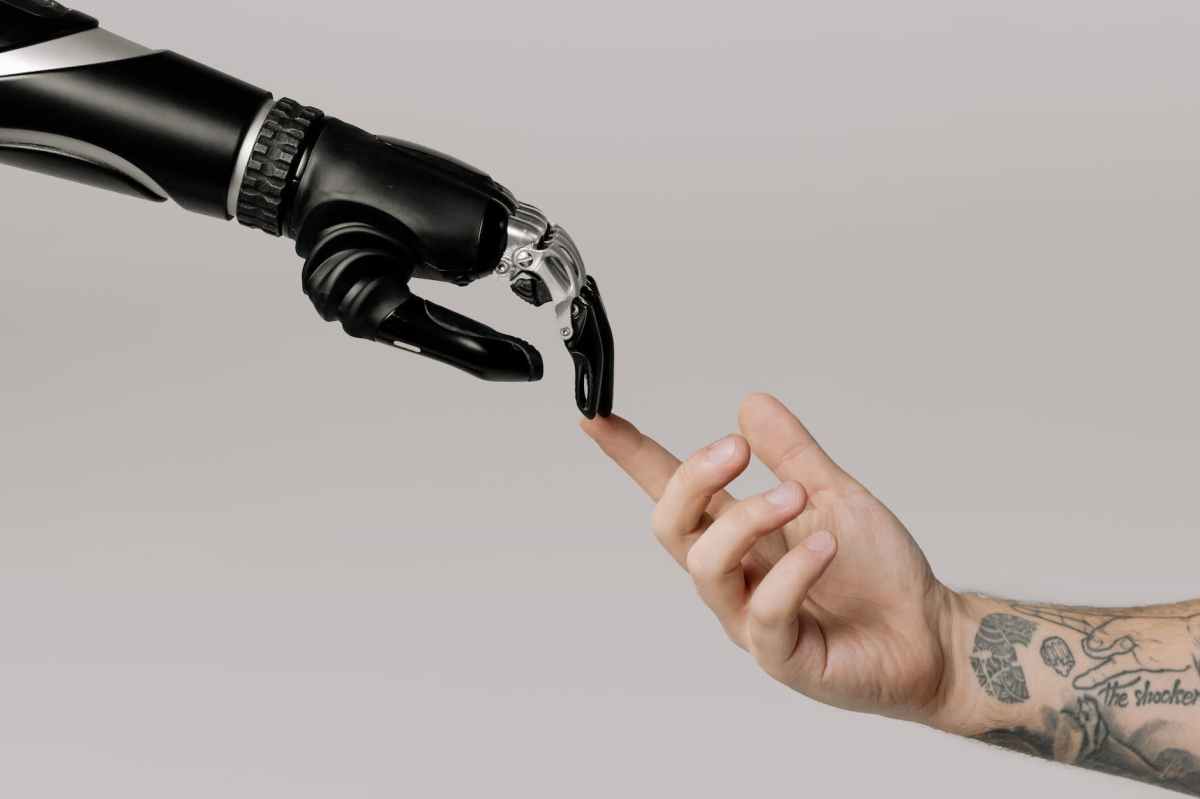
The rate of increase in the power of artificial intelligence (AI) is matched by the rate of increase in the number of “experts” in the field. I’ve heard that jokingly said. 5-minutes on Twitter and it’s immediately apparent that off-the-shelf opinions run from – what’s all the fuss about? to Armageddon is just around the corner.

Being a bit of a stoic[1], I take the view that opinions are fine, but the question is what’s the reality? That doesn’t mean ignoring honest speculation, but that speculation should have some foundation in what’s known to be true. There’s plenty of emotive opinions that are wonderfully imaginative. Problem is that it doesn’t help us take the best steps forward when faced with monumental changes.

Today’s report is of the retirement of Dr Geoffrey Hinton from Google. Now, there’s a body of experience in working with AI. He warns that the technology is heading towards a state where it’s far more “intelligent” than humans. He’s raised the issue of “bad actors” using AI to the detriment of us all. These seem to me valid concerns from an experienced practitioner.

For decades, the prospect of a hive mind has peppered science fiction stories with tales of catastrophe. With good reason given that mind-to-mind interconnection is something that humans haven’t mastered. This is likely to be the highest risk and potential benefit. If machine learning can gain knowledge at phenomenal speeds from a vast diversity of sources, it becomes difficult to challenge. It’s not that AI will exhibit wisdom. It’s that its acquired information will give it the capability to develop, promote and sustain almost any opinion.

Let’s say the “bad actor” is a colourful politician of limited competence with a massive ego and ambition beyond reason. Sitting alongside, AI that can conjure-up brilliant speeches and strategies for beating opponents and that character can become dangerous.

So, to talk about AI as the most important inflection point in generations is not hype. In that respect the rapid progress of AI is like the invention of the explosive dynamite[2]. It changed the world in both positive and negative ways. Around the world countries have explosives laws and require licenses to manufacture, distribute, store, use, and possess explosives or its ingredients.

So far, mention of the regulation of AI makes people in power shudder. Some lawmakers are bigging-up a “light-touch” approach. Others are hunched over a table trying to put together threads of a regulatory regime[3] that will accentuate the positive and eliminate the negative[4].


[1] https://dailystoic.com/what-is-stoicism-a-definition-3-stoic-exercises-to-get-you-started/

[2] https://en.wikipedia.org/wiki/Dynamite

[3] https://digital-strategy.ec.europa.eu/en/policies/european-approach-artificial-intelligence

[4] https://youtu.be/JS_QoRdRD7k

Oath

Oh dear. What do they say: the road to hell as being paved with good intentions. Maybe that’s a bit extreme. It’s not necessarily “hell” that I’m talking about here but something that does the opposite of what’s intended. I can image the planning meeting where someone pipes up – I’ve got an idea.

Swearing allegiance to the King[1] might sit well in a Hollywood movie of knights in armour and English castles standing proud against the green, green countryside. In the 21st century it sounds quaint and patronising to say the least. Strange vestiges of the historic riddle of our constitution.

The public is being asked to swear allegiance at the King’s coronation. These words are proposed: “I swear that I will pay true allegiance to Your Majesty, and to your heirs and successors according to law…….

Now, I know that Members of Parliament (MPs) must swear a similar allegiance before taking their seat in Parliament. MPs cannot take their seat, speak in debates, vote, or receive a salary until taking an oath or affirmation[2]. For them it’s more about being elected lawmakers than allegiance to a single person. It would make much more sense if they swore an oath to the British Constitution but there lies the problem.

Such quintessentially British activities hark back to a day when everyone knew the rules of cricket, knew their place and, as John Major once put it in his failed Back to Basics[3] campaign, old values. In 1953, the time of the last crowning, Britain was a deferential society, now it’s not.

The question is – should a “modern” constitutional monarchy be asking for allegiance in this public way whilst knowing that most the population will ignore the whole exercise? Not only that but a considerable number of people will think the exercise utterly ridiculous.

There’s not so many large counties in the world where subjects are asked to swear an oath to an unelected head of state and his dysfunctional family. That’s a family that has filled the media with unhappy stories for years. It gets stranger and stranger depending on how you look at it.

It’s not what you might call democracy or meritocracy in the normal sense, it’s more of a ritual of imperial legacy. In this green and pleasant land some people think this is a fantastic advertisement for our great nation across the world. I disagree.

British Citizens have a proud allegiance to their country, but this is to one man and his whole family. Now, that is peculiar. It’s feudal. Sadly, to point out the obvious just gets branded as anti-monarchist.


[1] https://www.bbc.co.uk/news/uk-65435426

[2] https://www.parliament.uk/about/how/elections-and-voting/swearingin/

[3] https://en.wikipedia.org/wiki/Back_to_Basics_(campaign)

Crown

It’s a difficult time to be a British republican. A couple of reactions to mention of an alternative to having a monarchy is – don’t be a spoil sport or the alternative would be worse.

The national celebrations coming up are not the problem in my mind. Nothing at all wrong with having a big nationwide event in May. Especially given the grim time the hospitality industry has just been through and the natural inclination to celebrate springtime.

Sadly, I have to say that the British republican movement, such as it is, is throwing away the opportunity to pose the questions on the good and bad of having a prominent monarchy in a modern country. “Not My King” is a ridiculous campaign slogan[1]. I believe we’d be better off as a republic but that belief lives with the pragmatic acceptance that there will be a King and he will be the Head of State. Pretending that is not so doesn’t help win the case for change.

Generally, I think there’s an ambivalence[2] about the whole subject amongst the British public. That is however much the BBC talks-up the whole coronation. Nobody much is complaining about having an extra Bank Holiday. Nevertheless, a widely held view is that Charles III will be on probation as a King. If the British monarchy continues to be embroiled in controversy and exist primarily as source of a tabloid headlines, then it will continue to decline as a symbol of the national and last no longer than a decade. The feeling that a monarchy interested in survival should have skipped a generation is a strong one. Their past survival has been mostly because of relative modernisation and not wallowing in ancient rituals.

According to polls, public support for the monarchy is age dependent. This maybe because of the claimed propensity for people to become more conservative, with a small “c”, with age. On the other hand, this is a new age. We have never had the global information revolution that is shaking the foundations of society in the way it is now.

I’m a supporter of British republicanism because we are citizens and not subjects. Although, I do recognise that the different status of people can be of dreadful intricacy given our history.

In Britain, some aspects of our unwritten constitution are “too easy” to change because of a passive Head of State. Conversely, some aspects of our unwritten constitution are “too hard” to change because of being constrained by custom, tradition, and the power of veto by those with inherited influence.

Ironically, post-Brexit, British republicanism is more allied to maintaining sovereignty than our crumbling[3] existing system of governance. That is as much about the sovereignty of the individual citizen as it is of our society or the State. Republicanism has always been about liberty. A few passages from Tom Paine (1737–1809) are enough evidence in that respect.

Good luck to His Majesty King Charles III. He’ll need it.

POST: Not me or, no relation in so far as I know: John Vincent (historian) is a British historian and professor emeritus of modern history at the University of Bristol. He is known for his works on political history, especially the 19th and 20th centuries, and for his controversial views on democracy and monarchy.


[1] https://www.theguardian.com/uk-news/2022/oct/27/notmyking-billboard-campaign-launched-by-anti-monarchy-activists

[2] https://natcen.ac.uk/news/british-social-attitudes-monarchy

[3] The last six years have illustrated the weakness of the current settlement.  

Minister walks

In the news this week is a British politician who has served as Deputy Prime Minister in the UK, resigning because of a report into his conduct[1]. The Prime Minister (PM) has been accused of dither and delay in addressing the outcome of an investigation into bullying that has now been published.

Certain Government Ministers are entitled to be addressed as “Right Honourable” in the UK Parliament. What’s clear in this case is that the conduct described in the report is neither right nor honourable. The findings of the investigation report were set before the PM for his judgement[2]

A senior lawyer had been asked to investigate whether the Conservative politician Dominic Raab had bullied civil servants during his time as both Foreign Secretary from 2019 to 2021, and then Justice Secretary from 2021 to 2022.

Raab has been Member of Parliament (MP) for Esher and Walton in Surrey Country since 2010. He has been a prominent supporter of Britain’s exit from the European Union (Brexit) and known for his forthright style in asserting the virtues of that ill-planned project.

Unsurprisingly, his resignation has stirred up a host of conspiracy theories and finger pointing.

I’m left wondering what it would have been like to have been a civil servant working in the indescribably complicated environment where Brexit is treated as a religion. It must have been a high-pressure situation offering practical and pragmatic options to a Government Minister so wedded to one singular belief, especially under Boris Johnson’s failed premiership.

Bullying behaviour is a serious matter. Whereas some Press commentators are trying to blame the accusers who stepped forward, the evidence shows that it’s not the former Minister who is the victim here. I think it’s disingenuous to paint Dominic Raab as a victim.

Yet again the Conservative Party is in turmoil. It seems to be a perpetual state of play. When Government priorities should be focused on the cost-of-living crisis, instead they are engulfed on their own unending bad behaviour.


[1] https://www.bbc.co.uk/news/uk-politics-65333983

[2] https://www.gov.uk/government/publications/letter-from-the-prime-minister-to-the-rt-hon-dominic-raab-mp

Light touch folly

Light touch regulation. Now, there’s a senseless folly. It’s a green light to bad actors wherever they operate. It’s like building a medieval castle’s walls half as thick as planned to save money in the belief that enemies are too stupid to work it out. Saying that the public good far less important than the speed of developments is unwise to say the least.

The INTERNET arrived in the UK in the late 1980s. Now, it seems strange to recount. Clunky Personal Commuters (PCs) and basic e-mail were the hight of sophistication as we moved from an office of typewriters and Tipp-Ex to the simple word processor[1]. Generations will marvel at the primitive nature of our former working lives. Getting scissors and cutting out paper text and pasting it into a better place in a draft document. Tippexing out errors and scribbling notes in the spaces between sentences. Yet, that’s what we did when first certifying many of the commercial airliners in regular use across the globe (Boeing 777. Airbus A320). Desktop computers took centre stage early in the 1990s, but administrations were amid a transition. Clickable icons hit screens in 1990. Gradually and progressively new ways of working evolved.

Microsoft Windows 95 and the INTERNET were heralded as the dawn of a new age. Not much thought was given to PCs being used for criminal or malicious purposes. No more thought than the use of a typewriter to commit crime. That doesn’t mean such considerations were ignored it just means that they were deemed a lower-level importance.

In 2023, everyday there’s a new warning about scammers. Even fake warnings about scammers coming from scammers with the aim of scamming. Identifying whose real and whose a fake is becoming ever more difficult. Being asked to update subscriptions that were never opened in the first places is a good indicator that there’s some dirty work afoot. Notices that accounts are about to be blocked referring to accounts that don’t exist is another.

In 30-years the INTERNET has taken on the good and bad of the greater world. It hasn’t become a safer place. In fact, it’s become a bit like the Wild West[2].

Our digital space continues to evolve but has nowhere near reached its potential. It’s like those great western plains where waggons headed out looking for rich new lands. In any towns on the way the shop fronts are gleaming and inviting but if you look around the back there’s a desperate attempt to keep bad actors at bay.

Only a fraction of the suspicious, emails, texts, and messages get reported. People unconsciously pile up a digital legacy and rarely clean out the trash that accumulates. A rich messiness of personal information can lie hidden to the eyes but just bellow the digital surface.

When politicians and technocrats talk of “light touch regulation” it’s as if none of this matters. In the race to be first in technology, public protection is given a light touch. This can’t be a good way to go.


[1] Still available – Tipp-Ex Rapid, Correction Fluid Bottle, High Quality Correction Fluid, Excellent Coverage, 20ml, Pack of 3, white.

[2] https://en.wikipedia.org/wiki/American_frontier

Pause

An open letter has been published[1]. Not for the first time. It asks those working on Artificial Intelligence (AI) to take a deep breath and pause their work. It’s signed by AI experts and interested parties, like Elon Musk. This is a reaction to the competitive race to launch ever more powerful AI[2]. For all technology launches, it’s taking fewer and fewer years to get to a billion users. If the subject was genetic manipulation the case for a cautious step-by-step approach would be easily understood. However, the digital world, and its impact on our society’s organisation isn’t viewed as important as genetics. Genetically Modified (GM) crops got people excited and anxious. An artificially modified social and political landscape doesn’t seem to concern people quite so much. It maybe, the basis for this ambivalence is a false view that we are more in control of one as opposed to the other. It’s more likely this ambivalence stems from a lack of knowledge. One response to the open letter[3] I saw was thus: A lot of fearmongering luddites here! People were making similar comments about the pocket calculator at one time! This is to totally misunderstand what is going on with the rapid advance of AI. I think, the impact on society of the proliferation of AI will be greater than that of the invention of the internet. It will change the way we work, rest and play. It will do it at remarkable speed. We face an unprecedented challenge. I’m not for one moment advocating a regulatory regime that is driven by societal puritans. The open letter is not proposing a ban. What’s needed is a regulatory regime that can moderate aggressive advances so that knowledge can be acquired about the impacts of AI. Yesterday, a government policy was launched in the UK. The problem with saying that there will be no new regulators and regulators will need to act within existing powers is obvious. It’s a diversion of resources away from exiting priorities to address challenging new priorities. That, in of itself is not an original regulatory dilemma. It could be said, that’s why we have sewage pouring into rivers up and down the UK. In an interview, Conservative Minister Paul Scully MP mentioned sandboxing as a means of complying with policy. This is to create a “safe space” to try out a new AI system before launching it on the world. It’s a method of testing and trials that is useful to gain an understanding of conventional complex systems. The reason this is not easily workable for AI is that it’s not possible to build enough confidence that AI will be safe, secure and perform its intended function without running it live. For useful AI systems, even the slightest change in the start-up conditions or training can produce drastically different outcomes. A live AI system can be like shifting sand. It will build up a structure to solve problems, and do it well, but the characteristics of its internal workings will vary significantly from one similar system to another. Thus, the AI system’s workings, as they are run through a sandbox exercise may be unlike the same system’s workings running live. Which leads to the question – what confidence can a regulator, with an approval authority, have in a sandbox version of an AI system? Pause. Count to ten and work out what impacts we must avoid. And how to do it.

Policy & AI

Today, the UK Government published an approach to Artificial Intelligence (AI)[1]. It’s in the form of a white paper. That’s a policy document creäte by the Government that sets out their proposals for future legislation.

This is a big step. Artificial Intelligence (AI) attracts both optimism and pessimism. Utopia and dystopia. There are a lot more people who sit in these opposing camps as there are who sit in the middle. It’s big. Unlike any technology that has been introduce to the whole populous.

On Friday last, I caught the film iRobot (2004)[2] showing early evening on Film 4. It’s difficult to believe this science fiction is nearly 20-years old and the short story of Isaac Asimov’s, on which it’s based is from the 1950s. AI is a fertile space for the imagination to range over a vast space.

Fictional speculation about AI has veered towards the dystopian end of the scale. Although that’s not the whole story by far. One example of good AI is the sentient android in the Star Trek universe. The android “Data” based on the USS Enterprise, strives to help humanity and be more like us. His attempt to understand human emotions are often significant plot points. He’s a useful counterpoint to evil alien intelligent machines that predictably aim to destroy us all.

Where fiction helps is to give an airing to lots of potential scenarios for the future. That’s not trivial. Policy on this rapidly advancing subject should not be narrowly based or dogmatic.

Where there isn’t a great debate is the high-level objectives that society should endeavour to achieve. We want technology to do no harm. We want technology to be trustworthy. We want technology to be understandable.

Yet, we know from experience, that meeting these objectives is much harder than asserting them. Politicians love to assert. In the practical world, it’s public regulators who will have to wrestle with the ambitions of industry, unforeseen outcomes, and negative public reactions.

Using the words “world leading” successively is no substitute for resourcing regulators to beef-up their capabilities when faced with rapid change. Vague and superficial speeches are fine in context. Afterall, there’s a job to be done maintaining public confidence in this revolutionary technology.

What’s evident is that we should not delude ourselves. This technical transformation is unlike any we have so far encountered. It’s radical nature and speed mean that even when Government and industry work together they are still going to be behind the curve.

As a fictional speculation an intelligent android who serves as a senior officer aboard a star ship is old school. Now, I wonder what we would make of an intelligent android standing for election and becoming a Member of Parliament?


[1] The UK’s AI Regulation white paper will be published on Wednesday, 29 March 2023. Organisations and individuals involved in the AI sector will be encouraged to provide feedback on the white paper through a consultation which launches today and will run until Tuesday, 21 June 2023.

[2] https://en.wikipedia.org/wiki/I,_Robot_(film)

Digital toxicity

There’s a tendency to downplay the negative aspects of the digital transition that’s happening at pace. Perhaps it’s the acceptance of the inevitability of change and only hushed voices of objection.

A couple of simple changes struck me this week. One was my bank automatically moving me to an on-line statement and the other was a news story about local authorities removing pay machines from car parks on the assumption everyone has a mobile phone.

With these changes there’s a high likelihood that difficulties are going to be caused for a few people. Clearly, the calculation of the banks and local authorities is that the majority rules. Exclusion isn’t their greatest concern but saving money is high on their list of priorities.

The above aside, my intention was to write about more general toxic impacts of the fast-moving digital transition. Now, please don’t get me wrong. In most situations such a transition has widespread benefits. What’s of concern is the few mitigations for any downsides.

Let’s list a few negatives that may need more attention.

Addiction. With social media this is unquestionable[1]. Afterall digital algorithms are developed to get people engaged and keep them engaged for as long as possible. It’s the business model that brings in advertising revenues. There’s FOMO too. That’s a fear of missing out on something new or novel that others might see but you might miss out on.

Attention. Rapidly stroking a touch screen to move from image to image, or video to video encourages less attention to be given to any one piece of information. What research there is shows a general decline in the attention span[2] as a characteristic of being subject to increasing amounts of information, easily made available.

Adoration. Given that so many digital functions are provided with astonishing accuracy, availability, and speed there’s a natural inclination to trust their output. When that trust is justifiable for a high percentage of the time, the few times information is in error can easily be ignored or missed. This can lead to people defending or supporting information that is wrong[3] or misleading.

It’s reasonable to say there are downsides with any use of technology. That said, it’s as well to try to mitigate those that are known about and understood. The big problem is the cumulative effect of the downsides. This can increase fragility and vulnerability of the systems that we all depend upon.

If digital algorithms were medicines or drugs, there would be a whole array of tests conducted before their public release. Some would be strongly regulated. I’m not saying that’s the way to go but it’s a sobering thought.


[1] https://www.theguardian.com/global/2021/aug/22/how-digital-media-turned-us-all-into-dopamine-addicts-and-what-we-can-do-to-break-the-cycle

[2] https://www.kcl.ac.uk/news/are-attention-spans-really-collapsing-data-shows-uk-public-are-worried-but-also-see-benefits-from-technology

[3] https://www.bbc.co.uk/news/business-56718036

Small Boats

Are there really hundred million people coming to Britain? Or is this a desperate scare tactic adopted by a Conservative Minister who has run out of workable ideas? It’s certainly the sort of tabloid headline that a lot of conservative supporters like to read. As we saw in the US, with former President Trump’s rhetoric on building a wall these themes stir-up negative emotions and prejudice. It’s a way of dividing people.

Xenophobia is defined as a fear and hatred of strangers or foreigners or of anything that is strange or foreign. With nearly 8 billion people on Earth[1] the potential for this destructive fear to be exploited has never been greater. Here, the Conservative Party is increasingly dominated by xenophobia and demagoguery, whatever a change of leadership may be trying to cover-up.

Will Parliamentary debate save us from the worst instincts highlighted in the Government’s latest proposals on small boat crossings? That’s a big question when the ruling political party has such a large parliamentary majority. Debate is likly to be heated and lacking objectivity.

Pushing the boundaries of international law can cause reputational damage, even if these rum proposals are defeated. However, what concerns most commentators is the high likelihood that the proposed measure will not work. They are merely a more extreme version of past failed policies.

One of the poorest political arguments is to criticise an opponent for reasoned opposition. It goes like this: here’s my policy and by opposing, it without providing your policy, you automatically make my policy a good one. It’s like planning to build a dangerously rickety bridge, likely to fail, and pointing to those who criticise the project as a reason why it’s a good to project.

When spelt out, like this it’s clear how curiously subversive this shoddy bombast can be. However, one of the basic party-political instincts, to seek headlines and publicity, has overridden common sense in this case. In the Government’s case, legislating regardless of the consequences, is an act of political desperation. Sadly, that’s where we are in this pre-election period.

NOTE: In June 2022, the UK had a prison population of roughly 89,520 people. The detention facilities needed to enable the Government’s small boats policy would need to be in the region of 40,000 people. Yet, there’s no published plan for a significant expansion of detention facilities. 


[1] https://www.census.gov/popclock/world

Rules

Let’s be controversial. Principle Based Rules could be retitled Hypocrisy Based Rules.

Now, I’ve already caused confusion because most consumers, or users of services will not have a clue what I’m talking about. The way rules are put together is not an everyday topic for conversation. Even if, in our complex society, this subject is vitally important.

Listening to the daily news it’s clear there’s been a break down between British Gas and its regulator and some vulnerable customers. Practices undertaken by a British Gas sub-contractor have shocked people. Breaking into people’s homes should not be normal business practice.

Yet, these real-world actions happened, and they sharply go against the “principles” of the energy supplier[1] and its regulator. So, do the rules that exist produce behaviours that fit with public expectations? This is the “how long is a piece of string” question. In other word the perception of the rules, such as they are, can be favourable but when it comes to implementation it’s another story completely.

Sadly, the defensive reactions of both energy supplier and regulator are to frame the whole problem as one of first not knowing then discovery, investigation, and corrective action. This is not bad in of itself, but it’s the most basic kind of reactive response that can be expected. It says to the consumer, we will wait for an influential spokesperson[2] to highlight a failing and then respond to pressure.

Has British Gas captured its regulator? That is to convince them that everything is hunky-dory and maybe convinced themselves it’s hunky-dory too but at the same time not bother to look at customer facing bad practices?

Hence my coining the notion of Hypocrisy Based Rules. I’m not saying for one moment that regulatory rules can be written that have no gaps, inconsistencies, or avenues for “creative compliance”. It can be advantageous to the consumer that an energy suppler has a degree of freedom on how they comply with rules.

What was missing is that regard for the need for constant vigilance. Reports suggest that British Gas’s sub-contractor undertook behaviour that did not fulfil regulatory goals.

Although it’s long in the tooth, this quote from an Irish statesman has resonance:

The condition upon which God hath given liberty to man is eternal vigilance. John Philpot Curran[3]

In this simple sentence “liberty” can be replaced with safety, security, prosperity, and honesty. It’s often been reworked.


[1] https://www.centrica.com/about-us/people-culture/our-code

[2] https://www.thetimes.co.uk/article/british-gas-prepayment-meter-debt-energy-bills-investigation-wrgnzt6xs

[3] https://www.britannica.com/biography/John-Philpot-Curran