Political Intervention by Billionaires

I’ve heard several people downplay the political intervention of the world’s richest man. This last weekend, he chose to address a large gathering of right-wing activists in London. Not there on the streets, but remotely by video. From another part of the globe.

It’s almost as if some media commentators are treating him as a naughty boy – nothing to see here, boys will be boys. What do you expect? Never mind, this is just what he does.

What comes to my mind is part of my student life in the late 70s / early 80s. Coventry is a great English city. Its football team has had more than a few ups and downs. What I remember is a Saturday afternoon with a large cordon of police lining the way between the railway station and Highfield Road. A palace of galvanised steel sheeting in a red brick terraced area of the city. Highfield Road’s football stadium no longer exists.

In those days, English football hooliganism was a set piece event that was as predicable as the seasons. It was a time to avoid parts of the city centre on a weekend. These events were regularly played out throughout the country. That era has passed – thank God. It’s not that football hooliganism is entirely dead. It’s that there are far fewer people who fit that description and they are generally socially ostracised.

In my mind, this weekend, Elon Musk acted like a hooligan-in-chief. Addressing a London crowd that was already steamed up and out to make their protest heard. Parts of that protest turned to violence.

Now, I’ve nothing against protest. I’ve been on a several. It’s that the ones I’ve been on have been peaceful and good natured. That was certainly the case during the many London protests marches against Brexit. Hundreds of thousands marched without incident.

Speakers address protest marches to amplify the message of the protestors. The reason for the gathering. Most often those notable speakers are people with what might be called – skin in the game. Campaigners who dedicate their time to a cause.

Outside agitators, without any discernible affiliation, can be a nuisance. At worst they are agent provocateurs out to ferment trouble. I think, Elon Musk’s acts were shameful and unwelcome.

London has a place called Speakers’ Corner. North-east corner of Hyde Park. I’d invite this gentleman to go there, take a stand, speak for a while and see if his way of thinking stands up to public scrutiny. He can be as irritating, contentious, or eccentric as he likes.

Eurostar

More than a few times the thought that climate change will impact transport has been raised. Not so much as transport impacting climate change but the two go hand in hand. Whereas the assumptions built into roads, rails and airports were of their time, time doesn’t stand still.

More frequent heavy rain and raised tides, and the flooding associated with them, are to be expected. To hear that the rail tracks between London and the Channel Tunnel have been underwater shouldn’t be too much of a shock. Flooding is a worldwide threat to public transport systems. In London, over the last couple of days, flooded tunnels brought travel chaos. Millions of gallons of water were not where they were supposed to be.

We can get used to disruption caused by strong winds and torrential rain sweeping across the country. The question to ask is – should we? I always wonder as soon as I see the word: “unprecedented” in a public statement. Huge volumes of water may not have been predicted to overwhelm the pumping systems designed to keep them under control, but now we know. It makes me think we are going to hear the word “unprecedented” a lot more in future.

This city centre to coastline railway is relatively new[1]. It cost £6.84 billion and opened in November 2007. Most travel commentators would say that it has been a great success. I was looking forward to the day that the German train company, Deutsche Bahn was to implement plans for a London to Frankfurt train service. Sadly, that project was shelved in 2018. I wonder why[2]? That “B” word again.

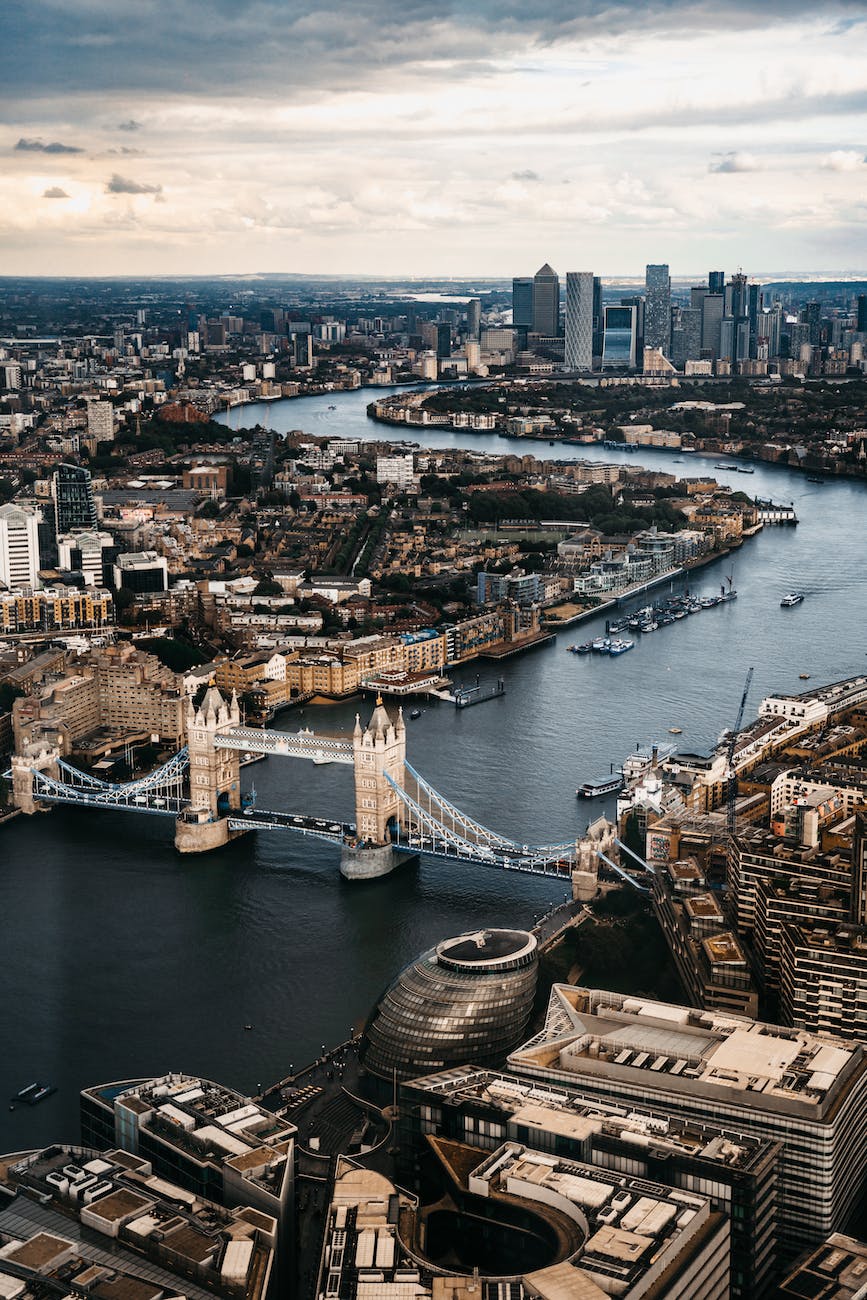
The subject of these comment, the Thames Tunnel is over 3km long. The rail lines dive beneath the river from the counties of Essex to Kent. This High-Speed rail tunnel goes under the river near Fiddler’s Reach. This part of the River Thames, much like most of the tidal river, was once busy with commercial shipping. It’s been the site of unfortunate events before[3].

Further upstream is the Thames Barrier. A truly magnificent structure. The barrier protects central London against a storm surge. It works well. However, it will eventually need to be replaced. The inexorable tide, no pun intended, is moving just one way.

Risk is a multifaceted factor: operational, economic, social, political, safety, security. Did current risk assessments foresee a likelihood of flooding? I don’t know. The safe running of High-Speed trains through underwater tunnels should be subject to risk assessment. I’m sure it is.

Eurostar has experienced a set back as 2023 comes to an end. Eurostar services are again running as normal. But this weather-related event highlights the fact that climate change will impact transport systems. If the thought has not found its way onto the desk of a civil servant, it might be as well to do a high-level audit of the nations transport infrastructure.

Either that or get used to using the word “unprecedented” a lot more.


[1] High Speed 1 (HS1) is a 109.9-kilometre high-speed railway linking London with the Channel Tunnel.

[2] https://www.independent.co.uk/news/uk/politics/london-frankfurt-cologne-train-deutsche-bahn-db-eurostar-cancelled-shelved-a8394806.html

[3] https://www.britainfromabove.org.uk/en/image/EAW143996

ULEZ

Londoners in all Boroughs need clearer air to breathe

Oh yes. London has an air quality problem. It’s not the only city by any means. My recent trip to Cologne left me in no doubt that cities must address this problem. It’s an insidious hazard. It’s not so – in your face – as noise or water pollution. We’ve this human capacity to normalise bad things. Much to our detriment. Air quality becomes most evident when you move from a place of bad air quality to a place of good air quality. Then the difference becomes acutely noticeable.

Last weekend, I was in the West Country. Way down the A303. The difference is quite striking.

Last evening, I was traveling on the Tube to get to the Albert Hall. The difference is quite striking.

Whatever you may think about the implementation of the Ultra Low Emission Zone (ULEZ) in London, there’s a need to do something drastic.

Expanding ULEZ across all London Boroughs from 29 August 2023 is getting a lot of political attention. No doubt some of this is whipped up purely to punish the Labour Mayor. However, the dilemma is clear. Penalising a lot of people who are not directly feeling the discomfort of poor air quality is inevitably going to cause a stink.

Now, we shouldn’t get disproportionately agitated. That fact is that poor air quality is killing people is not in question. The fact that a small fraction of vehicle owners will be made to pay is not in question[1]. The balancing act between reliving an unacceptable situation of harm and causing minimal economic pain is a tricky one. It would be a tricky one for whoever was in power.

My view is that measure that force people to change their vehicles should be accompanied with a practical scheme to compensate them for significant financial losses. Or that the emissions thresholds set should take account of the natural turn-over of vehicles that takes place in normal years. The political controversy of the moment is much because of the speed of change and its coincidence with a cost-of-living crisis that is very real.

Londoners in all Boroughs need clearer air to breathe. But London doesn’t sit in isolation. Afterall the Borough boundaries do not track urban boundaries. Parts of adjoining areas are equally urbanised, and the air doesn’t know about administrative boundaries. The M25 motorway doesn’t do much for air quality, that’s for sure. So, hearing of the London Mayor doing battle with adjoining areas is a bit sad. Solutions need to be negotiated with all impacted parties regardless of the politics.

By the way, I’m not impressed with communications from Transport for London. I clicked on an e-mail sent to me on the above subject and this came up: “This link has expired. Please contact the sender of the email for more information.” Thanks a lot.


[1] More than 4 out of 5 vehicles meet emissions standards, but if you use a petrol vehicle over 16 years old, or a diesel vehicle over 6 years old, you need to check it.

The queue

Likely a favourite subject of study for social scientists. The queue. That self-organising line of people that waits in an orderly manner. A way of passing the time of day so that everyone can do whatever needs to be done. To wait in turn.

Even that description isn’t accurate. Who amongst us hasn’t been in a disorderly queue. Often angry and frustrated people in an airport building, suffering lack of information. One desk open and hundreds of tired travellers lined up to take a voucher or ask desperate questions about connections. Staff like windup automatons handing out dollops of advice when all they want to do is go home. Overwhelmingly most of my queuing experiences have been at international airports. Well, that and supermarkets but it’s not the routine supermarket situations that carve their way into memories. There are moments at Amsterdam Schiphol Airport that I can never erase.

Being ever inventive, airports provide routine orderly queuing opportunities at security. These are strictly controlled up to a point. Asking for forgiveness and breaking the strict queuing coded there’s always the one or two people who are desperate not to miss their flight. “Please can I pass. I’m late for my flight”. Hearing this we generally stand aside thinking; that could be me one day.

This is where social scientists get their buzz. The etiquette of queues is so variable. Not only is the composition of the line a factor but the climate, time of day and final goal. Not to mention culture.

Now, in London the queue to see the Queen’s lying-in-state[1] is becoming more than just a queue. It’s a phenomenon where people are going to view the queue as much as stand in it. It’s a testament to the commitment of those standing in-line. As night-time temperatures start to fall it doesn’t seem to have acted as a deterrent. The drive to be part of history and pay their respects has overtaken a lot.

What is heartening is to hear the reports of the friendliness, humour, and comradery that’s evident. There’s a great spirt of making it up as they go along. Yet, maintaining a sense of purpose and order. These are admirable characteristics. Although, I don’t wish to join these good people, my appreciation for their efforts is here. By doing what they are doing they make us all a little bit better.

POST 1: Matt caputures it with his pen -https://www.facebook.com/mattcartoonist/posts/pfbid02v74vRWa7SwBqrFcuV9LmU9N2dirp39MxgjohSLVMZ2Dr2oNWp3sNrYT8z4YUc4Bvl

POST 2: I wasn’t thinking of an extra-dimensional being of unknown origin (“Q”) or a Spanish word but as my wife said – how can you spend all week reading articles about the London queue and still spell the word wrongly? To that, I have no answer.


[1] https://www.bbc.co.uk/news/uk-62872323

In praise of the BBC Proms

I’ve only done three, so far this year. That’s two in the arena and one in the gallery. The Royal Albert Hall is the place to go for the BBC Proms[1]. I’m an amateur. I stand at the Proms. This is my 4th year.

I say, I’m an amateur because the guy I was standing next to, a couple of evenings ago, has been Promming since 1967. It seems to be a bug that once it’s bitten you escape becomes impossible. Promming tickets are released on-line on the morning of the day of a concert.

Music has a power that transforms this Victorian citadel of culture into a centre of magical experience. It’s as if the world ceases to exits and all there is becomes engulfed in that wraparound auditorium. As if it were the centre of the universe. It’s the impact of the soundscape, the people, and the building that produces a mysterious combination. It’s a unique mix.

Live performance has a transformative effect. Post-COVID it’s one of those experiences that was most missed during the pandemic. It’s so evident how dull and grey the world becomes without it.

Acoustically the hall is flawed. Nevertheless, wherever I’m standing, or occasionally seated, there’s a special feeling as oceans of sound flood over the audience. Yes, there are superior concert halls. I was lucky to live within walking distance of the Koelner Philharmonie[2] when in Germany.

The Royal Albert Hall is in a league of its own. It has a heritage and creates an atmosphere that is unmatched both for the things that work and those that don’t. Yes, you need a bank loan to buy a beer and the wiring looks as if its 150 years old.

I’m not musically knowledgeable, or did my education point me in that direction. Our dishevelled music teacher desperately tried to interest my cohort of 1970s kids, but he was pushing a rock uphill the whole way. He knew his unfashionable message, dusty texts and scent of smoke and alcohol were way out of sync with his students. Discipline wasn’t his speciality either.

In fact, I discovered a lot in the school music room by it was nothing to do with music, or its history. Ironically, at the time, music was a huge part of our lives as T-Rex, Bowie, The Who, Slade, glam rock, and disco hit their peak. If I could advise my younger self, it would be to say; learn an instrument. Anyone would do. It really doesn’t matter which one. It really doesn’t matter how well. A skill acquired as a teenager carries throughout life.

By the way, I’d recommend the tour of the hall[3].


[1] https://www.royalalberthall.com/tickets/proms/bbc-proms-2022/

[2] https://www.koelner-philharmonie.de/en/

[3] https://www.royalalberthall.com/tickets/tours-and-exhibitions/royal-albert-hall-tour/