Deregulation

There’s nothing wrong with making an argument for deregulation. What’s absurd is to make that argument as an unchallengeable dogma. It’s the irrationality of saying that deregulation is good, and regulation is bad, de-facto. This kind of unintelligent nonsense does permeate a particular type of right-wing political thinking. It pops it’s head up in a lot of Brexiters utterances. For advocates of Brexit their great goal is to throw away rules and lower standards. Mostly, this is for financial gain.

Let’s take some simple examples. The reasons for rules and regulations can often be found in recent history. Hazards are recognised and action is taken.

There’s still lead paint to be found in many older houses. There was a time when such paint was used on children’s toys. Toy safety has been a confusing area of law, and there have been several sets of regulations since the 1960. From our current perspective this past laxness seems insane, but such lead paint mixtures were commonplace. In fact, all sorts of toxic chemicals have been used in widely used paints.

I remember working in one factory building where a survey was done of the surrounding grounds. Outside certain windows there were small fluorescent flags placed at in the grass verges. They marked places where minor amounts of radiation had been detected. This came from discarded paint brushes and tins that had accumulated in the war years. At that time radioactive luminescent paint was used to paint aircraft instrument dials.

Any arguments for the deregulation of toxic chemicals in commonly used paints should be one that is quashed instantly. However, some deregulation fanatics are only to happy to endorse a loosening of the rules that protect the public from toxic chemicals.

One result of the loosening of public protection is often to put greater profits in the hands of unscrupulous industrialist. Across the globe there are numerous cases studies of this sad folly. Newspapers and political parties that push the line that rules, regulations and regulators, by their very nature are crushing our freedoms are as bad as those unscrupulous industrialists.

Yes, there’s a case to be made for pushing back over-regulation. There’s risks we are prepared to take where the risks are low, and the benefits are large. This is a matter for intelligent debate and not throwing around mindless slogans. We should not be cowed by loud voices from small corners of society intent on tearing down decades of learning and sound practical laws. I could come up with an encyclopaedic list of examples. Opponents rarely, if ever want to address a particular case since it’s much easier for them to thunder off sweeping assertions. Beware these siren voices.

NOTE: The Toys (Safety) Regulations 2011 implemented the requirements of Directive 2009/48/EC, whose purpose is to ensure a high level of toy safety.
Winds of Change

At the start of a new Carolean Era. Wow, I’ve been wanting to say that for some time. Yes, it’s a new era in this country. In Britain, we mark the passing of history by reference to the monarch of the time. Georgian, Edwardian, Victorian, Elizabethan and so on, it’s a tag to place a period in history. They are often associated with national accomplishments, culture and styles that were fashionable.

It’s a blustery wet day in London and King Charles III is being crowned sovereign. Apparently, the coronation of Queen Elizabeth II had to contend with wet weather too. At the age of 73, King Charles became the oldest person to accede to the British throne. I’d say in 2023, we can no longer say that 73 is old. There are numerous Heads of State across the globe who can top that easily.

We don’t do this designation act with politicians, but we do use a shorthand for their time in power with a reference to their approach to the job or an iconic slogan or two. Thatcherism, Blairism, the white heat of technology or you have never had it so good, or things can only get better.

What’s great about the beginning of the Carolean Era is the signals of political change. Hopefully we will no longer need to hold our head in our hands in astonishment at the utter folly enacted by our elected representatives. Well, maybe less so as we run up to a General Election.

This week’s local elections in England are an awakening. Voters have decided – enough is enough. There are a more than a thousand less Conservative Party councillors in the country. This is democracy at work. I’ll quote Dick Nolan, who wrote in The San Francisco Examiner in 1966: “Politicians are like diapers. They should both be changed regularly and for the same reason.”

The Conservative Party has performed so badly over the last decade they deserve to be put out of power for the next decade. Now, extrapolating from this week’s political earthquake to the result of the next General Election is a doggy business. That said, the trend seems set and the expectation is that a political change is inevitable.

Although, I feel secure in saying this there’s always at least one catalyst that can upset this prediction dramatically. For this I’ll go back to Mrs Thatcher. What would the politics of Britain look like if the Falklands War of 1982 had not occurred? This short international conflict transformed the climate of the day and, no doubt the Prime Minister. However, people might think of the successes and failures of that time the result was the strengthening of her premiership.

Local elections recent held the Conservative Party to account in one way. The bigger story will be written over the next 18 months or so. Mayism was chaotic. Borisism was a total disaster. Trussism was insane. Prime Minister Rishi Sunak’s time in office maybe as that of John Major. The boy with his finger in the dam awaiting a flood of change. Let’s see what the country looks like after a weekend of pomp but also of reflection.

Oath

Oh dear. What do they say: the road to hell as being paved with good intentions. Maybe that’s a bit extreme. It’s not necessarily “hell” that I’m talking about here but something that does the opposite of what’s intended. I can image the planning meeting where someone pipes up – I’ve got an idea.

Swearing allegiance to the King[1] might sit well in a Hollywood movie of knights in armour and English castles standing proud against the green, green countryside. In the 21st century it sounds quaint and patronising to say the least. Strange vestiges of the historic riddle of our constitution.

The public is being asked to swear allegiance at the King’s coronation. These words are proposed: “I swear that I will pay true allegiance to Your Majesty, and to your heirs and successors according to law…….

Now, I know that Members of Parliament (MPs) must swear a similar allegiance before taking their seat in Parliament. MPs cannot take their seat, speak in debates, vote, or receive a salary until taking an oath or affirmation[2]. For them it’s more about being elected lawmakers than allegiance to a single person. It would make much more sense if they swore an oath to the British Constitution but there lies the problem.

Such quintessentially British activities hark back to a day when everyone knew the rules of cricket, knew their place and, as John Major once put it in his failed Back to Basics[3] campaign, old values. In 1953, the time of the last crowning, Britain was a deferential society, now it’s not.

The question is – should a “modern” constitutional monarchy be asking for allegiance in this public way whilst knowing that most the population will ignore the whole exercise? Not only that but a considerable number of people will think the exercise utterly ridiculous.

There’s not so many large counties in the world where subjects are asked to swear an oath to an unelected head of state and his dysfunctional family. That’s a family that has filled the media with unhappy stories for years. It gets stranger and stranger depending on how you look at it.

It’s not what you might call democracy or meritocracy in the normal sense, it’s more of a ritual of imperial legacy. In this green and pleasant land some people think this is a fantastic advertisement for our great nation across the world. I disagree.

British Citizens have a proud allegiance to their country, but this is to one man and his whole family. Now, that is peculiar. It’s feudal. Sadly, to point out the obvious just gets branded as anti-monarchist.


[1] https://www.bbc.co.uk/news/uk-65435426

[2] https://www.parliament.uk/about/how/elections-and-voting/swearingin/

[3] https://en.wikipedia.org/wiki/Back_to_Basics_(campaign)

Crown

It’s a difficult time to be a British republican. A couple of reactions to mention of an alternative to having a monarchy is – don’t be a spoil sport or the alternative would be worse.

The national celebrations coming up are not the problem in my mind. Nothing at all wrong with having a big nationwide event in May. Especially given the grim time the hospitality industry has just been through and the natural inclination to celebrate springtime.

Sadly, I have to say that the British republican movement, such as it is, is throwing away the opportunity to pose the questions on the good and bad of having a prominent monarchy in a modern country. “Not My King” is a ridiculous campaign slogan[1]. I believe we’d be better off as a republic but that belief lives with the pragmatic acceptance that there will be a King and he will be the Head of State. Pretending that is not so doesn’t help win the case for change.

Generally, I think there’s an ambivalence[2] about the whole subject amongst the British public. That is however much the BBC talks-up the whole coronation. Nobody much is complaining about having an extra Bank Holiday. Nevertheless, a widely held view is that Charles III will be on probation as a King. If the British monarchy continues to be embroiled in controversy and exist primarily as source of a tabloid headlines, then it will continue to decline as a symbol of the national and last no longer than a decade. The feeling that a monarchy interested in survival should have skipped a generation is a strong one. Their past survival has been mostly because of relative modernisation and not wallowing in ancient rituals.

According to polls, public support for the monarchy is age dependent. This maybe because of the claimed propensity for people to become more conservative, with a small “c”, with age. On the other hand, this is a new age. We have never had the global information revolution that is shaking the foundations of society in the way it is now.

I’m a supporter of British republicanism because we are citizens and not subjects. Although, I do recognise that the different status of people can be of dreadful intricacy given our history.

In Britain, some aspects of our unwritten constitution are “too easy” to change because of a passive Head of State. Conversely, some aspects of our unwritten constitution are “too hard” to change because of being constrained by custom, tradition, and the power of veto by those with inherited influence.

Ironically, post-Brexit, British republicanism is more allied to maintaining sovereignty than our crumbling[3] existing system of governance. That is as much about the sovereignty of the individual citizen as it is of our society or the State. Republicanism has always been about liberty. A few passages from Tom Paine (1737–1809) are enough evidence in that respect.

Good luck to His Majesty King Charles III. He’ll need it.

POST: Not me or, no relation in so far as I know: John Vincent (historian) is a British historian and professor emeritus of modern history at the University of Bristol. He is known for his works on political history, especially the 19th and 20th centuries, and for his controversial views on democracy and monarchy.


[1] https://www.theguardian.com/uk-news/2022/oct/27/notmyking-billboard-campaign-launched-by-anti-monarchy-activists

[2] https://natcen.ac.uk/news/british-social-attitudes-monarchy

[3] The last six years have illustrated the weakness of the current settlement.  

Head in Sand

Well, it’s happened. A debate. Are we any wiser? Well, not much. So many good points are raised but so many good points are dismissed by current Government Ministers. So deep are they in a mess of their own making.

On Monday, 24 April at 16:30, a UK Parliamentary debate[1] took place on the impact of the UK’s exit from the European Union (EU). This was consideration of e-petition[2] 628-226 relating to the impact of the UK’s exit from the EU. On the day of this debate this petition had attracted over 178 000 signatures. Petition debates are “general” debates which allow UK Members of Parliament (MPs) from all political parties to discuss important issues raised by the public.

The petition reasons that the benefits that were promised, if the UK exited the EU have not been delivered. Not at all. Although this fact might be self-evident it never-the-less warranted a timely debate. Public support for Brexit is falling as every day that goes by.

The petitioners called upon the UK Government to hold a public inquiry to assess the impact that Brexit has had on this country and its people. Given that other less impactful events have been subject to a public inquiry it seems only right that Brexit be investigated.

The call for an independent public inquiry, free from ideology and the opinions of vested interests is only fair, right, and proper in an accountable democratic 21st Century country. Transparency is a mark of good governance.

Today’s, Brexit is damaging the UK’s economy, opportunities for young people and rights of individuals. It’s well past the time that the people of the UK were told the full story. There needs to be a way out of this mess.

In the debate the point was made that the two biggest Westminster political parties continue to be committed to Brexit despite the harm that it’s doing to the UK. A long list of disbenefits were rattled off as speakers paced through the evidence. A long list that is growing.

The Government’s current approach is to ask UK Parliamentarians to stop talking about Brexit. It’s the ultimate ostrich with its head in the sand[3]. Brexit is a gigantic strategic mistake. Unfortunately, there remains a significant number of English politicians so entrenched in the mythology of Brexit that change is slow in coming. The public are way ahead of the politicians.

Stereotyping people as being in one camp or another, with the aim of continuing to divide the public is the unscrupulous tool of those people without a rational or coherent argument to make. It’s clear, progress will not be made until Ministers recognise that Brexit was a mistake. We may have to wait until after the next UK General Election before a real change is possible. Let’s hope that day comes soon.

POST 1: UK Press reports on the debate MPs debate consequences of Brexit for first time | The Independent MPs debate Brexit impact ‘for the first time since leaving the EU’ | The National Brexit: MPs call for public inquiry into impact of leaving EU – BBC News

POST 2: Brexit is a drag on the UK Sunak Grins And Bears It As Boss Hits Out At Brexit’s ‘Drag On Growth’ | HuffPost UK Politics (huffingtonpost.co.uk)


[1] https://youtu.be/iHzf1BQFXq8

[2] https://petition.parliament.uk/

[3] It’s a myth ostriches bury their head in the sand. Though this isn’t true, Ostrich Syndrome is a popular belief. It’s avoidance coping that people use to manage uncomfortable feelings or rather, not deal with them.

Minister walks

In the news this week is a British politician who has served as Deputy Prime Minister in the UK, resigning because of a report into his conduct[1]. The Prime Minister (PM) has been accused of dither and delay in addressing the outcome of an investigation into bullying that has now been published.

Certain Government Ministers are entitled to be addressed as “Right Honourable” in the UK Parliament. What’s clear in this case is that the conduct described in the report is neither right nor honourable. The findings of the investigation report were set before the PM for his judgement[2]

A senior lawyer had been asked to investigate whether the Conservative politician Dominic Raab had bullied civil servants during his time as both Foreign Secretary from 2019 to 2021, and then Justice Secretary from 2021 to 2022.

Raab has been Member of Parliament (MP) for Esher and Walton in Surrey Country since 2010. He has been a prominent supporter of Britain’s exit from the European Union (Brexit) and known for his forthright style in asserting the virtues of that ill-planned project.

Unsurprisingly, his resignation has stirred up a host of conspiracy theories and finger pointing.

I’m left wondering what it would have been like to have been a civil servant working in the indescribably complicated environment where Brexit is treated as a religion. It must have been a high-pressure situation offering practical and pragmatic options to a Government Minister so wedded to one singular belief, especially under Boris Johnson’s failed premiership.

Bullying behaviour is a serious matter. Whereas some Press commentators are trying to blame the accusers who stepped forward, the evidence shows that it’s not the former Minister who is the victim here. I think it’s disingenuous to paint Dominic Raab as a victim.

Yet again the Conservative Party is in turmoil. It seems to be a perpetual state of play. When Government priorities should be focused on the cost-of-living crisis, instead they are engulfed on their own unending bad behaviour.


[1] https://www.bbc.co.uk/news/uk-politics-65333983

[2] https://www.gov.uk/government/publications/letter-from-the-prime-minister-to-the-rt-hon-dominic-raab-mp

Policy & AI

Today, the UK Government published an approach to Artificial Intelligence (AI)[1]. It’s in the form of a white paper. That’s a policy document creäte by the Government that sets out their proposals for future legislation.

This is a big step. Artificial Intelligence (AI) attracts both optimism and pessimism. Utopia and dystopia. There are a lot more people who sit in these opposing camps as there are who sit in the middle. It’s big. Unlike any technology that has been introduce to the whole populous.

On Friday last, I caught the film iRobot (2004)[2] showing early evening on Film 4. It’s difficult to believe this science fiction is nearly 20-years old and the short story of Isaac Asimov’s, on which it’s based is from the 1950s. AI is a fertile space for the imagination to range over a vast space.

Fictional speculation about AI has veered towards the dystopian end of the scale. Although that’s not the whole story by far. One example of good AI is the sentient android in the Star Trek universe. The android “Data” based on the USS Enterprise, strives to help humanity and be more like us. His attempt to understand human emotions are often significant plot points. He’s a useful counterpoint to evil alien intelligent machines that predictably aim to destroy us all.

Where fiction helps is to give an airing to lots of potential scenarios for the future. That’s not trivial. Policy on this rapidly advancing subject should not be narrowly based or dogmatic.

Where there isn’t a great debate is the high-level objectives that society should endeavour to achieve. We want technology to do no harm. We want technology to be trustworthy. We want technology to be understandable.

Yet, we know from experience, that meeting these objectives is much harder than asserting them. Politicians love to assert. In the practical world, it’s public regulators who will have to wrestle with the ambitions of industry, unforeseen outcomes, and negative public reactions.

Using the words “world leading” successively is no substitute for resourcing regulators to beef-up their capabilities when faced with rapid change. Vague and superficial speeches are fine in context. Afterall, there’s a job to be done maintaining public confidence in this revolutionary technology.

What’s evident is that we should not delude ourselves. This technical transformation is unlike any we have so far encountered. It’s radical nature and speed mean that even when Government and industry work together they are still going to be behind the curve.

As a fictional speculation an intelligent android who serves as a senior officer aboard a star ship is old school. Now, I wonder what we would make of an intelligent android standing for election and becoming a Member of Parliament?


[1] The UK’s AI Regulation white paper will be published on Wednesday, 29 March 2023. Organisations and individuals involved in the AI sector will be encouraged to provide feedback on the white paper through a consultation which launches today and will run until Tuesday, 21 June 2023.

[2] https://en.wikipedia.org/wiki/I,_Robot_(film)

Alexander Boris de Pfeffel Johnson

There’s a good argument for boring politics. Yes, it’s reasonable to get aerated about big choices and fundamental differences in belief. However, a lot of politics is implementing policy and taking corrective action when something goes wrong. For the bigger part of practical politics, the qualities of attention to detail and diplomacy are of paramount importance. One thing we know for certain is that we got the exact opposite from former British Prime Minister (PM) Boris Johnson[1]. Gesticulation and flowery language took the place of thoughtfulness, care, and compassion.

Johnson denies lying to the UK Parliament. He once revelled in his performances at the dispatch box in the House of Commons (HoC). His period as UK PM was turbulent and full to the brim with bullish rhetoric. There’s no doubt that there’s an audience who laps up those political theatrics.

In the promotion world, adverts are supposed to be “legal, decent, honest and truthful.” In the political world, it would be asking a lot for all four of those to be observed all the time.

One place where there’s an extremely high expectation that a PM will be honest and truthful is while they are standing at the dispatch box[2] in the HoC. Now, that doesn’t preclude them from failing to say all there is to say about a given subject but what they do say should be correct. Better said; must be correct. In a lot of ways this is one of the primary responsibilities of a UK PM.

A PM, or Government Minister found lying to Parliament is committing a significant offence and carries the likelihood of suspension. It’s not a trivial matter, neither should it be.

In public, as a campaigning conservative politician there are lots of cases where Boris Johnson has been casual with the truth. Britain’s exit from the European Union (EU) was driven by a cacophony of factual falsifications and gross distortions of the truth. Boris and Brexit are synonymous.

A HoC committee will decide on the facts surrounding the downfall of former British PM Boris Johnson. His peers, as members of a privileges committee will make a statement on his behaviour in coming weeks. With all the evidence in the public domain now, it seems probable that the committee will find that Johnson was at least reckless, if not that he intentionally lied in the HoC chamber, fellow Members of Parliament and the country.

Although, it would be unwise to discount Johnson’s political comeback, one day, there may be a chance that his style of politics will be shown to be as damaging as we know it to be. This should be a turning point where accountability wins out over bluster and fibs. Let’s hope it is.


[1] Alexander Boris de Pfeffel Johnson is the politician, writer and journalist who was Prime Minister of the UK and Leader of the Conservative Party from 2019 to 2022.

[2] https://www.parliament.uk/about/living-heritage/building/cultural-collections/historic-furniture/the-collection/scott/despatch-boxes-/

Drop Of A Tweet

I’ve got a couple of vinyl copies of “At The Drop Of A Hat”. They turn up in charity shops from time to time. Those responsible maybe from the 1950s but the genius of Flanders & Swann never wanes.

For those of us who grew up in the 1960s there are songs that embedded in our childhood. “Junior Choice” was a BBC programme broadcast on Radio 1 and 2. From that regular show there’s a whole string of comic sings that I cannot erase from my memories.

There one song that we are told started life in Scarsdale Villas[1], South Kensington, South West London. Now, a part of London where the house prices mount in the millions.

Introducing each of their songs there was often a monologue saying something about the song. So, we know, uniquely one famous song is inspired by a badly parked car but is about an animal.

It goes like this. Michael Flanders was a wheelchair user. Kensington Borough Council helpfully dug out a part of the pavement and curb outside his flat so that he could get around. He recounts his annoyance that a thoughtless driver would often steal his parking space. 

In his monologue he jokingly praises the independent minded councillors of Kensington adding – there’re all Conservatives. That little bit of humour is so British. It maybe goes to the heart of the BBC’s current problems. They could be saying to us all: “of course we are independent, we are all conservatives.” Equating conservative attitudes to being “independent” is the norm in my part of Surrey.

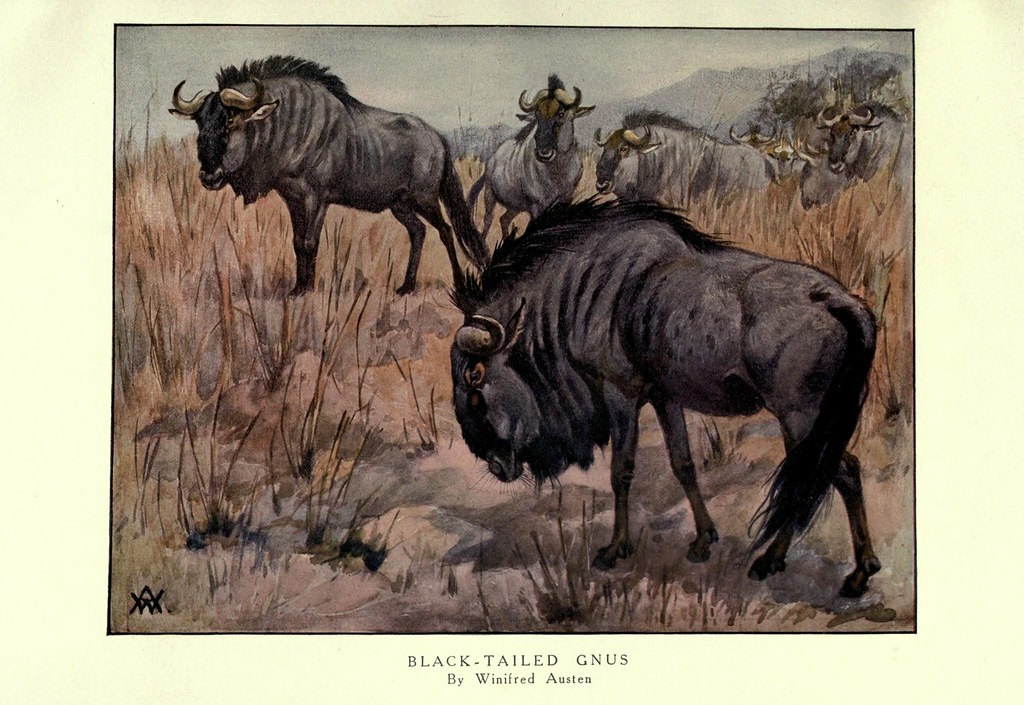
Back to the song. The antisocial parked car’s number plate began with the letters GNU. The rest is comic history. The two wrote: “The Gnu.[2]

To make the song work. They pronounced the animal’s name “G-noo”. What could be better than a word that rhymed with “zoo”. A place where we might find a Gnu[3].

The English language was changed forever.

Perhaps the lesson for the BBC is to look at its comic history. Learn lessons. To rise above the serious and intense debate of the moment, concede and reflect in amusement, and at leisure.

Sport is entertainment but so is politics when it gets absurd and ridiculous.


[1] https://en.wikipedia.org/wiki/Scarsdale_Villas

[2] https://youtu.be/j53z6RfFb7U

[3] a large African antelope with a long head, a beard and mane, and a sloping back. Also called a wildebeest.

Shameful

Let’s look at the current fetor objectively. Is it reasonable to say that the Government is using language that is reminiscent of political parties in Germany in the 1930s?

Politicians speaking stridently about making new laws plays well with media commentators and meets the need of being seen to be doing something, even if that something is highly flawed.

To marshal support for a much-criticised proposal, the language being used by Conservative politicians is harsh. Speaking in the House of Commons, a Minister said “there are 100 million people” who would qualify for asylum in the UK. This is reminiscent of the right-wing rhetoric used in 2016 by the referendum Leave campaign to say that 10s of million of Turkish people would come to the UK is we stayed in the European Union (EU).

Shamefully, scare stories about migration are the bread and butter of right-wing politicians much as they were in early 1930s in Germany. It’s clear, that the much-discussed Tweet by a well know football commentator[1], this last week has touched a political nerve. The truth often does touch a nerve.

There’s more than double trouble with Conservative politicians forcing the UK’s “independent” national broadcaster to sanction a well know football commentator for a private remark.

Godwin’s law[2] is known to politicians but maybe not more widely known. Basically, starting an argument by mentioning a comparison to Nazis is not a good a way to win a case. It’s that making an extreme comparison can undermine the credibility of a fair case against something bad.

Now, a national broadcaster with an obligation to aim for political impartiality, with respect to news and current affairs, is inconsistency jumping on the head of one of its popular faces. 

It’s sad that scrutiny of a proposal for a bad law is being overshadowed by an entirely unnecessary media spat. An unnecessary spat that is undermining free speech in the UK[3]. I do not think that Conservative politicians engineered this situation, but they unjustly are benefiting from it. The controversy is corralling right-wing support for a government bill that is full of holes.

I don’t know how we got to this ridiculous state but it’s part of a trend that has been evident since 2016. The reason an evil political party succeeded in Germany in the early 1930s is that they masked their true intent, and countless people discounted their prospects of electoral success. There’s an important lesson in history that we should never ignore.

The language politicians use does matter. It matters a lot.


[1] https://www.standard.co.uk/topic/gary-lineker

[2] https://en.wikipedia.org/wiki/Godwin%27s_law

[3] https://news.sky.com/topic/gary-lineker-7610