Service

The subject of national service, and its reintroduction is part of a memorable Yes, Prime Minister. “He thinks it’s a vote winner[1]” and so, apparently does our current PM.

This sketch is a wonderful example of how someone can be hood-winked into saying “yes” to something regardless of circumstances, or the foolishness of the idea. It’s comedy genius. Sadly, it’s reality in this early stage of campaigning for this UK General Election.

Conservative PM Sunak’s knee-jerk proposal to reinstate national service falls apart like a toilet roll falling in a bath of cold water. Layer by layer the logic crumbles, with any scrutiny.

For one, how come £4 billion can be found at an instant for something previously ignored. Frankly, anything that resembled civic service has been consistently rundown over the last decade[2]. Not to mention the massive rundown in youth services over a couple of decades.

It might be wise to ask if the UK military want such a new system of national service. One that hosts around 30,000 young people a year. The answer so far is – absolutely “no”. At a time when our professional services are stretched, it seems ridiculous to ask them to take on the task of administering and running a scheme that is extremely unlikely to boost their combat readiness and overall effectiveness.

I’m old enough to have been told a long list of anecdotes from those people who had to do national services in the 1960s. I worked with many of them in the 1980s and 90s. The stories are often humorous, eccentric and riddled with tales of timewasting schemes that were invented to keep young men occupied and out of trouble. Well, out of big trouble.

National service doesn’t offer a life of adventure. More like peeling potatoes, picking fruit and driving scruffy delivery vans around. Although such schemes may benefit a very few, for the vast majority would be spinning wheels and filling time. Wating to put time served behind them before getting stuck into a career of their choice. For a few young people, who could already be on the path to a criminal career, giving them weapons training isn’t a good idea.

Mr Sunak is betraying his fickle nature. He’s a desperate politician inclined to grab at something shiny. Magpie like. Retro policies, perhaps picked-up watching classic TV series from the past, are not the way forward for a country keen to make a new start.

We will not see Mr Sunak running a flower stall outside Waterloo Station if he fails to secure re-election. The post of UK PM will be filed quickly. More likely to see him on a sunny beach in California soon. I wonder if he’s packed his suntan lotion.

POST 1: The last thing we need to do now is to take young people out of existing apprenticeship and training schemes. The demand for young engineers and technologists is high. It would be far more constructive to offer sponsorships and subsistence support to applying and existing students rather than vague one-year gimmicks.

POST 2: Even The Daily Mail is commenting on how this proposal was sprung on unsuspecting candidates and Ministers without warning. Maybe the lobbying of parents prepping their offspring for Oxbridge, and alike is echoing loudly. Clearly, no one thought through the real life implications of a mandatory national service scheme for all 18-year olds.


[1] https://www.youtube.com/watch?v=ahgjEjJkZks

[2] https://schoolsweek.co.uk/national-citizen-service-cuts-ties-with-largest-provider/
Future

The road to fixing climate change is not an endless road. Today, our whole approach to climate change goes somewhat like this:

I’m not sure I’m convinced. Yeah, maybe we have a problem. We should do something. Definitely, but send me the plans, I’ll get to it, I’m busy. Time passes. What was it we should be doing? Oh yes, but that plan is for (insert a name) not me. I’m not contributing much to the problem. Anyway, there’s time between now and (insert a date).

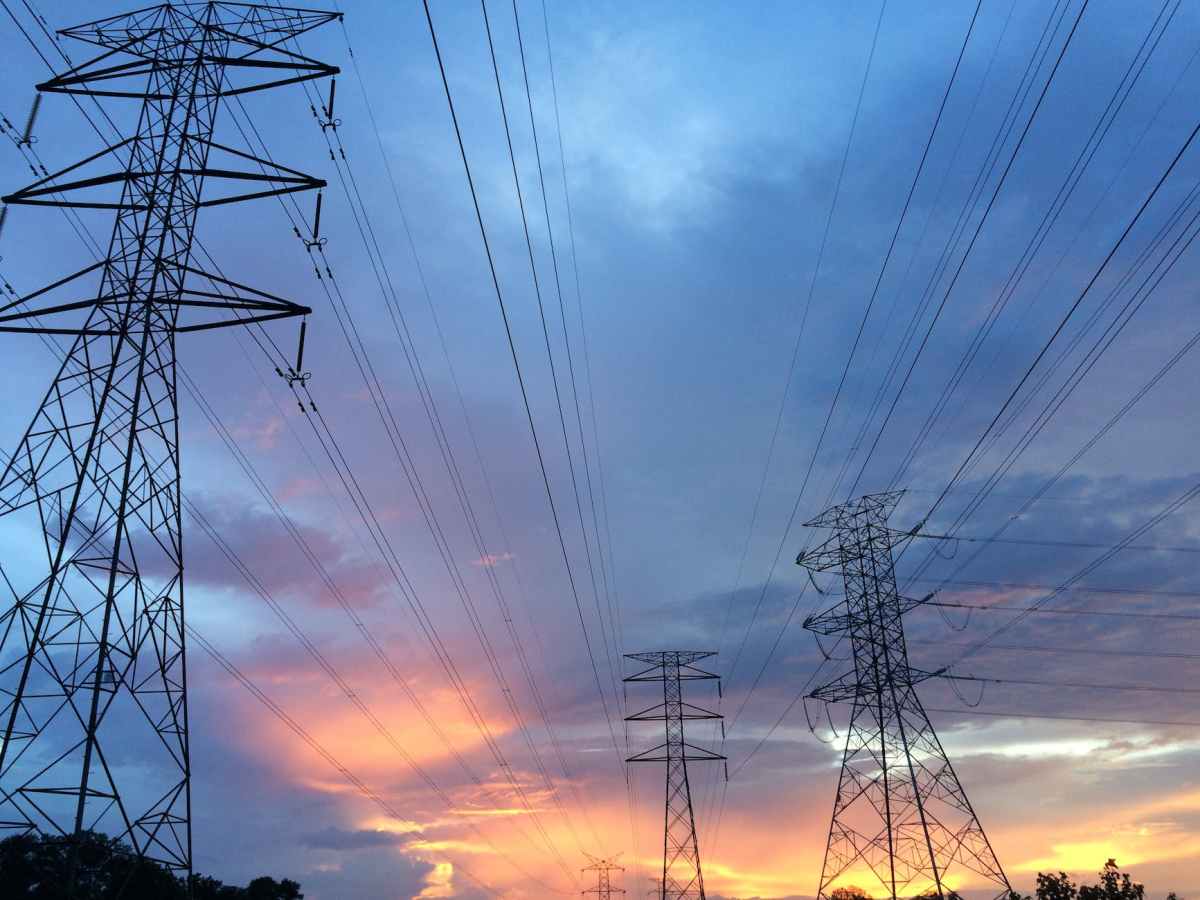
So, we go on. There’s no doubt that there are changes needed to tackle climate change that are immensely difficult to do. Trouble is that by fixating on those difficult problems we talk ourselves out of doing the easier things. Let’s put simple actions like home insulation on the agenda again. Let’s loosen-up on our ridiculously restrictive policy on wind farms. Let’s invest in our national electrical grid to permit more connections to be made easier and quicker.

Yes, it’s advantageous for the PR companies employed by high carbon businesses to talk up difficulties and herald small gains as miracles. I mean, that’s what they are employed to do. On the other side we have PR companies employed by activists and campaigners who paint pictures of dire consequences and delinquent Governments.

I keep pointing out the dangers of populism and nationalism. The history of both is not a good one. They generally make most people poorer and a minority richer and more powerful. However, the tactics they use to gain popular appeal don’t seem to die off down the ages. A case in point is the story of Rome and Julius Caesar, as he crushed Roman democracy and seized power[1]. The chronicle is being well told on BBC 2. In the Britian, it’s often only their incompetence that halts the progress of Caesar like characters. Not mentioning any names.

To make change happen on climate change there needs to be a greater appeal to the populous. Expecting politicians to take a lead on the subject is nice in theory but wanton of hope. In our system of governance terms of office can be measured in days. Expecting neurotic politicians to step-up to a challenge that requires real long-term commitment is asking a bit much.

Campaigners will not give up on highlighting the challenges ahead. Periodically, politicians will pick-up on that campaigning fervour and try to jump on-board. However, as soon as a more immediate public concern comes along, they will jump-off.

I’m not saying that the cost-of-living crisis isn’t a number one priority. What I am saying is that a cost-of-living crisis is not an excuse to put climate policy on a dusty shelf for another few years. The road to fixing climate change is not an endless road.


[1] https://www.bbc.co.uk/programmes/p0gjlmkv

Short-sighted

None of that comes cheap.

OK. Why are mini-nuclear power stations such an irrational idea? The industry is selling these untried, untested power station as completely unlike that which has gone before. A Conservative Minister has been echoing their marketing brochures.

Let me say, with power generation there are some basic realities that remain the same.

Fuel must be transported to power stations and waste must be removed from them on a regular basis. For coal, that was the reason for the sitting of large power stations in the past. For gas, there was more flexibility in location, but the costs of transportation still needed to be minimised. For such innovations as waste-to-energy plants, proximity to the source of waste presented a major problem. Neighbourhoods rarely invited these plants to be built close by.

Spreading the distribution of nuclear fuel and waste around the country doesn’t sound like a good idea to me. Cost of transportation are high. Safety is paramount. Security is always a grave concern.

Now, I understand the need for limited numbers large-scale nuclear power stations. They provide a reliable base load when the renewable sources of power are not available. The wind doesn’t blow.

Although, there are a variety of different international companies in the nuclear business the notion of a “free market” in the conventional sense is not a real prospect. The investments needed to be competent and meet regulatory requirements in the nuclear business are huge. Projects are there for the long-term. A whole working career of a nuclear engineer may be locked to one technology.

Experience has shown us that a goal of zero accidents rarely delivers a reality of zero accidents. These are complex engineered systems. It doesn’t matter if they are big or small the complexities remain. Yes, safety can be managed in a safety critical industry but there had better be preparedness for worst possible outcomes[1]. With these nuclear plants decommissioning and recovery from significant incidents of contamination must be accounted for in any design, implementation, and operation. None of that comes cheap.

Overall, in Britain there are much better paths to travel than the mini-nuclear one.

It absolutely astonishes me that, given the enormous tidal range of the Severn Estuary[2] we have never captured the energy of those waters. Equality in a nation, with a coast as large as ours, we have only ever dabbled in wave power[3]. Let’s have some genuine innovation. Let’s think like the Victorians and build for the long-term.

Why are we so incredibly short-sighted in Britain?


[1] https://www.bbc.co.uk/news/world-13047267

[2] https://en.wikipedia.org/wiki/Severn_Barrage

[3] https://en.wikipedia.org/wiki/Salter%27s_duck

Pause

An open letter has been published[1]. Not for the first time. It asks those working on Artificial Intelligence (AI) to take a deep breath and pause their work. It’s signed by AI experts and interested parties, like Elon Musk. This is a reaction to the competitive race to launch ever more powerful AI[2]. For all technology launches, it’s taking fewer and fewer years to get to a billion users. If the subject was genetic manipulation the case for a cautious step-by-step approach would be easily understood. However, the digital world, and its impact on our society’s organisation isn’t viewed as important as genetics. Genetically Modified (GM) crops got people excited and anxious. An artificially modified social and political landscape doesn’t seem to concern people quite so much. It maybe, the basis for this ambivalence is a false view that we are more in control of one as opposed to the other. It’s more likely this ambivalence stems from a lack of knowledge. One response to the open letter[3] I saw was thus: A lot of fearmongering luddites here! People were making similar comments about the pocket calculator at one time! This is to totally misunderstand what is going on with the rapid advance of AI. I think, the impact on society of the proliferation of AI will be greater than that of the invention of the internet. It will change the way we work, rest and play. It will do it at remarkable speed. We face an unprecedented challenge. I’m not for one moment advocating a regulatory regime that is driven by societal puritans. The open letter is not proposing a ban. What’s needed is a regulatory regime that can moderate aggressive advances so that knowledge can be acquired about the impacts of AI. Yesterday, a government policy was launched in the UK. The problem with saying that there will be no new regulators and regulators will need to act within existing powers is obvious. It’s a diversion of resources away from exiting priorities to address challenging new priorities. That, in of itself is not an original regulatory dilemma. It could be said, that’s why we have sewage pouring into rivers up and down the UK. In an interview, Conservative Minister Paul Scully MP mentioned sandboxing as a means of complying with policy. This is to create a “safe space” to try out a new AI system before launching it on the world. It’s a method of testing and trials that is useful to gain an understanding of conventional complex systems. The reason this is not easily workable for AI is that it’s not possible to build enough confidence that AI will be safe, secure and perform its intended function without running it live. For useful AI systems, even the slightest change in the start-up conditions or training can produce drastically different outcomes. A live AI system can be like shifting sand. It will build up a structure to solve problems, and do it well, but the characteristics of its internal workings will vary significantly from one similar system to another. Thus, the AI system’s workings, as they are run through a sandbox exercise may be unlike the same system’s workings running live. Which leads to the question – what confidence can a regulator, with an approval authority, have in a sandbox version of an AI system? Pause. Count to ten and work out what impacts we must avoid. And how to do it.

Policy & AI

Today, the UK Government published an approach to Artificial Intelligence (AI)[1]. It’s in the form of a white paper. That’s a policy document creäte by the Government that sets out their proposals for future legislation.

This is a big step. Artificial Intelligence (AI) attracts both optimism and pessimism. Utopia and dystopia. There are a lot more people who sit in these opposing camps as there are who sit in the middle. It’s big. Unlike any technology that has been introduce to the whole populous.

On Friday last, I caught the film iRobot (2004)[2] showing early evening on Film 4. It’s difficult to believe this science fiction is nearly 20-years old and the short story of Isaac Asimov’s, on which it’s based is from the 1950s. AI is a fertile space for the imagination to range over a vast space.

Fictional speculation about AI has veered towards the dystopian end of the scale. Although that’s not the whole story by far. One example of good AI is the sentient android in the Star Trek universe. The android “Data” based on the USS Enterprise, strives to help humanity and be more like us. His attempt to understand human emotions are often significant plot points. He’s a useful counterpoint to evil alien intelligent machines that predictably aim to destroy us all.

Where fiction helps is to give an airing to lots of potential scenarios for the future. That’s not trivial. Policy on this rapidly advancing subject should not be narrowly based or dogmatic.

Where there isn’t a great debate is the high-level objectives that society should endeavour to achieve. We want technology to do no harm. We want technology to be trustworthy. We want technology to be understandable.

Yet, we know from experience, that meeting these objectives is much harder than asserting them. Politicians love to assert. In the practical world, it’s public regulators who will have to wrestle with the ambitions of industry, unforeseen outcomes, and negative public reactions.

Using the words “world leading” successively is no substitute for resourcing regulators to beef-up their capabilities when faced with rapid change. Vague and superficial speeches are fine in context. Afterall, there’s a job to be done maintaining public confidence in this revolutionary technology.

What’s evident is that we should not delude ourselves. This technical transformation is unlike any we have so far encountered. It’s radical nature and speed mean that even when Government and industry work together they are still going to be behind the curve.

As a fictional speculation an intelligent android who serves as a senior officer aboard a star ship is old school. Now, I wonder what we would make of an intelligent android standing for election and becoming a Member of Parliament?


[1] The UK’s AI Regulation white paper will be published on Wednesday, 29 March 2023. Organisations and individuals involved in the AI sector will be encouraged to provide feedback on the white paper through a consultation which launches today and will run until Tuesday, 21 June 2023.

[2] https://en.wikipedia.org/wiki/I,_Robot_(film)