
Massive intertwining skyscrapers. Towering masts. Flying cars. Pulp magazines in the 50s and 60s had it all. Beautifully illustrated in bold colours. Sharp lines and chiselled faces. Heroic poses and streamlined transports.
Visions of the future. Idealistic imaginations of a utopian society. Don’t we just love them. That is until someone builds them in our neighbourhood. Until the bulldozers turn-up unannounced on a Sunday morning to root out the trees. The birds flee the vicinity (except the pigeons).
You can blame the draftsmen of the past if you like. In our heads there’s a disconnect between the images on a set of drawings and what that might become in concrete and steel. Grand designs are but few. A great deal of the building and planning of the last 60-years can justly be called dreadful.
We have an outcry over brutalist architecture or a lament about a Victorian park that has been paved over. Has anyone ever walked through a public car park that inspired?
If you dream it, you can make it. Nice phrase but often stifled because current technology and thinking are way behind the curve. It could be said that this is one of the drivers that pushes technology forward. The realising of dreams but who’s?
Where does the flying car fit in all this fiction and near realism? New forms of air mobility are just about to start operating.
It’s a habit of our times to jump to an instant polarised opinion. Those open toed sandalled greenies will object. Those red necked, but reforming petrol heads will welcome. That sort of stuff makes nice headlines. It’s only a basis for the crudest dialogue. Anticipate conflict and then fuel it with prejudice. Please, let’s avoid that pointless waste of time.
My thoughts are that the potential of the greater use of airborne transport is a nuanced.
Electrification is a pathway to more environmentally sustainable ways of moving around. If this helps to reduce miles of fuming traffic jams that must be good. At its best, flying can get people from point to point without having follow roads set-down at the time of the horse and cart. Accepted that concrete may be poured to create a take-off and landing zone but compare that with road building and there is no comparison.
On the more concerning side, contrast that with cluttering the skies up with fast moving machines.
In HHGTTG there’s a tale about a shoe event horizon. When gloom causes people to look down and so then buy new shoes to cheer themselves up. So, the whole economy switches to shoe production and then collapses as a result. The association with salvation coming from looking-up is there in the wit of Douglas Adams. We look up to cheer up.
If looking up, as I do at home, to see high altitude vapour trails crisscrossing the sky, my thought is – I wonder where they are going? On the days when a light aircraft crosses the town, to or from our local airfield that doesn’t bother me. Even a noisy police helicopter keeping an eye on the traffic. That’s fine because they are solely there for our safety and security.
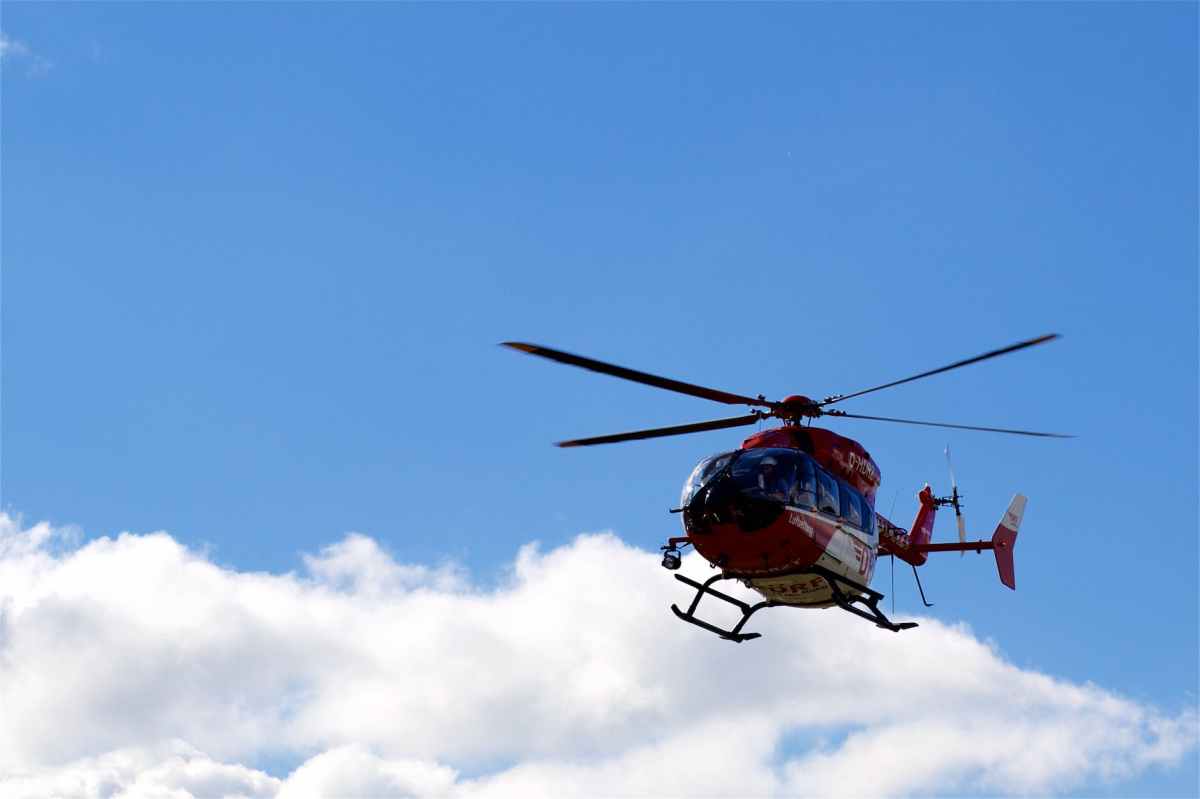
What will be the public reaction when we look up to see half a dozen new urban mobility vehicles buzzing past overhead? Perhaps we’ll accept new flying machines if it’s for a public service, an ambulance, fire services, police, or even newsgathering. Brightly coloured in emergency orange.
A public flying taxi service might raise a few eyebrows. A flashy private flying car, now that might be another matter altogether. There you are on a hot summer evening, in the garden, having a pleasant barbeque with friends and whiz a flying car swoops over the treetops. The passengers have their mobile phone out filming their trip. This is when fist will be raised skyward. It’s a time when you hope the next-door farmer hasn’t got a shotgun.
Today, a few pilots do get prosecuted for misbehaving when low flying private helicopters. Not often, it’s true. This happens with less than 1500 helicopters registered in the UK. What would happen with, say, 10,000 private flying cars? I wonder.

 John Vincent