Labour’s IHT Policy: A Threat to Family Farms?

Labour is driving down a road it’s driven before. It’s a shame when the two biggest political parties in Britain are so captured by their past that they can no more look forward than a duck can master arithmetic.

Post Second World War the country was broke. Rising taxes were inevitable to pay down debt. The British State was far more directly involved in everyday economic decisions than it is now.

Inheritance Tax (IHT) got its status as a loathed tax partially because of the necessary actions of the post-1945 Government. At that time, “estate duty” was increased to 80%. This generated increase tax revenue but led to the breakup of large country estates up and down Britain. Ironically, the breakup of country estates created an opportunity for some tenant farmers. As the estates were sold off in lots so tenants could become owners, if they could raise the finance.

So, you might say farmers paying IHT at 20% isn’t so bad by comparison. The amount of generated increase tax revenue isn’t much. With one hand the Government is subsidising farmers and with the other hand it’s taking a cut of their lifetime acquired assets.

Another side of the coin is the cost-of-living crisis. Certainly, winter heating costs have been a matter of great concern for a lot of people. Food too is an absolutely essential expense. Hence, the growth of food banks in every part of the country. This shouldn’t be accepted as the norm.

All of this is happening at a time when the nation’s supermarkets are making healthy profits. Keeping cheap food on the shelves with, in some cases, the philosophy of sell it cheap and pile it high. Industrialised and highly processed food coming in at the lowest prices to the customer. At the other end of the supply chain, forcing down farm gate prices.

You would think that getting national food production, the job done by farmers, right would be an imperative for Government. You would think that a regular dialogue with farmers might be quite important. Wouldn’t you?

The problem with Labour’s 20% IHT and the threshold of 1 million is that it’s not going to have much impact of those who own large country estates to avoid other taxes, like CGT. It’s not going to have much impact on large corporate agricultural enterprises. It may not even have much overall impact on land prices. Afterall, they don’t make it anymore.

But it’s going to clobber small and medium sized enterprises, very often family farms. It will clobber far more than the Treasury’s last-minute calculations say[1]. The reason is clear. The profitability of family farming has been dire over recent years. Add a new tax bill and selling-up will be the most attractive option for many potential next generation farmers.

Then the question must be asked what’s it all about? What are the values underpinning this policy? There I go back to the start. Does Labour perceive these working people as “rich”. Their logic may go, why shouldn’t the rich pay more after the Conservative Government that they supported has made such a mess of the country? One way of seeing where we are.

Trouble is that they have aimed at the wrong target.


[1] https://www.channel4.com/news/how-many-farmers-will-have-to-pay-inheritance-tax

Daily writing prompt
Beach or mountains? Which do you prefer? Why?

Even if I wanted to answer “mountains”, I couldn’t. You see my early years were spent paddling on the Dorset coast. Not that I’ve got anything against breathtaking mountain walks.

I did all the classic summer things a boy might do in the 1960s. Ride donkeys and build sandcastle on Weymouth beach. Tried stop the tide coming in. That never worked. Ice cream and newspaper wrapped fish and chips. Picked-up seaweed and shells in Swanage.

Idyllic. Not always. Dad driving around forever trying to find a parking space in Bournemouth. Stuck in sweltering hot traffic jams around Corfe Castle[1]. Sunburn.

For me, favourite of all was Studland Bay[2]. Wide open spaces and rolling sand dunes. Those were summer moments that flashed by but last forever in the deep corners of my mind.


[1] https://www.nationaltrust.org.uk/visit/dorset/corfe-castle

[2] https://www.nationaltrust.org.uk/visit/dorset/studland-bay

Daily writing prompt
If you could meet a historical figure, who would it be and why?

It’s one thing to have the fancify idea that just as in “Bill & Ted’s Excellent Adventure[1]”, I’d be able to talk to anyone but that’s just not on. I might meet Socrates, or some other great classical mind and ask questions about the meaning of life.

Let’s face it, nice idea but we wouldn’t understand a word we said to each other. There’s also that divide between the analogue and digital world. Technology 21st Century types take for granted would seem like magic stepping back a century. Thus, dude it’s the modern age where I’d focus attention. Set the dial on my time machine.

Let me go for Richard Feynman[2]. I’d ask how do you communicate complex ideas and make them seem not so complex? Then afterwards I’d be stuck with the dilemma that often strikes. Well, I thought I understood what he was saying but now I’m not so sure.

Strange that Bill & Ted went on their adventure the year Feynman passed on. That year, I was figuring out the space between the analogue and digital world.

If Feynman was busy, I’d go for Carl Sagan.


[1] https://youtu.be/oUDIBzecP1I

[2] https://www.nobelprize.org/prizes/physics/1965/feynman/biographical/

UK Farmers’ Unrest: Budget Shock and Political Implications

Yesterday, central London was full of British farmers. Far more than was anticipated. It’s a countryside revolt. Or at least the seed corn of unrest. It needs to be addressed quickly.

The UK Government Budget sprung an unexpected shock on farmers. Newly elected, everyone expected them to try to correct the spending mess left by their predecessors. However, few expected them to make-up last minute figures to do something they said they wouldn’t do.

Lots of family farmers could be singing the classic Beatles song “Yesterday”. Troubles seemed so far away before the general election. Now, they seem here to stay.

Like androids, and the Tories before them, Labour Members of Parliament (MPs) are trotting out lines prepared for them by their masters. The political excuse trotted out robotically is that the theoretical threshold for taxation is £3 million and not £1 million as everyone is saying. Therefore, they say, fewer farm businesses will be impacted by their new death tax.

When something goes wrong in Government one of the best strategies is to address the facts immediately, apologies for any error, take the temporary hit and move on quickly. Stonewalling and wibbling is an extremely poor approach.

For a start, many farmers will not be able to take-up the tax reliefs Labour MPs are talking about. Farming is a hazardous profession. Sadly, unexpected deaths are not unusual. If such an event occurs this could then result in compounded tragedy, that is the death of a family business too.

Farmers are pointing out that significantly wealthy people will still use land purchase to avoid tax. They will have complex and detailed tax planning services at their fingertips.

Agricultural land values have increased dramatically in recent decades. Yes, there is an issue to be addressed with respect to land value. Housing development land is an astronomical price. It’s one of the drivers that is making house prices unaffordable for many people.

Labour needs to recognise that it’s not food producers who are driving these negative phenomena. It’s not small and medium sized family farms who are the problem makers.

Not only is this new inheritance tax very poor politics by Labour, but it’s also not going to crack the problem that they might wisely wish to crack. I’d say, think again. At least consult.

Daily writing prompt
What’s your favorite month of the year? Why?

Beware the Ides of March. What nonsense. March is the start of the New Year. Spring has sprung. Meteorological spring starts on 1st March[1].

Spring is sprung, the grass is ris. I wonders where the birdies is.

They say the birds is on the wing. Ain’t that absurd?

I always thought the wing was on the bird.

That little ditty always reminds me of my father-in-law. Spring has got to be the best time of the year. March is its herald. In ancient Rome the traditional New Year celebrations kicked-off in March. That is until Julius Caesar changed the calendar[2]. Look what happened to him.

Above and beyond all this history, my birthday is in March. So, what better month to celebrate.


[1] https://www.metoffice.gov.uk/weather/learn-about/weather/seasons/spring/when-does-spring-start

[2] https://www.britannica.com/science/Julian-calendar

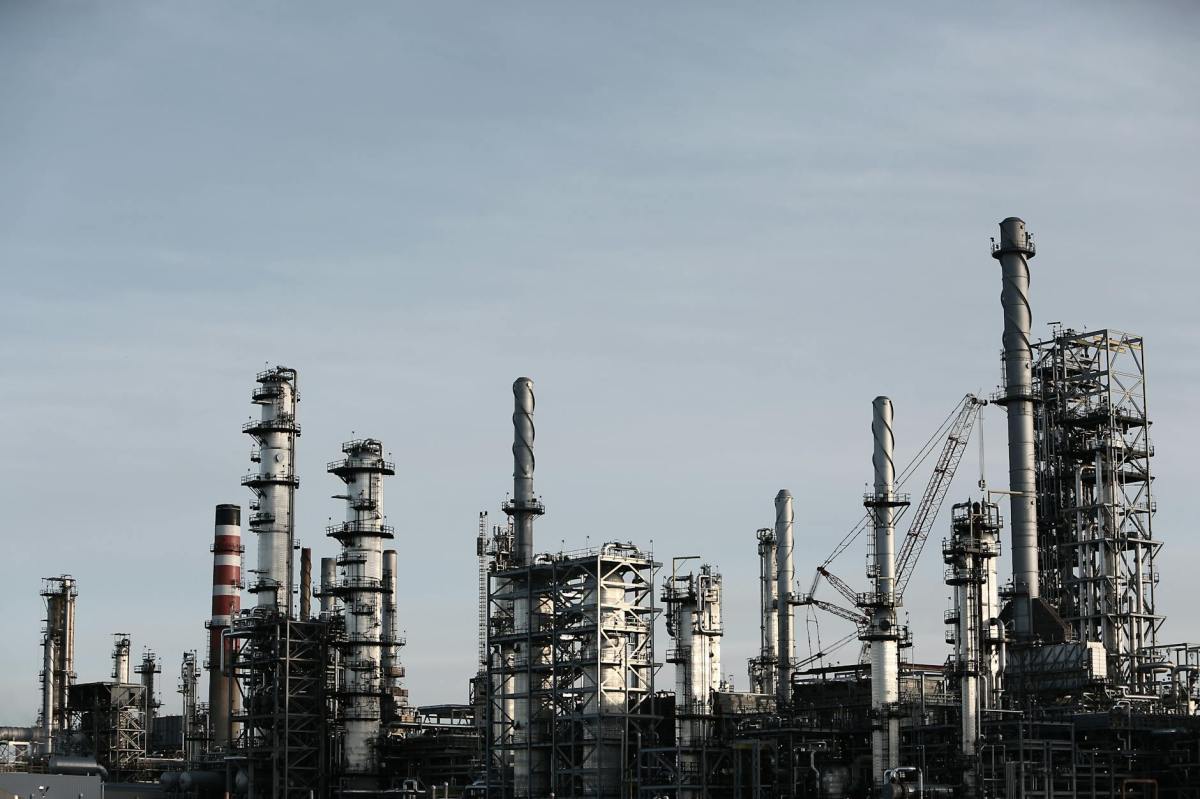
Ignoring Climate Change?

In a way, I’m not immune from a little hypocrisy. Petrol prices go up and I’m not going to jump for joy. Prices go down. I’m not suddenly thinking that’s just going to encourage more consumption. No, I’m looking at the pound in my pocket. It will cost me less to fill up the tank.

There was a whole swath of apocalyptic tales of the world in the 1970s. The “oil crisis” of 1973 should have been a warning. Humanity might have taken the opportunity to look at the trends related to oil and gas consumption. There might have been a more sustained reaction.

Instead, alternative lifestyles, renewable energy projects and energy conservation were thought of as quaint novelties or scientific curiosities that would never really catch on. The political addiction to short-termism overrode consideration of substantial change. Increased exploration led to new sources of oil and gas being found.

Today, we should know better. The fight against climate change has a decade of talk behind it. Humanity knows that the link exists between burning hydrocarbon and a changing global climate. We are ignorant no more. Now, I almost wish I hadn’t written that last sentence.

Across the pond there’s a powerful nation. One that influences the behaviour of 100s of other nations. The US is the largest producer of oil and gas in the world. However, until the last few weeks it had recognised that maybe that isn’t a good formula for the future.

Back to that dollar in the pocket. Despite the US being a powerful nation many its people didn’t feel that way. All politics is local. When filling up with gas gets more expensive people do not jump for joy. In fact, there’s that human tendance to romanticise the past and remember when everything was cheaper. Life was easier. Can’t we go back?

It’s being reported that US President elect Trump’s choice for energy secretary is going to be like turning the clocks back. Prospect is that the fight against climate change is going to get a back seat. At least for the next 4-years.

Does this spell global disaster? Well, it certainly is a great big lost opportunity. Just like here in the UK, Brexit ignited the tendance to romanticise the past. It looks as if the same phenomena have taken root in the US. Burning more and more hydrocarbons is like a sugar rush. A boom to begin then followed by exhaustion. I expect after this presidential term the results will be one of regret. Just like Brexit. A wonderment – why on earth did we do that?

Still, there’s an opportunity for other countries to race ahead with advanced and alternative technologies to reduce energy dependency. It’s hard to think and act long-term. I’m confident it can be done. If it’s done successfully the prize will be great.

Daily writing prompt
What’s the first impression you want to give people?

In answer, so much depends on the situation. Clearly, standing on a platform in front to a large audience is different from getting on a train and smiling at fellow passengers.

I almost needn’t say, first impressions are incredibly important. Every textbook echoes that line. For all our advancement and sophistication, judging people in the first couple of minutes we meet them is imbedded. Maybe it’s some ancient human defence mechanism that discriminates between friend and foe. We can be ready to embrace or flee at the drop of a hat.

There’s the core of an answer. First off, in most situations, the impression to give is that of a potential friend. If the people in question are openly threatening, then precisely the opposite comes into play. Call it “caveman” but these human responses are intrinsic.

New Form of Monarchy in 2024?

An observation. There’s something strange going on across the Atlantic. You see, I have found inspiration in the story of America’s revolutionary struggle. The writings of Thomas Paine stirring up a radical movement. The strong desire to be independent of the rule of Kings and Queens. There’s a lot to be said for freeing a nation from imperial tyranny.

The Declaration of Independence in 1776 is a bold statement. Rejecting the royal authority of George III to set a new nation on an independent path. It proved to be a dynamic and prosperous democratic path. One that people across the world looked on with admiration.

It’s true that the United States has had its own dynasties. Powerful families and influential individuals that have shaped its history. However, since its independence, none of them have ruled as a monarch. None have wheeled massive power without checks and balances.

Yet here we are in 2024, and a form of pseudo monarch stands ready to take the reigns of power. Sure, democracy has played its part in putting one man in control. That, in of itself, is not unknown in the history books. The question to ask is when does a Republic tip over and become something quite different from what it has been?

I hope my observations are an exaggeration. It’s all to easy to see the News that commentators want us to see. I’ve often found that it’s most difficult to see things as they actual are as opposed to how they are shaped by personal beliefs and fleeting desires. Objectivity isn’t so easy.

This much can be said, the next four years are going to be turbulent ones. There’s a certainty in that conclusion. Even with the Atlantic in the way, just as the Jetstream brings us changeable weather, so unsettling waves of transformation will hit our shores.

The latest commentary coming from supporters of the new Trump regium in the US is one of polarisation. It’s the traditional stick-up. Choose between us and them. Our populous island off the shore of continental Europe must be squeezed into a choice between the US and the EU.

This monosyllabic way of framing a debate gets swallowed by the media. Overall, it’s nonsense. There’s no way that both will not be important for as far over the horizon as anyone can see. Both are going through periods of disruption. For once, domestically, the UK seems relatively stable. That’s putting aside the past damage done by Brexit and a Conservative government that fell into total disrepair. Yes, the UK can plot its path knowing that some internal consistency can be expected.

Everything I’ve written here is overshadowed by issues of global concern. Overshadowed being the sad reality. Climate change will not wait for the dust to settle from ardent disruptors. The planet’s atmosphere knows nothing of the exploits of prominent personalities. We desperately need to rediscover common interests and act on common concerns.

Exploring the Kennet & Avon Canal

It’s the road to the west. The A4 out of London heads towards the west. It’s younger but bigger brother the M4 motorway goes the same way. Going the same way too is the Great Western railway and before that a major waterway, a canal. I guess the ancient roads predate the lot of them given that east-west traffic is an important part of English history. Certainly, the Romans went that way.

I now live at what is roughly the halfway point between London and the west. It’s where what is largely a level route from London starts to rise at a slow pace. That climb made linking rivers, most particularly the London Thames and the river Avon in the west, a challenge. The incentives were evident. So, much potential for trade. Moving heavy commodities around. Canals are truly visionary engineering infrastructure and now an inheritance that’s much treasured.

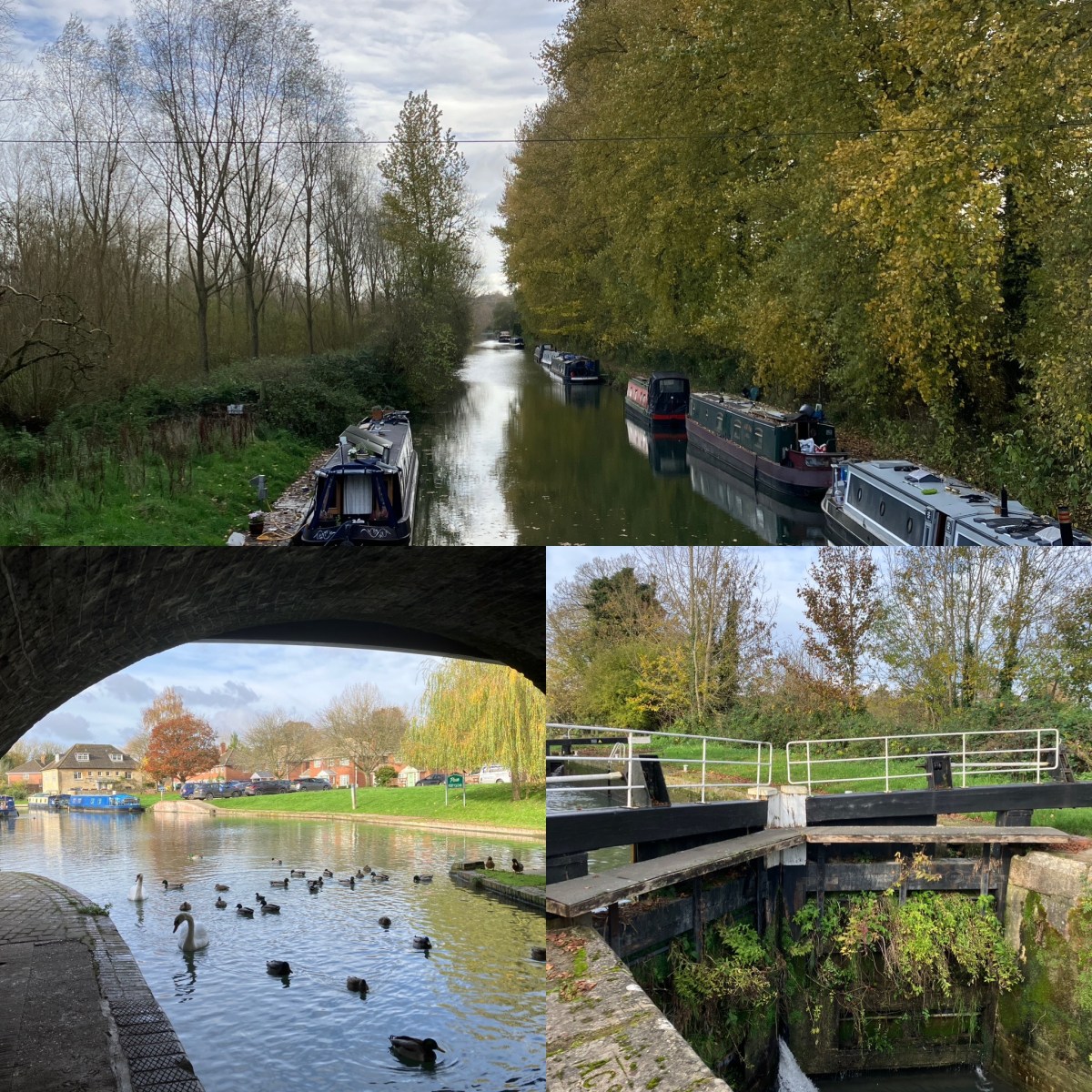
For people who like to walk, like me, canal towpaths[1] provide flat route between towns. A direct waterside route that wanders through lush countryside. Yesterday, I did the 15km between Newbury and Hungerford. Along that stretch, the Kennet & Avon Canal raises about 150 feet but it’s almost unnoticeable. The main signs are the difference between the fast-flowing waters of the river Kennet and the sober slow canal. A littering of canal locks and small brick-built bridges are a feature too.

The Kennet & Avon Canal was constructed between 1795 and 1810. It was eventually killed-off as a commercial enterprise by the construction of the Great Western railway. Being cheaper and faster along the iron road, transport of goods by water couldn’t compete. It’s in this modern time that the canal was restored. It’s been working again for the last 30 years. Now, it’s a centre of leisure pursuits, small businesses and alternative lifestyles.

The canal’s path follows the River Kennet and its narrowing flood plain. I found looking at how the waterflow is controlled by sluice gates and weirs a fascinating part of the walk. Ambling along the canal’s towpath is a great way to venture into the Berkshire countryside. There are a couple of points where the path changes sides and it’s a bit soggy in one or two places but overall, it’s relatively easy walking.

I did see an Otter on the opposite bank. It was a fleeting glimpse. He, or she, slinked away almost before I realised what I was looking at. Quite different from noisy ducks this Otter made virtually no sound or ripples on the water. 

Dotted along the canal near bridges, decaying concrete World War II-era pillboxes are a reminder that this would have been a defensive line if Britain had ever been invaded.

The walk took me under 4 hours. I was exceedingly fortunate with the weather on the day. A cool breeze and intermittent sunshine. Not bad for November.


[1] https://canalrivertrust.org.uk/things-to-do/walking

Daily writing prompt
Is there an age or year of your life you would re-live?

The power of 1976. At an age when the future was a blank page. Specialness of that 12-months, almost unsurpassed in the analogue world. Years of 45 rpm. Music was brilliantly diverse. It wasn’t only Punk bursting onto the scene. Pink Floyd’s pig flew over a London. The Eagles release Hotel California. Dylan, The Stones, Led Zeppelin and Elton John travelled the world. Presley was around. The Beatles continued to be news. Eric Clapton became persona non grata. The range of acts was astonishing, going from the Bee Gees to Bob Marley. From Donna Summer to Queen. The Rocky Horror Picture Show to Abba.

As if to stress the innocence of the time. Filming starts on Star Wars. If a time machine was ready to use at the press of a button, I’d go back and say: you guys may have something with this strange movie. Of course they would ignore me. Lucky me.