On Your Farm: 60 Years of Farming Innovation and Change

Like me, the BBC’s “On Your Farm” will soon be over 60 years old. I’m already there and, as a 4-year-old at the time wouldn’t have known there was anything new on the radio. That chunky Bush radio with the large batteries.

That’s a launch one year after the coldest winter for 200 years, in 1963. I don’t remember that winter but was told numerous stories about it. Winter 1963 must have been tough for the West Country farming community. Probably a lot of fun for me a very young boy. Snow for weeks and weeks.

The BBC’s regular farming radio broadcast takes a wide-ranging view of what’s happening in the industry. Needless to say, the elapse of 60-years has seen changes that would have been incompressible in 1964. The sheer scale of enterprises, the power of modern machinery and huge reduction in the labour force may not have been predicable.

That early sixties period was one of great hope for the advancements that technology could bring. We now see that some of the leaps forward that were made were progressive but had long-term negative consequences. Ripping out hedges to make bigger fields and becoming ever more dependent on artificial fertilizers did increase productivity. That came with big costs.

If I’m correct in recalling what my father’s generation said, at the time there was great pride in the modernisation that was taking place. A vibrant competitiveness between farmers to have the most modern machinery and buildings available. National policies encouraged expansion.

There’re pictures of me and my brothers sitting on a new Ford 4000 tractor. Clearly, that modern tractor was the state-of-the-art for a family farm of the time. It’s now a classic at agricultural shows.

1964 was also the year of the debut of Top of the Pops. So, the BBC was busy catching up with the changes that were happening in society. We talk of populism now but pop culture kicked-off at the time I’m recalling.

The idea behind the BBC’s “On Your Farm” was an innovative one. Go out and chat to people about the challenges of their farming world on their working farms. Outside broadcasts were a relief from cultured studio accents and monotone accounts of the great and good. Outside broadcast vehicles and equipment of that era were bulky and sensitive. Making them work in a random field or farmyard must have been a technician’s nightmare. The reward for producers was getting a sense of real life transmitted into the nation’s kitchens and living rooms.

Putting aside the changes in agriculture, the changes in broadcasting are vast. Fortunately, radio hasn’t disappeared. It’s evolved. Now, with an inexpensive handheld mobile and a good microphone anyone can practically go anywhere at any time. Not only that, but given a reasonable internet connection the broadcast can be instant and of superb quality.

So, are we all better informed about agriculture, farming and the British countryside. I’ll let that one rest. One thing is certain. There are more opinions expressed, more often about more subjects than ever before.

I will not say one word about badgers.

Brazilian Air Crash

Two weeks have elapsed since the tragic loss of VoePass Linhas Aéreas flight PTB2283[1].

Reports are that the Brazilian air accident investigators[2] have successfully downloaded recordings from the aircraft Cockpit Voice Recorder (CVR) and Flight Data Recorder (FDR).

A detailed analysis of both recordings should provide a replay of the flight events on the fateful day. This means that any flight anomalies can be interpreted. Both actions of the crew and the response of the aircraft can be used to understand the sequence of events.

Those conducting the analysis will need to verify the past serviceability[3] of both recorders. It’s easy to assume that what’s presented in the recovered replay is what happened. However, that depends on the calibration of sensors and the correct functioning of the aircraft’s audio system.

CVRs and FDRs are primarily tools for the investigation of accidents and serious incidents by investigating authorities. Accident recordings can be a rich source of information. It’s not just the obvious contribution technical records make to an investigation. The CVR, via a cockpit area microphone picks up much more than just the speech of the crew and their communications with air traffic. Engines, propellers, aircraft warning systems, aerodynamic noise and the impact of structural failures all produce audio signatures.

I assume that the aircraft operator has a Flight Data Monitoring Program. Such a program can support continuing airworthiness and operational safety of an aircraft. It can be a vital part of a Safety Management System (SMS). Also, the regular analysis of flight data is one way of ensuring that the serviceability of the data acquisition system for an FDR is known.

A preliminary report on this fatal accident is expected in early September. It is up to CENIPA if the publish any transcript of the accident recordings.

VoePass, the airline in question, operates a regional network in Brazil. Not surprisingly it has now come under greater scrutiny by the Brazilian aviation regulator, Agência Nacional de Aviação Civil (ANAC).

It’s worth noting that the Brazilian civil aircraft fleet is one of the largest in the world. It’s a sizable country. Both ANAC and CENIPA are well experienced in addressing the aftermath of a major aviation accident. Expectations are high that the causes of this fatal accident will be fully understood. Appropriately then corrective action will be taken.


[1] https://asn.flightsafety.org/wikibase/409335

[2] Brazilian Aeronautical Accidents Investigation and Prevention Center (CENIPA)

[3] https://www.caa.co.uk/publication/download/12811

Origins and Meanings

Daily writing prompt
Where did your name come from?

Doesn’t take a lot of research to answer that question when it comes to my first name. Two key people in the New Testament share my name. John the Baptist and John the Apostle. Because of those biblical references the name John has a version in a wide range of languages. In its origins, it has something to do with being gracious. Although, I can’t say that’s a particular characteristic on mine (as a gracious remark).

Having done a little family history it’s a name that reoccurs down the generations. John was a hugely popular English first name for a long time. Today, it’s well down the rank and order of popular names. Which I think is slightly strange. John is easy to spell. It’s simple to pronounce and has some agreeable variations like: Ivan, Yan, Hans, Sean, Ian, Evan and Jack.

What makes my toes curl is being called Jon or Johnathan or Johnny. Apologies to those known as such but these watering downs of my first name just make me cringe.

What I’ve never properly figured out is the reversal of my name. It’s happened to me more than a few times when checking into hotels. It certainly seems to happen in France. It’s probably because my surname is most often a first name in specific cultures. So, I will arrive at a hotel front desk. Give my name. Then the hotel receptionist will look at me in a quizzical manner. Hum. So, you are not Mr Johns. No, I’m Mr Vincent. Johns can be a version of Jones or Johnson. It’s not my surname. It’s a whole different kettle of fish.

If only my parents had known this and named me Vincent Vincent. That would have squashed any chance of naming in the wrong order. There must be folk who run around with the same first name as surname. Bet they live in a hazy mist of confusion when trying to explain.

Back to Christianity. Yes, Vincent is a Saints name[1]. The far south westerly corner of Portugal is called: Cabo de São Vicente or Cape St. Vincent in English. Martyrdom does get a priest a place name. In his case, it was an especially gruesome martyrdom at the hands of the Romans.

My Vincents extends back to the corners of the English country of Dorset. Where precisely it’s hard to say but there were some of those with that name residing around the Isle of Purbeck[2]. Which is not an isle, by the way. It’s a peninsula. Corfe Castle, and the village that adjoins it goes back to the time of William the Conqueror. That’s about 1000 years of history. Maybe that explains me being short and blue eyed. Who knows?


[1] https://catholicsaints.info/butlers-lives-of-the-saints-saint-vincent-martyr/

[2] https://www.visit-dorset.com/explore/areas-to-visit/purbeck/

Navigating Speculation in the Age of Abundant Information

Speculation is a natural human response. When faced with a paucity of information we often put together what we know and then make a best guess as to what happened or what might happen. However, wise or unwise it’s not possible to stop speculation. Well, that is assuming that autocratic power doesn’t use force to crush the free exchange of ideas.

Since the rise of the INTERNET, with a proliferation of all kinds of material, it becomes less and less possible to quell speculation. A sprinkling of information can grow into a monstrous conspiracy but equally it can grow into a stepping stone to greater understanding. Living with this two-edged sword is our modern dilemma.

In a more deferential society, that we may have been immediately post WWII, officialdom was accustomed to restricting information. The principal of “need to know” and statements like – wait for the official report – were enough to quell Press intrusion and intense public curiosity. On occasions this deference turned out to be tragic and been an enabler for authorities to cover up dreadful errors and failings. My mind goes to the Hillsborough disaster[1] when I think of tragedies made worse by the manipulation of information.

What’s all this about – you might say. I’m giving a thought to the post- accident scenarios that become more common. When major fatal transport accidents happen to planes, boats and trains there’s an instant demand for detailed information.

This is happening in relation to the recent Brazilian ATR aircraft accident and, this morning, to the sinking of a large modern yacht off the coast of Sicily. Both tragedies seem astonishing in their own way. So much of our technological world works so perfectly, a great deal of the time, that we get accustomed to reliability, safety and security. Almost taking it for granted.

Basic technical information, like registration numbers, type and age of the vehicle all surface quickly after an event. Even numbers of fatalities are verified within a couple of days. What gets the speculators going is the answers to the question – why?

A list of circumstantial factors can soon emerge. The time, the weather, the location and the organisations involved. All of this creates a mix that feeds both intelligent and unintelligent speculation. I’m not saying this is de-facto bad. It’s reality.

What’s all this about? There are reports across the media of the “last words of Brazil plane crash pilots.” This speculation surrounds the words spoken in the cockpit and seem to come from someone’s knowledge of a transcript. How can that be? Through international agreement the independent aviation investigation organisations across the globe are committed to a protection of this type of recorded information (Cockpit Voice Reporter (CVR)[2]). Accident flight recorders are there for the purposes of the investigation of an accident or incident.

Back to our modern dilemma. Is it good or bad that sensitive protected information leaks into the public domain before it’s been thoroughly analysed and properly understood? There is a cost to a dilution of the protection of information. For one, it may discourage the voluntary application of safety enhancements, like fitting a recorder to a plane, boat or train.


[1] https://www.bbc.co.uk/news/topics/c8m8v3p0yygt

[2] https://skybrary.aero/articles/cockpit-voice-recorder-cvr

A constrained list

Daily writing prompt
What are your top ten favorite movies?

I’ve done this before. At least for movies with an aviation theme. My measure of a “good” movie is one that doesn’t dull with repeated viewing. Yes, of course, let’s not take that to absurd limits. I’m more talking about, say once a year, if it comes up on the small screen. I’m going to sit through it and enjoy it.

A top ten selection doesn’t mean there are only ten. There’s a lot of movies that fit into the category of being a pleasant way to spend time on a long flight. Even on a tiny seat back screen the hours pass quickly if the entertainment is really entertaining.

In no particular order, and straight off the top of my head. No great analysis or soul searching.

Apollo 13[1]. An intense drama based on true events that grip my imagination. Especially for those who watched events unfold on a black and white TV. Just think. If you or I had been in the room at ground control – what would we have thought and felt?

Flight of the Phoenix (The original)[2]. That twist about the guy being a model aircraft maker and the backwards and forwards of the emotions of the stranded passengers and crew. Faith is rewarded only at the last moment.

Ice Cold in Alex[3]. Another movie where the protagonists go on a testing journey, and you go with them all the way. It’s engaging and immersive and makes you ask – would I have lost hope? To top that it has a beautiful ending.

Close Encounters of the Third Kind[4]. I know the movie is marmite. For me, loved it from day one. It now looks dated or at least the special effects. Its quality is that its so simple yet so vast.

The Shining[5]. So brilliant in its menace. Everything drags the viewer into the insanity of isolation and a malevolent force that destroys a person. Yet, from the first moment of the film all the signpost point to where its going.

Galaxy Quest[6]. For pure unadulterated entertainment value. It’s a parody. It’s not full of belly laughs. What it has is a wonderful off-beat comic story that is so well done by such good people.

The Rocky Horror Picture Show[7]. Iconic and full of endlessly repeatable lines, it’s a movie that makes me smile time and time again. Didn’t we pass a castle back there?

A Matter of Life and Death[8]. Captivating as we all root for David Niven in his fight to stay on Earth. Soring imaginings wrapped-up in an irresistible warmth.

Passport to Pimlico[9]. A movie with surprising undertones in our post-Brexit situation. Excelling in humour but inscribed with an acute observation of human behaviour.

The Ipcress File[10]. Masterful casualness of Caine as he wrestles with the sinister unknown. Sensemaking of threads of information slowly feed to the viewer make this a powerful movie.

My list has comedy, adventure, horror and thrillers. If I write a list tomorrow maybe half the names would change. Ten is such a limiting number.


[1] https://www.imdb.com/title/tt0112384/

[2] https://www.imdb.com/title/tt0059183/

[3] https://www.imdb.com/title/tt0053935/

[4] https://www.imdb.com/title/tt0075860/

[5] https://www.imdb.com/title/tt0081505/

[6] https://www.imdb.com/title/tt0177789/

[7] https://www.imdb.com/title/tt0073629/

[8] https://www.imdb.com/title/tt0038733/

[9] https://www.imdb.com/title/tt0041737/

[10] https://www.imdb.com/title/tt0059319/

Keep it simple

Daily writing prompt
Create an emergency preparedness plan.

Plans are great. Professionally, I spent years and years making plans of all different shapes and sizes. Some collected dust on shelves, some turned out to be wholly inadequate and others did the trick, at least in saving time, money and potential harm. The often quoted saying “no plan survives contact with the enemy” has a ring of truth to it but it’s a million times worse not to have a plan when faced situations that are likely to be harmful.

It seems obvious to say it. Making plans for other people and making plans for oneself are not the same. Training staff and having a detailed plan of what do in a flight emergency is essential. As a humble passenger, sitting in an assigned seat, I expect an aircraft to safely go where it’s supposed to go. So, am I properly prepared for the one in a million event?

If I can, I always book an aisle seat. Having people climb over you to get to the loo isn’t such a big deal. It’s the elbows of the 20-stone man in the middle seat that’s more annoying.

Listen to the safety briefing. Read the safety card. Count the rows of seat to the nearest exit. Yes, I do. I try not to be that– oh, I’ve heard or seen that a hundred times before type of bore.

Fortunately, I’ve never had to work through my private emergency plan. Closest I’ve come was a flight landing on one engine at Düsseldorf Airport. The heart raced a little when looking out of the aircraft window. I could see airport firefighting vehicles chasing us down the runway.

What?

What’s wrong with what? And you can’t say how I feel about “what”. In fact, what is one of my favorite words. It belongs to a family of six. All six are words I’d be happy to hear more people using. There’re words that people with inquiring minds use a lot and with good reason.

Forgive Mr Kipling for saying this only of men. He was a man of his times. Written as it is, his six serving men have served me well. What and Why and When and How and Where and Who.

I Keep Six Honest Serving Men – The Kipling Society

Daily writing prompt
What is a word you feel that too many people use?

Summer Reminiscence

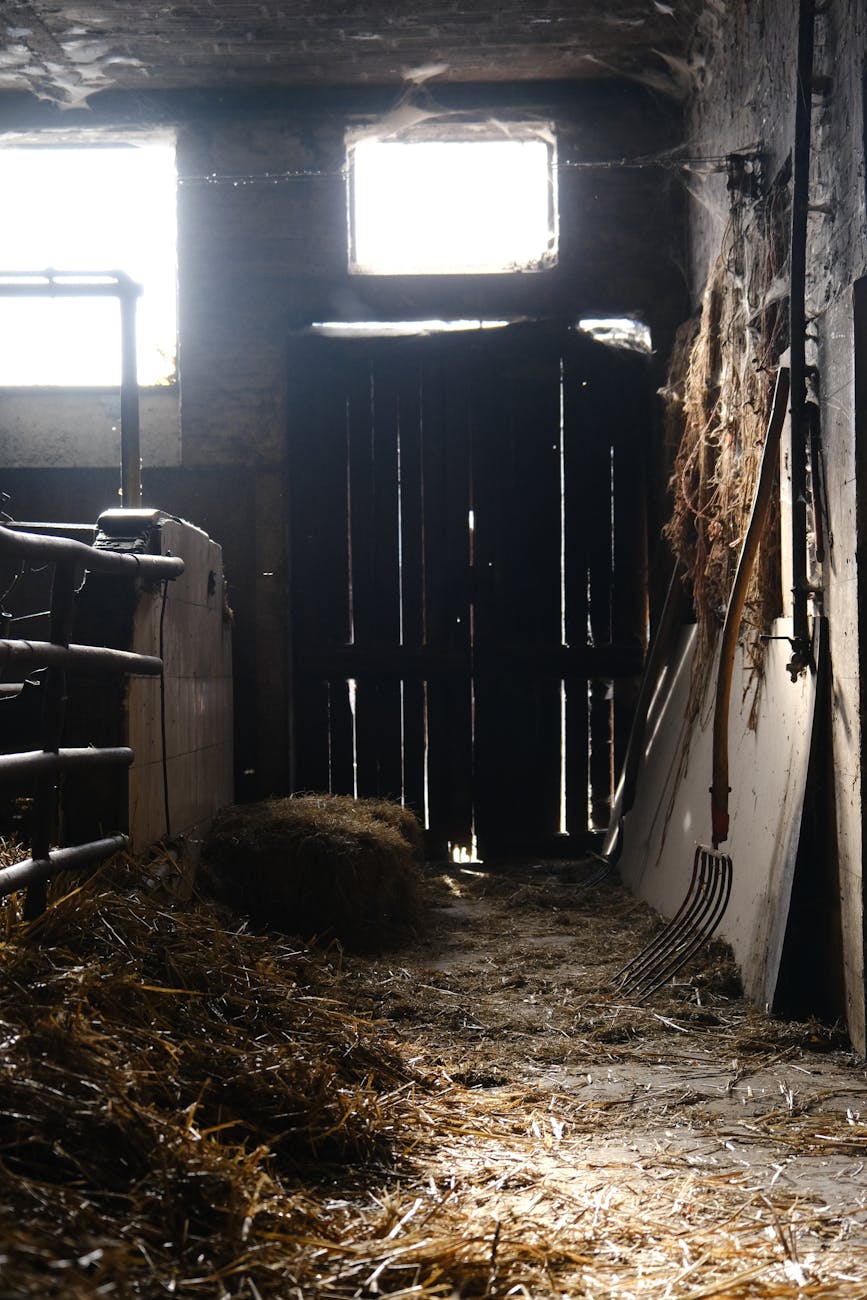
After a long winter of heaping straw on top of straw, the layer of bedding could be 3-feet high with ease. There was hardly a space where calves, or larger cattle hadn’t over wintered. That was the West Country farmyard where I grew up.

Roughly square in shape, with cow stalls along the northern side and the cart shed in the westerly corner. These traditional stone-built buildings were made for a different era. Opposite the farmhouse there was a modern steel framed building that my father put up.

A story of livestock farming is written in these buildings. That transition from the intensive use of human labour to a more machinery dependent system. Going from cramped timber and local stone buildings to sheeted large span open spaces. One long lived and of great character, often listed and the other solely utilitarian, making life simpler.

A pick and wheelbarrow. Cleaning out was one annual manual task. My brother and I would push endless wheelbarrows of dung out into the yard. There wasn’t the machinery to get into the tight spaces of the confined old buildings. Our job was to dig out the masses of compressed dung. Then it could be attacked by our Ford 4000 tractor[1] in the yard.

Now, such hard to access areas of a cattle shed are confronted by a skid-steer[2]. Days spent with a pick and wheelbarrow are exceptional. There’s no comparison with the 1970s.

Here, it’s not this monotonous labour that I’m wanting to write about. Rather more outdoor farm work. Work that was a bit more fun on a steaming hot day.

One of the other summer jobs I had as a boy was cleaning out water tanks. We had a couple of large concrete and brick cattle troughs that hosted a mass of algae and all sorts of accumulated debris. Summer was a time to clean them out. The sheds would be empty of cattle.

We didn’t have a swimming pool. I think you can guess where I’m going with this recollection. Having scrubbed a season’s worth of growth off the walls of the biggest tank, the smooth concrete walls were then revelled. We did a thorough job because this cleaning process didn’t get done all that often.

In the mists of the summer heat and with the yard empty of cattle, this tank was a place for a dip. Chilled water, straight out of the mains supply, as the tank refilled added to the fun. So, we became the fish in the cow trough. At least for a summer day.


[1] https://heritagemachines.com/guides/buying-guide/fantastic-ford-force-4000/

[2] https://www.bobcat.com/na/en

Listen

Daily writing prompt
What brings you peace?

The mind can be a rambling and untamed animal that runs riot with anxieties and imagined troubles. Is it possible to have too much imagination? Inventing situations, dramatic and comedic, and letting them loose by the handful. All this spent energy bearing scant connection to reality. A blizzard like information overload in our digital age.

Peace is sending that cerebral chaos away. Floating in a harmonious relation with the real world that’s going on around, here and now. Being in the moment, as some people say. How to get there on a busy day? Easy. Take time out in a pleasant space. Just close your eyes and listen. Listen hard. Different bird songs unjumble themselves. Distant conversations, although mumbles, seem distinct. Wind through the leaves becomes audible. After a couple of minutes of concentration, past untamed hours vanish into lost memories.

Spectacular Sighting

There’s steep hills. Some more interesting than others, you might say. In my youth this one was known for the road that climbed the hill. That’s the B3081, if you want the detail. It’s an opportunity to journey through wonderful English countryside. The area being Cranborne Chase, a protected landscape.

Zigzag hill was great fun for us as children. Probably not so much fun for my parents as our jet black Wolseley16/60 strained to get around the corners and climb to the top. The car packed with the six of us. This was a route we’d take to get from home to Bournemouth, and the seaside.

On the way, I remember the finger post signs to Compton Abbas Airfield[1]. My thought being what an interesting place for an airfield, right up here high on the chalk hills. Looking down on the surrounding Dorset countryside and the town of Shaftsbury.

Normally, I have to go to flying displays to see historic aircraft fly. This Sunday afternoon, I travelled no further than my back door. Sitting outback in the steaming 30C-degree summer weather all I had to do was look-up. Not that I’d planned to look skyward.

That doesn’t happen every day. First there was a distant rumbling sound. Then it developed into the hum of multiple piston engines. It’s only when the distinctive sight of a Lancaster bomber appeared over the roof of my house did all become clear what was happening.

As soon as I fixed my eyes on the aircraft it was already off over the garden and out across the neighbouring field. This was Avro Lancaster PA474 passing right overhead[2]. It was heading off in a north easterly direction at a notably low altitude. Quote a spectacular sight.

I had to do a little research once the aircraft had disappeared over the horizon. Looking at what was happening on Sunday, I assume it was flying back from Compton Abbas Airshow[3] to its home in Lincolnshire. Given the high summer weather, this was a great day for flying.

This Second World War heavy bomber first flew in 1941. It’s part of the Battle of Britain Memorial Flight (BBMF), based at RAF Coningsby. It’s the only Avro Lancaster that remains airworthy and flying in the UK. It’s only recently returned to the air after a tragic accident involving the BBMF.

Later in the day, off in the distance, looking north, three other historic aircraft trundled across the sky. After dark, with the heavens clear, I caught the Perseid meteor shower. So, for watchers of the skies, 11th August was a noteworthy day.


[1] https://www.comptonairfield.com/

[2] https://www.bbc.co.uk/news/articles/clyg7e7x319o

[3] https://comptonabbasairshow.co.uk/participants/