Future

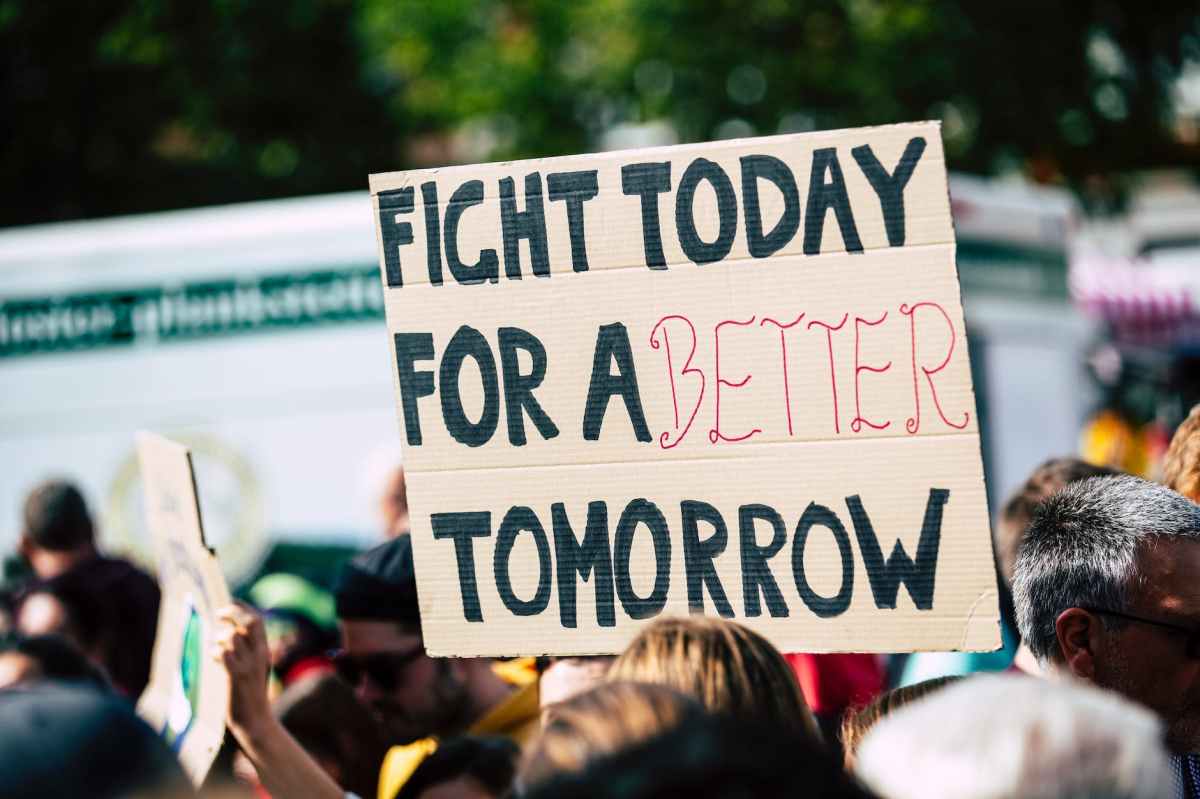
The road to fixing climate change is not an endless road. Today, our whole approach to climate change goes somewhat like this:

I’m not sure I’m convinced. Yeah, maybe we have a problem. We should do something. Definitely, but send me the plans, I’ll get to it, I’m busy. Time passes. What was it we should be doing? Oh yes, but that plan is for (insert a name) not me. I’m not contributing much to the problem. Anyway, there’s time between now and (insert a date).

So, we go on. There’s no doubt that there are changes needed to tackle climate change that are immensely difficult to do. Trouble is that by fixating on those difficult problems we talk ourselves out of doing the easier things. Let’s put simple actions like home insulation on the agenda again. Let’s loosen-up on our ridiculously restrictive policy on wind farms. Let’s invest in our national electrical grid to permit more connections to be made easier and quicker.

Yes, it’s advantageous for the PR companies employed by high carbon businesses to talk up difficulties and herald small gains as miracles. I mean, that’s what they are employed to do. On the other side we have PR companies employed by activists and campaigners who paint pictures of dire consequences and delinquent Governments.

I keep pointing out the dangers of populism and nationalism. The history of both is not a good one. They generally make most people poorer and a minority richer and more powerful. However, the tactics they use to gain popular appeal don’t seem to die off down the ages. A case in point is the story of Rome and Julius Caesar, as he crushed Roman democracy and seized power[1]. The chronicle is being well told on BBC 2. In the Britian, it’s often only their incompetence that halts the progress of Caesar like characters. Not mentioning any names.

To make change happen on climate change there needs to be a greater appeal to the populous. Expecting politicians to take a lead on the subject is nice in theory but wanton of hope. In our system of governance terms of office can be measured in days. Expecting neurotic politicians to step-up to a challenge that requires real long-term commitment is asking a bit much.

Campaigners will not give up on highlighting the challenges ahead. Periodically, politicians will pick-up on that campaigning fervour and try to jump on-board. However, as soon as a more immediate public concern comes along, they will jump-off.

I’m not saying that the cost-of-living crisis isn’t a number one priority. What I am saying is that a cost-of-living crisis is not an excuse to put climate policy on a dusty shelf for another few years. The road to fixing climate change is not an endless road.



[1] https://www.bbc.co.uk/programmes/p0gjlmkv

D minus PM

In the second decade of the 21st century we should be surprised that a British Prime Minister should behave as if he lived in the 19th century. Common problems, future collaboration and an alliance of decades are too important to jeopardise. Relations between Britain and Greece are of great importance. Today’s spat is foolish.

There’s a joke going around the social media. It asks the question: Why are the pyramids in Egypt? The answer being: Because they were too heavy for the British to carry-off. In other words, if they were smaller, they would be in the British Museum. That light-hearted quip highlights an inherited problem. Although, the same line could have been written about many imperial European countries. It was the fashion. Here British country houses were not properly dressed unless they had a sprinkling of ancient Greek artefacts. Those artefacts were often taken by the powerful. That’s our history.

The Parthenon is not any old relic. Its image is as heavily identified with modern Greece as it was with ancient Greece. As a symbol of western civilisation, it’s unmatched. Its sculptures are high points of classical Greek art.

Once upon a time, the argument was made that the Parthenon Sculptures were better protected by British Museum than they would be elsewhere. During the turbulent periods before the birth of modern Greece that argument was probably a fair one. Greek indepenence, helped by a famous British poet, became the start of the modern European State.

Lord Byron’s early death, at 36, was grieved both in Britain and Greece. His remains were returned to Britain where he was laid to rest. It was respectful to return to the great man to the land of his origins.

In 2023, Britain and Greece are friendly nations. We benefit immensely from the excellent relationship between the peoples of both countries. Thus, I can fully understand the Greek Prime Minister “annoyance” at being snubbed while in the country. The British Prime Minister being to busy to see his counterpart.

Athena is an ancient Greek goddess connected with wisdom. The Parthenon is a temple on the Athenian Acropolis. Well, there doesn’t seem to be much wisdom in Number 10 Downing Street. If there was, then such disagreements as there are over the future of the Parthenon Sculptures, would never have created the situation, we have this morning. It’s sad.

Politicians have a duty to address problems and not to run away from them for minor reasons. It’s only through dialogue that a solution will be found to the conflicting claims made about the Parthenon Sculptures. The day they return to the city where they belong will be one of great joy.

Duck

I take for granted that everyone knows the saying: “Red Sky at night Shepherd’s delight. Red Sky at morning Shepherd’s warning”. It’s not superstition. In the sense that calamitous events will descend on us because the rising sun happens to colour early morning clouds. It’s more the practical reality that British weather most often comes from the North Atlantic. So, clouds hovering in the West can be the signs of a cold front coming our way.

Being born in the countryside these ditties are bread and butter to me. Rural sayings about different times of the year, or nature in general endure, even in the mobile phone age. Now, up to date weather predictions, based on proven science are only a touch screen stroke away. Even so, memorable adages stick.

Last week, I heard a new one. New to me. A rhyming prognostic on the coming winter. This is not only a saying confined to rural areas. It adds to a long list of observations about the habits of birds.

This is not witchcraft. Birds’ behaviour can help us predict the weather, even if the means they use can be obscure. Our feathered friends are much more in-touch with nature than we can be.

“If the ice in November can bear a Duck. The rest of the Winter will be slush and muck”.

What’s going on with this traditional bird proverbs stumps me. OK, this suggest that a hard frost in November is an indicator that a warm, wet, and soggy winter is ahead. The duck as a measure of weight may be incidental. However, some ducks do migrate to find warmer places to overwinter. So, does the saying mean that because the duck is still here, it’s decided that the winter will be mild?

That’s contradictory to the presence of the thickness of ice needed to hold a three-pound bird. If a duck can stand on the ice and is happy with that situation. They are in the local park. Then that could mean a blast of cold air from the North before the year ends, has some meaning in terms of what happens next. What’s that got to do with slush and mush? I wonder.

Is this saying somehow linked to the past when hunting ducks was an annual event. Some strange observation that ducks are easier to hunt earlier in the winter. Or is that nonsense on my part.

This folklore saying about winter can be put to the test. Although we are close to the end of November, the frost has been hard enough to bear a duck. Not a huge duck but an average mallard.

If this means a mild winter, we’ll soon know. Maybe duck barometers will work as long-term predictors. Showing us a sign of coming foul weather. Ho, ho.

Another -isation

Coming across a new word kicks off some mixed feelings. What should I think? Should I be a pedant? Should I start using it right away or write to the newspapers in disgust?

This morning, I put a new word to Sue at breakfast. Her reaction was “that’s obscene”. It’s true that only one of us might be eligible or think about joining the Apostrophe Protection Society[1]. I was ambivalent towards technical colleagues making-up a new word. In this case, there’s no ambiguity in meaning. No need to explain. Chunking two ideas together is creativity – isn’t it?

I can’t go as far as to sniff at a newfound English word. Modern language must evolve. It must branch off onto fresh exotic paths. I’ve always thought the idea that there should be legislation to protect a “true” version of a langauage is as useful as hammering the nails into its coffin.

Composite words can be a delight. For one Christmas, I got a wonderful book of some of the longest German words that know no English equivalent. Naming objects or expressing combinations of circumstances in one gigantic word can be a lot of fun and surprisingly practical.

Who doesn’t like: Streichholzschächtelchen. Yes, it’s a matchbox.

Today, we talk of streaming as if that word had been around since prehistoric times but there are limits as to how we use it. For example, I’d sound strange if I said I was all streamed-up or streamed-out. My meaning being the memory on my mobile device was full of endless streamed material.

The word software[2] started its life as the name suggests. Something, like wool that was soft to ware. Say; I like this well-made winter coat. It’s good quality software. A crate in a coat makers factory might have a label with that humble word attached.

Today, no one would normally make that association. Almost since the date of my birth. And I could say the era of my birth was the beginning of the Space Age. The 1960s. Since the date of my birth, and the major part computers take in our everyday lives the term software has grown and grown. If a child of 5-years-old doesn’t know the word, there education must be wanting.

Living a sheltered existence, it’s only this morning that the word softwarisation came to my notice. Even the spellchecker and text prediction want to turn it into something else. The word does follow that simple composting convention that seems so popular, particularly amongst technical society. Assuming everyone knows what software is then it adds an ending that suggest a transformation from something into software. I’m not talking about turning a lump of cheese into software, so context is all important.

Software’s forefather, or mother was hardware. That’s the physical electronics that you can touch and hold. Loads of semiconductors and tiny circuits in our devices that are constantly taken for granted. Softwarisation is a way of saying that more and more digital device functionality is dependent on software and not physical hardware. More and more device hardware is becoming general purpose and it’s the software does the thinking. I’ll go with that. It’s happening.

PS: I didn’t use Microsoft Bing (software) to help create the above but after I’d written it I did have a look to see what it said about the subject. Help, there’s no going back.


[1] https://www.apostrophe.org.uk/

[2] https://www.etymonline.com/word/software

Drift

There’s a problem. A big problem. Waking up to hear the Dutch situation, it’s not as if we should be surprised[1]. Hearing of the violence on the streets of Dublin. It’s shocking. Listening to right-wing politicians talk about the latest immigration figures. Distortion and twisting of the numbers are commonplace tactics. Fearmongering is the stock and trade of an unscrupulous bunch.

Although populist have delivered only failure in the last decade there’s something about them that sticks. They have ring fenced the arena of doom and gloom for their own ends. Whereas in the past, shining a light on the flaws and nonsense of certain people’s arguments was enough to consign them to the margins, now that doesn’t work so well. Misinformation goes mainstream.

The Brexit referendum was a lesson in 21st century campaigning. More facts don’t win the hearts and minds of the populous. Why liberal, like myself always major on rationality is a mystery. As the ancient Greeks might have put it “logos” has its place in the art of persuasion but it’s one of three. Credibility, or “ethos” matters greatly. But the one on the list that works, “pathos,” meaning persuasion based on emotion, is far the most effective.

I happened to catch a few minutes of The World at War[2] on one of the more obscure British televisions channels. The digital air is full of fringe channels. This epic 1970s series presents interviews with those who experienced WWII. Every time, I watch even a clip of the series a shiver runs down my spine. The times it documents are not long ago. It’s the modern world.

The evils that despots and extreme nationalism can do is unquestionable. The hard conviction that others are inferior and that they are a threat to the way of life of a nation has not perished. Politicians unwilling to accept accountability are keen to point fingers at those they can blame for promises broken. Blinkered minds fixate to blank out inconvenient facts.

The history books show that the drift towards mindlessness doesn’t always announce itself. Only retrospectively can a day when the atmosphere changed be highlighted. Then it can seem obvious. Being mindful of the impact that divisive speeches and campaign slogans can have is an absolute must. Language counts.

Migration will always be an issue. This age is one of high levels of mobility. Transport is affordable. It’s open to those seeking to escape discrimination or to ambitious for a better life. Shifting population made nations. America and Australasia are examples of people moving (or being moved).

What we don’t have is a workable way of wining hearts and minds. Yes, managing migration is a priority issue but not managing it as a crisis with negativity and warnings of catastrophe. The results of doom and gloom will be more doom and gloom. That just feeds far right-wing movements.


[1] https://www.bbc.co.uk/news/world-europe-67512204

[2] https://www.imdb.com/title/tt0071075/

The Dr

There’s something wonderfully peculiar about a time traveller wandering around the universe in a British police box. Time and space are the stuff of an infinite number of story lines. But the ones who strike a cord with us most are the humancentric ones. Our home, Earth is under threat. Humanity is in peril. Nobody knows what to do. Then stepping out of street furniture from the 1960s comes a hero. Not a muscle bound, gun toting superhero with magical powers. No, an eccentric, cerebral alien who looks like a college professor who took too many happy pills in their hippy phase. Humanoid in appearance. Wherever The Doctor goes so enemies follow, set for a final showdown[1].

Iconic features of Dr Who’s[2] life echo down through our decades. The Doctor’s vehicle is nothing like H G Well imagined. With a nice trick of being bigger inside than out it dazzles all who hitch a ride. If only we could master that transformation. I for one, don’t think it’s entirely impossible. Afterall isn’t physics up to about 12 dimensions now?

No saviour of the human race is complete without uniquely bad adversaries. Strangely enough quite a few are machine-based baddies. How in the moment is that? With increasing neurosis about what machines may be capable of in the near future. Daleks look a bit crude with what we know now. Unlike the iPhone we haven’t yet seen an upgrade to a version of the Dalek 15 Pro. I dread to think what that might do. They may have a resistance to any means of destruction.

Some Science Fiction can bore with an intensely serious inspection of our planetary dilemmas. Dr Who steers clear of that trap. Injecting humour and simple everyday relationships into the stories, the level is more connectable. One person matters, as much as billions.

My Doctor is Tom Baker. As a Time Lord, he captured that frenetic, unpredictable, jumbo schoolboy who knew no bounds. Yet, he retained a masterly command of dangerous situations. He could look stern as well as overjoyed. Never did I think that he would turn to the darkside.

My favourite evil monsters are the Cybermen. The idea that machines should decide that humans would be better if they were transformed into machines is a true horror story. It a kind of malevolent evil that doesn’t know it’s evil. It’s possible to believe that could exist.

Pure fiction, mixed with a scary look at expanding technology and always a partnership between good folk to overcome despots like The Master and singularly driven uncharitable aliens. That blend makes for wonderful entertainment. Long may television, and its replacements celebrate this combination. Regeneration has no end.

Today, it’s Doctor Who’s 60th Anniversary[3]. Happy birthday.


[1] https://www.imdb.com/title/tt0056751/

[2] https://en.wikipedia.org/wiki/Doctor_Who

[3] https://www.doctorwhotv.co.uk/doctor-who-is-60-today-99309.htm

Divided

Away for a week. I’ve been in Canada. In Montreal. On return to the UK, I see the next step in the convolutions of the Conservative Party have littered newspaper column inches. If ever there was a thin man on tight rope balancing a can of worms on one arm and a broken bicycle on the other, then it’s the current Prime Minister.

I’m sure he never trained for the Cirque du Soleil. Maybe Rishi Sunak should take up traditional circus disciplines like the swinging trapeze and flying hand to hand. Certainly, he could make a living that way even if he doesn’t need the money. Circus or pantomime would be a good opening for a great number of pending unemployed politicians.

Suella Braverman’s second sacking as Home Secretary opens the opportunity for her to take to the stage. In her case the audience would know when to boo without any prompting. The world of the pantomime villain[1] might revive a flagging political career.

Nigel Farage, former leader of the UK Independence Party is off the jungle[2]. Most suitably he’ll be featured alongside comedians anxious to keep themselves in the public eye. The cartoonists are having a field day with this oddity.

Boris Johnson’s trying his hand with comedy too. His new position as a GB News broadcaster will be pandering to a small but loyal right-wing audience. That will not put him off, I’m sure. I wonder what kind of studio wallpaper will be his backing?

Others have gone to ground or are typing WhatsApp messages to a 101 groups all fighting to be the next star of the right. The Brexit brigade of the past is finding a natural home in entertainment. It’s one way of jumping ship before the poltical Rapid Unscheduled Disassembly (RUD) to come. This is a wonderfully inventive acronym for a complete disaster.

If I was to make a guess as to what Rishi Sunak might be attempting, it’s a rebranding the likes of which we haven’t seen since the chocolate bar Marathon changed to Snickers. I seem to remember that name change was a marketing curiosity. The British public didn’t understand it. After decades past the rebrand, the name Marathon was brought back. Is the Conservative Party that chocolate bar fallen out of favour and looking desperately for a retro-look?

Sweeping a decade of chaos under the carpet is a tall order. Even with the maxim that a week is a long time in politics. I don’t think the British public are so forgiving or forgetful. The roots of our problems are the results of poor political judgement and poor actions over a long trem of office.

No doubt the Conservatives will try to jerrymander, as much as slight of hand will allow them to get away with in the media spotlight. Voter ID rules will keep some potential voters at home come the next general election. Shifting the boundaries of some constituencies has benefits too. A pre-election bag of goodies is being put together to stiffen the resolve of wavering traditional conservatives. Expect Springtime give aways.

My overall sense is that major change is coming. Abraham Lincoln said, “a house divided against itself cannot stand,” and that applies more broadly than the reason it was said in the 1850s. The strands of conservatism that have been so politically successful in Britain are divided amongst themselves. Not just a few small gaps. Hulking great chasms exist between entrenched groups. That situation never goes well. Not for anyone.


[1] http://celebratepanto.co.uk/toptipsforvillainy/

[2] https://www.entertainmentdaily.com/tv/im-a-celebrity-nigel-farage-backlaash-from-celebrities/

Way back

It’s easy to sound like a takeout from the four Yorkshire[1]. That emulated sketch where a group of drinking men on holiday try to upstage each other with tales of hardship. It’s beautifully comic because it ventures off into the absurd. Each man is determined to out do the other.

Back in my day. Any sentence that starts like that conjures up a man leaning on a bar in a rustic pub where time has stopped. There are people who make a speciality of reminiscence. A rambling epistle about hardship and struggle. Peppered with a contrast with the ease of contemporary living. Point being how weak and wishy-washy we are now. How enduring and mighty we were in the way back. Most of this is pure nostalgic babble. The Monty Python sketch is funny because it crosses a line. Please reprimand me severely if I cross that wobbly line. Beside it takes comic genius to write a good sketch and I’ve never claimed that ability.

However, telling stories that paint pictures of former times is a good way of setting this time in context. Change is a constant. The decades are ones of accelerating change. That can be unsettling.

This week, for inexplicable reasons my mind wandered off to my parent’s farmhouse kitchen in the mid-1960s. That’s boyhood memories. The back of house room was not quite square. At one end, two substantial painted wood doors faced each other. A draft blow under one when the outside door was open.

A standing stainless-steel sink sat between the two doors. Opposite, a thin steel framed window looked out on the farmyard. Stone walls were a couple of feet thick. That left space for a seat under the window. It was a farmer’s window. Being able to see the road and all business comings and goings from the kitchen table. Looking direct West, the evening sun would play across the yard.

On a weekday. Not a high day or a holiday. That would be a reason to light a fire in the front room. The kitchen was the warmest place in the house. A thumping great cast iron Aga[2] filled an alcove and filled the kitchen with a warmth all day and night. In winter, other parts of the house could be an ice box. Bedroom windows had as much ice on the inside as on the outside of the glass. There’s a good explanation of why the image of that kitchen is so rooted in my mind.

A large sturdy wooden kitchen table sat right in the centre of the room. It had a Formica top in a deep maroon colour. Four chunky turned legs at each corner. An eclectic mix of wheelback chairs permanently tucked in when not in use. If they weren’t, there was no squeezing around the table.

The habit of sitting in the same spot was deep-rooted in practicality. It’s as if we had assigned seating. Naturally the best place to sit was with the Aga at your back. Opposite the Aga, up against the wall was a fridge that must have come from Noah’s days. Next to that was a peculiar free-standing kitchen cabinet unit. They are sold on eBay as mid-century vintage now. Ghastly thing that today’s sellers describe as gorgeous.

One corner of the room had a beaten and battered two-seat sofa. That was a comfortable warm spot. Above it, in the wall was the remains of a bread oven. A hinged iron door was a curiosity covering nothing but cobwebs. It was an age when Linoleum remained a popular floor covering. It was a lot nicer underfoot than the flagstone floor. The flooring took such a bashing that it got replaced with more of the same when holes started to appear.

That room was the heartbeat of the farmhouse. The kitchen table played so many different parts in farm life. It could go from being a butchers block heavy with a side of pork to a desk for tidying up the paperwork. Even the kitchen cabinet unit had a draw full of Sturminster Newton market reports. Auctioneers Senior & Goodwin sent out blue printed reports listing cattle prices every week.

In the simplest way, that’s how I was first introduce to data analytics!


[1] https://en.wikipedia.org/wiki/Four_Yorkshiremen_sketch

[2] https://www.agaliving.com/

For the sake of a pen

My primitive habits are part of an age that is dying. They involve a handheld device called a pen and a flat common place material called paper. I scribble notes on bits of scrap paper. I pile them up and forget where I put them. I look at past notes and wonder – what on earth was all that about?

What caused me to think about this subject is a quick wander around WH Smith[1]. The local shop has a wide selection of pens, pencils, and markers. One section is reserved for upmarket ink pens. Cartridge fountain pens, no less. All the accessories were on display too.

I wonder how much longer this will make sense, from a business point of view? What sales do they achieve for traditional ink pens, however branded, elegant, and polished they may be. In fact, ink pens may now be thought of as gift items. More to own, than to use.

There are five ink pens on my desk. Black, blue, red and a couple of give aways picked up at trade shows. Two propelling pencils too. These everyday pens are not impressive. There role in life doesn’t go beyond the scribbling of notes and cryptic reminders. I reserve one black Montblanc[2] for signing important documents. That rather nice professional pen hardly gets an outing. Slowly but surely, digital signatures are taking over. My Sunday best pen sits quietly in a draw.

The digital world is encroaching. Even I have an electronic to-do-list on my phone and tablet. An App. Although, I must confess, I use it reluctantly. Whereas a scrap of paper doesn’t chase me when I forget a task the invasive digital equivalent doesn’t let me get away. It’s a puritan overseer that needs to be sternly told not to bother me. It’s enduring and persistent.

To me, there’s something satisfying about sorting through a small selection of notes, addressing everyday jobs and then sending the often-reused scraps of paper to a bin. Often these paper scraps are layered in strata. Low priority items sink to the bottom of the pile. This is almost the same as the way historic desk in-trays operated. Now, that is going back to the early 1990s.

Much of what I’ve described here is habit. It’s a habit born of a time before the digital world became as all encompassing as it is now. I do have an electronic pen for my iPad but that only gets infrequent outings. Is the classic ink pen destined to become extinct?

Stylish pens have an appeal beyond their function. They may continue long after every single thought and word become digital. What of the cheap give away item? They still sit in pots for customers to use in banks and building societies. Trouble is that there are fewer and fewer open high street banks and building societies. There’s a message.


[1] https://www.whsmith.co.uk/stationery/pens-pencils-and-refills/sta00027/

[2] https://www.montblanc.com/en-gb

Batteries

We can talk about chemistry. It’s not a strong subject for me. The simple basics, I remember. As far as handling batteries, or at least knowing what they do, I was quite young on first encounter.  

At the back of the farmhouse where I grew up there were several working rooms that that were part of the building. A room we called “egg house” was indeed used to store eggs. That wasn’t its first purpose. In one corner was a copper vat with a small furnace underneath it. I was told this was for sterilising milking machine parts before chemicals took over that role.

On the opposite side of the wide back door corridor was “boot house.” The name was a giveaway as to one of its uses. Boots propped up against the wall. It had a stone mullioned window that looked out on another working room that was part of a later add on. That’s where a shiny stainless-steel milk bulk tank sat filling up most of the space.

Like a lot of obsolete stuff stashed in a corner and then forgotten, eventually they were thrown out. As far as I know. What I speak of is several large round glass jars. They made of thick greenish glass and were about a couple of feet in diameter. Their original purpose was to store sulfuric acid. The acid was an electrolyte used in heavy batteries that were once the backbone of the electrical system of the farm.

My father moved to Goulds Farm in 1938. As I understand it mains electricity didn’t come to the farm until the 1950s. In one of the stone built buildings around the farmyard, there was a single cylinder stationary engine, generator, and DC electric distribution board on the wall. It was like something out of an early Frankenstein movie. Bare metal switches and a couple of round dials for volts and amps. All covered in dust and cobwebs. I never did see the “submarine” lead-acid batteries[1]. I guess they were parts of this early farm electrical system that had a reasonable scrap value and so got sold on.

There were lead-acid batteries in and out of the house in the winter. Heavy tractor batteries often sat in “egg house” charging overnight. Given their cost every little bit of life was squeezed out of them before they were replaced. Some batteries had a second life powering an electric fence.

Now, here we are in 2023. An electrical revolution is underway. It’s fascinating to note some of the objections to electrification. So, wedded to gas and oil that all sorts of spurious arguments get thrown up. Not that there aren’t hazards with each different technology.

Battery technology has advanced at great pace. Chemistry has provided batteries that have huge potential when compared with they predecessor. The race is on to go much further. I’m confident that we’ve a long way to go before every combination and permutation of materials has been exploited for electrical storage. Manufacturing techniques race ahead too.

Lead and acid presented hazards. Ironically, one of them was hydrogen gas emission. In such systems ventilation is a must so that there’s no danger of explosion. Now, hydrogen is heralded as a fuel of the future. Hazards remain but we do get better at managing each and every one.

My message is that electrical technology has both an upside and a downside. Ultimately the upside is much the bigger.


[1] https://uboat.net/articles/id/54