Midgets

Even in the early 1980s the “rubber bumper” MG sports cars were viewed as not quite authentic. The original MG Midgets had a cute simplicity. I had two MG Midgets. Both were of the 1500cc Triumph engine “rubber bumper” variety. The bumper was a change to meet regulations for export to the US car market. To some enthusiasts this was an ugly and unnecessary adornment to a much-loved traditional British sports car.

The Midget was an affordable little sports car that was “modern” for the 1970s. It was fun and straightforward. Nothing complicated. Eminently repairable. The car was made for the twisting and turning back roads of Somerset and Dorset. Those hidden single-track roads with grass growing down the middle and shaggy green hedges that overhang.

Both with the silky yellow one and the sharp black one, I had a couple of incidents.

One was hurtling down a road with steep dirt banks on either side. Now, that’s fine when there’s plenty of visibility and the roads are dry. In this case the narrow lane, linking farms and villages was regularly plastered with mud. Cows were herded up and down the road on their way to and from milking. When applying a car’s brakes hard on a surface like that the results are likely to be not what you want. Slipping and sliding is going to happen, and it did.

My cherished yellow MG hit the bank and didn’t stop immediately. It slid along the road on its side slowly soaking up its energy and leaving me watching the sky go by through my side window. Not a nice feeling. As the car stopped, hanging on my seatbelt, my adrenaline kicked in. I was out of there like a shot. Pushing the driver’s door up into the air, I climbed out and surveyed the damage.

Both my pride and the car were wounded. Fortunately, not as much as I feared. Surprisingly, the car was relatively easy to push back onto its four wheels. It drove without a problem. What was a problem was a nasty rash of scrapes and piles of mud. Yes, I was lucky. Such an “incident” with a soft-top car could have been extremely unpleasant if the car had gone all the way over. My MG didn’t have a roll bar.

Another incident that was a real heart stopper happened on a motorway. This time it was unavoidable. Driving west on the M40, late one night, what I remember is a bright light to my left. This was the car’s headlamp beam reflected off a running deer that bounced off the car’s wing. There was an instantaneous flash and then a loud thump. At the time I had no idea what I’d hit. In shock, I slowed and stopped the car on the motorway hard shoulder. It was a cold drab wet night. Much the worst of times to be stuck on the side of a motorway. I got out and walked around the car. Despite the drama of the event the car looked relatively unscathed. A dented left wing.

By the time I’d stopped I was well ahead of the place where the impact took place. My instinct was that I needed to tell someone what had happened. Maybe there was a dead or dying animal on the embankment way back behind me. Seeing the car was drivable, I set off to find a telephone. No mobile phones then. Eventually, I got to inform the police and get the car patched up to continue my journey westward to Cheltenham.

There was a lot of enjoyable happy driving of my little sports car. However, I have to say, for all the fun a 1970s MG Midget is not a good car to have any kind of serious incident. Those were different times and I have been lucky.
Winds of Change

At the start of a new Carolean Era. Wow, I’ve been wanting to say that for some time. Yes, it’s a new era in this country. In Britain, we mark the passing of history by reference to the monarch of the time. Georgian, Edwardian, Victorian, Elizabethan and so on, it’s a tag to place a period in history. They are often associated with national accomplishments, culture and styles that were fashionable.

It’s a blustery wet day in London and King Charles III is being crowned sovereign. Apparently, the coronation of Queen Elizabeth II had to contend with wet weather too. At the age of 73, King Charles became the oldest person to accede to the British throne. I’d say in 2023, we can no longer say that 73 is old. There are numerous Heads of State across the globe who can top that easily.

We don’t do this designation act with politicians, but we do use a shorthand for their time in power with a reference to their approach to the job or an iconic slogan or two. Thatcherism, Blairism, the white heat of technology or you have never had it so good, or things can only get better.

What’s great about the beginning of the Carolean Era is the signals of political change. Hopefully we will no longer need to hold our head in our hands in astonishment at the utter folly enacted by our elected representatives. Well, maybe less so as we run up to a General Election.

This week’s local elections in England are an awakening. Voters have decided – enough is enough. There are a more than a thousand less Conservative Party councillors in the country. This is democracy at work. I’ll quote Dick Nolan, who wrote in The San Francisco Examiner in 1966: “Politicians are like diapers. They should both be changed regularly and for the same reason.”

The Conservative Party has performed so badly over the last decade they deserve to be put out of power for the next decade. Now, extrapolating from this week’s political earthquake to the result of the next General Election is a doggy business. That said, the trend seems set and the expectation is that a political change is inevitable.

Although, I feel secure in saying this there’s always at least one catalyst that can upset this prediction dramatically. For this I’ll go back to Mrs Thatcher. What would the politics of Britain look like if the Falklands War of 1982 had not occurred? This short international conflict transformed the climate of the day and, no doubt the Prime Minister. However, people might think of the successes and failures of that time the result was the strengthening of her premiership.

Local elections recent held the Conservative Party to account in one way. The bigger story will be written over the next 18 months or so. Mayism was chaotic. Borisism was a total disaster. Trussism was insane. Prime Minister Rishi Sunak’s time in office maybe as that of John Major. The boy with his finger in the dam awaiting a flood of change. Let’s see what the country looks like after a weekend of pomp but also of reflection.

Experts

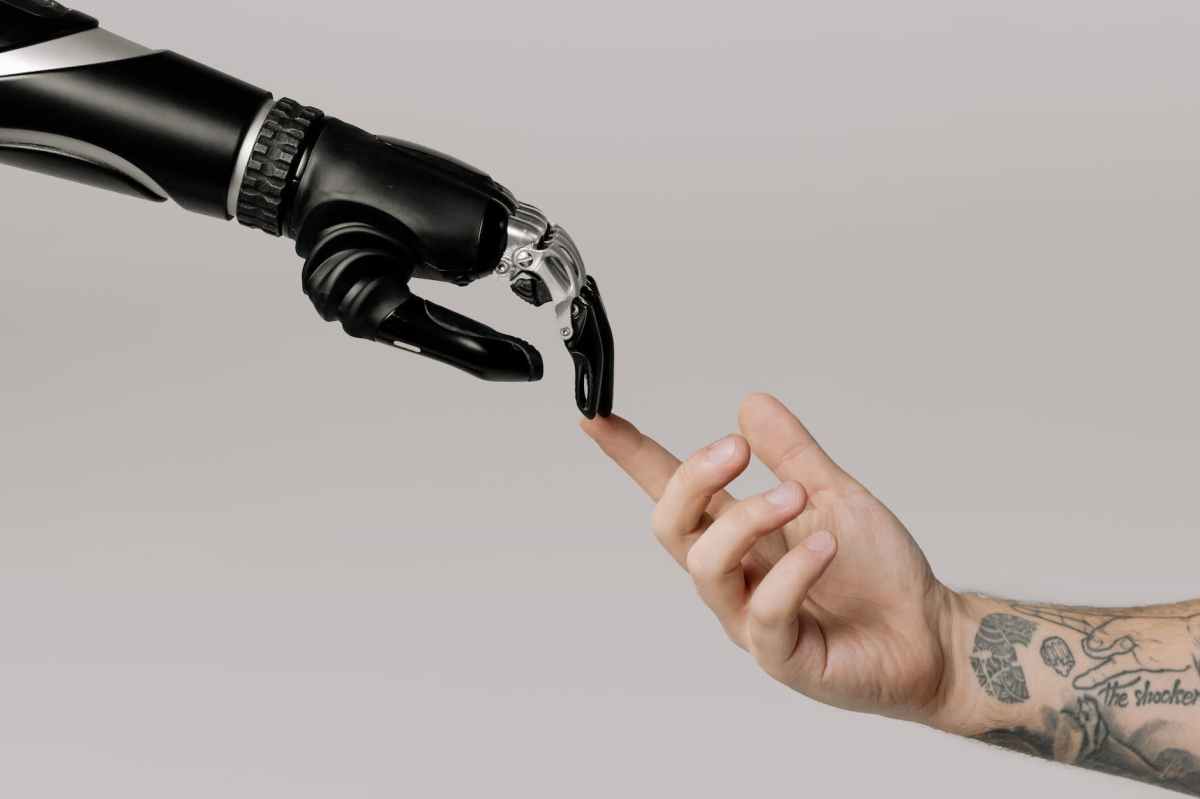
The rate of increase in the power of artificial intelligence (AI) is matched by the rate of increase in the number of “experts” in the field. I’ve heard that jokingly said. 5-minutes on Twitter and it’s immediately apparent that off-the-shelf opinions run from – what’s all the fuss about? to Armageddon is just around the corner.

Being a bit of a stoic[1], I take the view that opinions are fine, but the question is what’s the reality? That doesn’t mean ignoring honest speculation, but that speculation should have some foundation in what’s known to be true. There’s plenty of emotive opinions that are wonderfully imaginative. Problem is that it doesn’t help us take the best steps forward when faced with monumental changes.

Today’s report is of the retirement of Dr Geoffrey Hinton from Google. Now, there’s a body of experience in working with AI. He warns that the technology is heading towards a state where it’s far more “intelligent” than humans. He’s raised the issue of “bad actors” using AI to the detriment of us all. These seem to me valid concerns from an experienced practitioner.

For decades, the prospect of a hive mind has peppered science fiction stories with tales of catastrophe. With good reason given that mind-to-mind interconnection is something that humans haven’t mastered. This is likely to be the highest risk and potential benefit. If machine learning can gain knowledge at phenomenal speeds from a vast diversity of sources, it becomes difficult to challenge. It’s not that AI will exhibit wisdom. It’s that its acquired information will give it the capability to develop, promote and sustain almost any opinion.

Let’s say the “bad actor” is a colourful politician of limited competence with a massive ego and ambition beyond reason. Sitting alongside, AI that can conjure-up brilliant speeches and strategies for beating opponents and that character can become dangerous.

So, to talk about AI as the most important inflection point in generations is not hype. In that respect the rapid progress of AI is like the invention of the explosive dynamite[2]. It changed the world in both positive and negative ways. Around the world countries have explosives laws and require licenses to manufacture, distribute, store, use, and possess explosives or its ingredients.

So far, mention of the regulation of AI makes people in power shudder. Some lawmakers are bigging-up a “light-touch” approach. Others are hunched over a table trying to put together threads of a regulatory regime[3] that will accentuate the positive and eliminate the negative[4].


[1] https://dailystoic.com/what-is-stoicism-a-definition-3-stoic-exercises-to-get-you-started/

[2] https://en.wikipedia.org/wiki/Dynamite

[3] https://digital-strategy.ec.europa.eu/en/policies/european-approach-artificial-intelligence

[4] https://youtu.be/JS_QoRdRD7k

Oath

Oh dear. What do they say: the road to hell as being paved with good intentions. Maybe that’s a bit extreme. It’s not necessarily “hell” that I’m talking about here but something that does the opposite of what’s intended. I can image the planning meeting where someone pipes up – I’ve got an idea.

Swearing allegiance to the King[1] might sit well in a Hollywood movie of knights in armour and English castles standing proud against the green, green countryside. In the 21st century it sounds quaint and patronising to say the least. Strange vestiges of the historic riddle of our constitution.

The public is being asked to swear allegiance at the King’s coronation. These words are proposed: “I swear that I will pay true allegiance to Your Majesty, and to your heirs and successors according to law…….

Now, I know that Members of Parliament (MPs) must swear a similar allegiance before taking their seat in Parliament. MPs cannot take their seat, speak in debates, vote, or receive a salary until taking an oath or affirmation[2]. For them it’s more about being elected lawmakers than allegiance to a single person. It would make much more sense if they swore an oath to the British Constitution but there lies the problem.

Such quintessentially British activities hark back to a day when everyone knew the rules of cricket, knew their place and, as John Major once put it in his failed Back to Basics[3] campaign, old values. In 1953, the time of the last crowning, Britain was a deferential society, now it’s not.

The question is – should a “modern” constitutional monarchy be asking for allegiance in this public way whilst knowing that most the population will ignore the whole exercise? Not only that but a considerable number of people will think the exercise utterly ridiculous.

There’s not so many large counties in the world where subjects are asked to swear an oath to an unelected head of state and his dysfunctional family. That’s a family that has filled the media with unhappy stories for years. It gets stranger and stranger depending on how you look at it.

It’s not what you might call democracy or meritocracy in the normal sense, it’s more of a ritual of imperial legacy. In this green and pleasant land some people think this is a fantastic advertisement for our great nation across the world. I disagree.

British Citizens have a proud allegiance to their country, but this is to one man and his whole family. Now, that is peculiar. It’s feudal. Sadly, to point out the obvious just gets branded as anti-monarchist.


[1] https://www.bbc.co.uk/news/uk-65435426

[2] https://www.parliament.uk/about/how/elections-and-voting/swearingin/

[3] https://en.wikipedia.org/wiki/Back_to_Basics_(campaign)

Crown

It’s a difficult time to be a British republican. A couple of reactions to mention of an alternative to having a monarchy is – don’t be a spoil sport or the alternative would be worse.

The national celebrations coming up are not the problem in my mind. Nothing at all wrong with having a big nationwide event in May. Especially given the grim time the hospitality industry has just been through and the natural inclination to celebrate springtime.

Sadly, I have to say that the British republican movement, such as it is, is throwing away the opportunity to pose the questions on the good and bad of having a prominent monarchy in a modern country. “Not My King” is a ridiculous campaign slogan[1]. I believe we’d be better off as a republic but that belief lives with the pragmatic acceptance that there will be a King and he will be the Head of State. Pretending that is not so doesn’t help win the case for change.

Generally, I think there’s an ambivalence[2] about the whole subject amongst the British public. That is however much the BBC talks-up the whole coronation. Nobody much is complaining about having an extra Bank Holiday. Nevertheless, a widely held view is that Charles III will be on probation as a King. If the British monarchy continues to be embroiled in controversy and exist primarily as source of a tabloid headlines, then it will continue to decline as a symbol of the national and last no longer than a decade. The feeling that a monarchy interested in survival should have skipped a generation is a strong one. Their past survival has been mostly because of relative modernisation and not wallowing in ancient rituals.

According to polls, public support for the monarchy is age dependent. This maybe because of the claimed propensity for people to become more conservative, with a small “c”, with age. On the other hand, this is a new age. We have never had the global information revolution that is shaking the foundations of society in the way it is now.

I’m a supporter of British republicanism because we are citizens and not subjects. Although, I do recognise that the different status of people can be of dreadful intricacy given our history.

In Britain, some aspects of our unwritten constitution are “too easy” to change because of a passive Head of State. Conversely, some aspects of our unwritten constitution are “too hard” to change because of being constrained by custom, tradition, and the power of veto by those with inherited influence.

Ironically, post-Brexit, British republicanism is more allied to maintaining sovereignty than our crumbling[3] existing system of governance. That is as much about the sovereignty of the individual citizen as it is of our society or the State. Republicanism has always been about liberty. A few passages from Tom Paine (1737–1809) are enough evidence in that respect.

Good luck to His Majesty King Charles III. He’ll need it.

POST: Not me or, no relation in so far as I know: John Vincent (historian) is a British historian and professor emeritus of modern history at the University of Bristol. He is known for his works on political history, especially the 19th and 20th centuries, and for his controversial views on democracy and monarchy.


[1] https://www.theguardian.com/uk-news/2022/oct/27/notmyking-billboard-campaign-launched-by-anti-monarchy-activists

[2] https://natcen.ac.uk/news/british-social-attitudes-monarchy

[3] The last six years have illustrated the weakness of the current settlement.  

AI awakens

Artificial Intelligence (AI)[1] is with us. Give it a question and it will answer you. Do it many times, with access to many information sources and it will improve its answer to you. That seems like a computer that can act like a human. In everyday reality, AI mimics a small number of the tasks that “intelligent” humans can do and do with little effort.

AI has a future. It could be immensely useful to humanity. As with other revolutions, it could take the drudgery out of administrative tasks, simple research, and well characterised human activities. One reaction to this is to joke that – I like the drudgery. Certainly, there’s work that could be classified as better done by machine but there’s pleasure to be had in doing that work.

AI will transform many industries but will it ever wake-up[2].  Will it ever become conscious.

A machine acting human is not the same as it becoming conscious. AI mimicking humans can give the appearance of being self-aware but it’s not. Digging deep inside the mechanism it remains a computational machine that knows nothing of its own existence.

We don’t know what it is that can give rise to consciousness. It’s a mystery how it happens within our own brains. It’s not a simple matter. It’s not magic either but it is a product of millions of years of evolution.

Humans learn from our senses. A vast quantity of experiences over millennia have shaped us. Not by our own choosing but by chance and circumstances. Fortunately, a degree of planetary stability has aided this growth from simple life to the complex creatures we are now.

One proposition is that complexity and conscious are linked. That is that conscious in a machine may arise from billions and billions of connections and experiences. It’s an emergent behaviour that arises at some unknown threshold. As such this proposition leaves us with a major dilemma. What if we inadvertently create conscious AI? What do we do at that moment?

Will it be an accidental event? There are far more questions than answers. No wonder there’s a call for more research[3].


[1] https://www.bbc.co.uk/newsround/49274918

[2] https://www2.deloitte.com/us/en/pages/consulting/articles/the-future-of-ai.html

[3] https://www.bbc.co.uk/news/technology-65401783.amp

Head in Sand

Well, it’s happened. A debate. Are we any wiser? Well, not much. So many good points are raised but so many good points are dismissed by current Government Ministers. So deep are they in a mess of their own making.

On Monday, 24 April at 16:30, a UK Parliamentary debate[1] took place on the impact of the UK’s exit from the European Union (EU). This was consideration of e-petition[2] 628-226 relating to the impact of the UK’s exit from the EU. On the day of this debate this petition had attracted over 178 000 signatures. Petition debates are “general” debates which allow UK Members of Parliament (MPs) from all political parties to discuss important issues raised by the public.

The petition reasons that the benefits that were promised, if the UK exited the EU have not been delivered. Not at all. Although this fact might be self-evident it never-the-less warranted a timely debate. Public support for Brexit is falling as every day that goes by.

The petitioners called upon the UK Government to hold a public inquiry to assess the impact that Brexit has had on this country and its people. Given that other less impactful events have been subject to a public inquiry it seems only right that Brexit be investigated.

The call for an independent public inquiry, free from ideology and the opinions of vested interests is only fair, right, and proper in an accountable democratic 21st Century country. Transparency is a mark of good governance.

Today’s, Brexit is damaging the UK’s economy, opportunities for young people and rights of individuals. It’s well past the time that the people of the UK were told the full story. There needs to be a way out of this mess.

In the debate the point was made that the two biggest Westminster political parties continue to be committed to Brexit despite the harm that it’s doing to the UK. A long list of disbenefits were rattled off as speakers paced through the evidence. A long list that is growing.

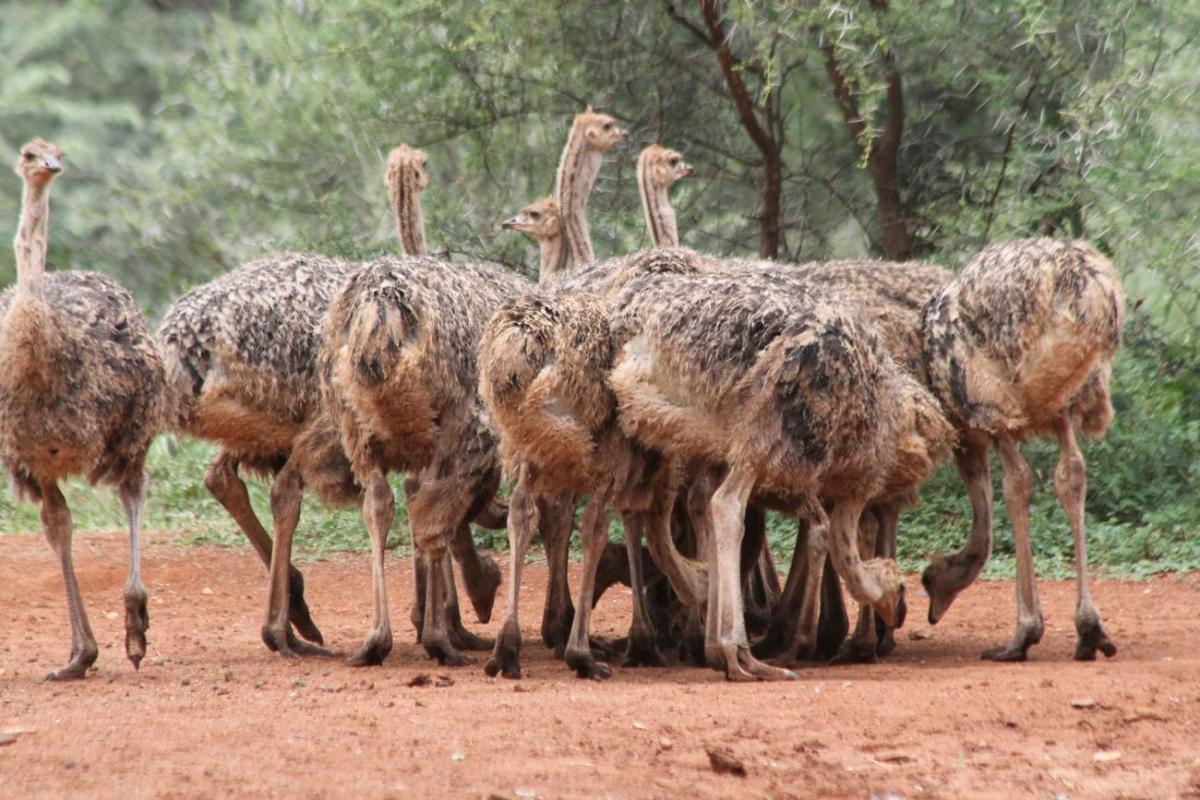
The Government’s current approach is to ask UK Parliamentarians to stop talking about Brexit. It’s the ultimate ostrich with its head in the sand[3]. Brexit is a gigantic strategic mistake. Unfortunately, there remains a significant number of English politicians so entrenched in the mythology of Brexit that change is slow in coming. The public are way ahead of the politicians.

Stereotyping people as being in one camp or another, with the aim of continuing to divide the public is the unscrupulous tool of those people without a rational or coherent argument to make. It’s clear, progress will not be made until Ministers recognise that Brexit was a mistake. We may have to wait until after the next UK General Election before a real change is possible. Let’s hope that day comes soon.

POST 1: UK Press reports on the debate MPs debate consequences of Brexit for first time | The Independent MPs debate Brexit impact ‘for the first time since leaving the EU’ | The National Brexit: MPs call for public inquiry into impact of leaving EU – BBC News

POST 2: Brexit is a drag on the UK Sunak Grins And Bears It As Boss Hits Out At Brexit’s ‘Drag On Growth’ | HuffPost UK Politics (huffingtonpost.co.uk)


[1] https://youtu.be/iHzf1BQFXq8

[2] https://petition.parliament.uk/

[3] It’s a myth ostriches bury their head in the sand. Though this isn’t true, Ostrich Syndrome is a popular belief. It’s avoidance coping that people use to manage uncomfortable feelings or rather, not deal with them.

Going backwards

I find it difficult to believe anyone who gets into their sixties and says that they have never had an accident. My latest isn’t original or without minor consequence. Yesterday morning a kind nurse gave me a bandage to hold two fingers straight.

At the start of the month my gardening efforts amounted to emptying pots, replanting pots, and moving pots. I’ve got far too many pots. Plants that had not survived the winter freeze were unceremoniously sent to the compost heap. Plants that looked like the spring was bringing them back to life were given a bit of pampering.

Sitting in the shade, one large square container held a small fir tree. The tree wasn’t in the best of health but remained well worth saving. What I was unhappy about was its position on the patio out the back of the house. So, it occurred to me that it was logical to move the container to a spot where the tree might flourish in future. The large square container was made of fiberglass but had the appearance of grey slate. It had been standing unhindered in one place for well over a year.

Now, you would think an engineer, like me, would know something about friction. Or in this case stiction, that is the friction that tends to stop stationary surfaces from easily moving. There are more than two ways I could have attempted to move this heavy garden container. One was to push and the other was to pull. I opted to pull and that was my big mistake.

I crouched down and with both hands pulled hard. The container was stubborn. Again, I pulled hard. Then without warning the side of the container gave way, and I went flying. Afterwards, I wish I had paid attention to what was behind me. I hit the ground awkwardly.

When adverse events like this happen, it’s as if time momentarily slows down. Naturally, it doesn’t but it feels like an out of body experience when there’s nothing you can do to stop the inevitable happening. That split second ended with me lying on my right side with my hand extended two steps down on the patio steps. My fall was broken by my backside and my right-hand middle finger.

Oh dear, this is going to hurt – that was my first thought as I lay on the hard ground looking back at the roots of the tree I was trying to save. Second thought was – why did I do that?

Knowledge with hindsight can be a universal blight. Sure, I wouldn’t have done what I did if I’d taken the time to think more deeply about all the possible consequences linked to moving heavy objects. In this case there was only me siting on the ground painfully recounting what happened. No one to say – are you crazy? You shouldn’t have pulled that part of that container.

Accidents are a part of life. Better they be minor. Better we learn from them every time.

Cider pigs

Out the back of the farmhouse was a scruffy orchard. It was through the east facing garden, then over an awkward cobbled together fence. The orchard was an L-shape with a soggy wet depression in the middle. The trees at the top end of the orchard had long since gone by the time of my childhood. The lower part of the orchard was populated with the most venerable but neglected cider apple trees. Never pruned with that crusty, mossy look of years of struggle against the elements.

There was no money in growing cider apples in the 1960s and besides the ones that still stood were probably originally grown for homemade home consumed cider. The orchard was a piggery.  Several well-made timber pig huts stood in the field. Except for one. In a corner there was strange construction made of used railway sleepers, arranged vertically, and covered with a round tin roof. It was the only hut that was not moveable. A rough concrete floor kept the railway sleepers in place.

Now, that was a good set-up. There’s a thing that most pigs like and it’s ripe cider apples. Trouble is that they don’t know when to stop. So, when they fell, we had to find something to do with them by the bucket load. For us boys, that wasn’t a problem. Cider apple[1] wars were a feature of the autumn.

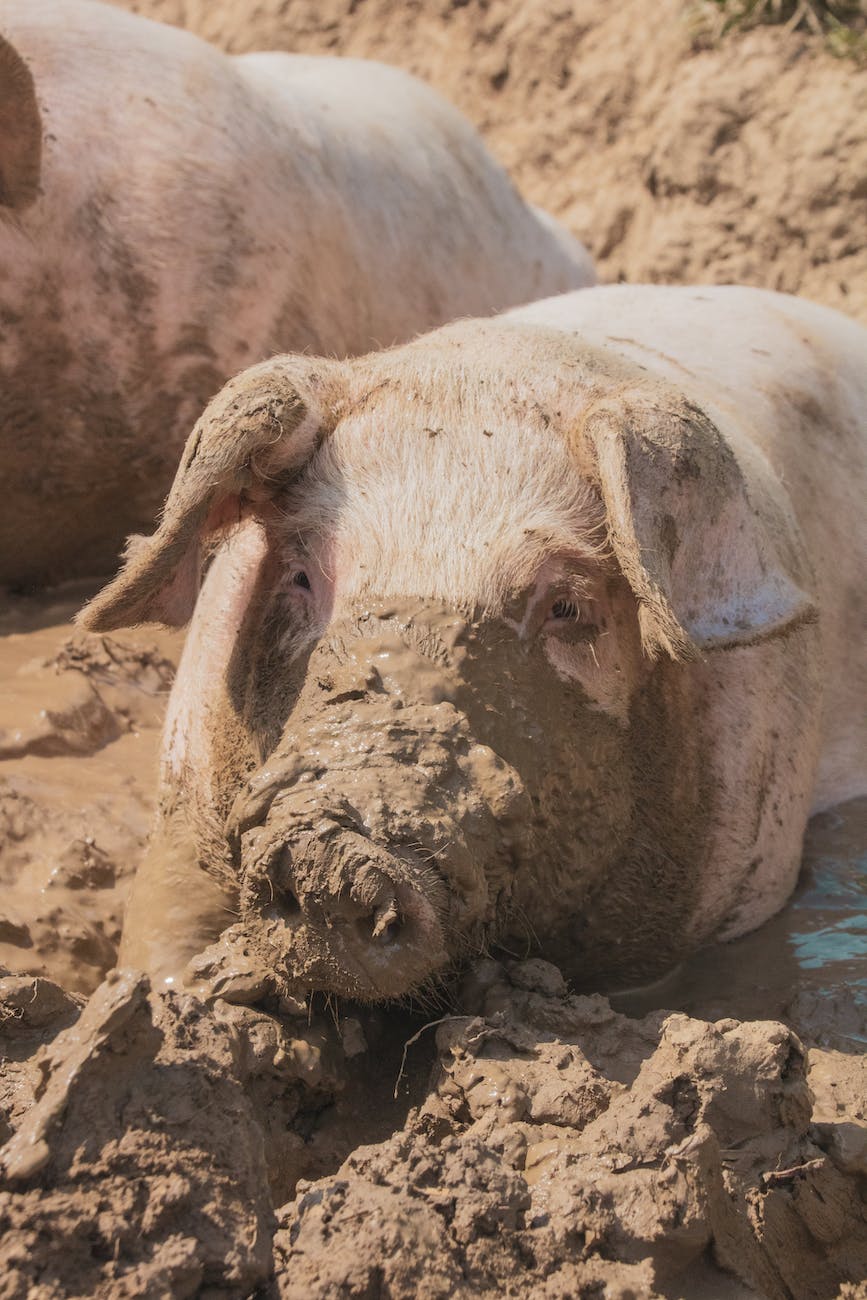
If I’d taken a shine to farming in those early years, it would have been keeping pigs. That orchard was always as carved up as a fresh battle ground. Nothing more satisfying to a happy pig than rooting through the dirt. In good weather making our way across the ground was easy. In bad weather getting stuck in the sticky clay mud was guaranteed. The thick mud was ideal in the summer. Wallows would form so the pigs could do what they do best when it gets hot.

All that said, I can’t imagine domesticated pigs in any other setting than outdoors. As I drive around, it makes me pleased to see so many examples of outdoor reared animals. Pigs are inquisitive and intelligent animals that deserve the freedom to roam around in an open space.

At one time or another, I kept a British Saddleback[2], a Landrace[3], and a Large White[4] pig.  The Large White pigs could be a handful if the pig took a disliking to you. Saddlebacks were the best when it came to temperament. Agreeable, content, and excellent mothers.

My brothers and I were being tutored in animal husbandry from a young age. The principle aim was not to pamper a pet but to look after the pigs with the aim of having as big a litter of piglets as possible. That’s where profit lay. We kept records of the cost of the pig food, bedding needs and everything that went into our mini farming enterprises.

Encouraged by my parents, my brother and I were often in competition.  I remember once sitting up late into the evening with a sow and being so proud of having helped 14 piglets into the world alive. This could be a hazardous business in a confined space of a small pig hut. The job was making sure the piglets found their way to their mother’s teat and didn’t get squashed on the way. If they let out a loud squeal the sow could move and could unwittingly squash one of the litter.

In my mind, Somerset cider is tied with pigs. The two go hand in hand.


[1] https://ciderappletrees.co.uk/

[2] https://www.britishpigs.org.uk/british-saddleback

[3] https://www.britishpigs.org.uk/british-landrace

[4] https://www.britishpigs.org.uk/large-white

Minister walks

In the news this week is a British politician who has served as Deputy Prime Minister in the UK, resigning because of a report into his conduct[1]. The Prime Minister (PM) has been accused of dither and delay in addressing the outcome of an investigation into bullying that has now been published.

Certain Government Ministers are entitled to be addressed as “Right Honourable” in the UK Parliament. What’s clear in this case is that the conduct described in the report is neither right nor honourable. The findings of the investigation report were set before the PM for his judgement[2]

A senior lawyer had been asked to investigate whether the Conservative politician Dominic Raab had bullied civil servants during his time as both Foreign Secretary from 2019 to 2021, and then Justice Secretary from 2021 to 2022.

Raab has been Member of Parliament (MP) for Esher and Walton in Surrey Country since 2010. He has been a prominent supporter of Britain’s exit from the European Union (Brexit) and known for his forthright style in asserting the virtues of that ill-planned project.

Unsurprisingly, his resignation has stirred up a host of conspiracy theories and finger pointing.

I’m left wondering what it would have been like to have been a civil servant working in the indescribably complicated environment where Brexit is treated as a religion. It must have been a high-pressure situation offering practical and pragmatic options to a Government Minister so wedded to one singular belief, especially under Boris Johnson’s failed premiership.

Bullying behaviour is a serious matter. Whereas some Press commentators are trying to blame the accusers who stepped forward, the evidence shows that it’s not the former Minister who is the victim here. I think it’s disingenuous to paint Dominic Raab as a victim.

Yet again the Conservative Party is in turmoil. It seems to be a perpetual state of play. When Government priorities should be focused on the cost-of-living crisis, instead they are engulfed on their own unending bad behaviour.


[1] https://www.bbc.co.uk/news/uk-politics-65333983

[2] https://www.gov.uk/government/publications/letter-from-the-prime-minister-to-the-rt-hon-dominic-raab-mp