Divided

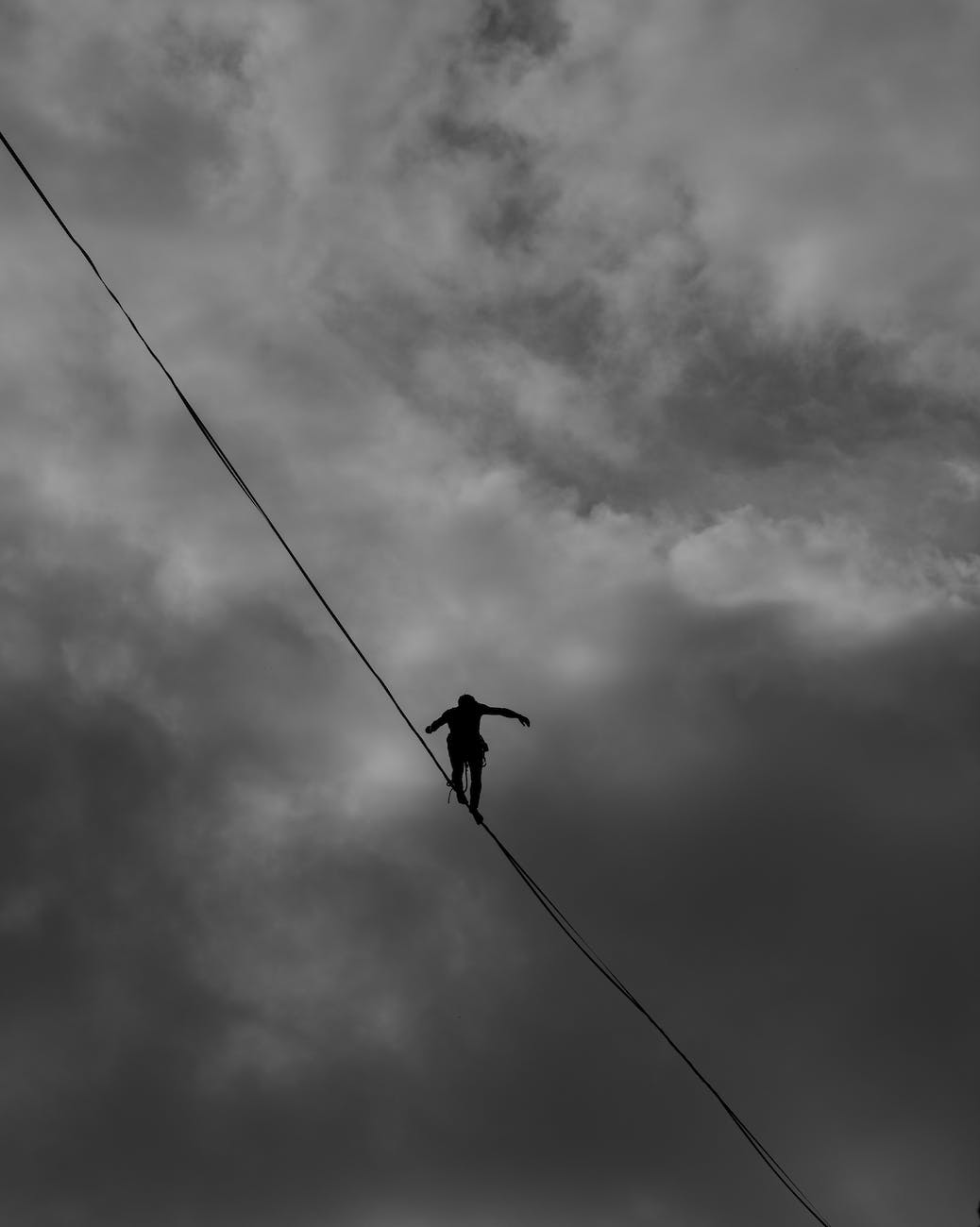
Away for a week. I’ve been in Canada. In Montreal. On return to the UK, I see the next step in the convolutions of the Conservative Party have littered newspaper column inches. If ever there was a thin man on tight rope balancing a can of worms on one arm and a broken bicycle on the other, then it’s the current Prime Minister.

I’m sure he never trained for the Cirque du Soleil. Maybe Rishi Sunak should take up traditional circus disciplines like the swinging trapeze and flying hand to hand. Certainly, he could make a living that way even if he doesn’t need the money. Circus or pantomime would be a good opening for a great number of pending unemployed politicians.

Suella Braverman’s second sacking as Home Secretary opens the opportunity for her to take to the stage. In her case the audience would know when to boo without any prompting. The world of the pantomime villain[1] might revive a flagging political career.

Nigel Farage, former leader of the UK Independence Party is off the jungle[2]. Most suitably he’ll be featured alongside comedians anxious to keep themselves in the public eye. The cartoonists are having a field day with this oddity.

Boris Johnson’s trying his hand with comedy too. His new position as a GB News broadcaster will be pandering to a small but loyal right-wing audience. That will not put him off, I’m sure. I wonder what kind of studio wallpaper will be his backing?

Others have gone to ground or are typing WhatsApp messages to a 101 groups all fighting to be the next star of the right. The Brexit brigade of the past is finding a natural home in entertainment. It’s one way of jumping ship before the poltical Rapid Unscheduled Disassembly (RUD) to come. This is a wonderfully inventive acronym for a complete disaster.

If I was to make a guess as to what Rishi Sunak might be attempting, it’s a rebranding the likes of which we haven’t seen since the chocolate bar Marathon changed to Snickers. I seem to remember that name change was a marketing curiosity. The British public didn’t understand it. After decades past the rebrand, the name Marathon was brought back. Is the Conservative Party that chocolate bar fallen out of favour and looking desperately for a retro-look?

Sweeping a decade of chaos under the carpet is a tall order. Even with the maxim that a week is a long time in politics. I don’t think the British public are so forgiving or forgetful. The roots of our problems are the results of poor political judgement and poor actions over a long trem of office.

No doubt the Conservatives will try to jerrymander, as much as slight of hand will allow them to get away with in the media spotlight. Voter ID rules will keep some potential voters at home come the next general election. Shifting the boundaries of some constituencies has benefits too. A pre-election bag of goodies is being put together to stiffen the resolve of wavering traditional conservatives. Expect Springtime give aways.

My overall sense is that major change is coming. Abraham Lincoln said, “a house divided against itself cannot stand,” and that applies more broadly than the reason it was said in the 1850s. The strands of conservatism that have been so politically successful in Britain are divided amongst themselves. Not just a few small gaps. Hulking great chasms exist between entrenched groups. That situation never goes well. Not for anyone.


[1] http://celebratepanto.co.uk/toptipsforvillainy/

[2] https://www.entertainmentdaily.com/tv/im-a-celebrity-nigel-farage-backlaash-from-celebrities/

Watch it

Today, the same hubris that plagued the Brexit referendum in 2016 is in the air. That’s when people become dangerous overconfident that they know what’s going to happen next. All the signs in the stars, almanac’s predictions and emotional forces point one way but hard cold reality respects none of these pointers.

It goes like this. Every day there’s a story about how dreadful the Conservative Government has been in recent years. Like tales of manic cartoon characters, the retelling of events is almost unbelievable. At the same time, the opinion polls and the commonly held media assumption is that, come the next General Election, next year the Labour Party will romp home with a workable parliamentary majority.

A great number of people may think that politicians have let them down and public figures that brim with arrogant self-confidence and bluster should not be trusted. However, that may not translate into a simple selection of an alternative. The primitive assumption that voters act in a binary way, dislike candidate A means like candidate B, belongs in a prior century.

This decade is different. The speed with which events happen and then are glossed over or suddenly uncovered is astonishing. It’s frantic. Watching a replay of last year’s “Have I Got News For You[1]” and it’s like visiting a distant land. Even some of the jokes no longer land. Names of people in the daily news rise and fade like waves hitting a rocky shore.

If we, me, and you were entirely rational then I’m sure there would be a strong wish for a period of consistent dull normality. A decade when competent people worked hard to make the world a better place. When the news was more about cats getting caught up trees and puppies chasing balls. When the economy gradually got rebuilt and a feeling of prosperity and security started to spread far and wide across the country. Ultimately, at the end of a term of office the whole country should be happier, healthier, and wealthier.

We are not rational. So, as a life-long liberal I warn my Labour Party colleagues of the dangers of excessive pride and over-confidence. Yes, lots of traditional indicators may suggest that change is coming. I’ve written about the great need for change, but we can soon be shocked or shaken by cold reality. Afterall that’s what happened at the 2016 referendum.

Reasons to vote can come from multiple directions. Personalities can sway the climate of opinion. We may hope for a coming decade of progress and sanity. It’s by no means guaranteed. Hubris is frequently the cause of upsets and surprises. That’s where we are at the end of 2023.


[1] https://www.bbc.co.uk/programmes/b006mkw3

Ticket to ride

The latest political rouse is not a new one. There must be a cabinet full of these tactics stashed away in Conservative party headquarters. In a desperate attempt to prepare prospective candidates for a forthcoming General Election we are going to see a lot of slight of hand. None of it will be magic. It takes blind ambition and the ability to deny yesterday’s plans in a heartbeat.

Most of the News about rail travel around here has been about industrial action. That said, at least one other issue has got people rallied in opposition over recent weeks.

Back in July a public consultation[1] was launched to consider how rail tickets are sold and how to improve customer service. The public were invited to comment on proposals which were made by rail operators across the country.

Now, that’s the interesting bit: proposals which were made by rail operators. So, they say. The reality is that rail operators would not have been able to make major proposals for change in customer services unless there was some kind of tacit agreement with the Department of Transport DfT[2]. This is reasonable because a great deal of public money is made available to the railways. Guidance on the issue is a matter for the Secretary of State for Transport.

One proposal was made that must have been known would spark protests. Not everyone uses local rail ticket offices, but their removal was never going to be a simple matter. Reigate has one. It’s not always open but when it is open the ticket office is immensely useful. Ministers when questioned about the unpopular move to close ticket offices windows defended this proposal.

Now, let’s jump to the outcome of the consultation and the decision made as a result. Through the 3-months after the closure of the public consultation period the issue was allowed to fester. As the post-party conference season weather limits doorstep campaigning so political social media activity is ramping up to take us through the winter.

The results of the consultation pointed to an obvious decision. This is particularly true because the issue of rail ticket office hours was not a new one, having done the rounds ten years ago.

So, what do we have? Conservative prospective parliamentary candidates claiming victory. Single handed they defeated an unpopular measure and listened to peoples’ complaints.

Honestly, am I being cynical? We must look back at where the recent public consultation came from and the fact that changes to railway ticket office opening hours were addressed in 2012, with the same result. Proposals dropped.

The way the roles of station staff have been used to stir-up controversy is a political ploy. Then to step-in to slap down wicked rail operators across the country is a rouse in my opinion. Will this issue of major changes to ticket offices come back again. Sure, it will but only after the next General Election.


[1] https://www.southernrailway.com/publicconsultation

[2]Not a new issue https://www.gov.uk/government/publications/changes-to-railway-ticket-office-opening-hours/changes-to-railway-ticket-office-opening-hours

Looking back

Yesterday, was a day for reflection. Sue and I attended the celebration of the life a former colleague and a friend who passed away recently.

Mostly, I was reflecting on the events of the 1990s. To me, that’s not so long ago. To the calendar that’s 30-years ago. Not an original thought but it was a moment when I was reminded that time passes remarkably quickly. Those years have raced by. In that time the country’s fortunes has gone backwards as much as forwards.

Baroness Thomas of Walliswood, to me Susan Thomas, was a Surrey County Councillor at the time that I also held that position in Reigate. I had one term of office from May 1993 to May 1997. Those years were special, and I don’t mean just to me. For one, the County Council was No Overall Control (NOC)[1] for the first, and only time in its history. During that 4-year period there was two Conservative budgets and two Liberal Democrat budgets. Susan was Chair of the full Council during the Liberal Democrat led period.

Susan was a parliamentary candidate in Mole Valley in the 1983 and 1987 General Elections. That’s when one of Thatcher’s Ministers Kenneth Baker held the seat for the Conservatives. A decade before I had my first outing as a parliamentary candidate in Surrey.

In the years up to 1997, the Liberal Democrats underwent a period of growth under the leadership of Paddy Ashdown. It was a time when change was happening. There was a strong wish to sweep away the stale remains of Thatcher’s legacy.

Lots of memories flooded back of sitting in meeting rooms in Kingston-on-Thames playing my part as a junior councillor. Although, that was before the executive system created a gulf between local government councillors. There may have been a mixture of long-standing and new members but each had an equal voice when it came to voting.

I sat in meetings were Susan put her experience to good use. As a large political group of 29 members it wasn’t a given that we would all go in the same direction. As has often been said, getting agreement could be like herding cats.

Susan was a strong supporter of our role in Europe. On that subject we agreed without question.

After the ceremony at the crematorium in Chichester there was a gathering at a pavilion in a park in the city. It was an opportunity to chat about those decades’ past reflections. One or two local campaign leaflets from the were displayed on a table with photos from the 1980s and 90s. This was before the internet dominated every aspect of campaigning. Simple printed paper with a message was the main way people with something to say said it. Party style and branding has moved on but the method remains.

A conversation with a lad who wasn’t born at the time that I’m recalling brought me back to 2023. Over sandwiches and nibbles we both discovered an affection for the city of Bristol. The city where Sue and I first met. It was good to hear that down the generations our political concerns of the moment were not so different. We agreed that change was in the wind and about time too.

There’s hope that the next generation that ventures into political activism will be driven by the same liberal instincts that united Susan and me. Just as in the years running up to 1997, the sense that change is on the way is growing. The failures of a long list of Conservative Prime Ministers, Brexit and the current air of sleeze can not be glossed over and forgotten. Change is on the way. Let’s hope that proves to be true.


[1] https://en.wikipedia.org/wiki/Surrey_County_Council

Scandals

Political scandals are as much part of British life as bread and butter pudding. Yet, we, you, me and the cat and the dog always seem shocked when the next one arrives. As if standing at a isolated bus stop never expecting a bus to turn-up and to our great surprise it does.

It might be failing to disclose or declare large sums of money changing hands. It might a succession of sex scandals. It might be misleading statements, or down-right lies. It might be cover-ups and blatant hypocrisy. It might be abuse or bulling. It might be leaking secrets or dirty tricks to undermine colleagues. It might be …………and the list goes on.

There seems to be no limit to the inventiveness of Members of Parliament (MPs). Is there a defence? It’s true that leading a public life does expose a person to more scrutiny than you or me. There are occasions when unprincipled adversaries can take advantage of this exposed situation.

Reputational damage spreads like wildfire even if the source of the damage is untrue. A bad news story gets media headline that are never retracted. However, you would think that, knowing all the above, that a person in the public spotlight would not entertain thoughtlessness or foolishness, in so much as they can avoid it.

Ever since the Watergate scandal in the US, nearly every occurrence now has the appendage “gate” shoved on the front of it. We’ve become a bit German in making-up new composite words. A pub quiz master could ask; can you identify this gate or that gate? Now, there’s a set of specialist question for a Mastermind contestant.

I can imagine a Monopoly board especially made for Conservative MPs. Although, Labour, Scottish Nationalists and Liberal Democrat MPs star in the lists too but less often. They even play the Get out of Jail Free card, now and then. Some MPs have almost got away with major misdemeanours but at the last moment party support collapses or the winds of fate turn sharply against them.

That leads me to wonder how many get away by the seat of their paints. Or they live with the knowledge that their party Whips office has a file marked – open only is X misbehaves.

It’s time to clean-up politics. Trouble is that I’ve heard that slogan before. It plays well for a while and then harsh reality breaks through, and the house of cards starts to fall. I remember the Back-to-Basics campaign announced in 1993 by British Prime Minister John Major at the Conservative Party conference. I’ll be he wishes he’d not gone down that road so ardently.

Like it or not, this is in our hands. The electorate. Time and time again we have General Elections where we, me included, vote in people who are not best suited to protecting the public interests, representing us or advancing our crumbling constitution.

The ballot is a powerful thing. Sadly, all too often it’s the political commotion in the few weeks before a ballot that determines the outcome. If only it was possible to take a more considered long-term perspective and stick with it. Granted, not a new phenomenon. The Greeks and Romans knew about the fragility of the public mood. Our inclination to make a choice for this day rather than the months and years ahead, or even decades ahead.

Maybe, 2024 will be different. My glass is half full outlook.

Swing

The results are in. They are exceptional in the true sense of the word. The Labour Party pushed aside two large Conservative Party majorities[1]. The momentum for change is gathering pace. It’s not slowing. Those motivated to go out and vote on Thursday sent a strong message.

The Labour Party candidate was victorious in Mid Bedfordshire despite all three major British political parties putting up a fight. Only a tiny minority are going to miss the former Conservative MP Nadine Dorries. At least for the next year, or so the constituents of Mid Bedfordshire will have some form of representation in Parliament.

Overturning massive electoral majorities doesn’t happen every day. The Conservatives were sitting on a majority of more than 24,000 and now it’s all gone. It’s true that the voter turnout in a byelection doesn’t match that of a UK General Election but in the face of such a massive swing this is immaterial. Even making the case that defending parties are often on the back foot doesn’t make much difference.

Having been on the doorstep in Mid Bedfordshire my impression is that the mood was for change. Immediate change. The electorate is smart when it comes to making choices. In this case they have chosen those they perceive as most likely to deliver what they want.

Commentators have described this as a “political earthquake” for the Conservatives. The references to May 1997 are flooding out of media outlets. How can they not? Similar percussors were evident in the years leading up to Tony Blair’s victory over the then Conservative Prime Minister John Major. 

Are we heading for a UK General Election in 2024 that mimics the results of May 1997? A simple reading of public opinion does point in that direction, at the moment.

With a year to go, and all that may bring, it would be hubris to assume that a General Election result can be predicted. In 1964, Labour politician Harold Wilson famously said: a week is a long time in politics. That’s as true now as it ever was. In fact, volatility is a mark of our age.

Despite the wisdom of caution, with the legacy that the Conservatives have accumulated, it would be remarkable in the absolute extreme if they did engineer a sustained recovery in the next year.  

It’s an American saying, and with some argument over its attribution – politicians, like diapers, should be changed regularly. The meaning is clear. There are times when change is the imperative. The exact nature of the change is not as important as the fact that change takes place.

That’s where we are. There’s a hunger to put the dreadful political mess of the last decade behind us. To aim for higher goals. To look ahead with ambition and optimism.


[1] https://www.bbc.co.uk/news/live/uk-politics-67126173

Voting

We could call them Thursday boxes. In the UK byelections take place on a Thursday. Ballot boxes and polling stations are open for the full day. This Thursday there are two important parliamentary byelections taking place in England. Both seats have been occupied by Conservative politicians and by the end of the day that may no longer be the case.

Named after the Norse god of Thunder, Thor, our Thursday is a good day to make changes. There’s the next working day to absorb the implications of any change. Then there’s the coming Monday to make a new start. The UK has stuck with Thursday as election day, with few exceptions.

One theory is that Thursday was often a market day in the towns of England. Thus, people would be gathered in town squares where polling stations could be located. This gave election candidates an opportunity to meet and treat the electorate on their way to cast their votes. Remember the voting franchise was for land and property owners over much of British history.

Fridays have been paydays. So, the voter may have been more absorbed in shopping, socialising and winding-up the working week than listening to campaigning politicians. Making a Friday visit to a polling booth a low priority. This is more the case after the passing of the Great Reform Act[1].

Now, it may be advantageous to move voting day to weekends to maximise the number of people who would be free to vote in-person. However, you could say that we have a 24-hour society and postal voting is popular, so the day of the week is no longer a big deal. It maybe the case that on-line voting will eventually take the place of the traditional in-person marking a cross on a paper ballot. That would open-up the opportunity to have a similar scheme to postal voting and open-up the ballot to more than one day.

Going back to the past, Sundays would have been reserved for religious services. That’s more political than one might first imagine. The Church of England vicar imploring parishioners to be good might also look down at the landed gentry in the front row and recommends voting in a particular way. Naturally, in a Methodist chapel, or other non-conformist chapel, down the road another congregation might be given different heavenly advice.

Has Thursday been adopted to minimise the influence of the Church or the public house? The reason for the choice of Thursday has been lost in the mists of time. That doesn’t matter so much given that there’s still some good reasons to continue the tradition.

Personally, I hope that in-person voting at a polling station will always be part of the British electoral system. However much the world around us is being digitised so that we interface with colourful Apps and websites there’s nothing quite like putting a cross in a box with a pencil.

The trail of evidence it provides and the pure satisfaction of the physical act of marking a paper must be preserved. It a ritual that emphasises the importance of voting. Even for those who choose to deface their voting papers this is an important democratic process.


[1] https://www.parliament.uk/about/living-heritage/evolutionofparliament/houseofcommons/reformacts/overview/reformact1832/

Button down

More as a matter of amusement than anything else, I’ll write about something that I’m entirely unqualified to raise. It’s the sartorial styles of the Conservatives as they huddle in Manchester this week. Pictures of prominent people or would be prominent people are scattered around the media and it’s impossible not to have a response. My main point of reference is the standard press shots of the MPs who have planned to stand up to speak. Standing up in public is not something to be done in one’s underwear.

Business casual hasn’t got to the Conservative Party Conference. Even business casual is now a bit of a blast from the past[1]. More suited to an industrial estate office complex in Slough than the real world. Wearing clothes that are more “modern and casual” has by-passed Manchester’s gathering of politicians. Shirts are all buttoned down.

The Conservative men’s recipe remains a strict and traditional. Even Moss Bross[2] have stepped into the 2020s. The Conservative have not. They are buttoned up and best seen against a grey background. Male politicians assembled in Manchester exhibit a dress code that is country club or what was once known as, when we had them in Britain, bank manager like. A regiment of blue ties are tightened to the neckline. Stiff collars look like they came straight out of the packet.

So much of what we see is the typecasted stereotype. No wonder a great mass of people are put off ever standing for election. It’s a good question to ask? Should British politicians look like standard politicians, and long lines of past politicians?

It’s true appearance can shape attitudes. However, my thought on the subject is that politicians shouldn’t look that much different from the population they serve. Afterall, if I turn up on your doorstep as if I was dressed to go to a funeral you might only give me the directions to the local cemetery. Strict and traditional apparel doesn’t help break down barriers. Nothing signals remoteness better than expensive dress shoes and a sharp button-down shirt. 

So many years ago, it seems like another century, it was in-fact, I did do the Colour Me Beautiful training[3] at a party conference. I only have favourable memories of that brief experience. It was fun. Somewhere in a draw, I still have the colour patch that was given away as part of the course. The message is that confidence can flow from dressing in tune with who you are.

It does matter what politicians look like. I know that sounds superficial. Like it or not, what we see, as first impressions can make a huge impact on subsequent reactions. This is not a fixed phenomenon. Gradually, understated casual appearances have become the new code. Smart attire can be put together to form an individual style. More politicians should do just that.


[1] https://www.bbc.co.uk/programmes/b00jd68z

[2] https://www.moss.co.uk/

[3] https://www.colourmebeautiful.co.uk/training-academy

Showboating

Thinking that the pressure of global migration will go away if we build a high enough wall, physically or legally, is foolish and doesn’t work.

We have a Minister called Braveman in the UK. Currently the Home Secretary. She has a particular set of views which can accurately be described as of the right of politics. Given recent speeches it may be more accurate to say that she holds views that are of those of far-right political parties.

At a time when the UK Home Office is performing badly, she chooses to spend her time in ways that contribute little to solving problems. Her diagnosis is flawed. At the same time her desire to parade in front of cameras is insatiable. Upstaging her colleagues and showboating are roles that she plays with apparent ease. All this while the Home Office flounders.

In part Braveman’s flawed thinking comes from an overly legalistic grandstanding[1]. Yes, UK Members of Parliament are legislators, but Government Ministers should be leaders and administrators too. The UK Home Office’s challenges can not be addressed by law making alone, or even grandstanding about law making. Fine, policy can be important. In the current predicament timely action and implementation are far more important.

Building walls, forging barriers, imprisoning immigrants are appealing options to hard core isolationism, nationalists, and xenophobes. A long history of experience shows that their impacts are temporary, at best, and the worst extremes are soon entertained. North Korea has policies of that nature. History records the devastation caused by aggressive nationalists’ policies in the 1930s.

Saying that words written in the 1950s are no more relevant is a puny argument. She does not say that the Magna Carta is irrelevant or that the US Constitution is out of date. Braveman picks and chooses likes and dislikes to fit her nasty narrative[2].

At home, the cartoon of the ostrich with its head in the sand applies. Thinking that the pressure of global migration will go away if we build a high enough wall, physically or legally, is foolish and doesn’t work. Demonising those who are in peril is downright criminal.

Yes, immigration must be regulated. National borders must be controlled. A nations administration must be well managed. All of these are vital areas where immediate focus is needed. All of these seem to be ignored by Braveman.

Posturing in front of media hungry think tanks is futile. It’s for show. It’s a Trump like approach to the UK’s challenges and will bring only continued failure. Braveman has ambitions to be a party leader. That frightening prospect hangs in the air like a bad smell. Now, her unfortunate colleagues struggle and fidget when trying to defend her showboating. Let’s hope her time in office is short. 


[1] https://www.bbc.co.uk/news/uk-politics-66930930

[2] https://news.sky.com/story/suella-braverman-hits-back-at-sir-elton-john-criticism-of-speech-as-she-brushes-off-claims-she-is-aiming-for-tory-leadership-12971087

HS2 – again

Travelled on the Elizabeth Line yesterday. It was an expensive project to build. Tunnelling under London and erecting new stations was a costly business. It was called “Crossrail”. Approval was given in 2007 and construction started in 2009[1]. In 2022, one-sixth of the UK’s total rail journeys took place on the Elizabeth Line. The billions spent were a major investment in the future. Over £18 billion in fact. It was a national demonstration that huge civil engineering projects can be undertaken and mastered[2].

As a passenger the Elizabeth Line is a pleasure to use. It’s clean, speedy, and simple to use. Comparing it to the older London Tube lines is like comparing a Tesla with a Ford Anglia[3]. Sadly, a great deal of our national rail infrastructure is trapped in the Ford Anglia era.

So, what of HS2[4]? The wibbling and wobbling that has plagued the project is sucking the energy out of the resolve needed to see through an even bigger undertaking than Crossrail. Some people argue that the billions needed for HS2 could be better spent on other projects. However, the portfolio of transport projects that are suggested as alternatives never seem to materialise.

Talk of cancellations feed the political turbulence over infrastructure investments. The impression this presents goes way beyond the shores of this country. There’s no Global Britain on show here. It’s more signals of dither and lack of determination that are publicly on display. Instability and the short-term outlook is the motif of the current generation of politicians.

If there are superior and smarter alternatives to HS2 they should have come up during the planning phase of the project. What we know about vast engineering projects is that chopping and changing them midstream adds massively to costs. It also diminishes the usefulness of the outcome.

Britain needs a backbone. A rail backbone and a political backbone. The spending on HS2 is large but that spending is in country. It’s jobs and investment onshore for the benefit of the whole country, not just the Southeast of England.

The last few years have seen that banner “levelling up” heralded by Conservative politicians. This slogan will be as nothing if HS2 is wound down or constricted. The signal will be loudly heard that all that talk of levelling up the regions of Britain was shadow boxing.

In the long-term improved connectivity across the country will be a great asset. The Victorians knew a thing or two about engineering great projects. Their legacy should give us resolve.

POST: Still it is good to see the rest of the world getting on with High Speed Rail High-speed Archives – International Railway Journal (railjournal.com)


[1] https://www.timeout.com/london/news/the-new-elizabeth-line-your-crossrail-questions-answered-052322

[2] https://www.theguardian.com/uk-news/2022/mar/13/elizabeth-line-crossrail-opening-london

[3] https://www.autoexpress.co.uk/ford/104979/ford-anglia-105e-and-123e-buying-guide-and-review-1959-1968

[4] https://www.hs2.org.uk/