Muddy

Rain, rain, rain. It’s been a wet spring, so far. Let’s put that down to global warming. The cause is one thing, but the symptoms another. They are there to see every day as I look out of the kitchen window. At the back of our house, the open field that stretches out towards the river Lambourn is about 7 acres in size. At least half of it has been flooded or is caught in that cycle of the ebb and flow of the river for the last 3-months. Great for wildlife. It’s a soggy marshland.

We are into mid-April and there are rainless days. Bit by bit, it looked as if the river’s flood waters[1] were receding, and they were but now and then a burst of rain tops up the pools and streams. That’s this morning in a nutshell.

Our lawn is growing fresh grass enough to fuel a herd of wildebeest. I jokingly said we need a goat to eat it all off. Getting my battery powered mower to control the lawn is a real effort. A healthy growing season. That’s the good side of a damp climate.

For livestock, and wildlife the flourishing fodder is a positive. Already there are two families of ducklings swimming around and eating as much as they can. On the negative side, parts of the field outback are too wet to allow cattle to trample the new grass. A seasonal problem I’m familiar with having grown-up in a place called Horsington Marsh.

Bright green growth is one of the delights of springtime. Leaves on the trees and the fresh grass as it reaches skyward. Even the moss looks shiny and alive. This is the two-edged sword of farming. Grass needs the rain but too much and the land becomes a potential mud bath.

Eventually, the fast-flowing waters of the River Lambourn run into the River Kennet and then the River Thames. Strange to think that the water the ducks and geese stomp around in around here eventually passes through the heart of London on its way to the sea.

It’s notable that the grass grows where the flood water has receded. That part of the adjoining field where the waters come and go has turned into a combination of mud and aquatic vegetation. There are plants that can tolerate little air getting to their roots and there’s others that start to die back if there are submerged for too long.

Sadly, although the river’s waters look clean and clear, sewage treatment works, septic tanks, arable farming, road run-off and industrial processes have all had their impact. Technically the river is in an “unfavourable condition[2]” when it comes to aspects of water quality.

What of the mud? It will be interesting to see how quickly the submerged areas recover as the weather improves. I’ll be looking out for how all the phosphates in the water and the dead grass come alive again. Or do we end up with a low-lying grimy mud riverbank supporting rushes, reeds, and algae? Climate change and the human activity are changing the nature of watercourses. It’s difficult to say if the worsts aspects of this can be mitigated.


[1] https://check-for-flooding.service.gov.uk/target-area/061WAF22Lambourn

[2] https://www.westberks.gov.uk/article/41082/River-Lambourn-Special-Area-of-Conservation-SAC

Smart

One of the most irritating peak-time adverts on British TV, now, is the one where a fake Albert Einstein wibbles on to a fake dog in a hideously fake humorous manner. It’s condescending and preachy. What on earth the Albert Einstein has to do with household energy meters I can’t imagine. His famous equation is more useful for making nuclear bombs than measuring domestic power consumption. You might think the great man was an annoying Italian computer gaming character.

The smart meter is pushed on the basis that “you can better manage your energy”. I expect that’s true in most cases when they work well. I’ve had one for some time. We recently changed energy supplier. Guess what? In the transition I had to throw away an indicator and replace it with another.

In the news are reports of defunct smart meters causing people concerning problems. Smart meter mode means a meter can automatically send readings to an energy supplier. When they don’t work, lack of meter readings opens the door to energy companies making up bill estimates often to their advantage.

When I informed our power company, I got an education that put me right. Can’t possibly call the whole system a smart meter. No, that would be wrong. So, says the company:

“The smart meter you are enquiring about is actually an In Home Display, the smart meter is the meter on the wall.”

That informative reply reminded me of the Not The Nine O’clock sketch set in a gramophone shop. Foolish householder not knowing that it’s called an In Home Display (IHD). The smart meter is installed on the wall.

I’m in support of energy saving and the role an intelligent meter can play in monitoring the use of domestic energy. What are they trying to do – put me off?

Long gone are the days when meter readers knocked on the door and with a cheery smile jotted down the gas or electricity numbers in the understairs cupboard.

Now, I see the claim is that the “vast majority” of smart meters are operating as intended. That’s good. Those words mean about 88% according to a BBC report[1]. That sounds fine but what about the 12% who are in limbo? That’s not an inconsiderable number of people.

The roll out of smart metering technology started in 2011. There’s a first-generation and second-generation set-up out there in homes. A lot of work has been done to sort out communication problems. However, network coverage is not universal. Those connection issue are familiar to anyone with even the best mobile phone.

The BBC report is right to highlight problems. There ought to be a bigger focus on a plan for maintenance of the system as much as pushing new smart meter installations.


[1] https://www.bbc.co.uk/news/articles/cz9zqn77ezno

Safety

A considerable part of my working life has been in the analysis of occurrence data and trying to distiller the factors that cause or contribute to accidents and incidents. It’s rewarding work. An opportunity to influence that has value. I subscribe to the dictum that everything we do should contribute to continuous improvement in safety. Not zero risk but to keep risks low and under control, in so much as it’s possible.

Aviation only has the great success that it does because it’s a safe industry. For mass transport by air to be viable across the globe, the public must have confidence in it. They are willing to place whole families in the care of an airline to get them from London Gatwick to the Canary Islands for something that is not a physical need[1]. Regular leisure travel is a luxury and a privilege. We live in a fortunate age when overseas travel can be afforded by a large section of the population.

I watched the recent documentary on flight MH370. It’s sobering. It’s a story of the loss of a large aircraft that still seems unbelievable in this era. It’s the 10th anniversary of the disappearance of Malaysia Airlines flight MH 370 on 8 March 2014. The loss is a stark reminder that the oceans cover over 70% of the surface of the Earth. We know less about parts of the oceans than we do about the surface of Mars. The depths remain uncharted.

With a paucity of evidence theories have taken root. Official investigation reports are available. However, mystery remains particularly when it comes to answering the question – why? If as the documentary suggest, the willful actions of the pilot-in-command brought about the fatal outcome then there’s little to tell of his motivation. Highlighting the tragic Germanwings aviation accident doesn’t offer anything other than a context to possibilities. Evidence that the MH370 pilot-in-command was suicidal is scant. Although his known actions do not make much sense without invoking such a theory. Understanding what drives people to purposefully undertake unpredictable and irrational actions is an area of study that always needs attention.

Yesterday, Sunday, I was remined that threats to safety can come out of nowhere. Seemingly routine car journeys can suddenly take a turn in an unexpected direction. We become subject to the fates. I use the word “fate” but I’m not a great believer in the fates. Randomness plays a part but, in this case, yesterday afternoon, I was the subject to the foolish and negligent actions of another car driver.

On a wet “B” road that climbs and descends over chalk hills, there are triangular road signs that warn drivers that the road is a high risk road. What the signs are referring to is the wildlife. A deer may leap out of a roadside hedge at great speed and misjudge the road traffic. In fact, I did see an unfortunate small dead deer at the kerbside.

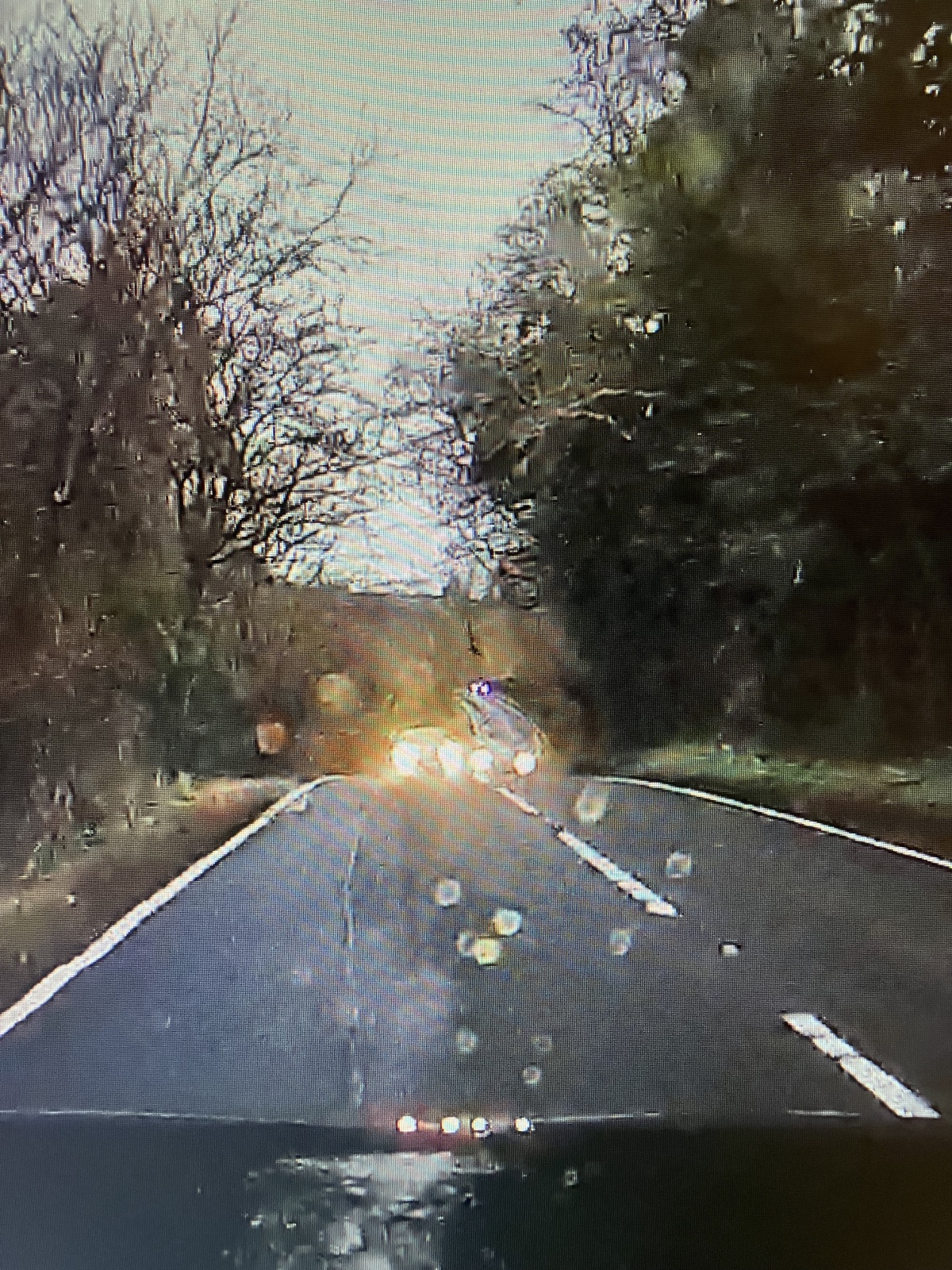
What happened to me had a purely human cause. Naturally, I would call it complete idiocy. Coming over the brow of a hill, and descending, suddenly there was 4 bright headlights ahead. On a narrow country road, with overgrown banks on either side that was a scary sight. Nowhere to go. In a faction of a second the overtaking car coming up the hill veered back into the right-hand lane. No more than a couple of yards in front of my car. Fortunately, there was no collision. What on earth was the motivation of that driver? Overtaking, at high speed, approaching the brow of a hill, on a wet county road, in poor light, sheer madness. A small red car, overtaking a larger car.

In safety work this points to the most difficult situations to understand. The irrational, or stupid or reckless, or carless human drives that are hard to design out of systems. How do we take effective corrective action when one person’s risk threshold is so very much higher than normal or acceptable? The problem with saying – take their licence away – is that this is always reactive. After a negative event. Maybe even a fatal one.


[1] https://www.simplypsychology.org/maslow.html

Spring

References to meteorological spring are all well and fine. I accept that those with the expert knowledge and data say that the 1st March[1] marked the transition into spring. For me that’s too early. Jumping the gun a bit.

The occurrence of astronomical spring makes more sense to me. That puts the transition on 20th March. So, a couple more weeks of tapering winter to go. I never like counting on spring before my birthday. I may have said this before, I’ve watched the Cheltenham Gold Cup[2] in a snow shower. That race is on the 15th March this year.

Nature is being the wake-up phases. Those buds that can be seen everywhere there hedges and bushes are a good indicator. Bulbs are well advanced this year. The snowdrops came and went with great speed.

This morning a frosty mist hung over the river. Slowly the sun’s rays burn-off this obscuring icy fog. The vail is lifted. The flood is receding after a couple of days of nothing more than light showers. Gradually the wetland grass is adjusting to a new phase of growth.

Riverbank trees are bare. The stretch up through the mist like a charcoal painting. Shades of grey gradually give way to colour as the dawn takes hold. A cloudless sky frames the outline with a pure morning blue. Backlight as I’m looking North.

Nothing but a troop of stubborn fat geese waddle around at the edge of the slivery water. The mirror like water is their playground. Preening and feeding the empire of Canadian geese numbers more than ten. Their peaceful contentment contrasts with the commuter traffic on the Oxford Road.

All the signs are of a sunny morning further hastening the approach of natures spring.


[1] https://www.metoffice.gov.uk/weather/learn-about/weather/seasons/spring/when-does-spring-start

[2] https://www.thejockeyclub.co.uk/cheltenham/events-tickets/the-festival/gold-cup-day/

March

The North wind doth blow and we shall have snow[1]. Well, today on the first day of March and it’s more of a gusty North Westerly wind and heavy rain. The snow maybe falling on high ground in the North of England but here in the South the temperature remains mild. Although, the line on the thermometer is slowly descending.

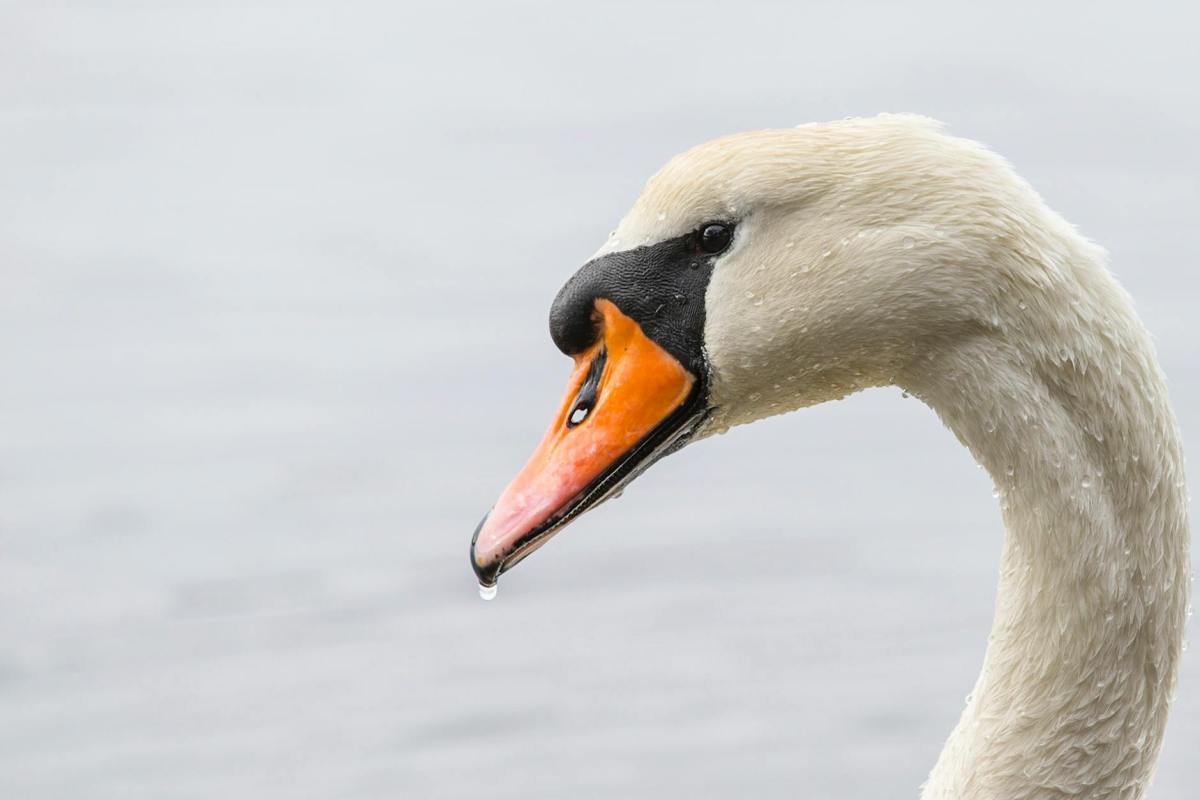
The flood in the small field out back waxes and wanes but is far from drying up. In fact, the extent of the water is greater now than it has been in a while. A lone Swan rests close to the riverbank. Not fussed by the driving rain. That makes me curious, where is its mate? On previous occasions, we have seen a pair of Swans cruising up and down the river Lambourn.

March comes in like a Lion[2]. That’s as true as it ever was of our weather, but will the next part of the saying happen as the month rolls on? Will March leave like a lamb? Winter may still have a sting in its tale. A misty wet March is in prospect.

March is always a month of transition. It certainly is for me. Having a birthday in the middle of the month is quite a good time to clock up another year. I never count winter as being behind us until I’ve put a candle on a cake. There’s an idea for a folksy modern saying.

There one more snowy white bird prancing around at the waters edge this morning. He or she is rather elegant small bird. It’s interesting to note that this bird was first recorded as breeding in Berkshire in 2007. Our visiting Egret[3] is dipping into the grass surveying the flood water with confidence.

Fishing is not just the exclusive rights of the Egret. There’s a slim tall Heron[1] who looks very regal. My guess is that the flood water has created small pools within which some small fish have become trapped. That’s a nice easy meal for a patient Heron. With spindly legs standing in the wet grassland any small fish would not see their fate coming.

As the sun has come up both Swan and Egret have moved on. The flood has been left to the ducks and geese. I don’t mention the Crows, Magpies and Pigeons. Although I just have. The wildlife seen from my window doesn’t mind gusty, wet, and windy anything like as much as I do.


[1] https://www.rspb.org.uk/birds-and-wildlife/grey-heron


[1] https://songsofchildhood.wordpress.com/2011/10/31/the-north-wind-doth-blow/

[2] https://www.theparisreview.org/blog/2015/03/02/folk-wisdom/

[3] https://www.wildlifetrusts.org/wildlife-explorer/birds/herons-egrets-spoonbill-and-crane/little-egret

EVs

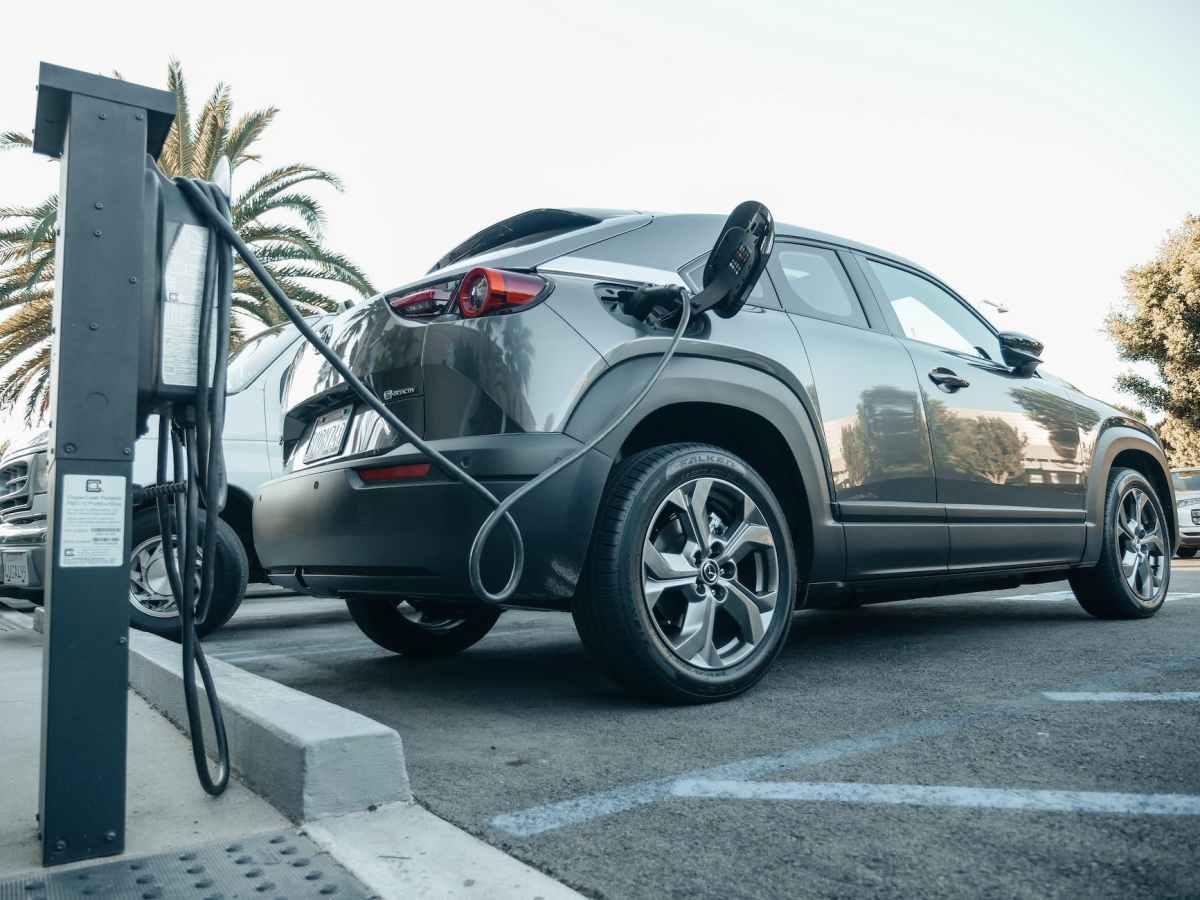
I do find the anti-EV campaigning on social media a bit peculiar. It’s a bit like the arguments for smoking that were made in the 1950s and 60s. Combustion engine vehicles are slowly but surely going to become history. The time for that change is the subject that should be discussed and not whether it’s a good idea or not[1].

One “argument” out there is that adding together all the elements that make-up an electric vehicle there’s a lot of environmental cost in their production. There’s no doubt that nothing is for free. For example, mining lithium and cobalt are not nice in every respect. There’s the concern that demand could quickly eat-up global supply too.

The “arguments” I’ve seen fall apart when considering not only the vehicle production environmental costs but the lifetime costs of an EV when compared with an internal combustion engine vehicle. 20-years of belching out toxic emissions stacks-up. 20-years of using renewable electricity is a far better solution. In theory the potential for recycling valuable materials is high with EVs too. However, we have yet to see if that works successfully in practice.

Other “arguments” look to demean the performance of EV’s when compared to conventional vehicles. Naturally, the time taken to recharge is one of the biggest gripes. For a conventional fuelling at a petrol station a tank can be filled with 500 miles worth of fuel in 15 minutes. For a current EV more preparation, planning and patience are needed to achieve a lesser range.

Some EV performance figures are far superior to conventional air breathing vehicles. Acceleration is one. Powerful electric motors unencumbered by complex mechanical transmission systems react immediately to demands[2]. EVs use power better.

There’s another gripe or moan and that’s about weight. Taking two comparable vehicles, in performance terms, the electric one will be heavier. That’s the technology we have now.

It’s a different kind of weight if that makes any sense. What I mean is that an EV is roughly the same weight whatever the state of the machine. Whereas a vehicle that uses liquid fuel varies in weight according the amount of fuel on-board. Of course, all vehicles vary in weight depending on the payload they carry (goods or passengers or both).

What’s a little difficult to take from the anti-EV lobby is that those who complain about EVs impacting roads, due to their weight, are rarely the same people who express concerns about heavy diesel delivery trucks or Chelsea tractors thundering down residential roads.

There’s one hazard that must be managed for all types of vehicles. A view of a serious fire involving either an EV or a conventional vehicle quickly shows what that threat can do. What we have now less experience dealing with EV fires. They can be severe and difficult to supress.

Regulation is often reactive. The fire threat is real. In this case maybe we do need fire suppression systems in integrated household garages. Multistorey car parks packed full of EVs are going to be a real challenge if a major fire sparks off. That said a fire started with a “diesel-powered vehicle” can be just as challenging[3].


[1] https://www.ft.com/video/95f86c5d-5a94-4e63-bbe8-6cc5ffb59a2b

[2] https://www.caranddriver.com/features/a38887851/why-are-evs-so-quick/

[3] https://www.bbc.co.uk/news/uk-england-beds-bucks-herts-67077996

Drive

Listening to talk radio passes the miles of spray as I thundered down the motorway in the heavy rain. Oddly, going West to East seems somehow to be “down” although that makes no sense at all. Today, the M4 looked at its least attractive.

Inherently, those who take the time to phone in to radio stations are a self-selecting group of people who have been themselves been selected by the station’s editors. Afterall, who wants a dull silence or an abusive incoherent rant? That’s what social media is for (smile).

I’m guilty as a listener of quick stereotyping. I’m human. Radio voices do give a hint of education and personality. Unfortunately, my irrational biases are not too different from a lot of people. That association of a middle English accent-less voice as being “intelligent” is so easy to make. Contrasted that person with a broad regional accent, God forbid, West Country, then it’s all to easy to think smock and pitchfork.

What I’m recalling is a man speaking in the poshest London accent one can imagine. The subject was flip flops (flippy floppy[1]) that opposition politicians are doing as they change their policies. Is it national News that circumstances change and policies change accordingly? Apparently, it is.

He was saying that he had intended to vote Labour in the forthcoming UK General Election because he wanted change. It’s time for a change. Now, recent announcements had put him off. The radio host asked him who he was going to vote for when the election finally came. His answer was not inspiring; the devil you know, he said. My reaction was one of destain. I wanted to shout at the radio; you mean after all the screw-ups this lot have made you would still want them back in power!

I thought how can an intelligent person, maybe that was a leap too far, stick with the devil you know, when you know that devil is so grossly incompetent? Their overall performance has been poor. It’s a mystery but is that’s a common view? Is the taste for change so weak?

That sort of spur of the minute instinctive reaction is quite legitimate. Afterall, it’s a secret ballot. So, if that’s the way a person feels then that’s the way they will go. Comfort blanket politics.

My problem is that the whole notion of accountability goes out of the window if people constantly stick with the “devil you know” regardless of what they have done. If choosing differently is always considered to be too risky then no one will ever know if things can get better (to paraphrase a slogan from a past election[2]).

There’s some political mendacity here too. If we go back to the 2016 referendum, it was decidedly risky to vote for Brexit. That didn’t stop tub thumping right-wing politicians from pushing the risky option. Now, those same right-wing politicians want to cling to power so they are advocating exactly the opposite. That’s to encourage the electorate to think that change is far too risky. I can image a new political slogan saying – Yes, we are awful but we say we are not so awful as all the others. Dick Emery[3] would be proud.


[1] https://youtu.be/CFNML_MGq-M

[2] https://youtu.be/V6QhAZckY8w

[3] https://www.theguardian.com/tv-and-radio/2020/jan/03/dick-emery-dies-archive-1983

Look ahead

Much as I support the UK Government’s position on hormone injected beef, the exit from negotiations on trade have wide implications. Maintaining the regulations that ban the use of hormones in beef is a good move for farmers and consumers.

However, for cheese exports the collapse of talks is tragic. Zero to 200% is one hell of a tariff jump. The UK will be in a worse position with respect to trade than it was pre-referendum. That’s with a strong ally, namely Canada[1]. Brexit has made us worse-off.

Yet, the Brexit supporters that remain, still herald Brexit as a wonder. Logic plays no part in their thinking. It’s easy to respond in an angry way to this self-inflicted blindness. It does no good. The stubborn streak in those who have dug a big hole is a thick one. And the hole is getting ever bigger.

Clearly, there’s no urgency on the part of Canada[2]. On the UK side the urgency is much greater. The need to stimulate growth to bring about a recovery in the British economy is much needed. Sadly, the legacy of a decision made in 2016 has made created a weak negotiating position.

For a long time, the UK has been given a soft landing due to transitional arrangements. Now, these arrangements are drying up. Far from the propaganda of the Brexiters, trade deals are not easy.

The problem is a reference back to the past is like crying over spilt milk[3]. How to go forward when the relationship between different States has been significantly changed is no simple matter. The situation is not irrecoverable but the avenues that can be explored are limited.

So, I caution of a never-ending lament. Brexit will need to be rectified. The means to do it are tortuous and may take a long time. The means to undo the mistakes of the past may face opposition from many quarters. One of the predictions for the European elections, this year, are that there will be a swing to the political right. Several right-wing political parties across Europe are on the ascendancy.

Instinctively these right leaning political parties are likely to less internationalist and more focused on immediate domestic concerns. So, third parties, like the UK, may not be high on Europe’s future agenda. On the UK side the major political parties have gone quite on Europe. There’s plenty of campaigning on international issues, like climate change and military conflict but little on enhanced working together.

There are many national news stories where solutions are best arrived at by greater communication, cooperation, and coordination. This year, so far, the signs are that these three “c” are going to take a back seat. Ironic, isn’t it. Facing greater international challenges than for decades, States choose to look inward. This myopia will continue until leaders speak positively of the future. Vision is needed.


[1] https://www.reuters.com/markets/canada-britain-pausing-free-trade-agreement-talks-2024-01-25/

[2] https://www.cbc.ca/news/politics/canada-uk-trade-cheese-1.7094817

[3] https://www.collinsdictionary.com/dictionary/english/cry-over-spilt-milk

Enough

I’m not a supporter of the Labour party leader but his call for change is surely one that is echoing through every street of the land. By the way, good choice for a location to make a national New Year speech[1]. And all the Conservatives could do in response is make populists claim that he’s a populist whilst doing nothing other than being populist. Populism eating itself. Populists accusing others of being populists. Admitting the flaws in what they do whilst trying to paint those flaws on others.

No, Prime Minister Sunak procrastination is not the way forward. He’s without core principles, hanging on to exploit whatever comes along. There’s zero authenticity only maximum opportunism.

Liberal Democrat party calls for a General Election are spot on. The reality is that we are destined to have a year’s worth of election campaigning ahead if the election date if not called for the spring.

Liberal Democrats “Tory Removal Service” may signal a love for publicity gimmicks but getting national attention when the media landscape is polarised is not a simple business.

Leader Ed Davey is showing that there is an alternative to the worn-out outdated political parties[2]. It’s a challenge to the British electorate. Do you want the stale ding-dong of national political debate to go on disappointing forever? We can do better. We can mend a political system that has been fundamentally broken for an age.

Rather than feathering the beds of supporters we need a government commitment to equality. Rather than short-termism we need a government that takes the long view. Rather than shunning our neighbours we need a government that embraces internationalism.

Yesterday’s resignation of Conservative MP Chris Skidmore[3] appears much like a rat leaving a sinking ship but it’s more important than that classic media interpretation of events.

Skidmore addressed the issue of short-termism head on. He’s resigning citing the on-going legislation to boost North Sea oil and gas drilling. Next week, the UK Parliament returns to consider an Offshore Petroleum Licensing Bill. This Conservative Government’s move is a kick in the teeth to the country’s green credentials. He states, I can no longer stand by. The climate crisis that we face is too important to politicise or to ignore.

Promoting the production of new oil and gas sources is a backward move. Yes, we need energy security but that should be a driver to invest in electrification and reducing energy waste. There’s a list of policy moves that could return the UK to a position of leadership on climate change.

2024 is likely to see the current Conservative administration flaking like peeling paint as it slowly decays. We do not need opportunistic papering over the cracks. It would be so much better for the whole country if they stood aside – soon.


[1] https://www.bbc.co.uk/news/uk-politics-67880324

[2] https://www.libdems.org.uk/news/article/new-year-2024

[3] https://news.sky.com/story/tory-mp-chris-skidmore-to-stand-down-over-bill-that-promotes-production-of-new-oil-and-gas-13042746

The Will

We’ve entered the first days of a New Year. Traditionally, it’s a time for reflection and speculation.

Looking back at the path behind.  Looking forward at the unmade path ahead. Four and twenty years into the new millennium perhaps it’s not so enjoyable to look back. To be reminded of the travails of the last decade, in particular, isn’t that helpful. We can go back to feel good moments, like 2012 and the London Olympics[1]. Sadly, there hasn’t been enough of these moments of unity and common purpose. Unscrupulous politicians have become fixated on dividing people.

This year, the opportunities to change all that are staring us in the face. It’s an Olympic year[2]. Choices abound. Elections mark an opportunity to carve a new path ahead. Doomsayers are totalling up the conflicts in the world. Listing the threats. Calling our attention to our weaknesses. This is one side of the coin. I’d rather highlight the other side of the coin.

As much as humanity is well capable of breaking things it’s getting ever better at fixing things. We may be slow in recognising climate change, but it’s spurring innovation on a massive level.

Despite the aging demographic in this country, the world is more youthful. That worldwide youth is gaining better education, in numbers unimaginable in past millennia.

The Human vs. Machine narrative is a false one. The choice is ours as to what to do with technology. We need to take that responsibility. The means to do so are available to us if we choose to us them.

Health outcomes, at a global level are improving. Our understanding of the afflictions of humanity is advancing to meet the challenge. Our responsiveness to new threats is improving.

So, don’t look down at your feet. Look up, look forward and prepare for a better future.

There’s also a stubborn noise in our political debate. Every request is for more money. The thesis is that the problem, whatever it is, will be solved by more money. Sometimes that’s the way to go. Investing in science and research has been shown to work. It clearly helps to have a well-trained and well-motivated workforce. However, this sum isn’t digital. In other words: More Money = solution. Less Money = failure. In a lot of cases, it’s not money that is the missing component.

Much of what I’ve observed fits a different equation. Namely, sustained political will equals progress. Lack of political will equals stagnation. And political will deployed like a blunderbuss equals disappointment and waste. I’m talking of a version of “A House Divided Cannot Stand.” The issue is how to differentiate and not how to divide. They are different.

The British high-speed rail debate is a sad example. Sustained political will can deliver. Poor management, shilly-shallying and constantly shuffling the pack, which is what has happened, lays the tracks to failure and waste in the long term.

2024 can be a year when we take back control of our destiny. Commitment to building a better country. A generous and inclusive society that brings people together. We have the will.


[1] https://www.londonolympics2012.com/

[2] https://www.paris2024.org/en/