Earthrise

24th December 1968 did change everything. What was achieved in that year hasn’t been matched. An unexpected event took place on an adventure to orbit our Moon. Now, 55-years have gone by. Enormous strides have changed lives. Technology has raced ahead. We reside on a beautiful and bountifully planet. Yet, we have continued to pump massive amounts of carbon into the Earth’s atmosphere. I wonder, does this tell us anything about human nature? If there is such a thing.

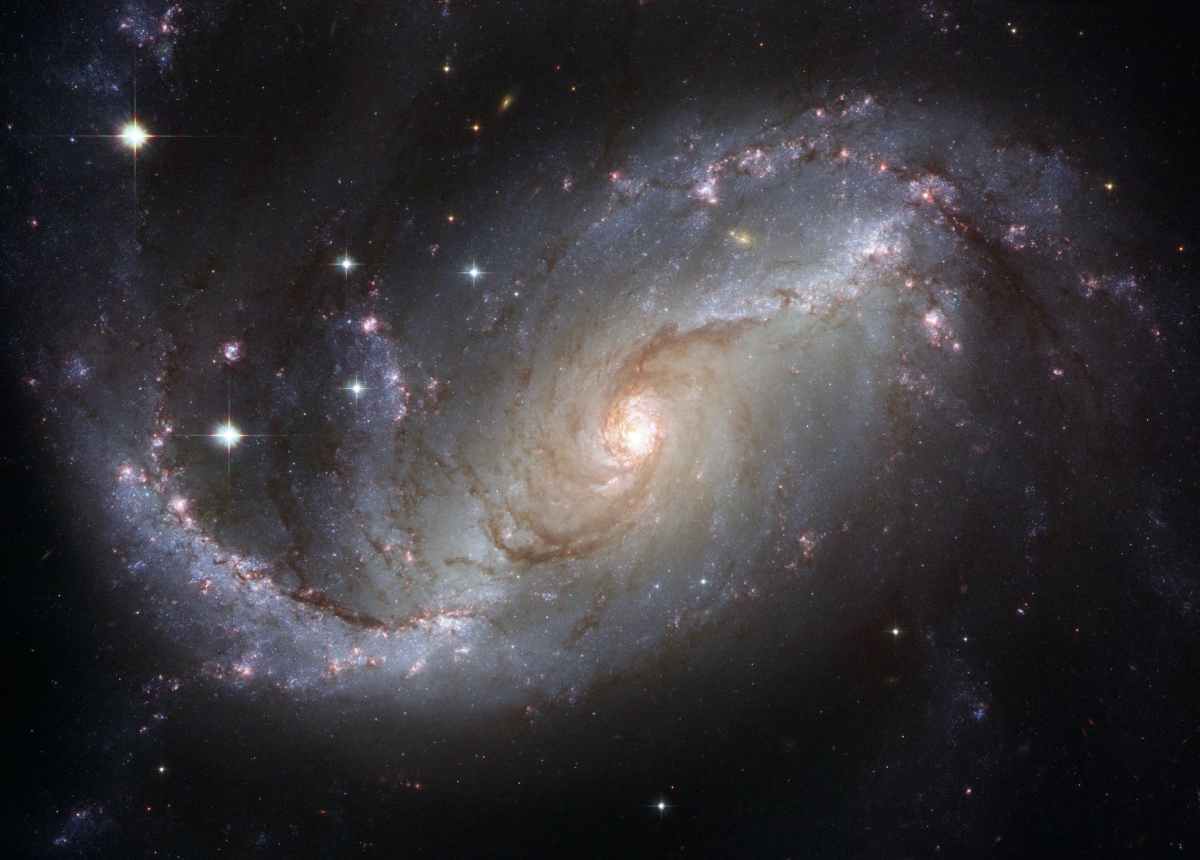
The photograph called “Earthrise” was taken while the Apollo 8 spacecraft was skimming over the surface of our Moon[1]. I don’t suppose there has ever been a more significant colour photograph in human history. As one of the astronaut’s said, he could hold his thumb up at a window and mask everything and everybody alive except for the three of them in the capsule.

The Earth appeared as a swirly blue marble set in the dark emptiness of space. The image is stark. Eyes are drawn to the lush colour and liveliness of the globe. Contrasted with the darkness and vastness of space. Clouds, oceans, and landmasses all scattered across this lonely planet. At the time of the Apolo mission there was about three and a half billion inhabitants. Today, there’s eight billion people spread across the surface of the Earth.

This image has become pivotal in our thinking. So much of our debates and discussions about the future are dominated by conflict and competition for resources. When there’s the opportunity to stand back and realise that our small homeland is shared, those tensions fade, at least a little.

Fragility and, almost irrelevance, when set against the vastness of space, is our daily reality. Illuminated by the Sun, a minor star, and in just the right place for life, so we fight and war as if humanity was at the centre of the universe. That animalistic behaviour could be the route of our downfall. Only, we are doing something else to top that persistent stupidity.

What sets Earth apart? That cultivated atmosphere. Such are the interactions going on in the first 100 kilometres above the surface of the planet that a sustained healthy atmosphere exists. It takes a quick look at the images coming back from the exploratory rovers on Mars to see how alive and miraculous Earth’s atmosphere has become.

The question is, are we the generations of humans who will permanently degrade it? Presently we are struggling with the needs and desires of the eight billons of us and the realising that a balance must be struck. For one pumping massive amounts of carbon into the Earth’s atmosphere is pure idiocy. It’s even greater idiocy when we have advanced and invented technologies that mean we don’t need to do it.

COP28 may be another step on the road to sanity but we continue to struggle with the realities of our situation. A human-made climate crisis and a dramatic increase in climate related catastrophes may wake us up. Perhaps every screen saver on the planet ought to be the Earthrise image.

POST: The first such image of the Earth seen from the Moon was taken by Lunar Orbiter 1 in 1966. It was in black and white and of poor quality.


[1] https://www.smithsonianmag.com/science-nature/who-took-legendary-earthrise-photo-apollo-8-180967505/

Dr Who at 60

Now, I can be nerdy par excellence. It makes me nervous to the extent that there are far more knowledgeable scribblers on Doctor Who. It’s not like the internet is without a massive amount of coverage of every aspect of the time lord’s life. Although, I’m not sure I’ve seen the details of David Tennant’s shoe size – yet.

Last night, way out on the edge of the know universe was a spaceship. Somehow it got there through a random worm hole. The drama doesn’t expand as to what the enormous ship does, or why it only had one crew member or the anarchic mix of technologies.

Almost like a sketch from the Twilight Zone, the mystery mounts as we are asked to go beyond our normal understanding. That’s a good plot line, in that anything then becomes possible. So, at the edge of what exists there’s nothing but blackness ahead. Behind is everything that was ever known in space and time. The good, the bad and the indifferent. And where most of us would rather be.

The end of everything, as far back in time as it’s possible to travel in this story is not empty. A malevolent force or mystical entity hides there hoping to one day make its way forward in time to annihilate everything it finds. Malevolence is so often associated with emptiness. It’s a primal thing.

That’s what The Doctor and annoying companion Donna encounter when the Tardis goes awry. Given that it was spilt coffee that threw them to this point in space and time maybe the transport ship they encounter was an intergalactic coffee carrier or a shoe carrier. With respect to Douglas Adams.

Titled “Wild Blue Yonder” the tale told wasn’t so much blue as void of natural light. Way yonder lurked a clever and evil shape shifter. So, evil that the Tardis runs away, as it rebuilds itself. Our two protagonists were then marooned on a giant ghost ship with no idea what’s happening. Now, that’s a fine plot. Adrift in the deep darkness.

Over a series of frantic moments, the story pieces together. The original pilot of the ship turns out to be a hero, prepared to sacrifice themselves to destroy the nameless baddies on the ship. The pilot’s cunning plan was ticking away at ultra slow speed to evade the speedy thinking malevolent thingies. Distracted but feeling imprisoned the shape shifting villains put all their energies into attempting to copy The Doctor and Donna.

The copies strategy then appears to have been to hop on board the Tardis when it returned. That’s a bit of a plot flaw. Since the Tardis would presumably only return when the air of evilness had been destroyed. That’s what did happen in a wonderful just-in-time moment. Concluding the story with the destruction of the spaceship and the physical forms of the lurking baddies. Thus, again we are all saved from extinction. Open is the question of whether the lurking baddies still lurk.

This 60th anniversary special was for fans. To those uninitiated into The Doctors world, it must have been confusing. Difficult to follow. In fact, rather slow in parts. David Tennant as the 14th Doctor is the best modern incarnation. Long may the Tardis take us to the limits of imagination. It’s possible that the 120th anniversary will include a virtual world that we will be able to step into and be immersed in a vast spectacle. Good luck to those who last that long.

Drift

There’s a problem. A big problem. Waking up to hear the Dutch situation, it’s not as if we should be surprised[1]. Hearing of the violence on the streets of Dublin. It’s shocking. Listening to right-wing politicians talk about the latest immigration figures. Distortion and twisting of the numbers are commonplace tactics. Fearmongering is the stock and trade of an unscrupulous bunch.

Although populist have delivered only failure in the last decade there’s something about them that sticks. They have ring fenced the arena of doom and gloom for their own ends. Whereas in the past, shining a light on the flaws and nonsense of certain people’s arguments was enough to consign them to the margins, now that doesn’t work so well. Misinformation goes mainstream.

The Brexit referendum was a lesson in 21st century campaigning. More facts don’t win the hearts and minds of the populous. Why liberal, like myself always major on rationality is a mystery. As the ancient Greeks might have put it “logos” has its place in the art of persuasion but it’s one of three. Credibility, or “ethos” matters greatly. But the one on the list that works, “pathos,” meaning persuasion based on emotion, is far the most effective.

I happened to catch a few minutes of The World at War[2] on one of the more obscure British televisions channels. The digital air is full of fringe channels. This epic 1970s series presents interviews with those who experienced WWII. Every time, I watch even a clip of the series a shiver runs down my spine. The times it documents are not long ago. It’s the modern world.

The evils that despots and extreme nationalism can do is unquestionable. The hard conviction that others are inferior and that they are a threat to the way of life of a nation has not perished. Politicians unwilling to accept accountability are keen to point fingers at those they can blame for promises broken. Blinkered minds fixate to blank out inconvenient facts.

The history books show that the drift towards mindlessness doesn’t always announce itself. Only retrospectively can a day when the atmosphere changed be highlighted. Then it can seem obvious. Being mindful of the impact that divisive speeches and campaign slogans can have is an absolute must. Language counts.

Migration will always be an issue. This age is one of high levels of mobility. Transport is affordable. It’s open to those seeking to escape discrimination or to ambitious for a better life. Shifting population made nations. America and Australasia are examples of people moving (or being moved).

What we don’t have is a workable way of wining hearts and minds. Yes, managing migration is a priority issue but not managing it as a crisis with negativity and warnings of catastrophe. The results of doom and gloom will be more doom and gloom. That just feeds far right-wing movements.


[1] https://www.bbc.co.uk/news/world-europe-67512204

[2] https://www.imdb.com/title/tt0071075/

The Dr

There’s something wonderfully peculiar about a time traveller wandering around the universe in a British police box. Time and space are the stuff of an infinite number of story lines. But the ones who strike a cord with us most are the humancentric ones. Our home, Earth is under threat. Humanity is in peril. Nobody knows what to do. Then stepping out of street furniture from the 1960s comes a hero. Not a muscle bound, gun toting superhero with magical powers. No, an eccentric, cerebral alien who looks like a college professor who took too many happy pills in their hippy phase. Humanoid in appearance. Wherever The Doctor goes so enemies follow, set for a final showdown[1].

Iconic features of Dr Who’s[2] life echo down through our decades. The Doctor’s vehicle is nothing like H G Well imagined. With a nice trick of being bigger inside than out it dazzles all who hitch a ride. If only we could master that transformation. I for one, don’t think it’s entirely impossible. Afterall isn’t physics up to about 12 dimensions now?

No saviour of the human race is complete without uniquely bad adversaries. Strangely enough quite a few are machine-based baddies. How in the moment is that? With increasing neurosis about what machines may be capable of in the near future. Daleks look a bit crude with what we know now. Unlike the iPhone we haven’t yet seen an upgrade to a version of the Dalek 15 Pro. I dread to think what that might do. They may have a resistance to any means of destruction.

Some Science Fiction can bore with an intensely serious inspection of our planetary dilemmas. Dr Who steers clear of that trap. Injecting humour and simple everyday relationships into the stories, the level is more connectable. One person matters, as much as billions.

My Doctor is Tom Baker. As a Time Lord, he captured that frenetic, unpredictable, jumbo schoolboy who knew no bounds. Yet, he retained a masterly command of dangerous situations. He could look stern as well as overjoyed. Never did I think that he would turn to the darkside.

My favourite evil monsters are the Cybermen. The idea that machines should decide that humans would be better if they were transformed into machines is a true horror story. It a kind of malevolent evil that doesn’t know it’s evil. It’s possible to believe that could exist.

Pure fiction, mixed with a scary look at expanding technology and always a partnership between good folk to overcome despots like The Master and singularly driven uncharitable aliens. That blend makes for wonderful entertainment. Long may television, and its replacements celebrate this combination. Regeneration has no end.

Today, it’s Doctor Who’s 60th Anniversary[3]. Happy birthday.


[1] https://www.imdb.com/title/tt0056751/

[2] https://en.wikipedia.org/wiki/Doctor_Who

[3] https://www.doctorwhotv.co.uk/doctor-who-is-60-today-99309.htm

Divided

Away for a week. I’ve been in Canada. In Montreal. On return to the UK, I see the next step in the convolutions of the Conservative Party have littered newspaper column inches. If ever there was a thin man on tight rope balancing a can of worms on one arm and a broken bicycle on the other, then it’s the current Prime Minister.

I’m sure he never trained for the Cirque du Soleil. Maybe Rishi Sunak should take up traditional circus disciplines like the swinging trapeze and flying hand to hand. Certainly, he could make a living that way even if he doesn’t need the money. Circus or pantomime would be a good opening for a great number of pending unemployed politicians.

Suella Braverman’s second sacking as Home Secretary opens the opportunity for her to take to the stage. In her case the audience would know when to boo without any prompting. The world of the pantomime villain[1] might revive a flagging political career.

Nigel Farage, former leader of the UK Independence Party is off the jungle[2]. Most suitably he’ll be featured alongside comedians anxious to keep themselves in the public eye. The cartoonists are having a field day with this oddity.

Boris Johnson’s trying his hand with comedy too. His new position as a GB News broadcaster will be pandering to a small but loyal right-wing audience. That will not put him off, I’m sure. I wonder what kind of studio wallpaper will be his backing?

Others have gone to ground or are typing WhatsApp messages to a 101 groups all fighting to be the next star of the right. The Brexit brigade of the past is finding a natural home in entertainment. It’s one way of jumping ship before the poltical Rapid Unscheduled Disassembly (RUD) to come. This is a wonderfully inventive acronym for a complete disaster.

If I was to make a guess as to what Rishi Sunak might be attempting, it’s a rebranding the likes of which we haven’t seen since the chocolate bar Marathon changed to Snickers. I seem to remember that name change was a marketing curiosity. The British public didn’t understand it. After decades past the rebrand, the name Marathon was brought back. Is the Conservative Party that chocolate bar fallen out of favour and looking desperately for a retro-look?

Sweeping a decade of chaos under the carpet is a tall order. Even with the maxim that a week is a long time in politics. I don’t think the British public are so forgiving or forgetful. The roots of our problems are the results of poor political judgement and poor actions over a long trem of office.

No doubt the Conservatives will try to jerrymander, as much as slight of hand will allow them to get away with in the media spotlight. Voter ID rules will keep some potential voters at home come the next general election. Shifting the boundaries of some constituencies has benefits too. A pre-election bag of goodies is being put together to stiffen the resolve of wavering traditional conservatives. Expect Springtime give aways.

My overall sense is that major change is coming. Abraham Lincoln said, “a house divided against itself cannot stand,” and that applies more broadly than the reason it was said in the 1850s. The strands of conservatism that have been so politically successful in Britain are divided amongst themselves. Not just a few small gaps. Hulking great chasms exist between entrenched groups. That situation never goes well. Not for anyone.


[1] http://celebratepanto.co.uk/toptipsforvillainy/

[2] https://www.entertainmentdaily.com/tv/im-a-celebrity-nigel-farage-backlaash-from-celebrities/

Scandals

Political scandals are as much part of British life as bread and butter pudding. Yet, we, you, me and the cat and the dog always seem shocked when the next one arrives. As if standing at a isolated bus stop never expecting a bus to turn-up and to our great surprise it does.

It might be failing to disclose or declare large sums of money changing hands. It might a succession of sex scandals. It might be misleading statements, or down-right lies. It might be cover-ups and blatant hypocrisy. It might be abuse or bulling. It might be leaking secrets or dirty tricks to undermine colleagues. It might be …………and the list goes on.

There seems to be no limit to the inventiveness of Members of Parliament (MPs). Is there a defence? It’s true that leading a public life does expose a person to more scrutiny than you or me. There are occasions when unprincipled adversaries can take advantage of this exposed situation.

Reputational damage spreads like wildfire even if the source of the damage is untrue. A bad news story gets media headline that are never retracted. However, you would think that, knowing all the above, that a person in the public spotlight would not entertain thoughtlessness or foolishness, in so much as they can avoid it.

Ever since the Watergate scandal in the US, nearly every occurrence now has the appendage “gate” shoved on the front of it. We’ve become a bit German in making-up new composite words. A pub quiz master could ask; can you identify this gate or that gate? Now, there’s a set of specialist question for a Mastermind contestant.

I can imagine a Monopoly board especially made for Conservative MPs. Although, Labour, Scottish Nationalists and Liberal Democrat MPs star in the lists too but less often. They even play the Get out of Jail Free card, now and then. Some MPs have almost got away with major misdemeanours but at the last moment party support collapses or the winds of fate turn sharply against them.

That leads me to wonder how many get away by the seat of their paints. Or they live with the knowledge that their party Whips office has a file marked – open only is X misbehaves.

It’s time to clean-up politics. Trouble is that I’ve heard that slogan before. It plays well for a while and then harsh reality breaks through, and the house of cards starts to fall. I remember the Back-to-Basics campaign announced in 1993 by British Prime Minister John Major at the Conservative Party conference. I’ll be he wishes he’d not gone down that road so ardently.

Like it or not, this is in our hands. The electorate. Time and time again we have General Elections where we, me included, vote in people who are not best suited to protecting the public interests, representing us or advancing our crumbling constitution.

The ballot is a powerful thing. Sadly, all too often it’s the political commotion in the few weeks before a ballot that determines the outcome. If only it was possible to take a more considered long-term perspective and stick with it. Granted, not a new phenomenon. The Greeks and Romans knew about the fragility of the public mood. Our inclination to make a choice for this day rather than the months and years ahead, or even decades ahead.

Maybe, 2024 will be different. My glass is half full outlook.

Get Back

The big picture story is that Europe needs unity more and more to face the future.

Today, a National Rejoin March takes place in London. This march takes place when it’s all to evident that Brexit has been an abject failure. Having the bravery to admit that Brexit is a failure remains challenging. UK political leaders are shying away from admitting the reality of our common situation.

Thousands of those who support the UK being a European Union (EU) member are gathering in the capital. It’s time to ensure a message gets sent that re-joining the EU is a popular and gaining momentum. Members of Parliament (MPs) may not be in Parliament on the weekend, but the message sent by those on the city’s streets is strong and clear.

It’s true that this is a frustrating experience. I’ve been on many organised London marches. They are characterised by their camaraderie, positivity, and great spirit. Marching makes a difference to the people who march and it’s also makes a wider impact. Media coverage may be sparce. What they do see and hear is a sense of solidarity and unity.

Sadly, there are no apparent results flowing from this national campaign, so far. The UK’s out of touch political parties are trying to look the other way. Today, the fearful nature of the bland mixture of our political leaders is immensely disappointing. They scurry around like little brown rats. Looking busy but terrified of stepping outside their comfort zone.

Tinkering with the Trade and Cooperation Agreement signed by former Prime Minister Boris Johnson will deliver only more disappointment. Papering over that public disappointment, we can rely on a part of the tabloid media spinning threatening stories. The artificial culture wars raging between the political right and left have little to do with reality. This noisy nonsense plunders the opportunity to make life better for the vast majority. It’s a side show.

The big picture story is that Europe needs unity more and more to face the future. If it’s climate change, war, immigration, or economic troubles sustainable solutions cannot be found in isolation. Our region of the world is so interconnected and interdependent that events in one part of Europe inevitably affect others. Brexit does not work.

Future generations will look back on this era as being a regressive one. Opportunities lost and difficulties increased by a lack of political bravery. A lack of direction. A lack of leadership. This will be overcome in time, but that change will not come soon enough.

POST: Reporting on the event Pro-EU supporters march for Britain to rejoin the European Union (france24.com)

Get Back

It’s painful to watch. Frightening. Seeing them take over London. Yes, I did hide behind the sofa when the Cybermen[1] came on. But then again, I was only around 6 or 7-years old. They converted humans to their kind by removing emotions and personalities. Scary stuff. The sort of evil creatures that nightmares are made of. With bodies made of cybernetic parts they seemed undefeatable but like so many great science fiction stories they had weaknesses, and the Doctor knew them. My early Dr Who knew exactly what to do.

In this case it’s not fiction that I’m writing about. Just the same it was painful to watch. Frightening. Seeing them take over London and the whole country. We had years of this scary drama. In fact, its still going on around us now. Laura Kuenssberg’s State of Chaos[2] has been a true horror story. This week I caught the Part 2. I don’t think I can take another Part.

History is being penned quickly in our media age. Watching the story of how our political system was smashed-up by a bunch of marauding, well, I don’t know what to call them. Is there a collective term for careless, egotistic, idiotic, manic, obsessive, power-hungry politicians? A term one can use in polite company, that is.

Since 2016, and to a lesser degree just before, the march of Conservative politicians has been to the tune with a dangerous beat. Smash-up the norms, disregard sound advice and steam ahead with blind arrogance. Much of this is epitomised by the character of Boris Johnson, but there are so many other in the cast strange and obsessive people.

Kuenssberg must tread a fine line because getting caught up in the finger pointing polarisation of the politicians is perilous. In her time as BBC Political Editor, it must have been like walking across Niagara on a tightrope every day.

The State of Chaos is giving us a new perspective on the Conservative Party’s on-going civil war. It seems the situation was even worse than we had been led to believe. This documentary is a treasure-trove of extraordinary material that is only a sample of what happened.

I’d say we all agree. It doesn’t matter which side of the Brexit argument that you stand or stood. Utter chaos has transpired in the reign of the last 5 Conservative Prime Ministers. Interviewees can point fingers at each other, all the same the word chaos applies.

In the coming months the lessons from this fearful period need to be learned. A new normal need to be established. We need to get back[3] what we have lost. Get back a sense of responsibility. Get back a reputation for competence. Get back ambition for the future.


[1] Dr Who. The Cybermen first appear in the serial The Tenth Planet in 1966, set in 1986.

[2] https://www.bbc.co.uk/iplayer/episodes/m001qgww/laura-kuenssberg-state-of-chaos

[3] I must be channelling The Beatles.

Past Earth

I wandered around the Natural History Museum[1] for an hour, or so this week. It’s one of the London Kensington museums that never loses its appeal. It’s a glorious place of assembled artifacts. At this time of year, it’s bubbling with children of all ages. Those ancient beasts that once strode the planet captivate and fascinate young minds. We can project all sorts of personalities upon them and know for sure we will never meet them wandering the streets.

I didn’t get to meet Titanosaur, one of the biggest animals to have walked the Earth but must go back and make sure I do. We share our planet with the remains of these giants. Luckily, we didn’t have to encounter them on the way to work in the mornings.

I like the reminder that human time and geological time are completely different spaces. We ponder the big news of the day over a tiny passage of history whilst the great expanse of life on earth sits quite in the background. Everything that made us, took billions of years to come to be.

Tracing the past, a couple of hundred million years isn’t much[2]. Yet, in one million we’ve come to dominate the planet as no other life has ever done before. We still have the choice as to our fate. Burning copious quantities of fossil fuel does seem foolish when seen in context. Will self-aware humans be a flash in the pan that comes can goes almost unnoticed by history?

Although, I don’t dismiss even remote possibilities when it comes to the unknown, the claims that non-human sightseers have been visiting us here on Earth does seem purely fictional[3]. There are several distinct arguments against such extraterrestrial alien holidaymakers.

Given the age of the universe, the coincidence of existence of multiple intelligent beings is possible, but they will certainly be separated by unfathomable distances. Even accepting the proposition that one day physics will provide a wizard transport system to cross those vast distances the needle in the haystack problem still means meetings may be extremely unlikely. Then there’s the arrogance that we presume such alien beings will have a shape, form and chemistry that has any meaning to us. Let’s face it, the abundance of life on Earth may be only a tiny range of what’s possible in the greater scheme of things.

No, I will continue to believe that there are rational explanations for lights on Salisbury Plain or deep in the Arizona desert. ET isn’t likely to be bothered with either. Unexplained aerial phenomena will continue to interest people, much as dinosaurs do but one is knowable today and the other may not be for generations, if ever.


[1] https://www.nhm.ac.uk/

[2] https://www.bbc.com/mediacentre/mediapacks/earth

[3] https://www.bbc.co.uk/news/world-us-canada-66320498?at_medium=RSS&at_campaign=KARANGA

Why do politics?

One reason has a long history. It’s basically, sitting on your hands, complaining about others, and doing nothing means that you are likely to be managed or governed by people of poor ability. Stepping-up and trying to change a situation at least puts to bed that passive abdication. Now, you might fail but that failure is no disgrace, if your intent is honest. At least you have had a go.  

Another somewhat more appealing reason is to know someone who has done some good. Achieved something worthwhile. To have a mentor, or admiration for a person who has made the best of what they have and made a real difference to their community, it’s optimistic, it’s positive.

Let’s not be too cynical, there are good politicians. If there wasn’t we would be in an even bigger mess than we are now. Let’s face it, the people who become politicians, in a democracy, have the undesirable flaws and admirable qualities that most of society exhibits.

For me, this starts with reading “Penhaligon”, Annette Penhaligon book[1] about her husband, David Penhaligon. There’s a story to tell. A West Country MP who fought tirelessly for his constituents.

Then, naturally, there’s the Member of Parliament (MP) who is responsible for me first taking-up community political activism. He was newly elected and fresh faced at the time. The MP for Yeovil in Somerset from June 1983 to May 2001, namely Paddy Ashdown.

I was living in Cheltenham in Gloucestershire when Ashdown came to a public meeting at the Pittville Pump Room[2]. He spoke fluently about becoming an MP and some of the ridiculous idiosyncratic nonsense of Parliament. His message was that British politics is time-consuming and frustrating but if you want to bring about change – get involved.

So, in Cheltenham I first started stuffing leaflets through letterboxes and knocking on doors. About, 40-years have gone by since that encounter with the MP for Yeovil.

This weekend, I got my walking boots on. I visited parts of the Somerset town of Frome that I’d never seen before. A wide range of different streets, each with a different history. From restored historic buildings to new housing estates there’s a surprising variety of different lifestyles in a small town.

That’s one of the spinoffs of political activism. I get to visit and explore places that I’d otherwise never get to know. It’s a good way of broadening the mind. With social media’s influence it’s all too easy to get locked into simple stereotypes, artificial divisions, and primitive arguments. Forget that nonsense. Real streets with real people are much more interesting and much more varied.

Yes, you will meet people that are disagreeable but believe me, they are the minority. If you don’t want dumb politicians, and ideas thrusts upon us that don’t represent us then get out and be active. Every little can count.


[1] https://www.waterstones.com/book/penhaligon/annette-penhaligon/9780747506164

[2] https://cheltenhamtownhall.org.uk/visit-us/pittville-pump-room/