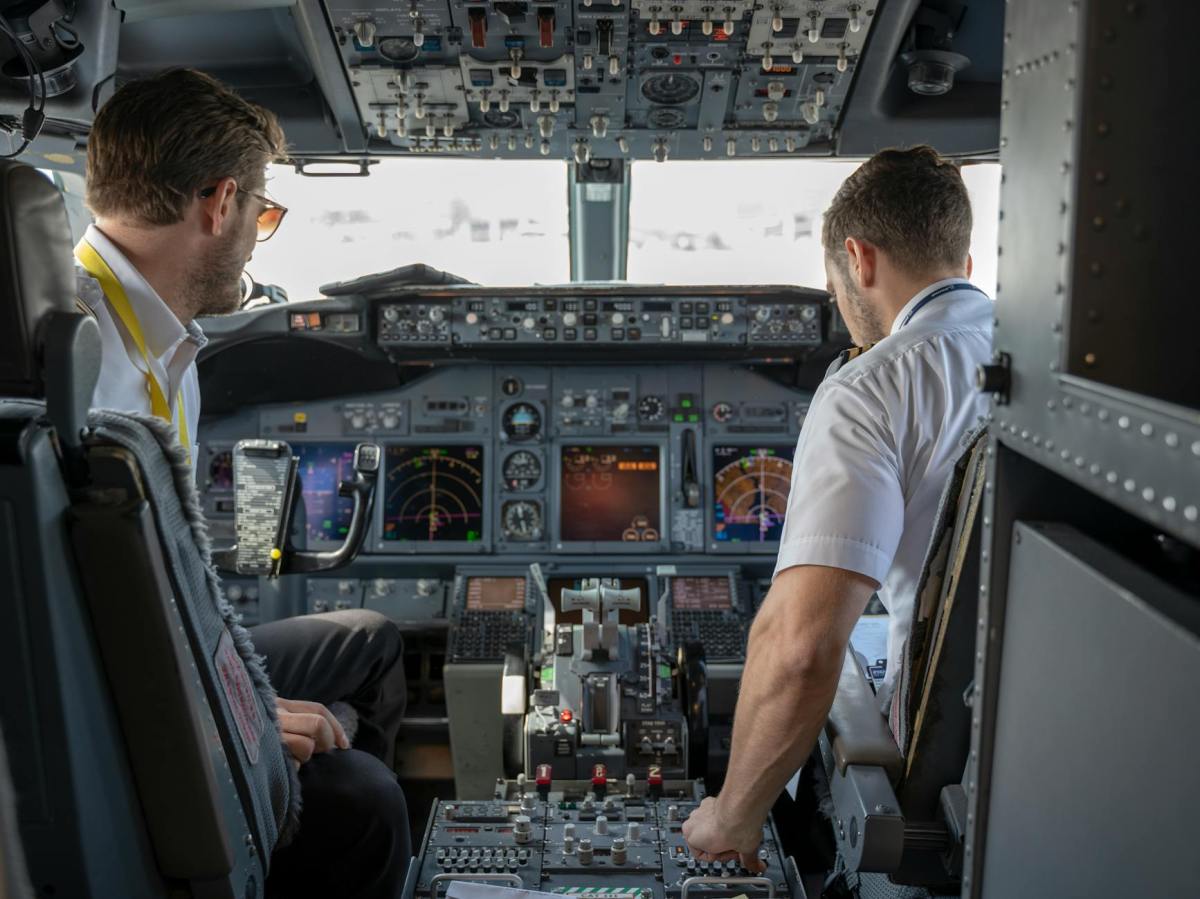
Understanding Aircraft Accident Recorders

There’s quite a bit of chatter on social media about accident flight recorders.

One of the skills required by an aircraft accident investigator, and not often mentioned, is the ability to grapple with rules, regulations, and technical requirements. This is given that civil aviation is one of the most highly regulated industries in the world.

The story of the development of the accident flight recorder is a long one. No way can a few words here do justice to all the efforts that has been made over decades to ensure that this vital tool for accident and incident investigation does what it’s intended to do.

In fact, that’s the first technical requirement to mention for accident recorders. Namely, FAR and CS Subpart F, 25.1301: Each item of installed equipment must be of a kind and design appropriate to its intended function. That basic intended function being to preserve a record of aircraft operational data post-accident.

Aircraft accident recorders are unusual. They are mentioned in the airworthiness requirements, however they play no part in the day-to-day airworthiness of an aircraft. The reality is more nuanced than that, but an aircraft can fly safely without working flight recorders.

FAR and CS 25.1457 refers to Cockpit Voice Recorders (CVR)[1] and 25.1459 refers to Flight Data Recorders[2]. Both CVR and FDR receive electrical power from the aircraft electrical bus that provides the maximum reliability for operation of the recorder without jeopardising service to essential or emergency electrical loads. Both CVR and FDR should remain powered for as long as possible without jeopardising aircraft emergency operations.

Before drawing too many conclusions, it’s important to look at the above certification requirements in relation to their amendment state at the time of type certification of an aircraft.

If the aircraft of interest is the Boeing 737-800 then the FAA Type Certification date is 13 March 1998 and the EASA / JAA Type Certification date is 9 April 1998. Without wading through all the detailed condition, the certification basis for the above aircraft type was FAR Part 25 Amendment 25-77 and JAR 25 Change 13 [Note: EASA did not exist at the time].

FAR and CS 25.1457 and 25.1459 were in an earlier state than that which is written above. That said, the objective of powering the recorders in a reliable way was still applicable. There was no requirement for the CVR or FDR to be powered by a battery. What hasn’t changed is the requirement for a means to stop a recorder and prevent erasure, within 10 minutes after a crash impact. That’s assuming that aircraft electrical power was still provided.

So, when it’s reported that the South Korea Boeing 737 accident recorders[3] are missing the final 4 minutes of recoding, the cause is likely to be the loss of the aircraft electrical buses or termination by automatic means or the removal of power via circuit breakers. We will need to wait to hear what is found as the on-going accident investigation progresses.


[1] https://www.ecfr.gov/current/title-14/section-25.1457

[2] https://www.ecfr.gov/current/title-14/section-25.1459

[3] https://www.bbc.co.uk/news/articles/cjr8dwd1rdno

Navigating AI

In my travels, I’ve seen derelict towns. The reason they were built has passed into history. A frantic fever swept through an area like an unstoppable storm. It might have been precious metals that excited the original residents. Gold rushes feed the desire to get rich quick. It doesn’t take the greatest minds in the world to figure out why gold fever will always have an appeal. The onrush of people joining the throng keeps going until opportunities have collapsed.

Breakthrough technologies, or their potential, can be just like a gold rush. There’s no doubt that 2025 will be a year of such phenomena. Top of the list is Artificial Intelligence AI[1]. If you want to be a dedicated follower of fashion[2], then AI is the way to go. Thank you, The Kinks. Your lyrics are as apt now as they were in the 1960s.

Predications range from the best thing since sliced bread to the end of humanity. Somewhere along that line is realism. Trouble is that no one really likes realism. It can be somewhat dull.

I’ve always viewed advancing technologies as a two-edged sword. On the one hand there are incredible benefits to be reaped. On the other, costs can be relatively unpredictable and devastating. I say “relatively unpredictable” as there’s always the advantage of knowledge with hindsight. Lots of commentators love to practice that one.

In desperation to gain the economic benefits of AI the current utterances of the UK Government may seem a little unwise[3]. Certainly, there’s nothing wrong with wishing to build a significant domestic capacity in this area of technology. What’s concerning is to always talk of legislation and regulation as a burden. Particularly when such language comes from lawmakers.

The compulsion to free-up opportunity for a western style gold rush like scenario has a downside. That is all too evident in the historic records. Ministers in this new Labour Government remind me of Mr. Gove’s past mantra – we’ve had enough of experts. Rational dialogue gets sidelined.

Even now we have seen generative search engines produce summaries of complex information sources that are riddled with holes. This experience reminds me of past work cleaning up aviation accident databases. Removing all those 2-engined Boeing 747s and airport IDs with one letter transposed. Data by its nature isn’t always correct. The old saying, to err is human, is always applicable.

The concerning aspect of AI output is its believability. If error rates are very low, then we stop questioning results. It gets taken for granted that an answer to a question will be good and true. There we have a potential problem. What next. AI to check AI? Machines to check machines? There lies a deep rabbit hole.


[1] https://www.technologyreview.com/2025/01/08/1109188/whats-next-for-ai-in-2025/

[2] https://youtu.be/stMf0S3xth0

[3] https://www.theguardian.com/technology/2025/jan/11/uk-can-be-ai-sweet-spot-starmers-tech-minister-on-regulation-musk-and-free-speech

Fatal Boeing 737 Crash in South Korea

Jeju Air Flight 7C2216, arriving from the Thai capital of Bangkok, at South Korea’s Muan Airport (MWX), crashed at around 9am local time (00:00 GMT/UTC) on Sunday, 29 December 2024.

My condolences to the families and loved ones of those who died or were injured in this fatal aircraft accident.

Pictures of the Jeju Air Boeing 737-800 landing[1] show that no landing gear can be seen deployed. A video image shows the aircraft skidding down the runway at high speed. The aircraft is wings level. It is reported the aircraft overrunning the runway and colliding with a wall or ramp. The video image does suggest that the aircraft engine thrust reversers were deployed. This is wrong. Weight on wheels is needed for deployment.

MWX runway 19 has a Landing Distance Available (LDA) of 2800 m. The local visibility was reported as 9000m and the wind speed at 2kt.

Was the pilot in command trying to go around? The accident flight recordings should answer this question. That is from the aircraft Flight Data Recorder (FDR) and Cockpit Voice Recorder (CVR).

This remains a hope. Reports are that the FDR has been damaged. This should not be a surprise given the nature of the impact it suffered. However, both FDR and CVR are designed and tested to survive extreme cases.

The South Korean Ministry of Land, Infrastructure and Transport says that the accident flight and voice recorders have been recovered[2].

Jeju Air is a popular South Korean low-cost airline. The airline was established in 2005.

A full independent accident investigation will no doubt take place. That is in accordance with the standards and recommended practices of ICAO Annex 13.

Current media speculation surrounding possible causes of this Boeing 737 accident do not offer any satisfactory explanation for the sequence of events. For example, it would be astonishing if the root cause of the accident was a bird strike or multiple bird strike shortly before landing. The aircraft has several means to deploy its main undercarriage.

It is likely that safety culture, controller and pilot training, and airport facilities are bigger factors in this fatal accident than the fact that it involved the loss of a Boeing 737-800 aircraft.

NOTE: Boeing 737 “If the gear fails to extend properly or hydraulic system A is lost, the gear can be manually extended by pulling the manual gear extension handles, located in the flight deck.” Landing Gear

POST: The impact test in the applicable technical standards EUROCAE ED55 (FDR) and ED56A (CVR) are demanding. The recorder’s crash protected memory module is fired out of a canon into a shaped target to simulate an accident scenario. It must be readable afterwards.


[1] https://www.independent.co.uk/tv/news/south-korea-jeju-air-crash-b2671085.html

[2] https://www.bbc.co.uk/news/live/c4glr85l2ldt

MH370 and MH17: A Decade On

The unthinkable happened in 2014. One major international airline suffered two catastrophic accidents. These tragic events ran contrary to all the trends in historic aircraft accident data.

In March, flight MH370 disappeared. In July, flight MH17 was shot down. In both cases there were no survivors from these international flights. This remains an unprecedented situation. It is a sobering consideration that such dreadful events were possible in a mature international framework of civil aircraft operations and regulation.

A decade on the pain of those who lost friends, family and colleagues in these tragedies is not diminished. Aviation should not lessen its attention to discovering more about what happened and putting measure in place to prevent reoccurrence of these events.

These two aviation catastrophes are different in respect of causal factors. One remains a mystery but, from what is known, has the hallmarks of an operational accident. The other is undoubtably an aggressive malicious act. Failings in the two elements of aviation safety and security, often viewed separately, are both capable of catastrophic outcomes.

Malaysia Airlines was a State-owned airline in the traditional model. There’s no reason to suppose that the airline harboured deficiencies that led directly to the two fatal accidents. In hindsight, the question is often asked: could both accidents have been avoided?

The extensive underwater search for MH370, in the southern Indian Ocean, resulted in no findings. However, floating debris from the fateful Boeing 777-200ER was discovered. Unlike what happened with Air France Flight 447 were the installed accident flight recorders were recovered from the deep ocean, there has been no such good fortune in respect of MH370.

Accident flight recorders are one of the primary tools for accident investigators. Installed recorders are built and tested to withstand extreme conditions. The reasonable assumption being that they will be found with any aircraft wreckage. The accident of MH370, is one where a deployable recorder may have been beneficial. That is one that ejects from an aircraft when it is subject to the high impact of the sea surface and then floats, possibly away from an accident site. There is a good case to be made for installing both deployable and installed recorders[1]. Particularly a case for long-range international overwater aircraft operations.

The facts surrounding the criminal act of shooting down of flight MH17 are well established. Sadly, in a troubled world it is impossible to say that such malicious acts will never occur again. What is to be done? Avoidance is by far the optimal approach. Commercial flying over warzones, where heavy weapons are known to be used, is extremely foolish. Now, it is good that much more flight planning attention is paid to understanding where conflict zones exist[2].

NOTE 1: On 07 March 2014 at 1642 UTC1 [0042 MYT, 08 March 2014], a Malaysia Airlines (MAS) Flight MH370, a Beijing-bound international scheduled passenger flight, departed from KL International Airport [KLIA] with a total of 239 persons on board (227 passengers and 12 crew). The aircraft was a Boeing 777-200ER, registered as 9M-MRO.

NOTE 2: On 17 July 2014, at 13:20 (15:20 CET) a Boeing 777-200 with the Malaysia Airlines nationality and registration mark 9M-MRD disappeared to the west of the TAMAK air navigation waypoint in Ukraine. All 298 persons on-bard lost their lives.


[1] https://flightsafety.org/files/DFRS_0.pdf

[2] https://www.easa.europa.eu/en/domains/air-operations/czibs

H2 Aircraft Design

Cards on the table. I’m a believer. Despite the immense technical challenges, Hydrogen is a viable fuel for future large civil aircraft. That said, operational service of such revolutionary aircraft isn’t going to happen in a hurry.

Reading the history, Concorde was an incredible test of the boundaries of what was possible and that was met, but it didn’t come easy. Breaking new ground is never easy. [A common saying that’s maybe open to challenge]. In aviation making step-changes happens every decade. What’s nearly always required is exceptional determination, almost beyond reason, large sums of money and special people.

Control systems – no big deal. Mechanical components – evolution possible. Turning a gaseous fuel into high-levels of propulsive thrust – can be done. Building a one-off technology proving research vehicle. It’s happening. At least for the light and commuter class of aircraft.

None of this is enough. Because the gap between an aircraft that can fly and an aircraft that can be produced in the thousands and go on to make an operational living and build an impressive safety and reliability reputation, that’s still a million miles off.

Today, there’s artist impressions of all sorts of different H2 aircraft configurations. It’s like people painted pictures of Mars with imaginary canals, long before anyone knew what the planet looked like in reality. Innovation starts with ideas and not all of them are sound.

As I expressed in my last article, crashworthiness must be given much consideration when speculating about future designs. It’s not always explicit in aircraft certification, cabin safety being the exception, but studying the history of accidents and incidents is essential. One of the successes of the authorities and industry working together is to take lessons learned seriously.

I remember looking at the pictures of the wreckage of Air France Flight 358, which crashed on landing in Toronto, Canada[1]. The fact that there were no fatalities from that accident is a testament to good operations and good design practices. The Airbus aircraft burned out but there was enough time for passengers and crew to get away.

My thought is what kind of H2 aircraft configurations would permit the same opportunity?

Considering this large aircraft accident, and others like it, then there’s a message as to where fuel tanks might best be placed. There’re some aircraft configurations that would have little hope of providing the opportunity for rapid evacuation of hundreds of people.

So, in my mind, don’t attached large pressurised cryogenic fuel tanks to the underbody structure of an aircraft fuselage. However robust the design and build of such fuel tanks they would be unlikely to survive as well as the cabin passenger seats, namely 9g[2]. That would not provide a good outcome post-accident.

Maybe, like aircraft engines sitting on pylons off the wings, that too is a good place for fuel tanks.


[1] https://asn.flightsafety.org/asndb/322361

[2] https://www.easa.europa.eu/sites/default/files/dfu/NPA%202013-20.pdf

Challenges of Hydrogen Fuel in Civil Aviation

This week has been a Hydrogen week. It’s great to learn more of the projects that are out there and the ambitions of those developing systems. Hydrogen is a live subject. Looking at the possible pathways for civil aviation to take there’s a myriad of choices. However, when it comes to the fuel for propulsion there are not so many potentials.

It’s surely the case that at some time in the future the use of fossil fuels to propel us across the skies will no longer be acceptable. Even if I’m talking to climate change sceptics the point must be made that fossil fuels are a limited resource. Not only that but the air quality around airports is a matter of concern.

It’s there in our basic education. Water is H2O. It’s that combination of Hydrogen and Oxygen that is essential to life on Earth. So, if we have a process that provides aircraft propulsion by using Hydrogen it should be a whole lot better for the environment than using Jet A1.

The problem is, and there’s always a problem, to carry enough Hydrogen it will need to be pressurised and in liquid form. That means extremely low temperatures, robust storage containers and extensive leak free plumbing.

Today, we have cars on the road that run on liquefied petroleum gas (LPG). It’s a novelty. It’s less harmful to the environment and can cost less. However, LPG systems need regular servicing. The point of mentioning this pressured gas in a transport system is that it has been integrated into regular everyday usage. That’s knowing that escape of even small quantities of the liquefied gas can give rise to large volumes of gas / air mixture and thus a considerable hazard[1].

Any analogy between the car and the aircraft can be forgotten. That said, one or two of the issues are similar. Yes, what happens when an escaped volume of gas / air mixture is ignited?

What scenarios would bring about conditions whereby a destructive explosion is possible?

Let’s start with the situations where aircraft accidents most often occur. Take-off and landing are those phases of flight. A surprising number of accident scenarios are survivable. The important part being to get an aircraft in trouble on the ground in such a way that an evacuation is possible. That can mean hitting the ground with a great deal of force[2].

Here’s the matter of concern. An aircraft with large cryogenic tanks and associated complex plumbing hits the ground at a force of many “g”. What then happens? Certainly, pressurised liquefied gas would escape. Being a very light gas, the uncontained Hydrogen would rise rapidly. However, trapped amounts of gas / air mixture would remain a hazard. Would that be ignited?

There are a lot of unknowns in my questions. Although there are unknowns, any post impact situation is likely to be very different from a situation with a conventionally fuelled aircraft.

Today’s, burn through requirements ensure that an external fuel fire is held back. Thereby ensuring enough time to evacuate. For a hydrogen aircraft ventilation may be essential to stop build-up of a gas / air mixture inside a fuselage. That means a whole different approach.


[1] https://youtu.be/AG4JwbK3-q0

[2] https://skybrary.aero/accidents-and-incidents/b772-london-heathrow-uk-2008

Societal Change and AI

Societal change is inevitable. It seems hack to analogise with reference to the printing press. Look what happened, an explosion of communication. Dominance of the book for centuries. Expanding literacy. Progressive shaping of society resulting in this era.

We are only where we are because we stand on the shoulders of the giants who went before[1]. Not just the giants. There is massive amount of human contribution that is never accounted. The unseen heroes and the occasionally rediscovered thinkers and doers.

Along the way of history those who battle the battle of glass half full or glass half empty chatter away. We are either in a glorious age or a minute away from Armageddon. Polar ends of our future, both stories have merit. Who has a crystal ball that works?

I’ve been aware of neural-networks and joked about Bayesian Belief Networks for at least two decades. Having been involved in the business of data analysis that’s no surprise. Even so the rapid advance of a multitude of different forms of artificial intelligence (AI) is a surprise.

Talking generally, we have this foolish mental picture of the world that everything is linear. Progression from one state to another takes proportionate steps forward. It’s a hangover from the analogue world which is where we were until the 1960s/70s.

This fetish for straight lines and normal curves is deeply embedded. It’s odd. Although a lot of rules in nature do have a linear form, one that Sir Isaac Newton would recognise, there’s far more that follows other rules.

In the last few weeks this fetish played out at a global scale. We are all treating climate change as if it’s a water clock. Drip, drip by drip the climate changes. A reaction to a progressive degradation. Yet, environmental reality might have a step change in degradation ahead.

In my view it’s right to try to vision ahead about the path AI technology might take. It’s right to consider more than progressive development and evolutionary change. Information systems have a habit of either falling into disuse or marching on at the pace of Moore’s law[2].

Another example. The math of Fourier transforms has been around a long time. Doing Fast Fourier Transform (FFT) in the 1970s required a couple of chunky cabinet full of power-hungry electronics. For the few, not the many. Today, every smart phone[3] in the world can crunch FFT algorithms. For the many, not the few.

Can we use a simple graphical representation to say where AI is going[4]? Will “intelligence” double every year or two? Well, I suspect that developments will go faster than a doubling. Like Moore’s law these conditions tend to become self-fulfilling. It’s a technological race.

[Why? To a machine there’s no sleep. To a machine there’s 86,400 seconds in a day. Everyone is meaningful and useful. To a complete and successful electronic machine only a tiny fraction of its operating time needs to be spent fixing itself. Or that might be one job left to us.]

POST: The impact of this high speed race makes interesting study U.S. Should Build Capacity to Rapidly Detect and Respond to AI Developments – New Report Identifies Workforce Challenges and Opportunities | National Academies


[1] Sir Isaac Newton, English scientist, “If I have seen further, it is by standing on the shoulders of giants.”

[2] https://www.asml.com/en/technology/all-about-microchips/moores-law

[3] https://www.bbc.co.uk/news/business-38320198

[4] https://www.nature.com/articles/d41586-024-03679-6

Safety Defined

I found myself saying the words: “the fundamentals remain the same”. A nice phrase that promotes the idea that there are some bedrock ideas that are immune from the winds of change. It’s as easy as saying that 2 plus 2 will always equal 4. Except I wasn’t taking about a mathematical relationship. A traditional set of rules that are so established that it becomes incredibly difficult to think differently. That is unless I get terribly esoteric and argumentative about what do we mean by plus and equals.

Safety is freedom from harm. That’s one of the simplest definitions of “safety”. Simplicity has merit but there’s one or two weaknesses in that basic definition. Although, it’s one that I’m happy to use. It communicates well. Theres a lot to be said for brevity.

The human condition is such that we are never ever free from potential harm. Such is the sheer complexity of our situation that the combinations and permutations of stuff that can harm us is immense. Every tiny cell in our bodies is doing something that it needs to get right. Yet, we exist relatively healthily with a myriad of flaws. Unfortunately, or fortunately, our awareness of the flaws that can harm us is often non-existent. Perhaps we have the freedom of ignorance.

Safety is freedom from harm with these caveats. Generally, even invoking the word “safety” implies that the stuff that can harm us is substantial and tangible. It’s something we might know and understand. Likewise, the word “harm” in this context doesn’t mean trivial or non-consequential actions. It’s something undesirable where effort would be made to avoid.

To compound my kicking away at what seems like a perfectly reasonable simple definition, the well-known dictionaries who publish their wisdom each have different variations on a theme.

Each definition has at least two parts for the abstract noun “safety”. Yes, it doesn’t have a physical form, in of itself but “safety” is a condition. The negative stuff to be avoided comes up as harm, danger, hurt, damage, injury, death, loss, and even risk. The act of avoidance of a negative outcome comes up as a condition of being free or protected.

Another dimension not explicitly mentioned in the common definitions is the dynamic nature of safety. It is not a static condition. Theoretically, the transition from a safe to an unsafe condition can take an infinite number of paths. In reality, some pathways are more probable than others.

This is where the discussion moves away from grammar to the substantial experience of safety. It’s locked into our thinking, and not often expressed that the dynamic nature of the subject means that probabilities always come to bare.

Today, I may not be the least bit concerned that a meteor would crash through the roof of my house without warning and injure me. That is even if I am not entirely free of the possibility of such an event happening. I will take the possibility of tripping on a loose stair carpet much more seriously. Both safety jeopardising events are possible but one is more probable than the other.

Next, I come to what’s conceivable and what’s not. In a universe of an infinite number of possibilities there are lots that are just plain inconceivable. The meteor case above is conceivable. Governments take practical actions to monitor space rocks.

Even to speak of something that is inconceivable is stretching the boundaries of our imaginations. It’s often taken as obvious that certain threats are out of bounds. Yet, the inconceivable occasionally happens and our boundaries are thus expanded. A pilot chooses to fly a perfectly airworthy aircraft into a mountain. As we know it has happened.

I’ll stop here. What’s clear is that a simple definition isn’t simple at all.

Navigating Heights

If I were to explain, the reasoning would go like this. It’s good to have a vivid imagination. As an engineer, it’s essential to be able to create a mental picture of what’s happening. But there’s a downside. Looking at a situation and seeing more than is there, opens the door to imagining all sorts of scenarios that are unlikely.

I’m talking about that experience of peering over a cliff edge to see what’s there. Curiosity being a strong urge. Then pulling back in fright of falling. Often when the ground is solid and safe. Often when nothing more than a spark in the imagination creates an unreasonable fear of falling. The fleeting image I have in mind is looking down at Beachy Head Lighthouse[1].

I have a curious relationship with hights. No, I’m not terrified of heights. It’s just that now and then that fear of falling does kick in. This feeling could be embedded or learnt from an early age. My mother tells a story of me as a toddler being halfway up a ladder. Sacring her. Me being oblivious to any danger and coming to no harm. Growing up on a family farm there was innumerable hazards around every corner.

One of the riskier things was to climb up the haybarn roof. This was an open steel framed structure spanning several bays. Corrugated sheets made up its roof. In the UK, we call these buildings a Dutch barn. This mostly refers to the curved shape of the roof. From the top of the barn, it was possible to see the whole farmyard.

Last week, I hiked around the Caldera de Taburiente on La Palma. I learnt that the term caldera has Spanish origins. So, I was in the right place to assess any fear of hights that might linger in my psyche. The Caldera de Taburiente is more than 2000 m deep.

Even the roughly hewn paths, some restored from local landslides, didn’t phase me. It’s as if, because I was one of thousands who have passed the same way, the dangers where contained. In fact, there were not. Some of the well-worn slippery stones underfoot had to be approached with a great deal of caution. Loose rocks and sheer drops had to be navigated with care.

The Caldera de Taburiente National Park is a magical place. It has a Jurassic Park feel about the place. Given that it’s not much more than a few million years old the place is far to youthful for dinosaurs. It has its own special natural beauty.

My aging but persisting vivid imagination had plenty to occupy itself as we climbed and descended in and out of the park. The whole hike was about 16 km. This was the second time I’d taken this circular route. What surprised me was the hard parts of the climb and decent following a riverbed on the way out. That part I’d conveniently forgotten.

No, I’m not terrified of heights when there’s solid ground underfoot. They do however have the capacity to scare or at least summon up a lot of extra care. I hope that inbuild sense of self-preservation never fails me.


[1] https://www.beachyheadlighthouse.co.uk/

Ethics of Medication

I don’t know about you but the whole idea of medicating people to increase the prosperity of society has a terrible echo of the worst kind of politics. Now, if we change the “p” word to protection of society, a policy of medication might make some reasonable sense. The COVID pandemic taught use that individual freedoms are not absolute. We know that allowing people to spread infection, whenever their personal beliefs, can kill other people. Reckless actions did exposed people to danger. Big name politicians did some dam stupid stuff just because they wanted to side with those who believed irrational, unscientific nonsense.

A UK Labour Health Minister saying that obese people would benefit from a jab so that they can get back to work makes me feel uneasy. It’s one thing to recognise that society has a problem with obesity but it’s entity another for the States to impose medication on specific groups of citizens. Expensive new medication that that.

I know it can be argued that the cost of obesity to the National Health Service (NHS) is high so there’s no zero cost answer. Having hammered down smoking deaths over decades of work it’s now obesity that’s the great societal challenge. The line between personal freedoms and social demands can be a fuzzy one.

The jab in question may have become fashionable as a weight loss aid[1]. That doesn’t justify a UK Minister, with all the power of the State, suggesting that overweight people be put on a regime of injections. And if they say “no” to the regime then be penalised in some vague manner.

It’s known that these new weight loss drugs have side effects. No everyone can take them without consequences. These drugs should only be used under medical supervision. That said, many people do take them without recourse to advice from a doctor.

To the Minister I say, don’t ague about the cost to the economy of obese people. Please ague for helping people to make weight management work for them as individuals. Obese people are not one amorphous mass of idle slobs who sit on the sofa all day. The Daily Mail characterisation of bludgeoning swarms of people burdening society with their indolent ways may chime with populists and the emerging Conservative Party. It’s no way for a Labour Minister to address a live challenge. 

National proposals to give unemployed obese people a jab to get them back to work has a ghastly ring to it. Yes, it’s not saying we (society) should send them down the salt mines but when the economic argument is the top one it does dehumanise the target audience.

Weight loss jabs may continue to have potential befits for many people. Let’s say that we are talking about health benefits, so that individuals can play their role in our society, whatever that role might be. State officials who attempt bring shame on people living with obesity, that’s just plain nasty.


[1] https://www.bbc.co.uk/news/articles/c981044pgvyo