EVs

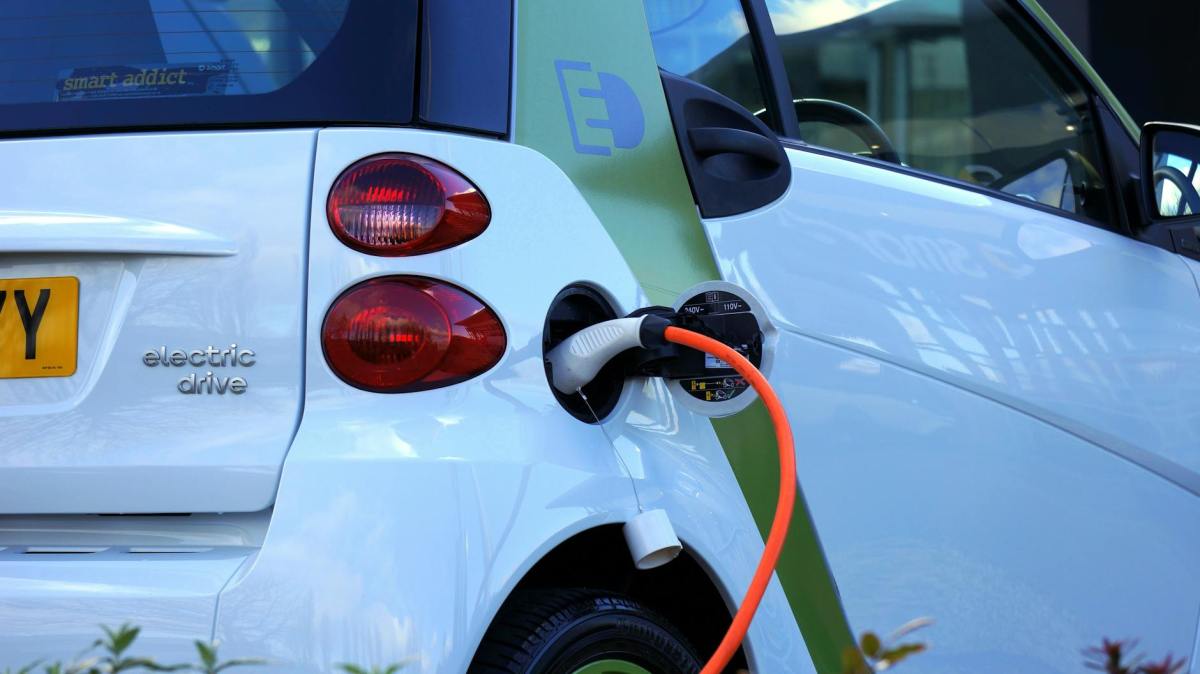
I do find the anti-EV campaigning on social media a bit peculiar. It’s a bit like the arguments for smoking that were made in the 1950s and 60s. Combustion engine vehicles are slowly but surely going to become history. The time for that change is the subject that should be discussed and not whether it’s a good idea or not[1].

One “argument” out there is that adding together all the elements that make-up an electric vehicle there’s a lot of environmental cost in their production. There’s no doubt that nothing is for free. For example, mining lithium and cobalt are not nice in every respect. There’s the concern that demand could quickly eat-up global supply too.

The “arguments” I’ve seen fall apart when considering not only the vehicle production environmental costs but the lifetime costs of an EV when compared with an internal combustion engine vehicle. 20-years of belching out toxic emissions stacks-up. 20-years of using renewable electricity is a far better solution. In theory the potential for recycling valuable materials is high with EVs too. However, we have yet to see if that works successfully in practice.

Other “arguments” look to demean the performance of EV’s when compared to conventional vehicles. Naturally, the time taken to recharge is one of the biggest gripes. For a conventional fuelling at a petrol station a tank can be filled with 500 miles worth of fuel in 15 minutes. For a current EV more preparation, planning and patience are needed to achieve a lesser range.

Some EV performance figures are far superior to conventional air breathing vehicles. Acceleration is one. Powerful electric motors unencumbered by complex mechanical transmission systems react immediately to demands[2]. EVs use power better.

There’s another gripe or moan and that’s about weight. Taking two comparable vehicles, in performance terms, the electric one will be heavier. That’s the technology we have now.

It’s a different kind of weight if that makes any sense. What I mean is that an EV is roughly the same weight whatever the state of the machine. Whereas a vehicle that uses liquid fuel varies in weight according the amount of fuel on-board. Of course, all vehicles vary in weight depending on the payload they carry (goods or passengers or both).

What’s a little difficult to take from the anti-EV lobby is that those who complain about EVs impacting roads, due to their weight, are rarely the same people who express concerns about heavy diesel delivery trucks or Chelsea tractors thundering down residential roads.

There’s one hazard that must be managed for all types of vehicles. A view of a serious fire involving either an EV or a conventional vehicle quickly shows what that threat can do. What we have now less experience dealing with EV fires. They can be severe and difficult to supress.

Regulation is often reactive. The fire threat is real. In this case maybe we do need fire suppression systems in integrated household garages. Multistorey car parks packed full of EVs are going to be a real challenge if a major fire sparks off. That said a fire started with a “diesel-powered vehicle” can be just as challenging[3].


[1] https://www.ft.com/video/95f86c5d-5a94-4e63-bbe8-6cc5ffb59a2b

[2] https://www.caranddriver.com/features/a38887851/why-are-evs-so-quick/

[3] https://www.bbc.co.uk/news/uk-england-beds-bucks-herts-67077996

Space

Eutelsat OneWeb is a growing global connected community. That’s what the publicity says. Once upon a time I wrote about OneWeb. I wrote about it in the context of Brexit.

One of the touted benefits of Brexit was autonomy, in other words, British innovation leading the way to benefit Britain above all others. It’s that aggressive assertion of sovereignty that was at the core of Brexit. Remember, it wasn’t so long ago that this was part of Brexiters fantasies? 

In the Brexit turbulence the UK Government walked away from the EU’s Galileo programme. The UK no longer participates in the European Galileo or EGNOS programmes[1].

Then in 2020 the UK changed its original post-Brexit position and scraped building a national alternative to the Galileo satellite system[2]. At that time, Business Secretary Alok Sharma offered around $500 million of UK public money to acquire part of an organisation in trouble, called OneWeb.

OneWeb is a commercial Low Earth Orbit (LEO) satellite constellation now with an element of Government ownership. It’s network of satellites doesn’t have a global positioning capability, like Galileo.

To get its satellite network up and running, an expensive business, OneWeb merged with French company Eutelstat. Today, if we look at the 2020 investment made with public money the financial situation doesn’t look good. That doesn’t mean to say that things will not turn around in future years[3].

The Times newspaper has taken a nationalist view of the circumstance[4]. It’s a point that the intellectual property is not in the hands of the UK Government, but the investment could still turn out to be a useful long-term commercial bet. It’s gambling with public money.

As an aside, I’ve been looking at buying a new dishwasher for the kitchen. It’s made me aware of a capability that I had no idea had been developed. Namely, the connection of dishwashers via the web. I think this is what is called the Internet of Things (IoT). So, imagine that, British dishwashers connected by space as a Brexit potential benefit.

However, if there’s a change in the UK Government’s political direction after the next General Election there’s a strong possibility that the UK will return to the EU’s Galileo programme with some manner of partnership. When we get to 2026, we may look back on the decade behind as a vacuum, much like the vacuum of space. A time when an uncertain direction cost a great deal.


[1] https://www.gov.uk/guidance/uk-involvement-in-the-eu-space-programme

[2] https://www.politico.eu/article/uk-scraps-plan-to-build-global-satellite-navigation-system-to-replace-galileo/

[3] https://www.politicshome.com/thehouse/article/oneweb-uks-gamble-satellite-startup-pay-off

[4] https://www.thetimes.co.uk/article/656bd77c-c106-47c3-840b-674e9efc4f0e

Look ahead

Much as I support the UK Government’s position on hormone injected beef, the exit from negotiations on trade have wide implications. Maintaining the regulations that ban the use of hormones in beef is a good move for farmers and consumers.

However, for cheese exports the collapse of talks is tragic. Zero to 200% is one hell of a tariff jump. The UK will be in a worse position with respect to trade than it was pre-referendum. That’s with a strong ally, namely Canada[1]. Brexit has made us worse-off.

Yet, the Brexit supporters that remain, still herald Brexit as a wonder. Logic plays no part in their thinking. It’s easy to respond in an angry way to this self-inflicted blindness. It does no good. The stubborn streak in those who have dug a big hole is a thick one. And the hole is getting ever bigger.

Clearly, there’s no urgency on the part of Canada[2]. On the UK side the urgency is much greater. The need to stimulate growth to bring about a recovery in the British economy is much needed. Sadly, the legacy of a decision made in 2016 has made created a weak negotiating position.

For a long time, the UK has been given a soft landing due to transitional arrangements. Now, these arrangements are drying up. Far from the propaganda of the Brexiters, trade deals are not easy.

The problem is a reference back to the past is like crying over spilt milk[3]. How to go forward when the relationship between different States has been significantly changed is no simple matter. The situation is not irrecoverable but the avenues that can be explored are limited.

So, I caution of a never-ending lament. Brexit will need to be rectified. The means to do it are tortuous and may take a long time. The means to undo the mistakes of the past may face opposition from many quarters. One of the predictions for the European elections, this year, are that there will be a swing to the political right. Several right-wing political parties across Europe are on the ascendancy.

Instinctively these right leaning political parties are likely to less internationalist and more focused on immediate domestic concerns. So, third parties, like the UK, may not be high on Europe’s future agenda. On the UK side the major political parties have gone quite on Europe. There’s plenty of campaigning on international issues, like climate change and military conflict but little on enhanced working together.

There are many national news stories where solutions are best arrived at by greater communication, cooperation, and coordination. This year, so far, the signs are that these three “c” are going to take a back seat. Ironic, isn’t it. Facing greater international challenges than for decades, States choose to look inward. This myopia will continue until leaders speak positively of the future. Vision is needed.


[1] https://www.reuters.com/markets/canada-britain-pausing-free-trade-agreement-talks-2024-01-25/

[2] https://www.cbc.ca/news/politics/canada-uk-trade-cheese-1.7094817

[3] https://www.collinsdictionary.com/dictionary/english/cry-over-spilt-milk

Votes count

Sneaking past the national news this week was a change that is of more than a little significance.

For more than a decade, I did live outside these shores. All the time that I did, I continued to vote in local and national elections. At that time, I still had an address in the UK. What would have happened if I’d continued to live abroad, for more than 15-years, is that my right to vote would have been taken away. This so-called 15-year rule meant that millions of British citizens were excluded from voting.

During the referendum of 2016 a great number of British citizens living abroad were unable to vote for or against Brexit. At the time this was seen as a great injustice. This was especially true for those who maintained strong links with the UK.

Now, almost without anyone noticing, the UK is aligning itself with other major democracies in the world. The 15-year rule has been scrapped. Some people estimate that the change to the franchise could mean an additional 3 million British citizens will have the right to vote restored.

British citizens living abroad, who no longer have an address in the UK, can now register to vote in UK General Elections. Which is convenient given that one is imminent. Naturally, this still requires those who are eligible to know about the change and to register to vote.

Interestingly, it’s the Conservatives who promised to enact “Votes for Life” in three previous election manifestoes. It’s taken a long time but the reality of the extension of the franchise is now with us[1].

The ability to donate to political parties comes with these changes. Maybe that’s one reason that Conservatives were persuaded of the need to change voting rights for the British abroad.

There’s still a possible Brexit related uncertainty. Should they occur, each UK referendum has different voting rules. So, the general restoration of the franchise may not impact any future vote on the reversal of Brexit. That would be a matter for specific legislation.

Lifelong voting rights have both a plus and a minus. For most people who retain interests in the UK it’s a matter of natural justice. They may have UK pensions, pay taxes, or have family members that are directly affected by changes that British politicians can, and do make.

For those people who have completely severed ties with the UK it maybe argued that this restored right to vote is generous. However, there’s no obligation for those who have no interests in British governance to register to vote.

Given that the British abroad can all participate in national elections, it will be interesting to see if future UK governments take more interest in their situations.

Starting on 16 January 2024, if you are a British citizen living abroad, now is the time to act. Register to vote.


[1] https://www.gov.uk/voting-when-abroad

Global

Our everyday life is built on an assumption of freedom of navigation. It’s not always easy to relate to this reality but there it is. Goods move around the globe. I illustrated this uncomfortable fact the other day by saying let’s just sit down and look around. Observe the room.

Sitting in my living room. How many items came to us by ship? Over the ocean. All the electronic goods for sure. The furniture? Some yes and some no. The carpet, maybe not. The curtains, the material for sure. Books? Some yes and some no. Radiators? Surely, made in the UK. However, even the items that were manufactured in the UK needed materials that were imported. Strip away all the imported goods and materials and there’s not much left. The cupboard would be bare.

Now, look at what I’m wearing. My clothes all got here by container ship. I’m not wearing up market attire only everyday wear. Down to my underwear it’s imported. If I did an inventory of my wardrobe there’s not much that was made here.

Take the cup of tea in my hand. Well, the cup might be domestically manufactured but the tea doesn’t grow here. True the milk in my tea is well and truly English. No sugar. I never take sugar.

My point is clear. The days when everything in an Englishman’s home was manufactured in the England have long gone. That day was a long time ago. Almost a pre-industrial period. Our imperial past was such that imported goods have always been a huge part of everyday life.

Today’s automatic assumption of the freedom of navigation stems from post-war settlements. Agreements and institutions flourished in the post-war period. They created and reinforced conventions that assured freedoms of navigation by air and sea. Something we all too easily take for granted. Almost totally ignore.

Since Reagan and Thatcher, it would be hard to find an international management school that didn’t emphasis the benefits liberalised markets and global supply chains.

Post-war the world went from a period when freedom of navigation that was secured by air forces and gunboats to a period when it was secured by agreement and mutual interest. Obviously, the subject is not entire so simple since conflict has always been occurring somewhere on the globe.

National sovereignty remains at the core of the agreements that exist. There is no such thing as world government and international law can be brittle to say the least. Amongst those who benefit from it, there’s a strong interest in upholding and protecting freedom of navigation. Those acts that disrupt or challenge freedom of navigation will always meet a response.

So, this week’s developments to protect international shipping routes through the Red Sea should come as no surprise. It’s a different matter as to whether they are right or wrong. Or whether the military action that has been taken will work.

Our western tendency to expect a rational response to a rational action maybe flawed. However, the aggressor in this case has interests that may not make any sense to us.

Beware

There is some corrupt b****** out there in INTERNET land. They would dip their hand in your pockets and take whatever they can in a second. It’s downright evil. The wild-west element of the INTERNET has never gone away. It’s a global problem.

I’ve never had a Netflix account. Maybe that’s unusual. It would be nice to have one but, personally I’m not convinced that the costs are warranted. Not today. I’m slow to step on the streaming bandwagon. I still have a pile of DVDs and CDs. Yes, I’m a primitive. In some things an early adopter but when it comes to services that require regular payments, I’m cautious.

As regular as clockwork junk e-mails turn-up saying that I need to update my payment details, or my Netflix account will be suspended. Followed by an exclamation mark. On closer inspection they are amateurish cons. In fact, it’s good that the junk mail filter can see through them as they come in.

This kind of fishing is criminal. Somewhere there’s a group on con artists thinking up ever more devious ways of taking money from people. The amateurish ones may not be a threat to me, but I wonder how many people they do catch. Even one in a hundred thousand would net a nice return for virtually zero outlay.

It may be the case that lots of people think that they are not so stupid as to fall for these blatant entrapments. What’s concerning is that cybercrime is becoming ever more inventive. We’ve yet to see what developments in intelligent algorithms will do to this landscape.

The best advice around is to never ever, I mean never ever, give personal payment details in response to an unwanted request. Most honest organisations make a point of saying that they will never request bank details in unsolicited e-mails. Unjustified urgency and a threatening tone are another sign that something is wrong.

Electronic means, namely the digital economy is not as robust as the traditional over the counter transaction. Organisations are aware of this fact. Warnings saying that they will not take responsibility if money is transferred to an incorrect bank account are commonplace.

The digital economy has been a boom for the major banks. High Streets up and down the country now have grand imposing buildings that are coffee shops, restaurants and, in the case of my town a kitchen showroom. Banks have retreated from face-to-face relationships. The responsibility for being aware of the potential for cybercrime has been firmly placed on the shoulders of the individual.

Talking to people remains important. Certainly, if a request for payment seems strange or unexpected there’s no substitute for picking up the phone, however tedious that process can be. Notes, and paper records still matter or, at least, they still matter to me.

NOTE: Useful information can be found here http://www.actionfraud.police.uk/

Time

My watch is playing up. It tends to freeze its screen. Any amount of pressing of buttons doesn’t have the desired effect. This is the third Garmin watch that has graced my arm. This one is full of smart features. Not, that I need a fraction of what it can do. Up until now it’s been faithful. So, I’m annoyed that it’s behaving badly.

These trails and tribulations led me to going back to a conventional watch. Dial and hands. A slightly more up-market Swiss watch that has been worn more on special occasions than the everyday Garmin. I like it. Only it’s metal, chunky and weighty. More of a real proper watch than the plastics of the Garmin. More residual value too.

This moment of reflection is about the demise of the traditional wristwatch. They haven’t gone out of fashion entirely. In fact, there’s more fashion watches displayed in shop windows than ever. But I wonder who buys them? I’m reliably led to believe that young people use their phone to tell the time. That simple but essential act. Since the mobile phone is almost inseparable from the human hand it’s pushed other devices into the wilderness. It does it all.

Maybe a couple of decades ago, I’d feel awkward if I’d forgotten to put my watch on in the morning. It would sit there expectantly. Its role was essential. Although timepieces were ubiquitous, around the house, car, and work, the only one that was personal was my own watch.

There wasn’t the necessity for a device to be “smart” either. A watch was a watch. A camera was a camera. A phone was a phone. A Walkman was a Walkman. The list goes on. Making this point makes me feel like a primitive relic from a long-forgotten past.

In the land that time forgot. No, not me. Time has always been important. If it’s not planning or scheduling, I’ve a fair amount of project management activity in my past. Deadlines, milestones, and critical paths coloured up on Gantt Charts[1]. Yes, time and tide wait for no man. A nice little idiom.

Time can be personal. At one time my mother had the kitchen wall clock set about 5-minutre in advance. The underlying idea being that if you were a moment or two late in starting or finishing a job then you were not late in reality. Even better when the deception instilled a bit of urgency into a task when in-fact there was time enough.

Going back further, I remember a childhood conversation with an ancient distant relative who lived in the shadow of a towering railway viaduct. Time then, in the small hamlet where he lived, was linked to the time of the steam trains on the Somerset and Dorset line. No need for clocks. Farm routines, like bringing the cows in for milking were arranged according to passing trains.

I expect I’ll get my Garmin watch, with its accurate navigation functions, up and running again. It may need a new battery. I do wonder if I need the precision or the range of its capabilities. Like the technology packed in my phone, its use is more habit than necessity, in a lot of cases. We are beguiled by “can do” technology.


[1] The first Gantt chart was devised in mid 1890s by Karol Adamiecki, an engineer who ran a steelworks in southern Poland.

Democracy in Danger

Here’s a proposition. We are more adjusted to day-to-day fibs than we have been in the whole of history. The art of telling stories and telling lies has merged. Conflicts and tensions have fuelled a deluge of misinformation. It’s easy to put aside the clams of a flat Earth supporter but who’s to know about a major event that has just happened unless capable fact checking is immediately deployed? The liar’s advantage is an unfortunate reality. Bad New travels fast but corrections travel slowly.

Here’s some examples. Hardly a day goes by without a junk e-mail in my mailbox. These junk e-mails tell blatant lies as a means of deception. Either pulling heartstrings or threatening vicious measures. Absurd fake News is easy to spot but subtle – could be true or is that real – doubts can hang in the air.

We have got accustomed to bombardment of advertising that promises a glamourous perfume will enhance our lives immeasurably. Cars that will propel us into a technicolour future. Shop banners that proclaim being obviously better than other. Gambling opportunities that are only about winning.

An unspoken assumption exists. That is that our education, however elementary, provides each one of us with a sufficiency of cynicism to see through overblown promises. An ability to look a con artist in the eye and see through their smoke and mirrors. An in-built discriminating nature.

In fact, most people are quite insulted if it is suggested that they don’t have these superpowers. It’s an afront to say that someone has been led by the nose and scammed. Most of us are embarrassed if it happens, and we discover it. I mean extremely embarrassed. Then pure human pride can kick in and a period of denial is almost inevitable.

Has this atmosphere where truth and shams fight for attention put democracy in danger?

The origins of democracy weren’t about universal suffrage. Everybody being involved. Voting was reserved for citizens who held that status as a privilege. Today, we have come to think of democracy as every single person on a level playing field. This is idealism, but it’s a beautiful model.

Just as in ancient Rome, legislators exaggerate, manipulated information, build dubious alliances, and tell porkies to advance their positions. Some of this is the warp and weft of politics. It’s reasonable to say that we have evolved a discriminating nature. Only that discrimination is rather fragile.

The speed and volume of media communication grows with no seeming limit. Technology has enabled this advance. However, I’m wary of blaming technology for a proliferation of misinformation. That’s to deny that there’s an intent behind deception.

It’s going to be useless to have a highbrow intellectual discussion about Artificial Intelligence (AI) if the outcome is no change. We may as well blame the fibre optic cable that pump data around the world. Even with AI there is human intent behind the technology. These are behavioural matters.  

Yes, democracy is in danger, but the solutions are in our hands. We need not become victims.

Next Decade Aviation

Here, I thought I’d speculate on what’s coming our way. That’s looking at the next ten-years.

Although this maybe contradictory to my earlier writings the subject is by no means all or nothing. Aviation is a technology-based means of mobility. Without the technology component there is no flight. Aviation a youthful industry when compared with ships, roads, and rail.

On the other hand, people are at the heart of the aviation system. That’s particularly true in assuring its stability, safety, and security. People create, innovate and fix systems when they fail. People make go-no go decisions. People protect systems from attack.

Commercial aviation maybe a youthful industry but it has an inbuilt conservatism. It’s the characteristic of not wishing to change when systems are working well. This has both and upside and downside.

A maturity of rules, regulations, processes, and procedures comes about by continuous improvement. By people learning. However, it’s often the case that industry does not reflect the society that it serves. People are excluded or walk away when expectations are dashed.

Across the globe, the future of the aviation workforce depends upon change. There again is a rub. People operating in a successful system rarely welcome change. Especially, if the drivers for that change come from outside the tight knit community of aviation professionals.

The first decades of the jet-age were characterised by a sense of adventure, glamour, and pride. As commercial aviation became available to a wider traveling public there was a gradual opening to professional entrants from most sections of society, even if that was predominantly male.

Now, big company traditional career paths are more an exception rather than the norm. Aviation competes with other industries at a time of rapid digital transformation. This has the impact of opening a wide range of options to potential professional entrants. In the coming decade the trend is going to advance.

A successful aviation industry organisation looks for skills and behaviours as much as it looks for raw technical talent. Assuring stability, safety, and security means having a responsible attitude, an instinct to challenge and question.

Today in the post-pandemic world, the industry is going through a period some people have called the “great resignation”. A generation have walked away from the pressure and stresses of the crisis. Industry behaviour, in a rush to cut costs, exasperated this by treating people exceptionally poorly.

For a sustainable future, commercial aviation needs to work to eliminate the hire and fire cycle. The global aviation industry needs to think and act differently. Aviation needs to get off the trap of the “similar-to-me” effect found in hiring. When a selection bias dominates potential professional entrants are put off. Talented young people are likely to choose meritocratic employment where rewards are there for achievement and commitment regardless of non-relevant factors.

Some work will be replaced by automation. However, retaining aviation people with people skills, regardless of background, will be invaluable in the next decade.

Change needed

In so far as voting systems are concerned, it’s often been misleadingly said that Proportional Representation (PR) would result in endless back room deals and politics conducted behind the scenes. This is because different political parties would need to negotiate more often than they need to do so in a purely adversarial system. However, whether that political negotiation is in public or in private isn’t on the ballot.

Today, we have a perfect illustration of the downside of the current First Past The Post (FPTP) voting system in the UK. The results of the UK’s voting system are not a broad representation of the views of the voting public, rather it’s the representation of the factions of the dominant political party. That is dominant in terms of numbers of elected Members of Parliament (PMs).

Instead of negotiations going on between political parties with defined aims and objectives UK citizens have negotiations conducted behind the scenes in back rooms inside a political party.

Rather than tolerating more than one secret “star chamber” of MPs, we ought to be questioning these unstable undemocratic practices. The fragile coalitions within political parties, like the Conservative Party, are completely fragmented and hold wholly different views on important issues.

Surely, it would be much better if different party factions were honestly represented by the own political party. That would give the voting public a fair choice. That would make voting more meaningful. Today, under FPTP the voting public have no idea what they will get. Don’t doubt that statement just recall what has happened in the UK since 2010. The UK’s electoral system is broken. That’s why current opinion polling says that the level of trust in politicians is low and getting lower.

With PR difficult issues are openly discussed. Political parties exist to promote their philosophy. If they are liberal, they are liberal. If they are authoritarian, they are authoritarian. If they are progressive, they are progressive. If they are conservative, with a small “c”, they are conservative. If they are internationalist, they are internationalist. If they are nationalist, they are nationalist.

Today, for the two political parties often taking power in the UK their official names don’t mean a thing. It says little about what they will do when elected to a position of power.

In 2019, the Conservative Party were given a big majority of the seats in Parliament despite only winning 44% of the vote. Yet, MPs from fringe factions will stand-up pontificating about their representation of the people. Constantly, saying that the British people want this or that when such loud assertions are clearly untrue.

The UK’s FPTP system means that millions of public votes are wasted. Large numbers of people are denied a voice, and the make-up of Parliament does not reflect how people cast their votes. The UK’s electoral system is not fit for purpose.